
このページを
日本語
で読む
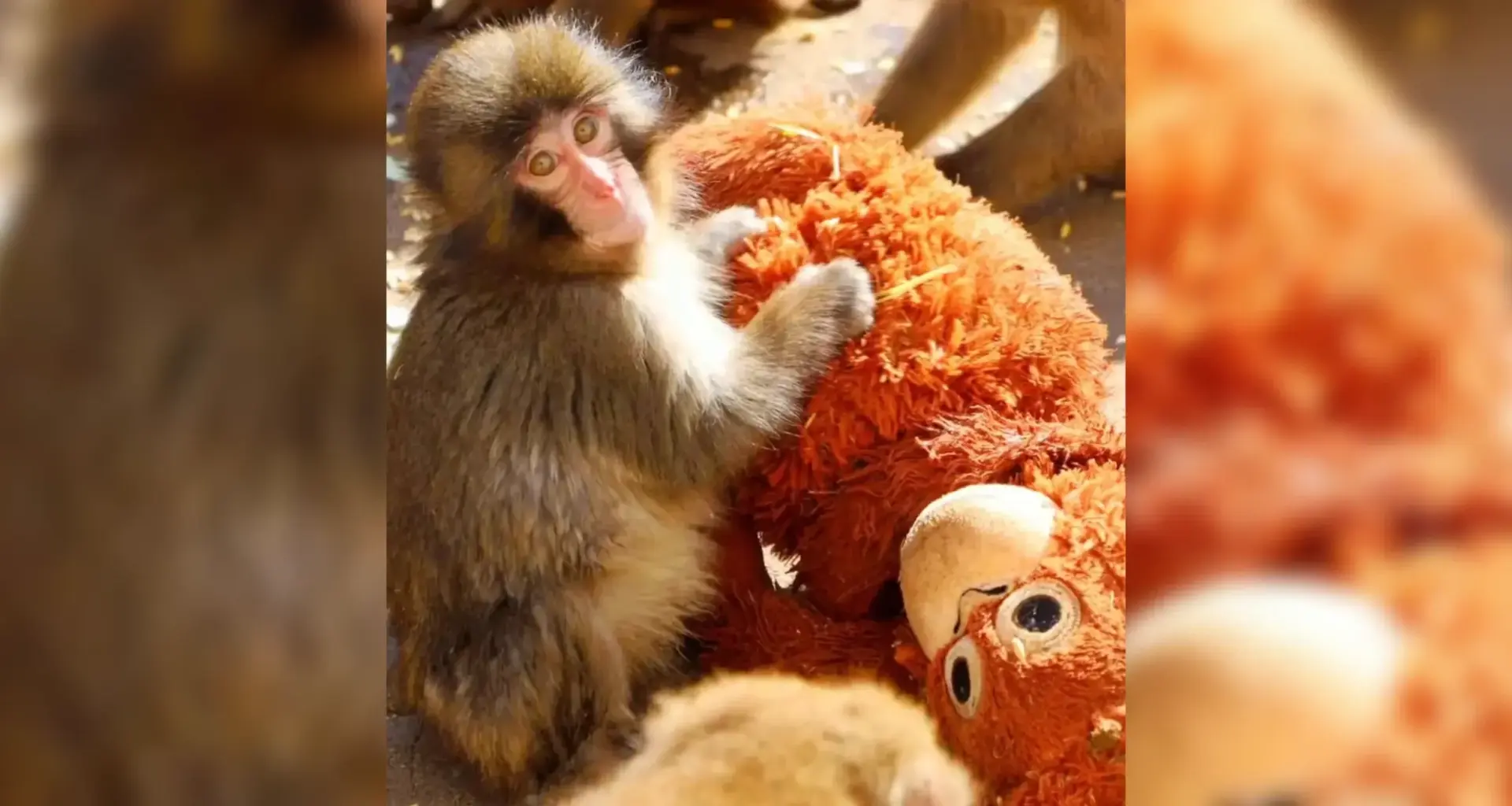
Videos of a Japanese macaque named Punch went viral on social media, showing him cuddling a stuffed orangutan as a surrogate mother after being abandoned by his own. The eight-month-old lives at the Ichikawa City Zoological and Botanical Garden in Chiba Prefecture.
His efforts to adapt to the troop were widely shared in February, drawing growing attention. Visitor numbers surged as people came to see his development in person, and attendance in FY 2026 surpassed 300,000 for the first time since the zoo opened.
Punch was born in July 2025 and raised by zookeepers after his mother abandoned him. In February, the zoo shared his story on social media to support his integration into the troop, and it quickly gained attention overseas as well.
Complaints and Misunderstandings
Videos also spread showing older monkeys striking Punch as a form of discipline, sparking concern online. Comments like “Isn’t this bullying?” and “That’s cruel” began flooding in.
The zoo received many complaints, including international calls in English. Takashi Yasunaga, head of the city’s zoo and botanical division, recalled that the burden on staff increased and the situation on-site became exhausting.
He also noted that some people overseas who are unfamiliar with Japanese macaque behavior have even suggested that the zoo was deliberately placing Punch in a harsh environment to stage a “pitiful” scene and profit from his story.
In response, the zoo issued a statement on February 20 under the keepers’ names, explaining that being scolded is a normal part of learning social communication within the group. It asked for understanding with a simple message: “Rather than simply feeling sorry, we hope you will support Punch’s efforts.” Phone and email complaints decreased following the statement.
 Visitors taking photos with smartphones around the monkey enclosure. March 25, Ichikawa, Chiba Prefecture. (©Sankei by Takayuki Suzuki)
Weekday Visitors
On March 25, despite it being a weekday, a long line had already formed at the entrance before the 9:30 AM opening. According to Yasunaga, the crowd that day was actually on the smaller side. “On weekends, people have to wait one to one and a half hours to enter,” he said.
Previously, most visitors were local, but people are now traveling from much farther away, and weekend attendance has roughly doubled.
A woman from Kamakura, Kanagawa Prefecture, had made the two-hour trip with her daughter and two grandchildren. “I was the one who wanted to come and brought them here,” she said, adding that she had finally found the chance to visit during her grandchildren’s spring break.
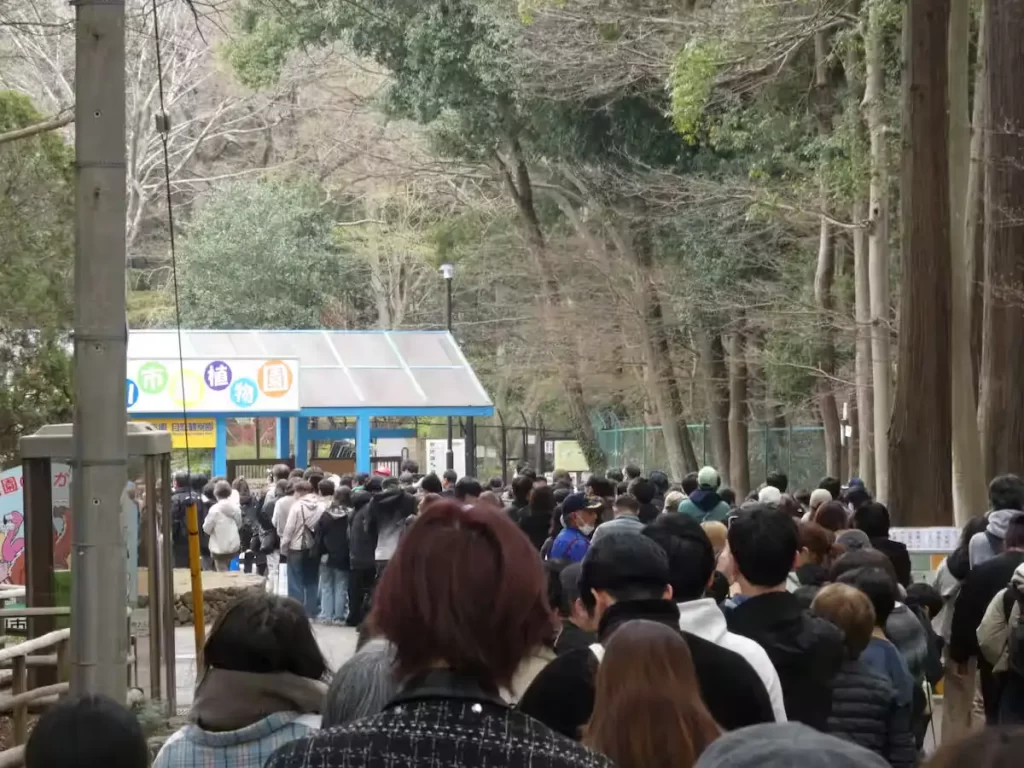 A long line formed even before the park opened. March 25, Ichikawa, Chiba Prefecture. (©Sankei by Takayuki Suzuki)
After opening, foreign visitors could be seen throughout the enclosure area, cameras in hand. An American man in his 50s who had come to Japan for snowboarding in Hokkaido stopped by on his way back through Narita Airport. He had seen cherry blossoms the day before but wanted to see Punch before heading home.
A 21-year-old American traveling through Tokyo and Kyoto with friends watched the enclosure and said he hoped Punch would find friends.

Online Scams
Punch’s fame has also brought some complications. Fraudulent accounts impersonating zookeepers and selling unofficial merchandise have appeared online, with some attempting to solicit donations. On March 16, Ichikawa City released a supporters’ guide in both Japanese and English, outlining legitimate ways to help through bank transfers, hometown tax donations, and LINE stickers.
Overcrowding around the enclosure has also created etiquette issues. The zoo asks visitors to limit their time at the front of the monkey enclosure to 10 minutes, but some refuse to move on, saying “We paid to be here.” The zoo is now promoting proper etiquette online in multiple languages, including English, Chinese, Korean, and Spanish.
Yasunaga stressed that the most important thing remains Punch’s integration into the troop. Being watched by large numbers of people can stress the monkeys and trigger fights, he noted, and Punch feels that impact most as the smallest member of the group. He urged visitors to be mindful of the animals when viewing them.
RELATED:
Author: Takayuki Suzuki, The Sankei Shimbun
このページを
日本語
で読む
Continue Reading