
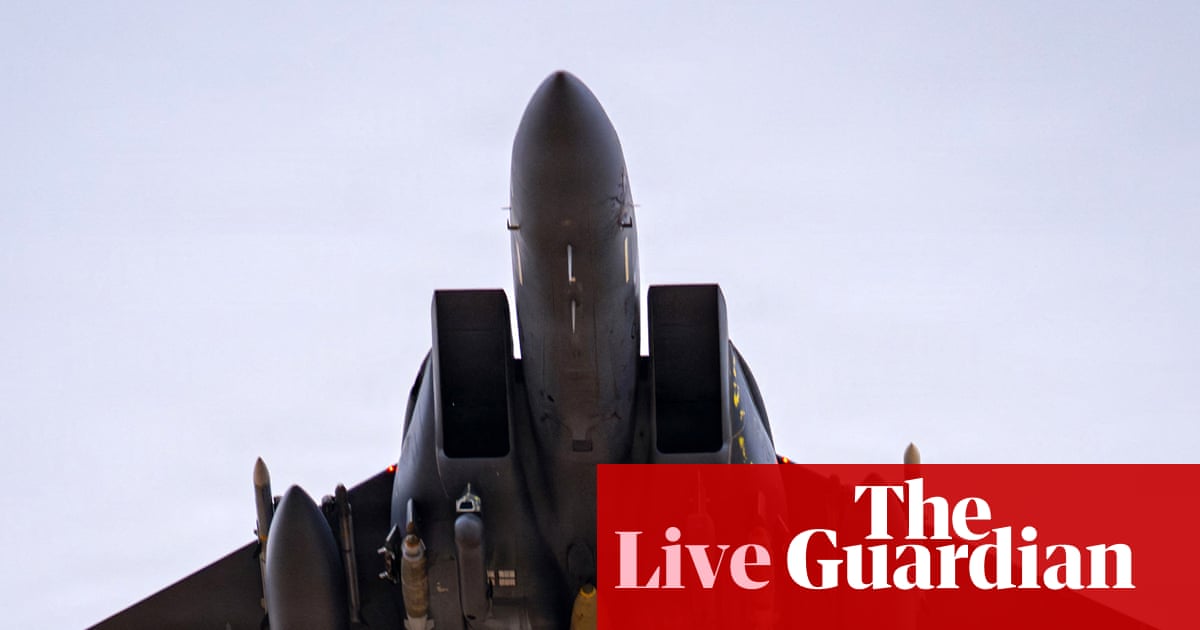
Second Turkish-owned ship passes through strait of Hormuz, official says
A second Turkish-owned ship has passed through the strait of Hormuz, Turkey’s transport minister, Abdulkadir Uraloglu, said, as more vessels trickle through the narrow waterway.
According to Uraloglu, there were 15 ships Turkish-owned ships in the strait when war broke out, and two of them have left. Speaking to CNN Turk, he said four ships have not requested to leave, two are energy carriers and two are engaged in regional trade.
“We are working in coordination with the ministry of foreign affairs to remove the remaining nine ships,” he said.
It was not clear when the second ship passed through the strait. Uraloglu announced safe passage of the first ship on 13 March after authorities received permission from Iran.
The strait of Hormuz, which carries a fifth of the world’s oil, has become a key point of contention in bringing the conflict to an end, with Iranian threats to shipping rendering the waterway effectively shut.
Several vessels, however, have been allowed safe passage through the strait, according to reports, including a container ship owned by the French shipping company CMA CGM, which sailed out of the Gulf yesterday. It is believed to be the first ship owned by a western shipping line to have made safe passage since war began on 28 Feburary.
The Guardian’s business reporter, Lauren Almeida, has looked at the number of vessels that have transited the strait so far, and the diplomatic efforts to get the key shipping route reopened. You can read her report here:
Updated at 04.02 EDT
Key events
Show key events only
Please turn on JavaScript to use this feature
US-Israeli strikes at Iran petrochemicals zone wound five people – state media
Iranian state media has reported explosions at a major petrochemical complex in southwestern Iran, saying it was hit by US-Israeli airstrikes that wounded five people.
Iran’s semi-official Tasnim news agency reported that several facilities at the Mahshahr Petrochemical Special Zone in the Khuzestan province were hit by strikes this morning. The Bandar Imam Petrochemical Complex that operates within the zone sustained damage, the report added.
The news agency quoted the deputy governor for Khuzestan province, Valiollah Hayati, as saying: “The likelihood of human casualties, including fatalities and injuries, from this attack is very high.”
ShareOne person killed after US-Israeli attack near Iran nuclear power plant, state media reports
Iran’s Bushehr nuclear power plant has been targeted in a US-Israeli attack this morning, with a projectile striking the grounds near the facility, according to Iran’s semi-official Tasnim news agency.
One person was killed and the plant’s auxiliary buildings sustained damage, the news agency reported. It added that there was no damage to the main section of the power plant and operations remain unaffected.
The news agency claimed it was the fourth attack on the power plant since the outbreak of war.
The US and Israel have not immediately commented on the claims.
Reuters news agency has reported that five EU finance ministers are calling for a tax on windfall profits of energy companies in reaction to rising fuel prices due to the Middle East war.
In a letter to the EU Commission, seen by Reuters, ministers from Germany, Italy, Spain, Portugal and Austria said the measure would “send a clear message that those who profit from the consequences of the war must do their part to ease the burden on the general public”.
Oil and gas prices have spiked since the war against Iran led to the effective closure of the strait of Hormuz, prompting governments around the world to declare emergency measures to limit the impact on consumers and the economy.
The Israeli military said it hit air defence sites and missile storage facilities during a wave of airstrikes in the Iranian capital of Tehran yesterday.
Among the targets was a site belonging to Iran’s Islamic Revolutionary Guard Corps (IRGC) “where missiles intended to strike aircraft were stored”, the Israel Defense Forces (IDF) said in a post on X.
The US and Israel have been bombing military sites in Iran over the past five weeks to erode Tehran’s ability to retaliate, but US intelligence assessments suggest they have yet to achieve that objective. Citing such assessments, the New York Times reported that Iranian operatives have been digging out underground missile bunkers and silos struck by US-Israel strikes and returning them to operation hours after an attack. CNN also reported US sources as saying about a half of Iran’s missile launchers are still intact.
The reports contradict remarks by Donald Trump earlier this week, that Iran’s “ability to launch missiles and drones is dramatically curtailed” and that the war was “nearing completion”.
Smoke rises after an airstrike in Tehran, Iran. Photograph: Abedin Taherkenareh/EPAShareSecond Turkish-owned ship passes through strait of Hormuz, official says
A second Turkish-owned ship has passed through the strait of Hormuz, Turkey’s transport minister, Abdulkadir Uraloglu, said, as more vessels trickle through the narrow waterway.
According to Uraloglu, there were 15 ships Turkish-owned ships in the strait when war broke out, and two of them have left. Speaking to CNN Turk, he said four ships have not requested to leave, two are energy carriers and two are engaged in regional trade.
“We are working in coordination with the ministry of foreign affairs to remove the remaining nine ships,” he said.
It was not clear when the second ship passed through the strait. Uraloglu announced safe passage of the first ship on 13 March after authorities received permission from Iran.
The strait of Hormuz, which carries a fifth of the world’s oil, has become a key point of contention in bringing the conflict to an end, with Iranian threats to shipping rendering the waterway effectively shut.
Several vessels, however, have been allowed safe passage through the strait, according to reports, including a container ship owned by the French shipping company CMA CGM, which sailed out of the Gulf yesterday. It is believed to be the first ship owned by a western shipping line to have made safe passage since war began on 28 Feburary.
The Guardian’s business reporter, Lauren Almeida, has looked at the number of vessels that have transited the strait so far, and the diplomatic efforts to get the key shipping route reopened. You can read her report here:
Updated at 04.02 EDT
The day so far
Here’s a rundown on the latest news from the US-Israel war on Iran to bring you up to speed. It’s 10.30am in Tehran, 10am in Tel Aviv and Beirut and 3am in Washington DC.
Iranian and American forces were racing each other early on Saturday to recover a crew member of the first US fighter jet to go down in Iran since the war began.
Tehran said it had shot down the F-15 warplane. US media reported American special forces had rescued one of its two crew members and the other was still missing, with a search operation under way. Iran urged people in the rugged south-west to also search for the jet’s crew.
The Iranian military said it also downed a US A-10 ground attack aircraft in the Gulf, with US media saying the pilot was rescued.
Donald Trump told NBC the F-15 loss would not affect negotiations with Iran: “No, not at all. No, it’s war.”
A man takes pictures with his mobile phone of the B1 bridge on Friday, a day after it was destroyed by a US strike in Karaj, south-west of Tehran. Photograph: Atta Kenare/AFP/Getty Images
Fresh strikes hit Iran, Israel, Lebanon and Gulf countries. The Israeli military said on Saturday it began striking “Hezbollah infrastructure” in Beirut after destroying a bridge in eastern Lebanon to prevent the Iran-backed group’s reinforcements from crossing. Two loud explosions were heard in the capital within half an hour early on Saturday. Israel said it also launched a wave of strikes of Tehran.
The three UN peacekeepers wounded in a blast in southern Lebanon on Friday were from Indonesia, UN officials said – the third such incident in a week. It came just days after three other Indonesians were killed in separate explosions.
A fire was reported after a drone hit storage facilities belonging to foreign oil companies west of Iraq’s southern port city of Basra, Reuters cited security sources as saying.
Recent US intelligence reports say Iran is unlikely to open the strait of Hormuz any time soon because its grip on the world’s most vital oil artery provides the only real leverage it has over the US, Reuters reported, citing three sources.
Israeli fire killed a man in Syria’s Quneitra province in the south near the Israeli-occupied Golan Heights, Syrian state media said. The man was killed by “an Israeli tank”, the Sana agency said, while state TV said a car was targeted.
An Egyptian national was killed and four others wounded after a fire at a gas complex in Abu Dhabi, caused by falling debris from an intercepted attack, the government media office said.
Israel’s emergency service said a 45-year-old man was treated for minor injuries after Iran fired missiles at the central city of Bnei Brak on Saturday.
Iran executed two men convicted of membership in a banned opposition group and carrying out disruptive actions aimed at overthrowing the Islamic republic, the judiciary said.
Dubai authorities said they responded to a “minor incident” caused by debris from an aerial interception falling on to the facade of the Oracle building in Dubai Internet City. No injuries were reported, the city’s media office said.
Trump asked US lawmakers to approve a $1.5tn defence budget for 2027, which would lift Pentagon spending by more than 40% in a single year – the sharpest increase since the second world war.
Updated at 05.13 EDT
Here are some images coming in from around the Middle East as the war enters week six.
Missiles launched from Iran in response to US-Israeli attacks are seen in the skies over Ramallah in the occupied West Bank. Photograph: Anadolu/Getty ImagesAn official walks next to the damaged Azadi sports complex in Tehran, Iran. Photograph: Abedin Taherkenareh/EPAAn Israeli woman with a child looks at the tail section of a ballistic missile launched from Iran, in the Jewish settlement of Shadmot Mehola in the northern Jordan Valley, Israel. Photograph: Erik Marmor/Getty ImagesA poster of victims killed in an Israeli airstrike that hit their house is seen through a destroyed car in Saksakiyeh village, south Lebanon. Photograph: Hussein Malla/APPeople carry Palestinian flags gather at the historic Umayyad mosque in Damascus, Syria, after Friday prayers. Photograph: Anadolu/Getty ImagesA residential building damaged by recent strikes at Vahdat town in Karaj, south-west of Tehran, Iran, on Friday. Photograph: Majid Saeedi/Getty ImagesWounded Palestinians including children are transferred to Al-Shifa hospital in Gaza City after Israeli attacks despite the ongoing ceasefire in Gaza. Photograph: Omar Ashtawy/APAImages/ShutterstockDisplaced children and families desperate for food at a food distribution point being run by activists in Beirut. Photograph: Anadolu/Getty ImagesAftermath of a projectile impact in Kiryat Ata, northern Israel.
Photograph: Shir Torem/ReutersA Muslim woman prays as a Jewish couple stands next to her at the Mount of Olives, overlooking Jerusalem’s Old City. Photograph: Mahmoud Illean/APShare
Updated at 02.56 EDT
UN says three wounded peacekeepers are Indonesian
The three United Nations peacekeepers wounded in a blast in southern Lebanon on Friday were from Indonesia, UN officials said, just days after three other Indonesians were killed in separate explosions.
The UN interim force in Lebanon (Unifil) said the blast occurred inside a UN facility near El Adeisse on Friday afternoon, injuring three peacekeepers who were rushed to a hospital. Two were seriously wounded.
The UN information centre in Jakarta said the “origin of the explosion” was unknown but identified the wounded peacekeepers as Indonesian, Agence France-Presse is reporting.
Unifil vehicles driving on a main road in Qlayaa, southern Lebanon, on 27 March. Photograph: Karamallah Daher/Reuters
Friday’s incident came just days after an Indonesian peacekeeper died when a projectile exploded on 29 March in southern Lebanon, where Israel and Hezbollah are fighting.
AFP quoted a UN security source as claiming on condition of anonymity on Tuesday that fire from an Israeli tank was responsible.
A day later, two more Indonesian peacekeepers died after an explosion struck a Unifil logistics convoy, also in southern Lebanon.
The bodies of the three fallen peacekeepers are scheduled to arrive in Jakarta on Saturday evening, according to the military.
Updated at 02.50 EDT
Iran has executed two men convicted of membership in a banned opposition group and carrying out disruptive actions aimed at overthrowing the Islamic republic, the judiciary said.
The executions on Saturday were the latest in a series targeting members of the banned People’s Mujahedin of Iran (MEK), after four other convicted members of the group were executed earlier in the week.
“Abolhassan Montazer and Vahid Baniamerian … were hanged after trial and their sentences were upheld by the Supreme Court,” the judiciary’s Mizan Online website said on Saturday, cited by AFP.
The men were found guilty of attempting “rebellion through involvement in multiple terrorist acts”, as well as membership in the MEK group and carrying out acts of sabotage aimed at overthrowing the Islamic republic.
It was not immediately clear when the men were arrested.
The MEK, which initially supported the 1979 Islamic revolution before falling out with the leadership in the 1980s, has since been in exile and is designated a terrorist organisation by Tehran.
Iran is the world’s second most prolific executioner after China, according to rights groups.
File shot of men and women soldiers of the People’s Mujahedin of Iran during a live fire exercise in Iraq’s Diyala province during the 1990s. Photograph: Barry Iverson/AlamyShare
Updated at 02.28 EDT
Foreign oil facilities hit in southern Iraq – report
A fire has been reported after a drone hit storage facilities belonging to foreign oil companies west of Iraq’s southern port city of Basra, Reuters is citing security sources as saying.
Updated at 01.39 EDT
US intelligence warns Iran unlikely to ease Hormuz strait chokehold soon – report
Recent US intelligence reports say Iran is unlikely to open the strait of Hormuz any time soon because its grip on the world’s most vital oil artery provides the only real leverage it has over the US, Reuters is reporting, citing three sources.
The finding suggests Tehran could continue to throttle the strait to keep energy prices high as a means of pressuring Donald Trump to find a quick offramp to the five-week-long war.
The reports also provide the latest indication that the war – intended to eradicate Iran’s military strength – may actually increase its regional sway by showing Tehran’s ability to threaten the key waterway.
Trump has sought to downplay the difficulty of reopening the strait, which nomally carries a fifth of the world’s oil trade. On Friday the US president appeared to suggest he could order American forces to reopen the passage, posting on his Truth Social platform:
double quotation markWith a little more time, we can easily OPEN THE HORMUZ STRAIT, TAKE THE OIL, + MAKE A FORTUNE. IT WOULD BE A “GUSHER” FOR THE WORLD???
But analysts have long warned that forcing the reopening could prove costly and draw the US into a protracted ground war.
Updated at 01.29 EDT
Several blasts heard coming from Tehran’s north, according to an AFP journalist. It is now 8.20am on Saturday in Tehran.
We’re seeing images from the central Israeli city of Bnei Brak after Iran fired missiles on Saturday and the Israeli military said it was working to intercept them.
Israel’s emergency service said a man, 45, was treated for minor injuries from glass shrapnel and taken to hospital.
The military said after the launches that civilians were permitted to leave protected spaces nationwide while search and rescue forces were heading to central Israel amid “reports of impact”.
A firefighter works at the scene in Bnei Brak, Israel. Photograph: Video obtained by ReutersSmoke rises in Bnei Brak after the Iranian missile attack. Photograph: Video obtained by ReutersShare
Authorities in Dubai say they have responded to a “minor incident” caused by debris from an aerial interception falling on to the facade of the Oracle building in Dubai Internet City.
No injuries were reported, the UAE city’s media office said in a post on X.
ShareIsrael attacks Hezbollah targets in Beirut after destroying bridge
The Israeli military said on Saturday it had begun striking “Hezbollah infrastructure” in Beirut after it destroyed a bridge in eastern Lebanon to prevent the Iran-backed group’s reinforcements from crossing.
Two loud explosions were heard in the capital within half an hour early on Saturday and smoke was billowing from the area of one of them, AFP is reporting.
Local media reported two strikes on Beirut’s southern suburbs, an area that has been a target of repeated Israeli strikes in recent days as the military presses on with its ground invasion in the country’s south as it seeks to establish a “security zone”.
A woman holds a mattress next to her tent at a temporary encampment for displaced people in Beirut on Friday.
Photograph: Mohamed Azakir/Reuters
On Friday the UN interim force in Lebanon (Unifil) said a blast at one of its positions in the country’s south near the border wounded three peacekeepers, as mentioned earlier – the third similar incident in days.
Israel’s military had warned it would target two adjacent bridges over the Litani River in the area “to prevent the transfer of reinforcements and military equipment”.
The Lebanese state-run National News Agency (NNA) said:
double quotation markIsraeli warplanes targeted the bridge that links Sohmor with Mashghara, leading to its destruction.
Lebanese local media reported that a second bridge was also hit.
The strikes in Sohmor continued into early Saturday, with the NNA reporting the town’s centre being hit twice as warplanes roared in the skies.
Israel has previously struck five other bridges over the Litani in the country’s south, including most of the main routes crossing the waterway.
Also in Sohmor, two people were killed and 15 wounded in an Israeli strike that hit “as worshippers were leaving the town’s mosque” after Friday prayers, according to Lebanon’s health ministry.
Lebanese authorities say more than 1,300 people have been killed in a month of hostilities.
Updated at 01.41 EDT
Further to the last post: as combat search and rescue (CSAR) teams are activated to retrieve a missing pilot after a downing, their soldiers – such as retired master sergeant Scott Fales – have been suiting up in a “ready room”.
Experts like Fales – a pararescue jumper who played a key role in the 1993 “Black Hawk Down” incident in Mogadishu, Somalia – are always standing by whenever US aircraft are over enemy territory.
“Before any operations are conducted … there is always a CSAR plan,” Fales told Agence France-Presse.
Simultaneously, an immense amount of intelligence is gathered and analysed on the location and status of the missing aviator. Fales said:
double quotation markEverything from human intelligence to imagery intelligence to, you know, all the different drones we have looking – signals intelligence. It’s all being used to try to find this guy.
Picture of an ejector seat posted by Revolutionary Guards. Photograph: X @IRGCIntelli
Once the missing aviator is located, a rescue plan is formulated in real time inside the helicopters.
“Those gunners are spotting and looking for threats, the pilots are looking for a place to land, we’re reaching out to that downed aviator,” Fales said.
On the ground, they ensure the pilot is actually the person they are searching for, and a threat-versus-medical-needs assessment is done. In their minds, Fales said, would be:
double quotation markWhat kind of immediate threat are we in? How much time do we have to get this person out? What kind of injuries do they have? And then we’ll make up our mind on the type, amount of treatment that’s needed on the scene – or do we just grab and go depending on the threat?
With a fellow soldier still unaccounted for in south-west Iran, Fales said he was “very hopeful” the aviator would be located.
double quotation markI’m hoping that friendly people have found him and are hiding him. Or he’s still evading.
Updated at 23.24 EDT
Hide, find water: ex-pilot tells how to survive being shot down
As US forces race against time and Iran’s military to locate an aviator reportedly shot down on Friday, a former air force pilot has detailed what it takes to hide, survive and extract someone behind enemy lines.
“You’re like, ‘Oh my God, I was in a fighter jet two minutes ago, flying 500 miles an hour, and a missile just exploded, literally 15 feet from your head,’” said retired brigadier general Houston Cantwell, who is now at the Mitchell Institute for Aerospace Studies.
With that said, a pilot’s training – known as survival, evasion, resistance and escape (Sere) – would likely kick in before he or she parachutes to the ground, the Agence France-Presse news agency’s report says.
“Your best view of where you may want to go or where you may want to avoid is while you’re coming down in your parachute,” said Cantwell, who logged 400 hours of combat flight experience, including missions over Iraq and Afghanistan.
Parachuting to the ground risked foot, ankle and leg injuries, the former airman said.
double quotation markThere are many stories of survivors from Vietnam that had severe injuries – compound fractures – just from the ejection.
Images of wreckage published by Iranian state media. Photograph: Press TV X
Upon landing, “take an inventory of yourself to figure out: what condition am I in? Can I even move? Am I even mobile?”
Aviators then figure out where they are, whether it is behind enemy lines, where they can hide and how they can communicate.
Cantwell said:
double quotation markTry to avoid enemy capture, as long as you can. And if I were in a desert environment, I’d want to try to find some water.
Simultaneously, combat search and rescue teams – highly trained soldiers and pilots already on alert – would be activated. But the missing crew member can increase the odds of a safe rescue. Cantwell said:
double quotation markMy priority would be, first of all, concealment, because I don’t want to be captured. I want to try to get to a location where I can get extracted.
In a city, that may be a rooftop. In a rural setting, a field where helicopters can land. Movement was best at night, he said.
Cantwell said that when he flew, he also carried a pistol.
Updated at 23.09 EDT
Welcome summary
Hello and welcome to our continuing live coverage of the US-Israel war on Iran and its impact on the region, the world and the global economy.
Iranian and American forces were racing each other early on Saturday to recover a crew member of the first US fighter jet to go down inside Iran since the start of the war.
Tehran said it had shot down the F-15 warplane, while US media reported American special forces had rescued one of its two crew members and the other was still missing.
Iranian authorities urged people living in the country’s rugged south-west to search for the jet’s crew, as state TV broadcast images of what was said to be the mangled debris.
Iran’s military said it also downed a US A-10 ground attack aircraft in the Gulf, with US media saying the pilot was rescued.
US Central Command did not immediately comment on the loss of the F-15, but the White House said Donald Trump “has been briefed”.
The US president told NBC the F-15 loss would not affect negotiations with Iran, saying: “No, not at all. No, it’s war.”
Fresh strikes meanwhile hit Israel, Iran, Lebanon and Gulf countries – and large blasts reportedly rocked northern Tehran. Israel said it had launched a wave of strikes in the Iranian capital, alongside parallel attacks in Beirut.
Strikes by all sides have increasingly targeted economic and industrial sites, raising fears of wider disruption to global energy supplies.
A collapsed building at the site of an overnight Israeli airstrike in the Haret Hreik neighbourhood of Beirut’s southern suburbs on Friday. Photograph: AFP/Getty Images
Here are the other main news developments:
Tehran rejected a US proposal for a 48-hour ceasefire, said Iran’s semi-official Fars news agency, citing an unnamed source. There was no immediate comment from the US. Earlier, the Wall Street Journal reported that Iran had officially told mediators it was unwilling to meet with US officials in Islamabad in the coming days.
The UN force in Lebanon said a blast at one of its positions had wounded three peacekeepers, two of them seriously, in the third such incident in a week.
Israeli fire killed a man in Syria’s Quneitra province in the south near the Israeli-occupied Golan Heights, Syrian state media said. The man was killed in an attack by “an Israeli tank”, the Sana agency said, while state TV said a car was targeted.
An Egyptian national was killed and four others wounded after a fire at a gas complex in Abu Dhabi, caused by falling debris from an intercepted attack, the government media office said. Two of the four people hurt were from Egypt, while the others were from Pakistan, it said.
Trump asked lawmakers to approve a $1.5tn defence budget for 2027 as the US faces rising costs from its war with Iran and mounting global security commitments. The proposal would lift Pentagon spending by more than 40% in a single year – the sharpest increase since the second world war.
The US embassy in Lebanon said Iran and allied groups could seek to target universities in the country, where Tehran-backed Hezbollah is at war with Israel and Israeli troops are carrying out a ground invasion.
Three tankers, including one co-owned by a Japanese company, crossed the strait of Hormuz by hugging close to Oman’s shore – a rare transit route – maritime traffic data showed on Friday.
With agencies
Updated at 22.53 EDT