
Life on Earth began from very simple things. Long before plants, animals, or even tiny microbes existed, the planet only had water, rocks, and basic chemicals.
Over time, these simple ingredients somehow came together to form life. Scientists are still trying to understand how this happened.
A big question about life

The origin of life is one of the biggest mysteries in science. No one has a clear answer yet.
“No one knows, from a scientific perspective, how life could have been formed from an early Earth that had no life,” said Shea Cinquemani, lead author of a new study from Rutgers University.
“How does something come from nothing?” This question has led scientists to study places where life could have first started.
Strange places where life can exist
Deep in the ocean, cracks in the seafloor release hot, mineral-rich water. These areas are known as hydrothermal vents.
Despite the intense heat and complete darkness, living organisms thrive there. Instead of relying on sunlight, these organisms use chemicals as their source of energy.
This discovery surprised scientists and showed that life can survive in harsh and unusual environments.
How simple things become complex
Scientists believe life began through a slow and gradual process. Small molecules joined together to form larger and more complex ones.
Over time, these molecules became more organized and began to behave like early living cells.
Different theories attempt to explain how this happened. Some focus on molecules that can store and pass on information, while others highlight simple structures that can hold and protect important chemicals.
Despite these different ideas, one thing remains clear. Chemistry played a central role, and life likely emerged from simple reactions between basic substances.
Meteor impacts may have helped
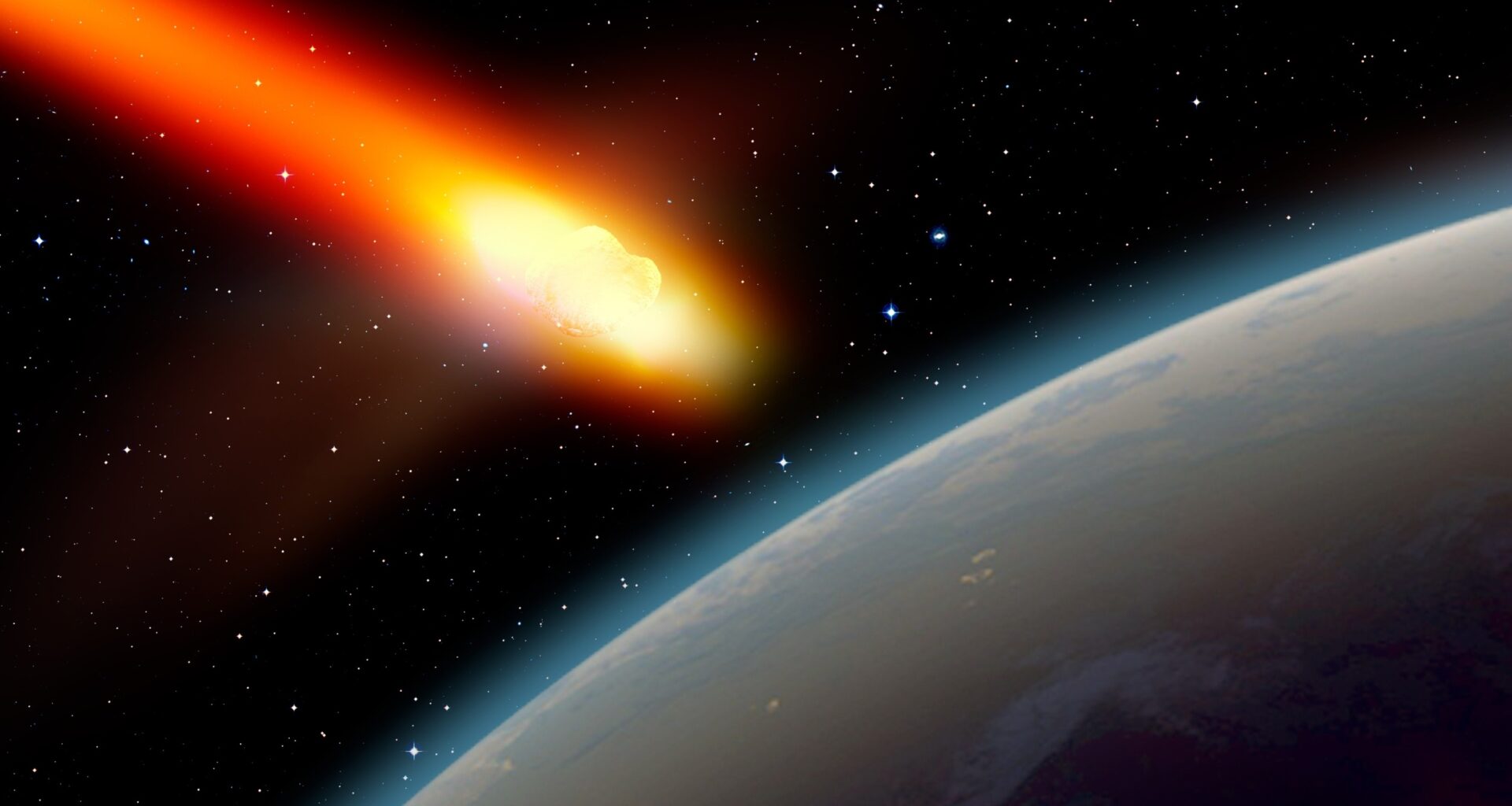
Cinquemani’s research suggests something interesting. Meteor impacts may have helped create life.
When a meteor hits Earth, it creates a lot of heat. It melts rock and forms a crater. Later, water can fill this crater and create a warm, mineral-rich lake.
“You have a lake surrounding a very, very warm center,” Cinquemani said. “And now you get a hydrothermal vent system, just like in the deep sea, but made by the heat from an impact.”
These environments may have been common on early Earth.
Why these places are important
Meteor-impact sites have three key things needed for life. They have heat, water, and chemicals.
The heat helps reactions happen faster, the water allows substances to mix, and the chemicals provide the building blocks for life.
As time passes, these simple substances can become more complex. This may have led to the formation of the first living cells.
Meteor craters show signs of life
Scientists have closely studied places on Earth where meteors struck long ago to understand their impact.
Some of these craters remained warm for thousands of years, while others still hold water even today.
In a few cases, researchers have even discovered tiny living organisms in these environments. These findings suggest that such conditions can support life.
Not just deep oceans
For many years, scientists thought life started only in deep sea vents because these places have heat and chemicals needed for life.
The new research shows that meteor-impact craters could also create similar conditions. When a meteor hits Earth, it forms a warm area that can fill with water and minerals.
Deep sea vents are extremely hot and salty, which can make survival difficult. In contrast, impact craters often contain freshwater and slightly milder conditions, which may be more suitable for early life to form.
This means scientists now have more than one possible explanation for how life began on Earth.
Curiosity drives discovery
Cinquemani began this work as a student project. At first, it felt challenging.
“I was like, ‘I know nothing about this topic,’” she said. “Thinking about the origins of biology on another planet was like, whoa. Not sure how I’m going to do this.”
Her journey shows how curiosity leads to new ideas.
“Humans are insanely curious beings,” said Cinquemani. “We question everything. We may never know exactly how we began, but we can try our best to understand how things might have occurred.”
The story of life’s beginning is still being written. Each new discovery brings us closer to understanding how life started from something so simple.
The study is published in the Journal of Marine Science and Engineering.
—–
Like what you read? Subscribe to our newsletter for engaging articles, exclusive content, and the latest updates.
Check us out on EarthSnap, a free app brought to you by Eric Ralls and Earth.com.
—–