
China, India also see sharp declines during same period; exporters cite reciprocal tariffs as main reason
05 April, 2026, 01:15 am
Last modified: 05 April, 2026, 10:43 am
Representational image. Photo: TBS
“>
Representational image. Photo: TBS
Apparel imports by the United States – Bangladesh’s largest single export market – declined significantly in the first two months of 2026, falling by 8.53% year-on-year. Bangladeshi exporters primarily attribute the steep decline in exports to tariffs imposed by the Trump administration in mid-last year.
Highlights: TBS
“>
Highlights: TBS
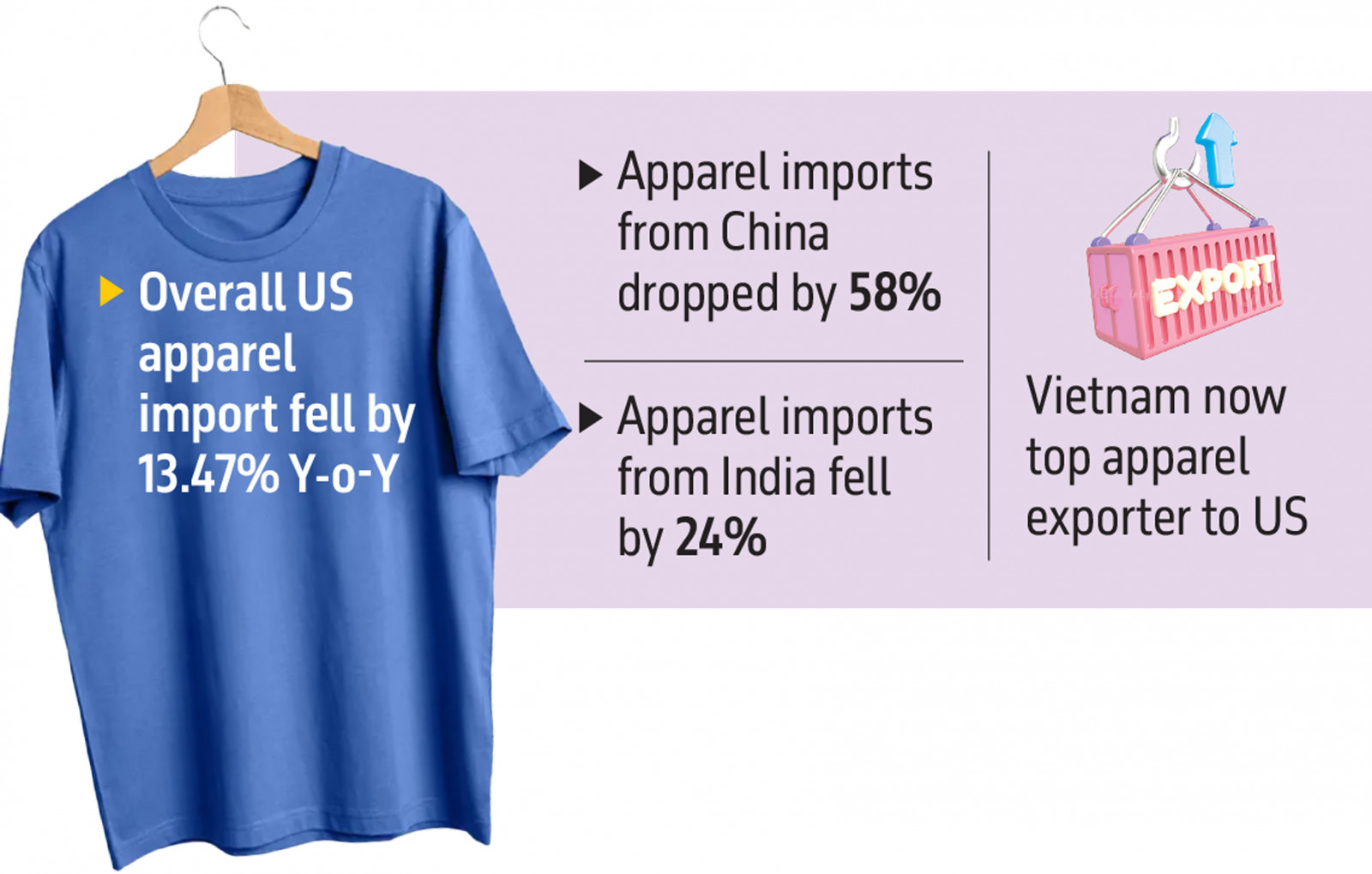
Exports from China and India fell even more sharply over the same period. The country’s overall apparel import fell by more than 13%.
However, during the same period, exports from two of Bangladesh’s competitors – Vietnam and Indonesia – increased in the US market.

Keep updated, follow The Business Standard’s Google news channel
These findings were reported by Bangladesh Apparel Exchange (BAE), a non-government organisation, based on an analysis of data from the Office of Textiles and Apparel (OTEXA), which tracks US apparel imports.
According to the report, the US imported apparel worth $11.73 billion in the first two months of 2026, a 13.47% decrease compared to the same period last year.
During this time, US apparel imports from China dropped by nearly 58% and from India by 24%. Vietnam has now become the top apparel exporter to the US. Among the top 10 exporters, the ranking is: Vietnam, Bangladesh, China, Indonesia, India, Cambodia, Mexico, Pakistan, and Honduras.
Mahmud Hasan Khan Babu, president of the Bangladesh Garment Manufacturers and Exporters Association (BGMEA), told The Business Standard, “Due to the reciprocal tariffs imposed by the Trump administration, consumer demand in the US has declined, which has also reduced our exports.”
He added, “A large portion of the additional cost is ultimately borne by consumers. As a result, consumption has decreased, leading to lower imports.”
After the Trump administration first announced reciprocal tariffs in April 2025, an additional duty of up to 10% was imposed on all countries until August. From 7 August, varying tariff rates were applied to different countries, including 20% on Bangladesh and Vietnam. However, tariffs on China and India were significantly higher, which caused a sharp decline in their exports to the US.
Some experts, however, believe Bangladesh failed to capitalise on the sharp drop in US imports from China and India.
Mohiuddin Rubel, CEO of Bangladesh Apparel Exchange, told TBS, “Given the overall decline in US imports, the reduction in our exports is expected. But we could not take advantage of the significant drop in imports from China. Countries like Vietnam, Indonesia, and Cambodia have benefited from that opportunity.”
He pointed to Bangladesh’s shortcomings in areas such as logistics as a key reason behind this missed opportunity.