
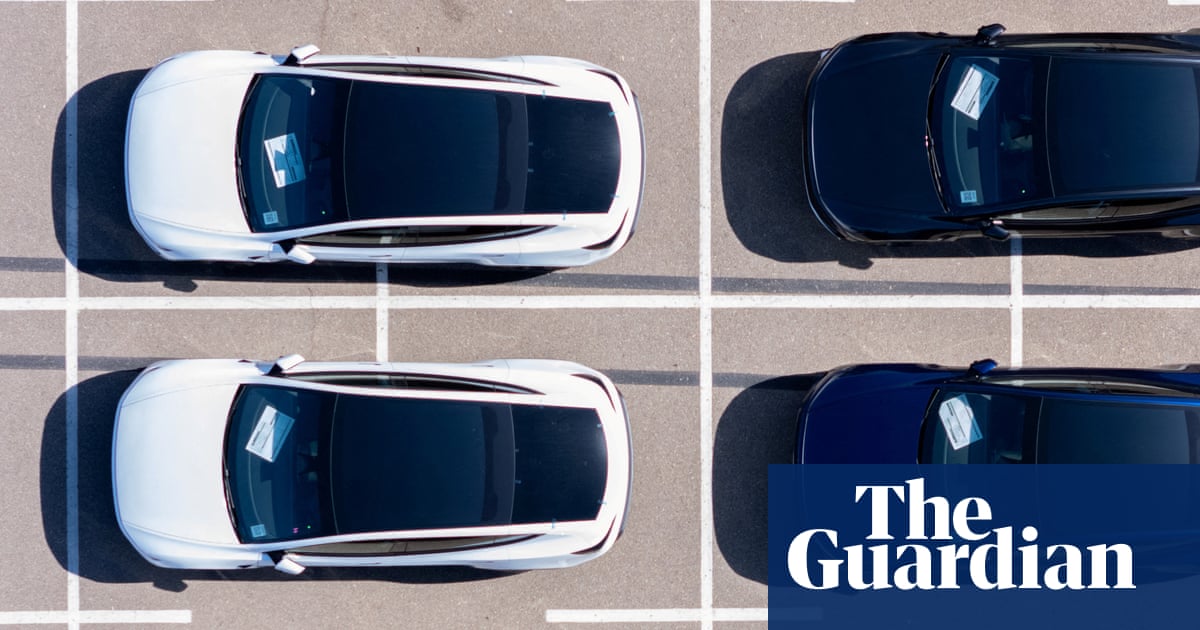
When a used vehicle rolls into a car yard, the usual trajectory for its price tag is down if it lingers too long.
That is the (almost) iron law of the secondhand market – until the oil crisis hit and dealers started raising asking prices for used electric vehicles.
Jake Sale, founder of Perth-based MotorMetrics, says lowered prices are not unusual but “up is very unique”.
“It’s specifically EVs that buyers are looking for.”
Sign up for the Breaking News Australia email
MotorMetrics’ live analysis of vehicle inventory shows that secondhand dealers have repriced a variety of used EVs, with Tesla’s Model Y up more than 6% in the last two weeks of March.
The Tesla Model 3, MG4 and Polestar 2, which are all electric, have also risen.
“That’s an early indication that dealers are confident to put the price up, and it’s likely that incoming stock will be at or around that new price,” Sale says.
Largest price increases of used and demo models
MotorMetrics data also shows that stock of used EVs is running low.
Meanwhile, several types of used diesel and petrol vehicles have had their sticker prices dramatically cut, in some cases by up to 20%.
The huge enthusiasm for EVs sparked by the oil crunch has surprised even their most ardent supporters, with car yards, brokers and now, secondhand dealers, reporting a sharp rise in demand immediately after petrol prices started to rise.
Rental demand for EVs is also soaring.
While many Australians have cancelled their usual Easter road trip plans over concerns they will run dry of diesel, or pay too much for unleaded, other travellers booked an EV instead.
Rob Chan, managing director of rental marketplace Turo Australia, says bookings for EVs and hybrids have increased 70% compared to the same period last year.
“This is one of those waves of consumer interest changes that is very unique,” Chan says.
Largest discounts for used and demo petrol and hybrids
He says the last time he saw a change in behaviour of this magnitude was the period of “revenge travel” that occurred after pandemic borders reopened.
“People are seizing control by booking cars that make a lot of rational economic sense. This will be a long-term trend,” Chan says.
Historically, Australia has been a laggard in EV adoption compared to countries such as Canada and New Zealand, due in large part to a prolonged period of political division in Canberra.
Sales have been accelerating in recent years, with more than 454,000 battery electric and plug-in hybrid electric vehicles (PHEVs) on Australian roads at the end of 2025, according to the Electric Vehicle Council.
The EV market share has now climbed to about 13% of new purchases, a rate expected to jump as more electric models enter Australia and charging infrastructure improves.
Peter Esho, an economist who heads Sydney-based Esho Capital, says while this isn’t the first oil shock “it could very well be one of the last”.
“EVs are now a credible option for many passenger vehicles and this shock is likely to exponentially accelerate adoption, once the dust settles,” he says.
Petrol prices increased almost every day in March across Australia’s capital cities, according to Informed Sources data, before the government’s fuel excise cut triggered a drop.
Commonwealth Bank data shows a steep increase in EV loans, with a 161% lift in weekly loan volume for new battery electric vehicles in March, compared to February.
Sydney motorist Har Rai Singh says he recently rented EVs to test them over longer distances before deciding whether to buy.
“Previously I made the mistake of rushing into buying a combustion engine vehicle, so thought I’d play it safe this time around and rent a couple out to see how I like them,” says Singh, who rented through Turo.
He says while there were some “slight niggles” on road trips, given some charging points weren’t working and he had to download a “bunch of different apps”, he’s now prepared to buy an EV.
“While people talk about waiting for chargers, now we’ve got people waiting for petrol pumps, and waiting to pay more than $100 to fill up a tank,” says Singh.
“It doesn’t make sense to me any more to hold on to a combustion engine.”