
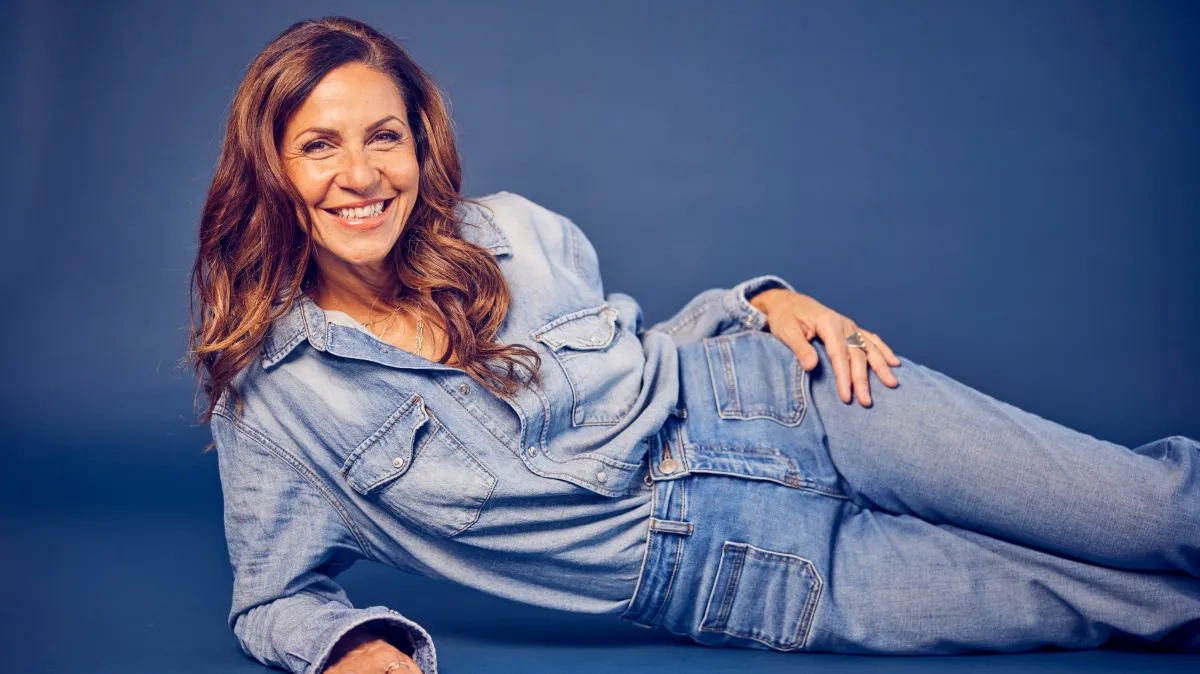
Recently Julia Bradbury ate a burger two days in a row. “I haven’t done that for a very long time,” she says. Her family were celebrating her twin daughters’ 11th birthdays — one at Legoland, where the first burger was consumed. The other was eaten at a trip to the fast food chain Shake Shack. “That was better because [the beef’s] grass-fed. It was without the bun in a lettuce leaf, though I had some chips, which I haven’t had for about three years. The burger was really good but, honestly, about two hours later I didn’t feel great. I felt sluggish and couldn’t wait to go to bed.”
Bradbury took some binders — activated charcoal (said to help excrete impurities) with a glass of warm water (said to improve digestion). “I woke up the next day feeling much better,” she says. Then she did “some rebounding” on her mini-trampoline, which apparently boosts lymphatic drainage. “It was all good again.”
At 55, Bradbury — a veteran television presenter who has presented everything from Watchdog to Countryfile — has reinvented herself as what she calls a “crash test mummy”, exploring everything that might help her live as long and healthy a life as possible, from the woo-woo — think chanting and barefoot walking — to good old exercise and lots of sleep.
It’s a response to her being diagnosed with breast cancer, aged 51, in 2021. At the time her twins, Xanthe and Zena, were 6 and her son Zephyr was 11. “I was terrified and sad, it was a very emotionally upsetting time,” she says. “It must have been very, very difficult for my family. I was in the eye of the storm and changed overnight to become the person I needed to be to get through this.”
Her surgeon deemed chemotherapy unnecessary but she had a mastectomy to remove a 6cm tumour. “I thought, right, I need to get stronger for this,” she says. She immediately cut out sugar and meat, although the latter (albeit normally organic) is now back on the menu and worked out furiously. “I knew after the operation I needed to move and walk as quickly as possible in order to heal. Getting blood pumping around a wound area is very, very important and your heart health also comes under attack when you have anaesthetics. In the moment it was instinct, but from that proactive period I was on a different path and didn’t come off it.”
This Bradbury is very different from the one emblazoned in my memory as part of the most memorable celebrity Come Dine with Me ensemble of all time, in 2009, in which she and Christopher Biggins got uproariously drunk while Edwina Currie observed with pursed lips.
“That was an absolute classic,” she says, beaming. “The production team said they’d never witnessed anything like it. In fact I recreated it for them the following night, the music, the menu…” The boozing? “Everything!”
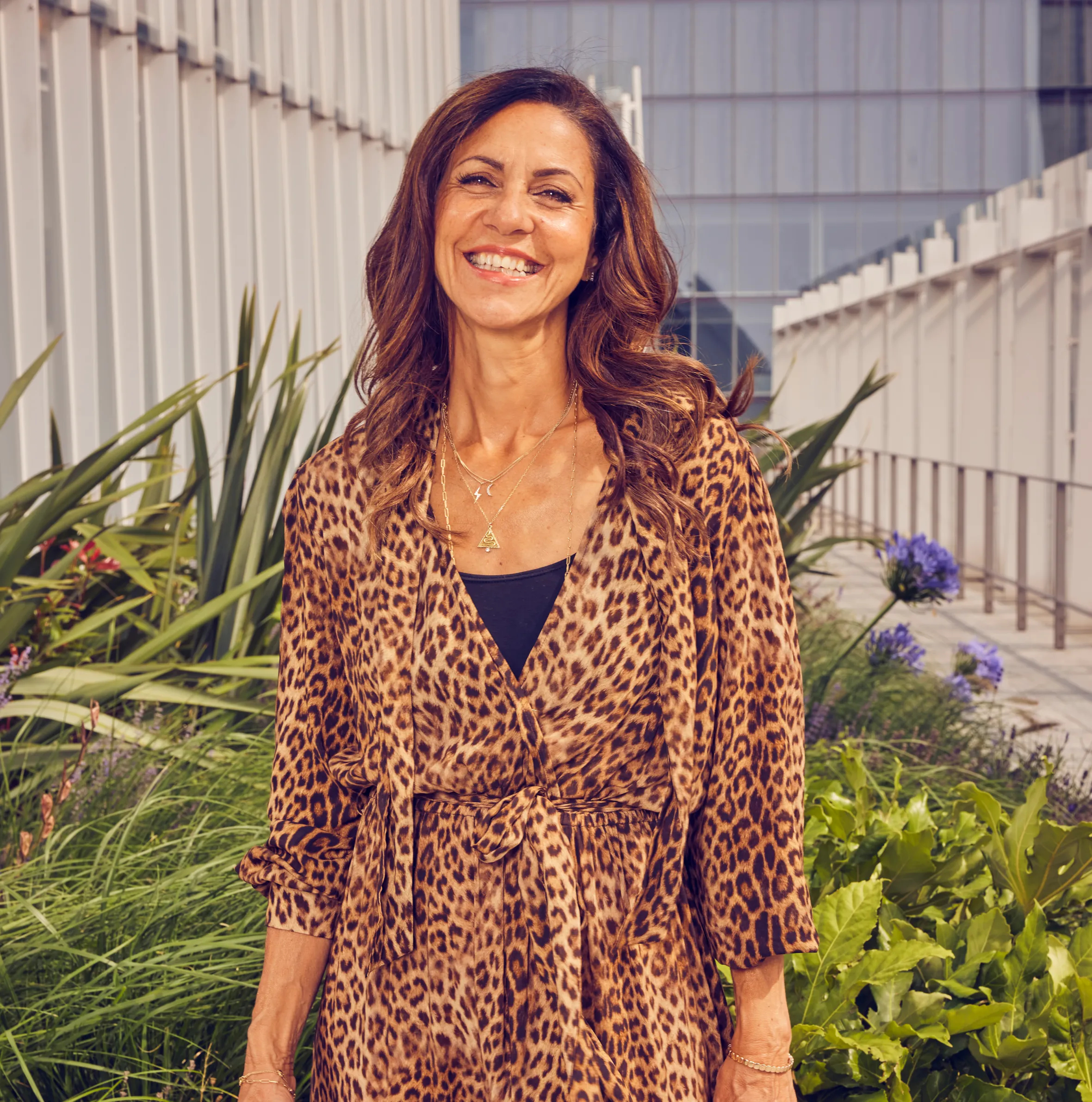 “I changed overnight to become the person I needed to be to get through this”Neale Haynes for the times
But that was the old Bradbury, who took her health for granted. “I used to live very much on convenience fast food because I was out and about filming all the time, eating at petrol stations, airports. It would be a ham and cheese sandwich, with a bit of pickle if you were lucky, in the back of a car and a bag of Haribo. I was having sugar all day in crazy quantities but I’m naturally slim so I didn’t have the warning sign some people have of putting on weight.” Her cortisol, a stress hormone, was “100 miles per hour and doing all sorts of damage”.
“I felt invincible when I was younger,” she says. “Had I been armed with the knowledge I have now, I would have been more cautious about my lifestyle. I would have still done Come Dine with Me but I wouldn’t have recreated it the following night. Instead I might have gone for a walk or done some yoga.”
We are in a restaurant around the corner from Bradbury’s home in Notting Hill, west London, where she lives with her children and partner, Gerard Cunningham, a property developer. Tall and wiry, with an aura of boundless energy, she orders a green teabag, hot water separately. I order a Diet Coke. Does my choice offend her? “Well, it’s not good for your microbiome or your sugar levels, but hey!” she says.
It’s not the only way Bradbury makes me reconsider my behaviour that day. She is fronting a campaign by Vista Health to encourage middle-aged people to be proactive in checking out health niggles. Research by the healthcare provider showed that of 2,000 midlife Brits, 76 per cent were unsure which symptoms they should have looked at, with more than half admitting to ignoring warning signs for an average of 14 months.
As it happens I’d almost cancelled a GP appointment that morning because I was so busy, and also pretty sure nothing serious was at stake. Only because I was meeting Bradbury later did I reluctantly fit it in — to be told everything was fine. But I was still glad I went.
After all, Bradbury very nearly didn’t attend a follow-up appointment regarding a lump she had found in her breast a year previously. Then the scans flagged nothing and she was told to return 12 months later. By then the lump was more painful but she was reassured everything looked the same. The consultant she had seen previously was on holiday so, she says, “I nearly didn’t bother going to see him when he got back six weeks later. I was busy, he was busy.” Eventually she decided to go simply to tick boxes. The consultant repeated all seemed fine but then he suddenly decided to do another ultrasound. “This time he found a tiny pinprick. And that’s probably why I’m here.”
She’s now a fan of full-body preventative MRI scans that can pinpoint dangers early (at her exhortation, as soon as I leave I book in for one with Vista Health). When Bradbury had one last year a brain cyst was spotted. “I was quite calm. They said they didn’t think this was anything to worry about and I should just have another scan in a year. But I messaged Davina McCall [the TV presenter, who had a brain tumour removed in 2024] and got the details of her neurosurgeon.” He reassured Bradbury that all appeared fine. Six months later she returned to double-check. “And it’s definitely nothing. I probably won’t have it looked at again for another ten years.”
Bradbury knows the cons of such testing: they can lead to more, potentially unnecessary or even dangerous procedures. They also can result in “scanxiety” once people discover they’re at a higher risk of something. “But the argument if you have a genetic mutation that shows you might be at an increased risk of Alzheimer’s, there are things you can do,” she says. “It doesn’t have to be, ‘Oh my God, I’m going to get Alzheimer’s!’ You could take care of your brain health a different way, exercise a different way, be wary of foods they suspect are contributing to Alzheimer’s. I feel empowered with this type of information.”
She has taken a genetic test to calculate her personal risk of breast cancer (or in her case recurrence), finding that hers stood at 13 per cent compared with an average of 10 per cent for women in her position. “Had I had that test when I was, say, in my twenties I would have known that I was at a slightly increased risk of breast cancer when I first discovered a lump. Instead of being sent away I’d have pushed harder to have it triple checked.”
Science informs Bradbury’s regime, which includes various forms of exercise (this reduces her personal chances of cancer recurring by 30 per cent), getting outdoors for daylight as soon as possible every morning and reserving three-minute periods every day for “breathwork”: breathing through the nose. It all takes effort to organise.
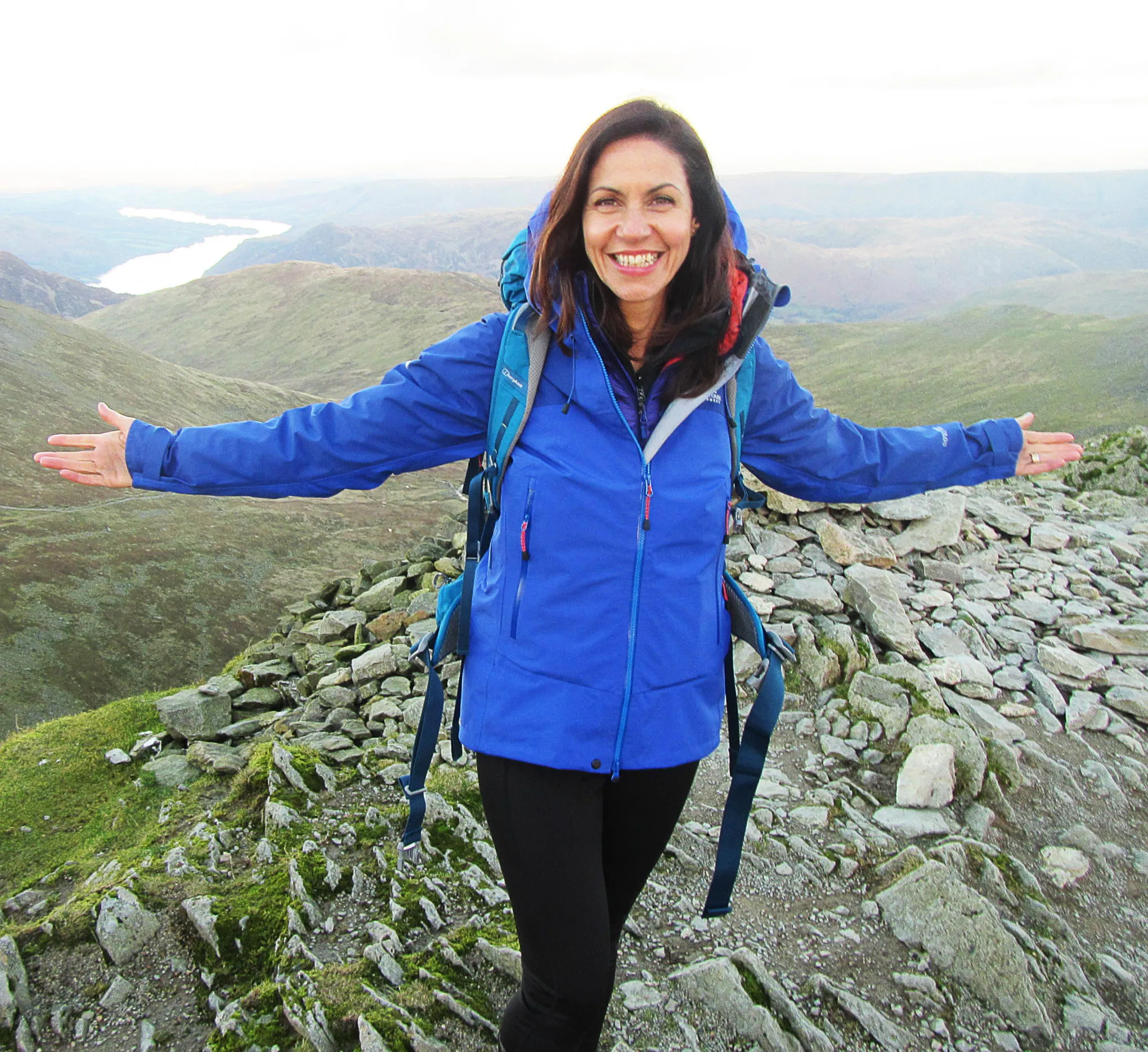 Bradbury tries to get outside as soon as possible in the morning ITV/Shutterstock
“My life is much harder now from a socialising point of view. I have to have to pre-prepare,” Bradbury says. “Yesterday I was at a wellness event but I didn’t know what the food was going to be like and it fell across the time I have my first meal of the day, so I prepared mine and took it with me and ate it on the way. It’s not the ideal, but it was my food and I knew that I had my steamed vegetables, my green tea, yoghurt and nuts. I’ve done a DNA test. I’m not very good with herbicides and pesticides and toxins, so my blueberries are either organic or washed in bicarbonate of soda, which they certainly wouldn’t have been elsewhere, even at a wellness event.”
She doesn’t eat gluten or drink alcohol because that would increase her personal cancer recurrence risk by 28 per cent. “But people think you’re weird,” she says.
Generally people “get very hot under the collar” at her lifestyle. A recent article outlining her typical weekend was widely mocked, not least for her revelation that her children “sometimes stash sweets away in their rooms, which I silently remove”. “It was as if I was going round their bedrooms and scouring for sweets. Honestly, my kids ’fess up: ‘Mum, you might want to look under there.’ The moment I was actually talking about in the article was about how they’ve got all these Jellycat cuddly toys, which I don’t let them have on the bed because they’re full of microplastics. I picked up one from the carpet and it was hiding this box of sweets. My daughter smiled. She’d already obviously eaten half of it. I didn’t berate her, I just picked it up very quietly and put it in my pocket. I didn’t do it secretly or horribly. I let my kids have pizza and ice cream and the food their friends eat. It’s just at home they eat very healthily.”
Snipers don’t deter her. “I’ve got the biggest motivator in the world for trying all these things out — I want to stay alive for as long as possible. But I don’t want everybody else to have to get into my position to be as motivated.” She understands not everyone has the money or time to do everything she does — but every little behaviour shift helps. “People don’t like to hear it, but there’s so much we can do to protect ourselves from not getting ill in the first place.”