
A new analysis has revealed that a major global cooling event about 34 million years ago did not produce a singular marine extinction event.
Instead, it unfolded as a series of staggered ecological disruptions across ocean habitats.

This finding reframes one of Earth’s major climate shifts as a prolonged reshaping of life in the sea rather than a single moment of collapse.
Reconstructing a complex timeline
Across 161 rock sections and drill cores, fossil records capture how marine species changed unevenly through time rather than disappearing all at once.
By reconstructing this global sequence, Junxuan Fan at Nanjing University (NJU) documented distinct patterns of loss and stability tied directly to where organisms lived in the ocean.
Surface and shallow-water species held steady before declining abruptly, while deeper communities followed a delayed and more gradual trajectory.
That divergence in timing shows the transition cannot be explained by a single shared cause, pointing instead to multiple overlapping environmental pressures.
Life at different depths
The main actors were foraminifera, tiny shell-building single-celled marine organisms, whose remains pile up by the billions on the seafloor.
Some floated near the surface, some lived in warm shallow bottoms, and others occupied darker mud far below.
Because light, temperature, food, and oxygen differ sharply with depth, each group faced the same cooling in a different way.
That ecological split explains why the new record looks less like one collapse and more like an extended reshuffling.
Decline before the freeze
Long before Antarctica carried major ice sheets, the late Eocene already showed marine diversity thinning over millions of years.
Surface-floating and shallow-bottom forms stayed fairly steady initially, even as the broader background trend kept sliding downward.
Meanwhile, small bottom-dwellers briefly boomed during the early Priabonian, when more food seems to have reached deeper habitats.
That early burst is one reason the study rejects the older habit of flattening this interval into a single crisis.
Arrival of frozen conditions
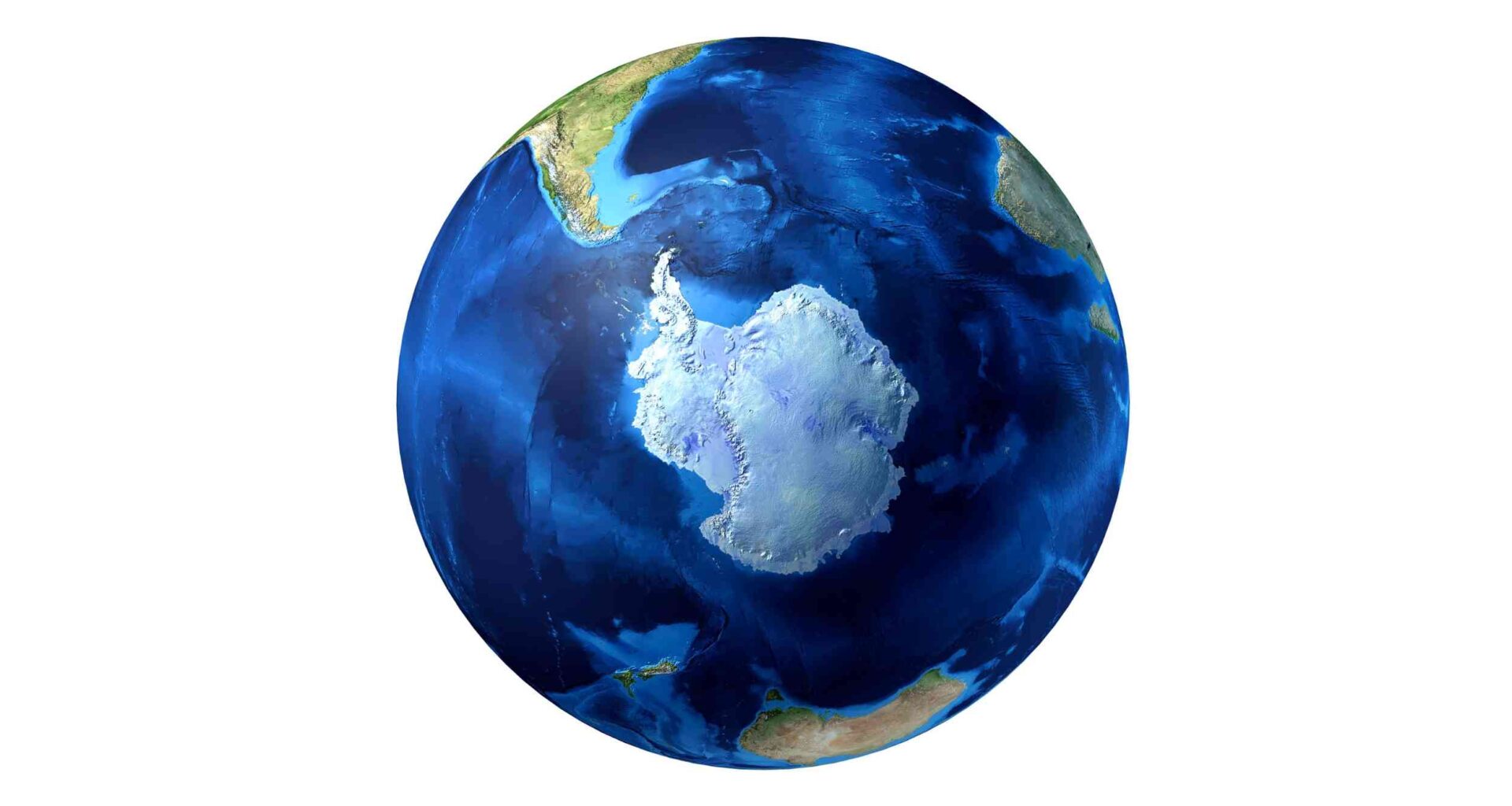
The sharpest break came when Antarctica gained its first continent-scale ice sheet near the start of the Oligocene.
Sea-surface cooling trimmed warm-water species, and falling sea level squeezed shallow habitats where many larger species lived.
A broader climate record places that turning point for Earth around 33.9 million years ago.
In the fossil curve, surface-floating and larger bottom-living forms lost species rapidly just as that colder world took hold.
Delayed collapse from below
Deep-sea communities did not crash at the same moment, and that delay is one of the record’s clearest findings.
As oceans cooled, a stronger biological pump, carbon sinking from surface waters, may have fed deeper seafloor species.
Only later did those small bottom-dwellers enter a long decline, likely as deep-water chemistry and food patterns kept changing.
That lag means the same global cooling could help one habitat for a while and still hurt it later.
Divergence of climate impact
When the team matched diversity against climate data, the groups lined up with different parts of the Earth system.
Surface and shallow-bottom species tracked sea-surface temperature and global sea level more closely than deep-sea forms did.
Small bottom-dwellers instead followed changes tied to deep-ocean temperature and carbon cycling, which fits their darker, food-limited setting.
That split turns a vague extinction story into a map of who was exposed to which stress first.
Old suspects fade
Two late Eocene asteroid impacts have long tempted scientists looking for a single trigger, but the timing does not line up.
The small bottom-dweller slide began before the big ice-sheet pulse, while surface groups showed no matching impact-time collapse.
Later volcanism in the Afar-Arabian province could have worsened deep-ocean stress, but evidence for that link stays tentative.
No lone disaster neatly explains every biological turn in time, even though several environmental changes overlapped.
Fossil clock intelligence
A new evolutionary algorithm, a search method that improves by variation and selection, made the sharper history possible.
Fan and colleagues at NJU designed the program to stitch patchy local fossil ranges into one timeline.
Using about 40,000 occurrences from 1,269 species, the program reached a timeline with steps of roughly 29,000 years.
That extra detail made the difference between one blended pattern and separate losses, pauses, and rebounds.
Rethinking extinction narratives
For decades, low-resolution summaries made the transition look like one marine extinction event followed by a simple recovery.
Chinese coverage of the study put it plainly: “not a collective extinction, but each group went its own way.”
That distinction sharpens how scientists read other deep-time crises, because different habitats can fail on very different clocks.
It also gives NJU and its collaborators a template for rechecking old extinction stories that were built from coarse bins.
Lessons from deep time
Seen at high resolution, the Eocene-Oligocene transition becomes a layered ecological event, not a single change happening everywhere at once.
That does not make today’s warming a replay, but it does show why fast global change can sort winners and losers by habitat.
The study is published in the journal Nature Communications.
—–
Like what you read? Subscribe to our newsletter for engaging articles, exclusive content, and the latest updates.
Check us out on EarthSnap, a free app brought to you by Eric Ralls and Earth.com.
—–