
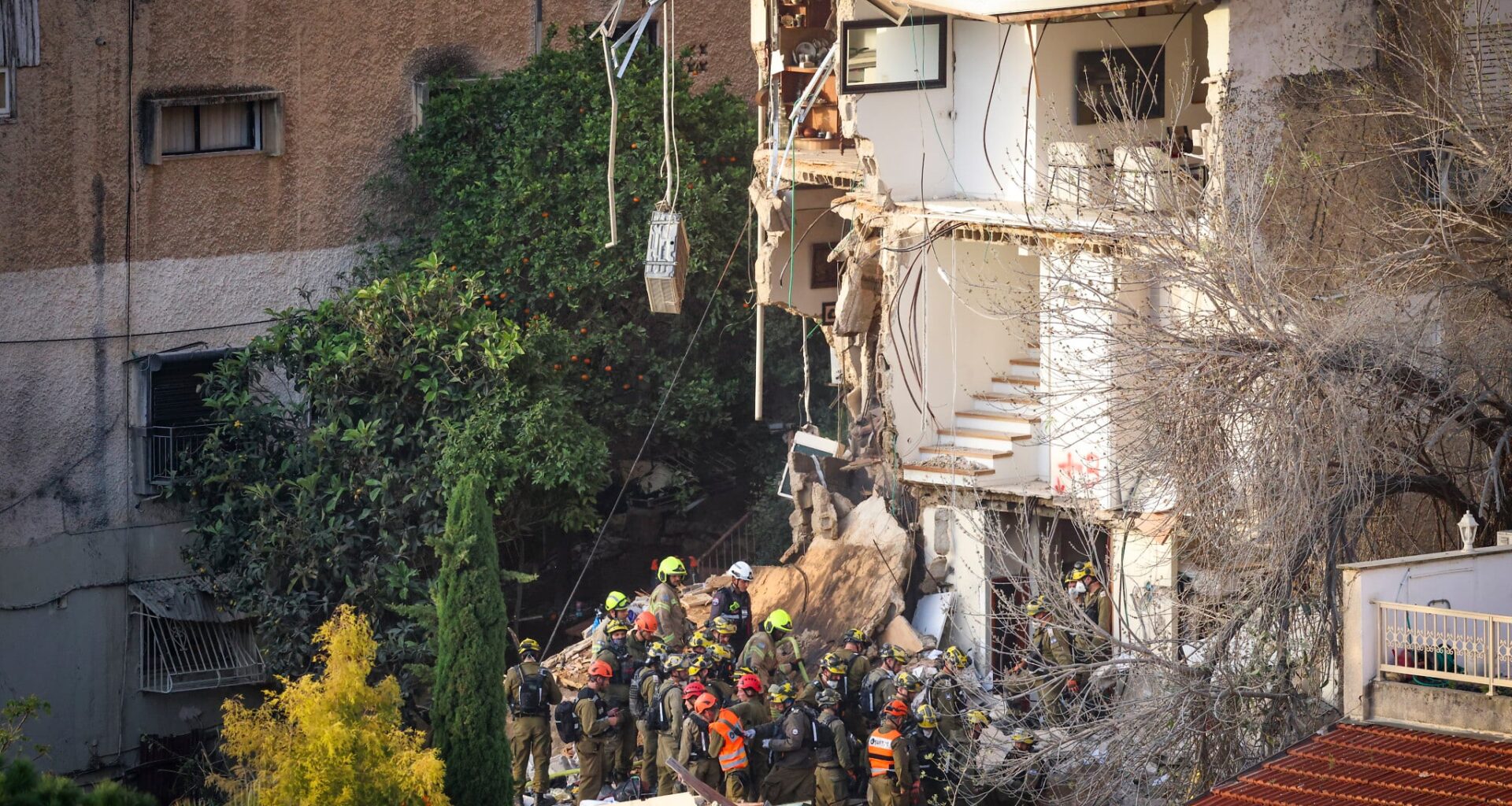
The bodies of two people were recovered from under the rubble at the site of an Iranian ballistic missile impact in Haifa, rescue services said early Monday, as a fresh barrage targeting the same area lightly wounded four people and caused additional damage.
The Fire and Rescue Service said that following hours of efforts alongside the Home Front Command, forces “rescued two trapped individuals found under the rubble without signs of life.”
“Rescue operations and attempts are still ongoing at this time in an effort to reach two additional trapped/unaccounted-for individuals,” the service said.
Four people were initially reported missing after the strike — including a child and two elderly people — first responders said late Sunday, adding that the building was at “serious” risk of collapse.
None of the dead or missing have been publicly named.
Get The Times of Israel’s Daily Edition
by email and never miss our top stories
By signing up, you agree to the terms
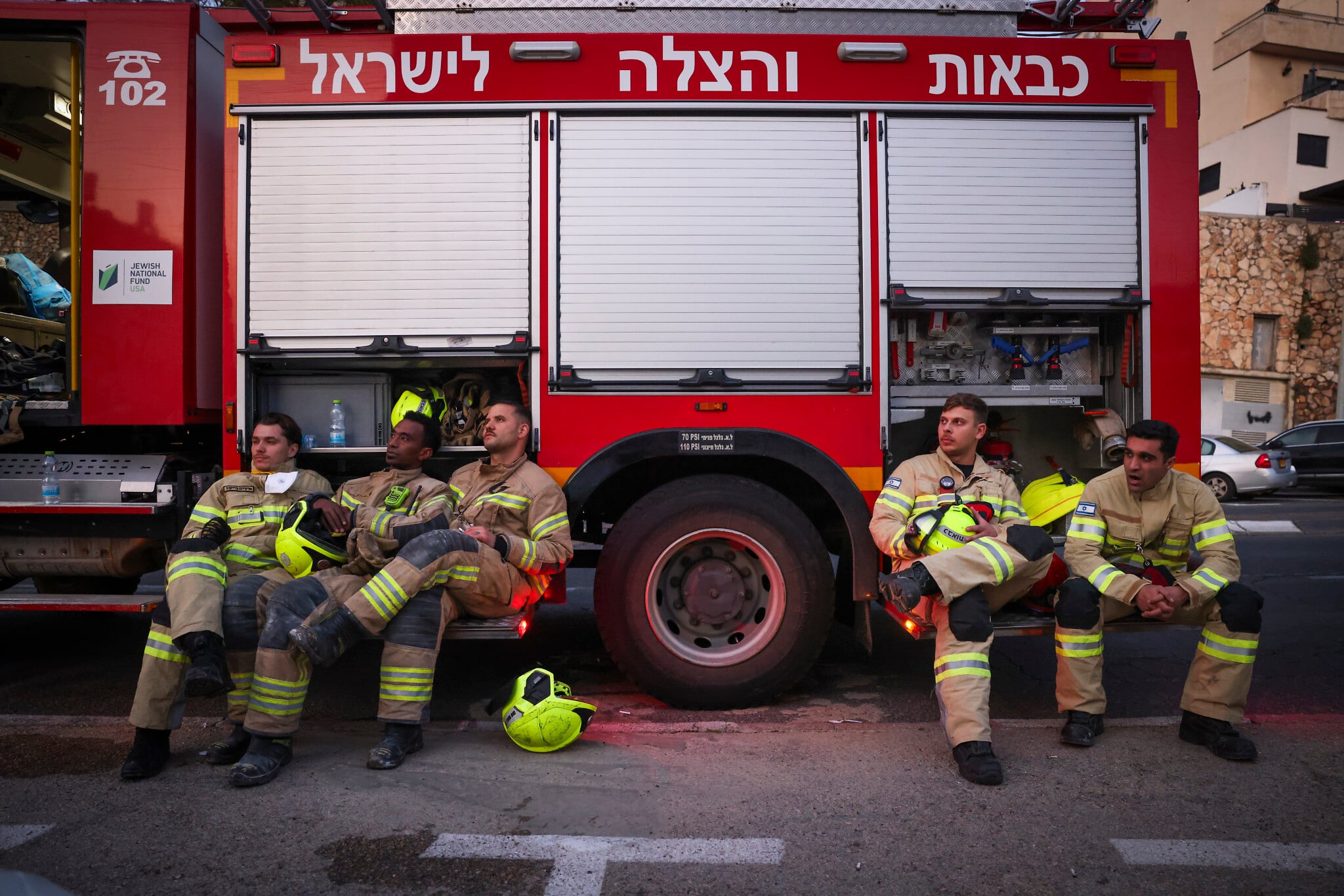
Israeli rescue forces rest at the scene where a ballistic missile fired from Iran struck a building in Haifa, on April 6, 2026. (David Cohen/Flash90)
The attack also left an 82-year-old man seriously wounded, along with a 78-year-old woman who was lightly to moderately wounded, as well as a 38-year-old woman and a 10-month-old baby lightly wounded, the latter with a head injury, according to medical officials.
A spokesperson for the Rambam Health Care Campus said Monday that the 82-year-old man had undergone surgery and was sedated and ventilated.
His wife, aged 78, was also hospitalized and in good condition, the hospital said.
According to investigations by the military and the police, the warhead from the ballistic missile — with an estimated several hundred kilograms of explosive material — did not explode upon impact.
The kinetic energy from the impact caused several floors of the residential building to collapse; however, there was no major damage to nearby homes.
Had the warhead exploded, the damage from the blast would have likely destroyed the entire building and damaged surrounding homes, rescue forces assessed.
At the scene, Israel Police Commissioner Danny Levy told reporters that the warhead, still under the rubble, was unlikely to explode. “We evacuated several buildings, so that, in the unlikely case that the missile explodes, nobody will be hurt. Our sappers are handling the matter,” he said.
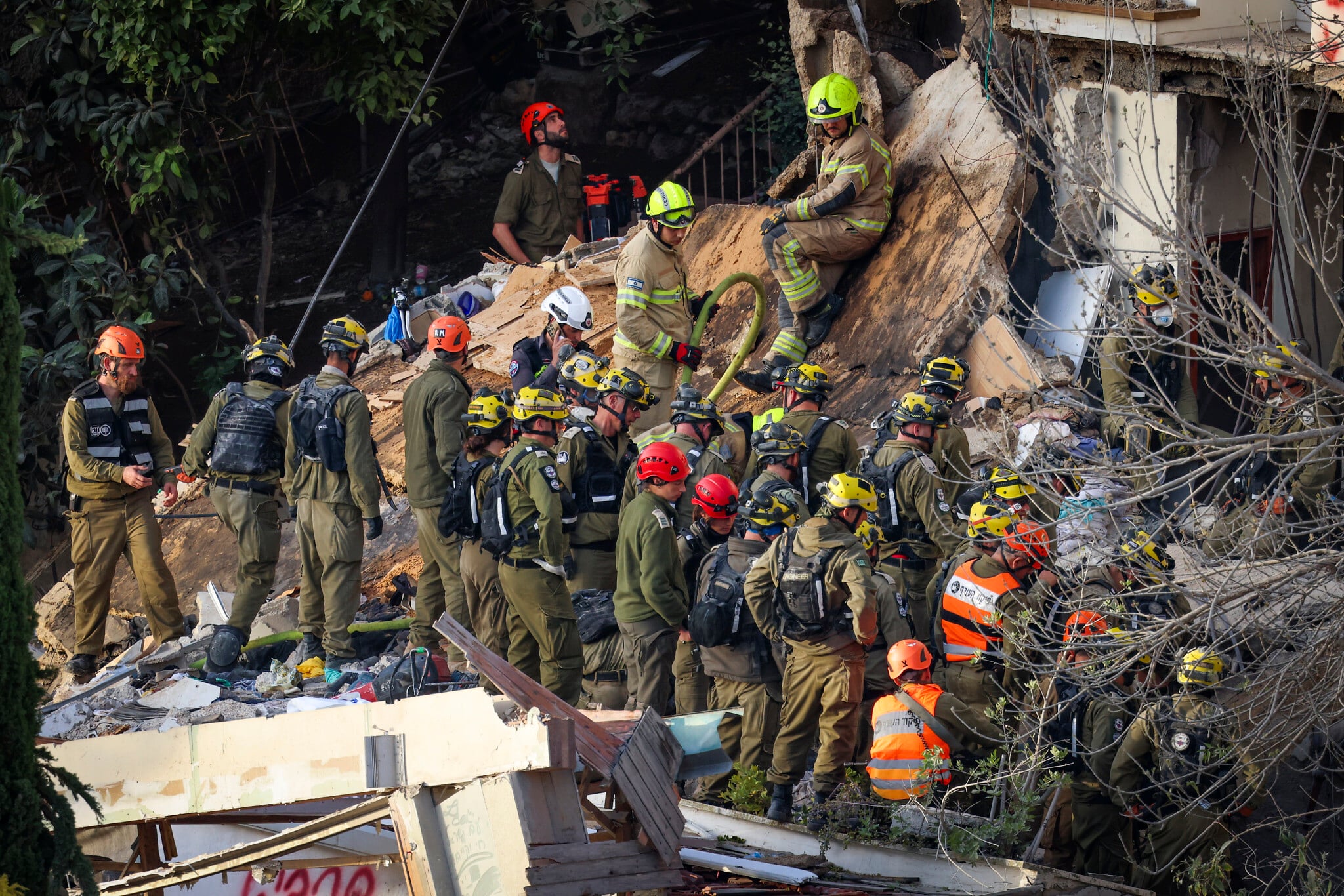
Israeli rescue forces search the scene where a ballistic missile fired from Iran struck a building in Haifa, on April 6, 2026. (David Cohen/Flash90)
Neighbors described a huge bang and a mushroom cloud followed ten minutes later by a gas explosion.
Smoke initially billowed from the ruins as emergency personnel worked carefully to remove the rubble.
As the destroyed part of the building is located on a hillside, away from the street and facing woodland, a large digger cleared trees to create access from the bottom.
Vered Ohana, a resident of Haifa, told the Ynet news site: “It was a huge boom, a crazy boom. It was clear that there was a direct hit.”
Most of the residents had sheltered in the building’s bomb shelter and were unharmed, according to rescue services.
Those missing and dead were not believed to have been in a bomb safe room at the time of the impact.
The Israeli Air Force said it was investigating the failure to shoot down the missile. Several attempts to intercept the missile were made, but air defenses failed to knock the projectile down, according to the military.
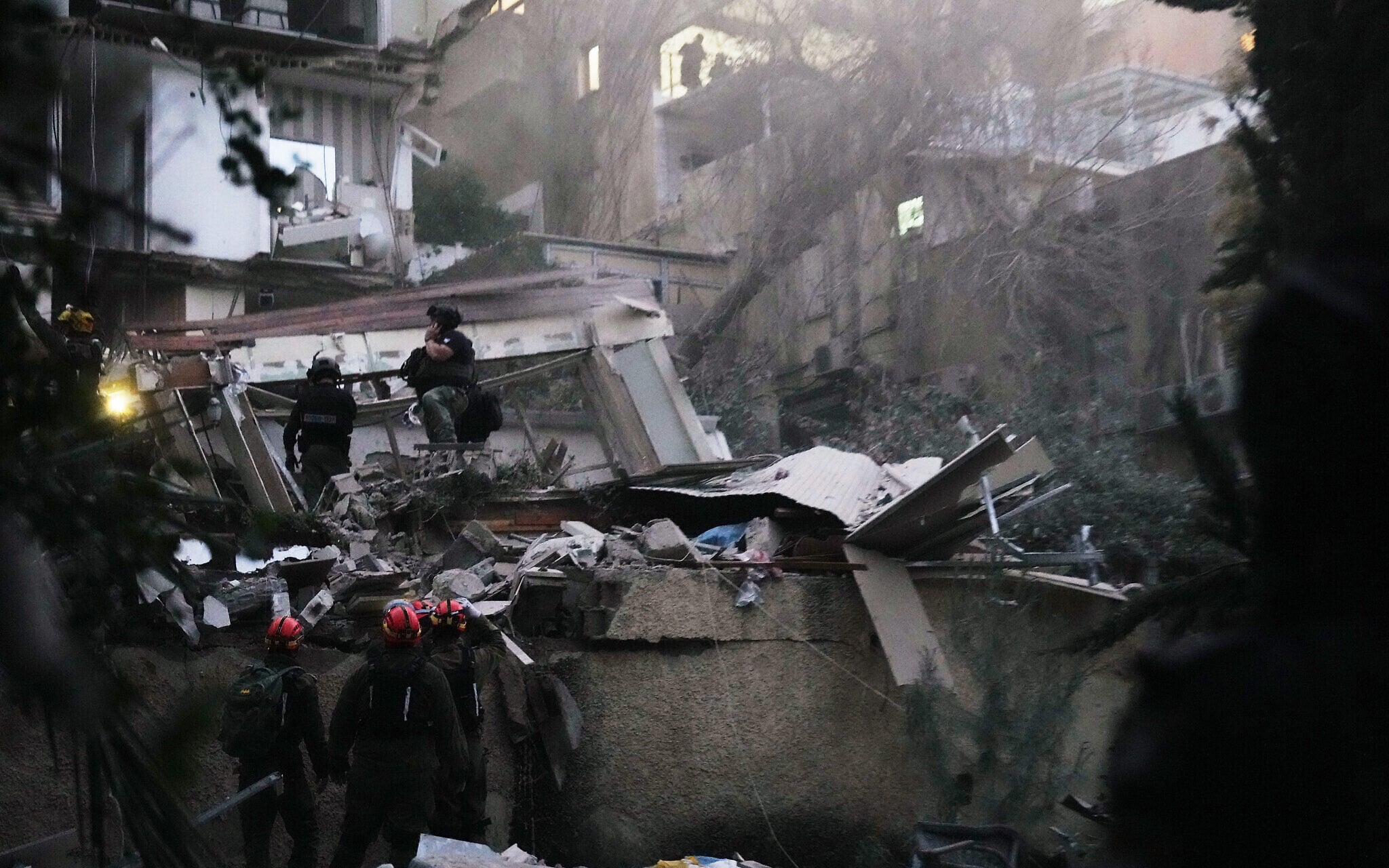
Israeli security forces and rescue teams work amid the rubble of a residential building struck by an Iranian missile in Haifa, Israel, April 5, 2026. (AP/Ariel Schalit)
Home Front Command chief Maj. Gen. Shai Klapper said at the scene overnight that the military would act with “determination, professionalism, and thoroughness” until everyone was found.
He described the scene as “complex” but noted that the army’s search and rescue units, “together with emergency organizations, have high expertise in operations of this kind.”
Klapper also noted that an early warning was issued and sirens sounded in Haifa amid the attack.
“I am aware that this campaign is ongoing and challenging. Nevertheless, adherence to the guidelines and staying in protected spaces saves lives,” he said.
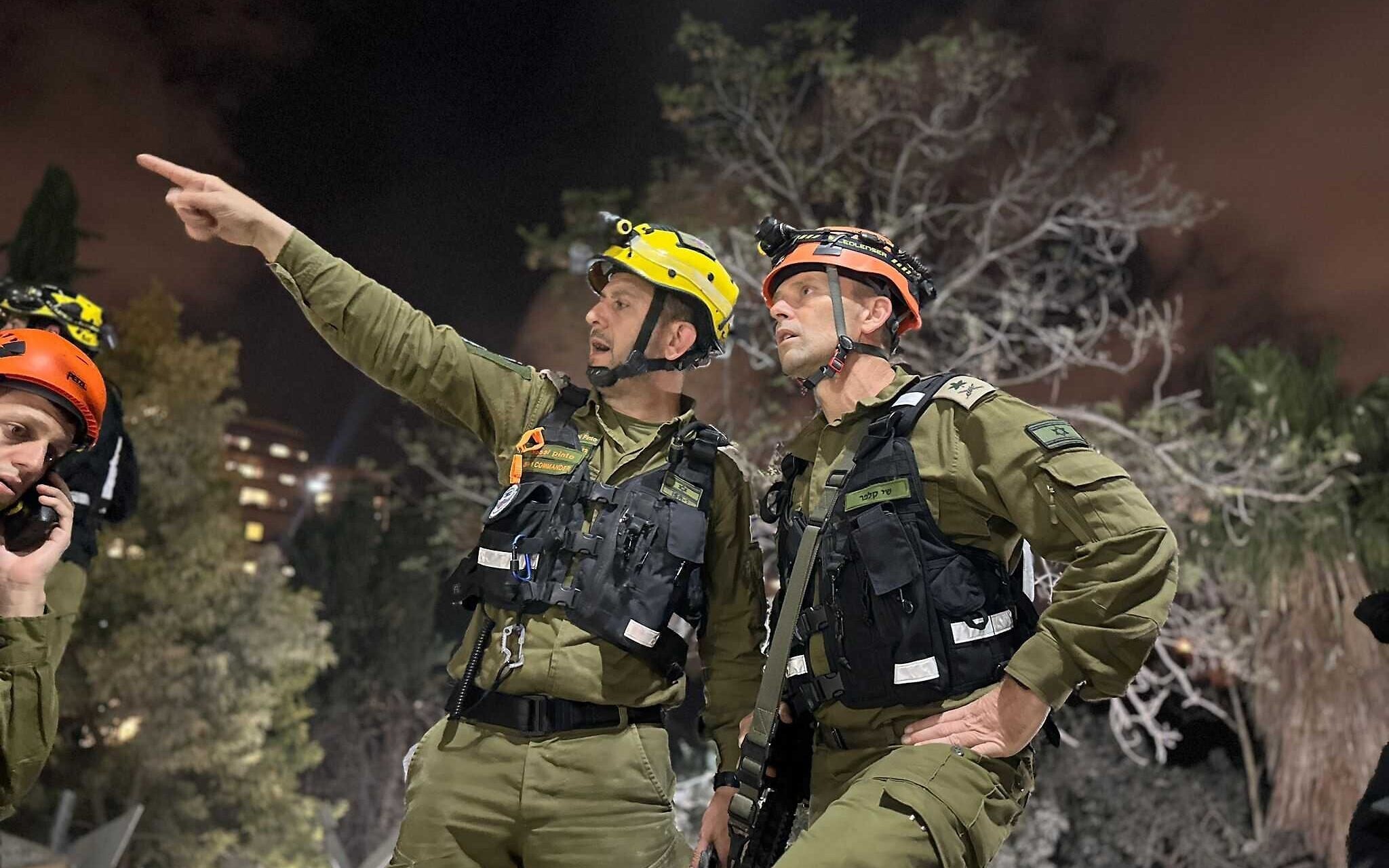
Home Front Command chief Maj. Gen. Shai Klapper (right) at the scene of an Iranian ballistic missile impact in Haifa, April 5, 2026. (Israel Defense Forces)
In the early hours of Monday morning, another ballistic missile attack from Iran targeted the Haifa area.
Unlike the deadly attack a day earlier, the missile fired Monday was assessed by the Israel Defense Forces to have carried a cluster warhead, spreading bomblets over a large area.
Four people were lightly hurt following the attack, medics said. The Magen David Adom ambulance service said it treated a couple in their 40s and two young girls who suffered smoke inhalation.
Additionally, one of the suspected bomblet impacts sparked a car fire, while another flipped over a vehicle, footage showed.
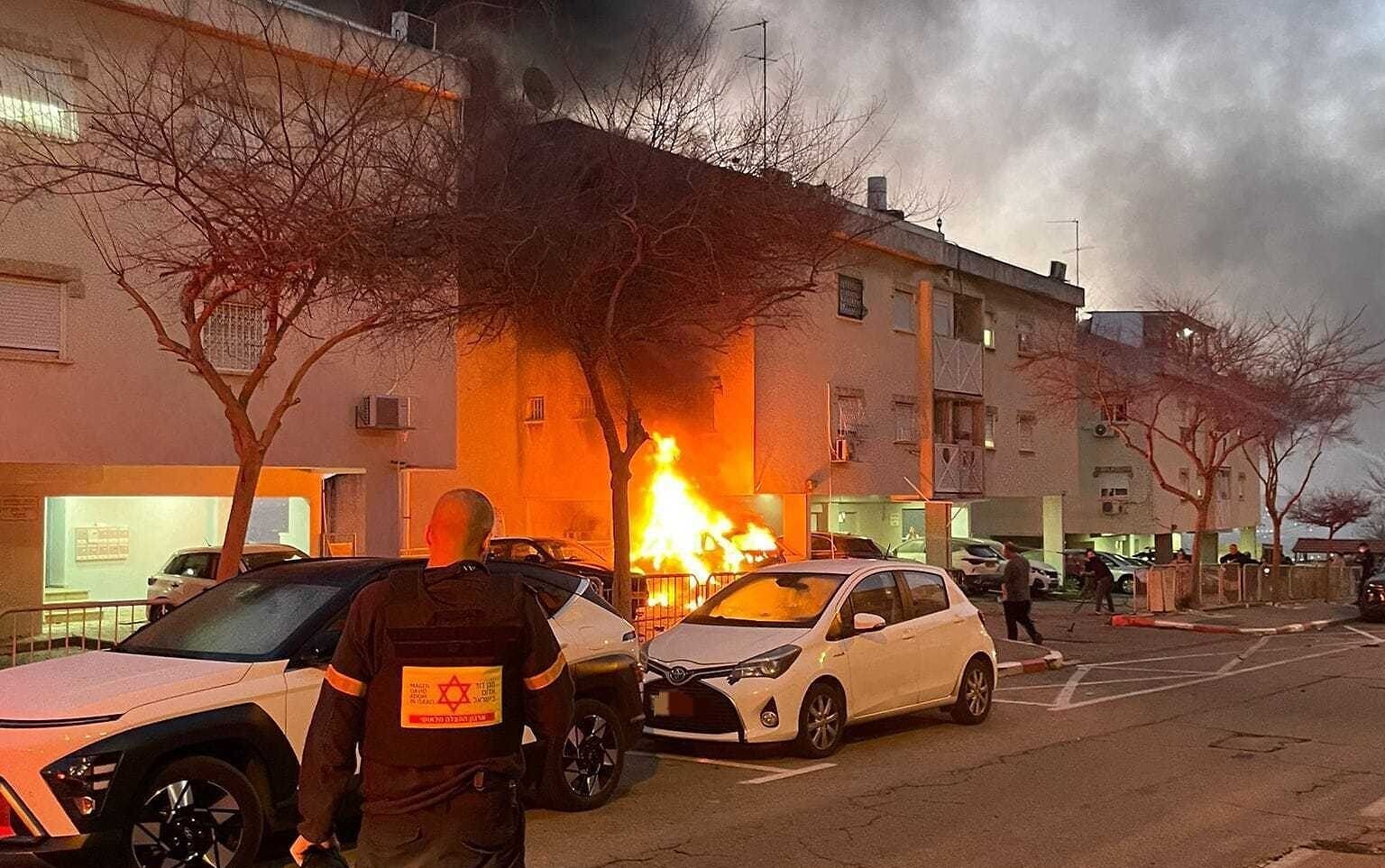
A fire burns after an Iranian cluster bomblet impact in Haifa, April 6, 2026. (Magen David Adom)
The center of the country was also targeted twice overnight, sending millions running for shelter.
A 90-year-old woman was in serious condition after she fell on her way to the bomb shelter, MDA said.
According to the IDF, the first salvo of missiles was intercepted, while the second, which contained a cluster warhead, dispersed over an open area.
More than 500 ballistic missiles have been launched from Iran at Israel since the start of the ongoing war on February 28.
In all, at least 14 missiles carrying conventional warheads with hundreds of kilograms of explosives have struck populated areas in Israel, causing extensive damage. There have also been more than 30 incidents of missiles carrying cluster bomb warheads hitting populated areas, with over 200 separate impact sites.
Since the war began on February 28, 18 Israeli civilians and foreign nationals have been killed in Israel in Iranian ballistic missile attacks, along with four Palestinians in the West Bank.
Sue Surkes, Diana Bletter and Times of Israel staff contributed to this report.
You appreciate our wartime journalism

You clearly find our careful reporting of the Iran war valuable, at a time when facts are often distorted and news coverage often lacks context.
Your support is essential to continue our work. We want to continue delivering the professional journalism you value, even as the demands on our newsroom have grown dramatically during this ongoing conflict.
So today, please consider joining our reader support group, The Times of Israel Community. For as little as $6 a month you’ll become our partners while enjoying The Times of Israel AD-FREE, as well as accessing exclusive content available only to Times of Israel Community members.
Thank you,
David Horovitz, Founding Editor of The Times of Israel