
Animal life is capable of so much more than we thought.
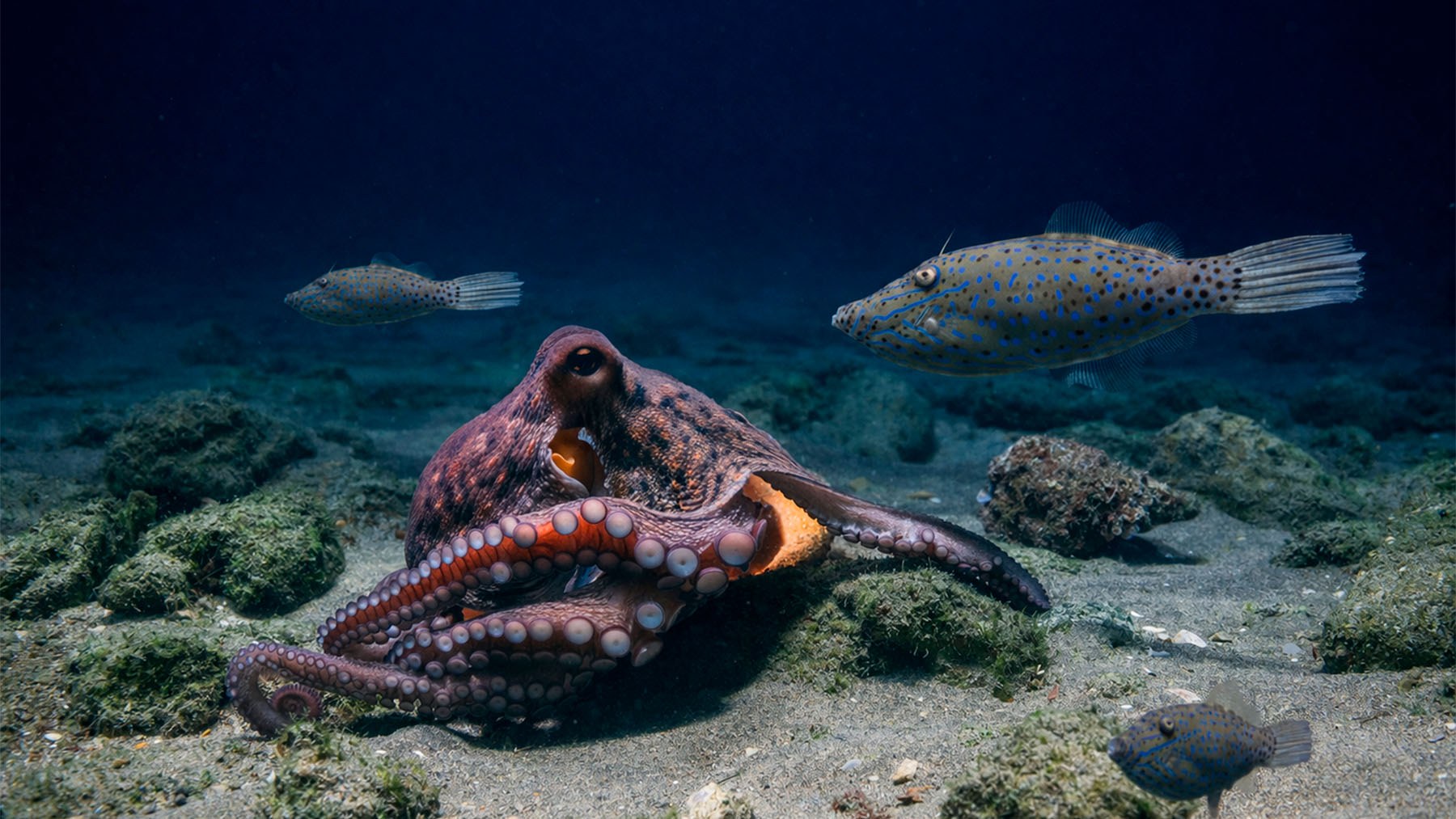
Over our collective history as a species, we have made several remarkable discoveries about the animal life that we share the world with. Such as the recent discovery that octopuses are hitting fish for no clear reason, but experts think this may be a complex social behavior.
Why are octopuses smacking their fish kinfolk in the ocean?
How science has taught us to better understand the world of life around us
Our planet is filled with mysteries that, without science, would remain hidden from the world.
In 1662, we began on the long road to enhancing our scientific capabilities when Robert Hooke first observed cells through a microscope. That began more than 200 years of scientific study based on actual, real-life observations instead of just relying on theories.
Even the building blocks of life have been identified and cataloged over time as our capacity to study the world increases.
The structure of DNA was first identified in 1869 by Friedrich Miescher. The proposal of the double helix was made by Watson and Crick in 1953, and that was the start of understanding the chemical makeup of human beings.
Life on Earth is complex and requires years, even decades, to study
We know that the planet is perfectly positioned from the Sun for life to boil into a pot of existence that can not be found anywhere else in the universe, at least not anywhere we have identified in the observable universe.
And we are making game-changing discoveries at an astonishing rate in recent decades.
Such as the discovery that traces of DNA have been found in water samples. Although the catalog of information of these water-based DNA samples has not had the time to be filled yet.
The region of our planet that is closest to what we may call “alien life” is, without a doubt, the ocean.
We know more about space than we do the very essence and origin point of life on our planet. However, this is slowly changing as experts spend an inordinate amount of time studying life in our oceans.
By doing so, researchers have recently found an ancient living fossil that remained hidden from the surface world for a decade.
A recent publication in Ecology has detailed some odd behavior in octopuses deep within the oceans of the world. How will this strange and quite aggressive behavior be explained?
Octopuses are displaying complex social “punishment” in the ocean
Octopuses certainly are odd, “alien-like” creatures that baffle the mind.
We know that they have several hearts that serve specific purposes, like pumping blood to different parts of their bodies. But we never knew that they exhibit behavior that shows they are capable of much more than we ever thought. We know that some animals mimic human behavior, but this is a stretch.
Octopuses are one of a few creatures that take part in what is known as cooperative hunting.
That is the process that sees different species hunting together at the same time for the same prey on a “team,” if you will. Octopi regularly pair up with fish to hunt together and increase their chances of finding food.
Ocean life has been stunning us as humans for generations, such as blue blobs that washed up in California that turned out to be living creatures.
What the study in Ecology has found is that octopuses regularly hit their hunting fish partners, most likely doing so to assert their dominance and keep the fishies in check. Remember who the boss is in this relationship.
So even octopuses display dominant behavior, much like we do as humans. How will this affect future studies in the ocean?