
Reputational risk
According to the Stockholm International Peace Research Institute, SIPRI, which tracks the global trade in arms, Elbit Systems is Israel’s No. 1 defence contractor, operating in fields including aerospace, land and naval command and control, communications, and intelligence, surveillance and reconnaissance systems.
In March, The Jerusalem Post reported that Elbit Systems is now the biggest Israeli firm by market value listed on the Tel Aviv Stock Exchange. It has a string of major contracts with the Israeli state and has already done business with Serbia.
Genocide accusations – and denial
In September last year, the UN Independent International Commission of Inquiry on the Occupied Palestinian Territory declared that Israel is committing genocide in Gaza, citing tens of thousands of civilian deaths and mass destruction.
“When clear signs and evidence of genocide emerge, the absence of action to stop it amounts to complicity,” said the head of the commission, Navi Pillay.
Previously, in January 2024, the International Court of Justice, the UN’s highest court, ordered Israel to prevent its forces from committing or inciting genocidal acts against Palestinians, in response to a genocide case brought by South Africa against Israel. A final ruling on whether Israel has committed genocide in Gaza could take years. Israel has denied doing so.
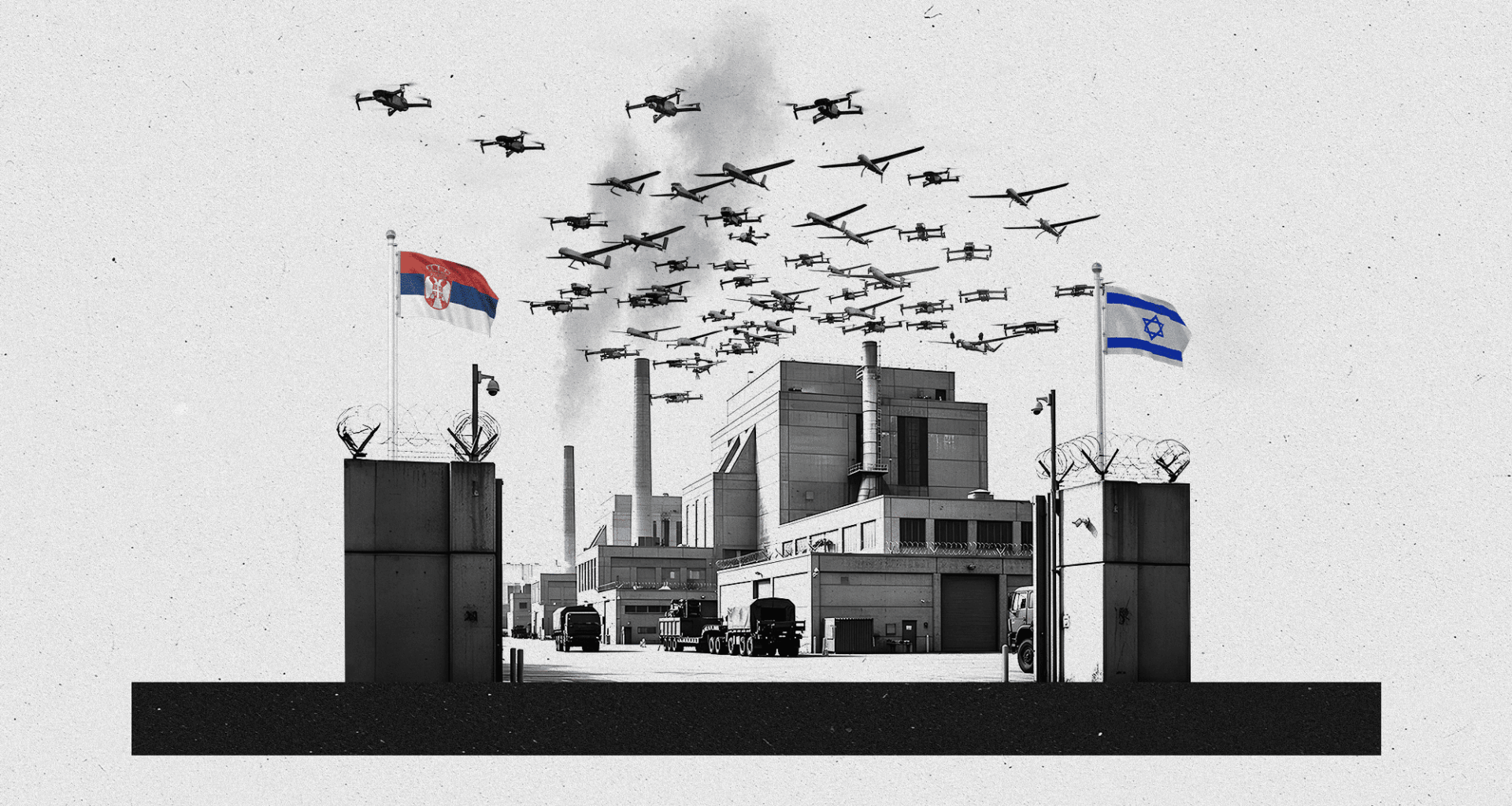
Early last year, Elbit Systems sold Serbia advanced artillery systems and drones worth $335 million. In August, another deal valued at $1.6 billion was signed for the delivery of drones, long-range missiles, electronic warfare systems, and other military equipment to Belgrade. The same month, BIRN reported that the Belgrade-based company Edepro – which describes itself as a “regional leader in propulsion system solutions” for rockets, drones, and missiles – had exported goods to IMI Systems, which is owned by Elbit Systems since 2018.
Its role in Gaza has given other state pause. Citing an official document, Agence France-Presse, AFP, reported in September last year that Spain had cancelled a contract worth some 700 million euros for the purchase of Elbit’s multiple rocket launcher system after the government announced a ban on military equipment sales or purchases with Israel over its Gaza offensive.
Last month, a group calling itself The Earthquake Faction claimed responsibility for a fire at a factory belonging to Czech LPP Holding, which has announced in 2023 that it would partner with Elbit in developing drones. The group said its aim was to disrupt Israeli operations in Gaza.
Such setbacks have not stopped Elbit Systems from posting revenues last year of $7.9 billion, 16.3 per cent up on 2024, boosted further by the US-Israeli attack on Iran.
Visiting in Serbia in March, Albanese described the Balkan country as “one of Israel’s strongest and most determined allies, without any shame”. In response, Serbia’s foreign ministry called her remarks “inappropriate”.
Issues even before Gaza war
In 2009, Norway’s government announced it had excluded Elbit Systems from investment by Government Pension Fund based on a recommendation by the Fund’s Council on Ethics over Elbit’s supplying of surveillance systems for a separation barrier in the West Bank. “We do not wish to fund companies that so directly contribute to violations of international humanitarian law,” said Kristin Halvorsen, Norway’s then finance minister.
In January 2010, Danske Bank added Elbit to a list of companies that it said failed its Socially Responsible Investment policy; two months later, a Swedish pension fund also boycotted the firm for its involvement in the construction of the West Bank barrier, which a 2004 advisory opinion from the International Court of Justice said contravened international law.
In 2014, one of Denmark’s largest pension fund administrators, PKA Ltd, announced it would no longer consider investing in Elbit, citing the same reasons.
And in 2018, British bank HSBC divested from Elbit following the Israeli firm’s acquisition of IMI Systems. HSBC cited IMI’s production of cluster bombs.