
Live updates: Follow the latest news on the Iran war
The ongoing Iran war risks slowing global economic growth as soaring energy prices continue to stoke inflationary fears.
Iran’s blockade of the Strait of Hormuz and the rising number of attacks on Gulf energy infrastructure are also likely to lead to higher prices and affect economic growth in the region, according to analysts. The declaration of force majeure by several regional energy companies will also have long-lasting effects.
Iran has hit several oil and gas and petrochemical facilities across the Gulf since the war broke out on February 28, in retaliatory strikes for attacks by the US and Israel.
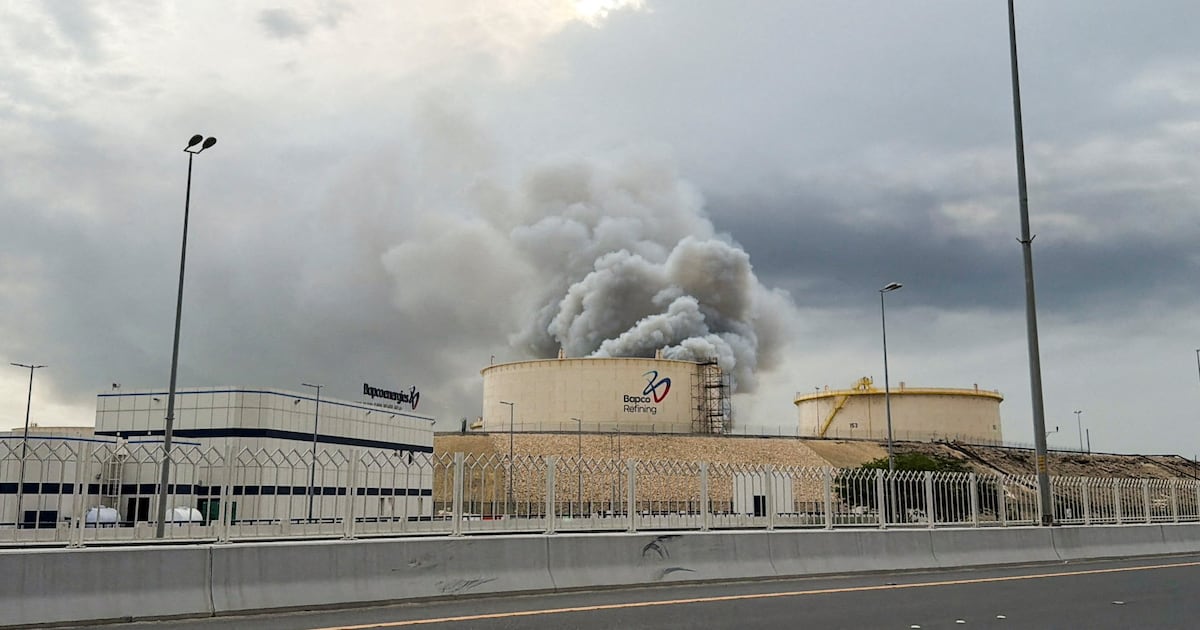
Facilities recently attacked include Kuwait’s Shuwaikh oil sector complex, which houses the oil ministry and Kuwait Petroleum Corporation headquarters, two power and water desalination plants in the country, a fuel storage facility run by Bahrain’s Bapco Energies, and the Borouge plant and Adnoc’s Hashan gas plant in the UAE.
Many of them have reported significant damage, with assessments still underway.
“Hits to infrastructure will have more permanent effects on prices, the ability to recover energy supply and overall economic recovery; it is more likely to result in stagflation,” said Nasser Saidi, president of Nasser Saidi and Associates and former economy minister of Lebanon.
Stagflation refers to an economy facing a combination of slowing growth, rising unemployment and high prices (inflation).
When infrastructure is damaged or destroyed, it leads to reconstruction costs as well as the need to develop alternative lower war risk infrastructure such as new pipelines and transport routes. This in turn implies higher deficits and use of fiscal buffers, Mr Saidi said.
“Destruction of energy and related infrastructure (pipelines, ports, etc) implies a larger fiscal effect: lower revenue, higher deficit and build-up of debt, since capacity has been impaired or destroyed,” he said.
Play
Iranian drone attack triggers fire at Bahrain Bapco facility
In Qatar, Iranian attacks on the Ras Laffan Industrial City last month cut 17 per cent of the country’s export capacity and are estimated to cause a loss of $20 billion in annual revenue, according to operator QatarEnergy. The repair to the damaged liquefied natural gas production plant will take three to five years, it said.
Last week, the International Monetary Fund said that the war will have a “global, yet asymmetric” impact.
“Although the war could shape the global economy in different ways, all roads lead to higher prices and slower growth,” the fund said in a blog post.
Supply choke-point
Along with the damage to the infrastructure, the effective closure of the Strait of Hormuz by Iran since the war began has led to supply disruptions and a sharp spike in the price of oil. The waterway, through which 20 per cent of the world’s oil and gas, as well as other products such as fertilisers normally pass through, has rattled traders and investors.
Brent prices are up about 49 per cent since the start of the war, having reached nearly $120 per barrel last month before easing back to around $110. The supply chain disruption, along with soaring energy prices, has led to concerns of inflation globally.
“The longer the strait remains inaccessible, the greater the impact on prices, supply chains, and the regional and global economy, given the critical role of energy in all activities,” Mr Saidi said. “This will feed into producer and consumer prices, resulting in macro-effects as economies and governments adjust.”
That could mean increased working from home and e-learning, shorter work weeks, reduced travel and a hit to transport and logistics, among other things.
The hit to power and desalination plants could also lead to socio-economic and environmental effects, particularly in Gulf countries such as Bahrain, Qatar and Kuwait, Mr Saidi said.
Play
Gulf states seek UN mandate for force to protect Hormuz
“This can become existential and depends on the degree of dependence on desalinated water for consumption and production.”
Fiscal impact
Given the high reliance on hydrocarbons in the Gulf, the recent reduction in production and the damage to energy infrastructure are expected to bring about a contraction of the oil and gas sectors, ratings company Morningstar DBRS said in a recent note.
“In our view, this drag on the economy could potentially lead to a recession in some cases, especially if the full resumption of hydrocarbon activity is further delayed and the non-oil sectors underperform,” it said.
The continuing disruption will also lead to a deterioration in fiscal and external balances, with infrastructure damage in particular translating into medium-term loss of oil and gas revenue.
“The impact on the oil and gas sectors will vary among the GCC economies and the recovery will depend on how quickly both hydrocarbon production and transit through the Strait of Hormuz normalise,” the report added.
The “robust performance” of the region’s non-hydrocarbon sectors has supported economic growth in recent years, said Adriana Alvarado, senior vice president in the Global Sovereign Ratings Group.
“But with some of these sectors weakening during the current conflict, economic growth in some Gulf economies is unlikely to receive a much-needed boost from the non-oil sectors.”
Mr Saidi said the economic and financial impact will depend on the reaction and effects on the private sector and how quickly confidence can be re-established.
“The latter will depend on how proactive governments (via fiscal, subsidies, industrial policies) and central banks (through monetary policies) are to counter the negative effects of damage to infrastructure,” he said.
The UAE Central Bank last month announced a resilience package for banks, followed by similar moves from the Central Bank of Kuwait and the Qatar Central Bank at the end of March.
“Although fiscal revenues are falling in most of the Gulf states, we expect their governments to support their economies,” Ms Alvarado said. “State involvement in the Gulf economies is already large, and most of the Gulf states have plenty of fiscal room to deal with shocks.”
For the Gulf states, an important stabilising role can be played by state-owned enterprises and government-related entities, given that they dominate sectors such as power, water and transport, as well as by sovereign wealth funds, according to Mr Saidi. “We need a strategy reset,” he added.