
A study by Snap Inc. and Kantar highlights the growing role of augmented reality (AR) in addressing ad fatigue among Gen Z audiences in India.
Titled State of AR in India, the report finds that 92% of Indian consumers believe AR will influence how they shop, learn, and interact online. The format is emerging as a key tool for brands seeking higher engagement in a cluttered digital environment.
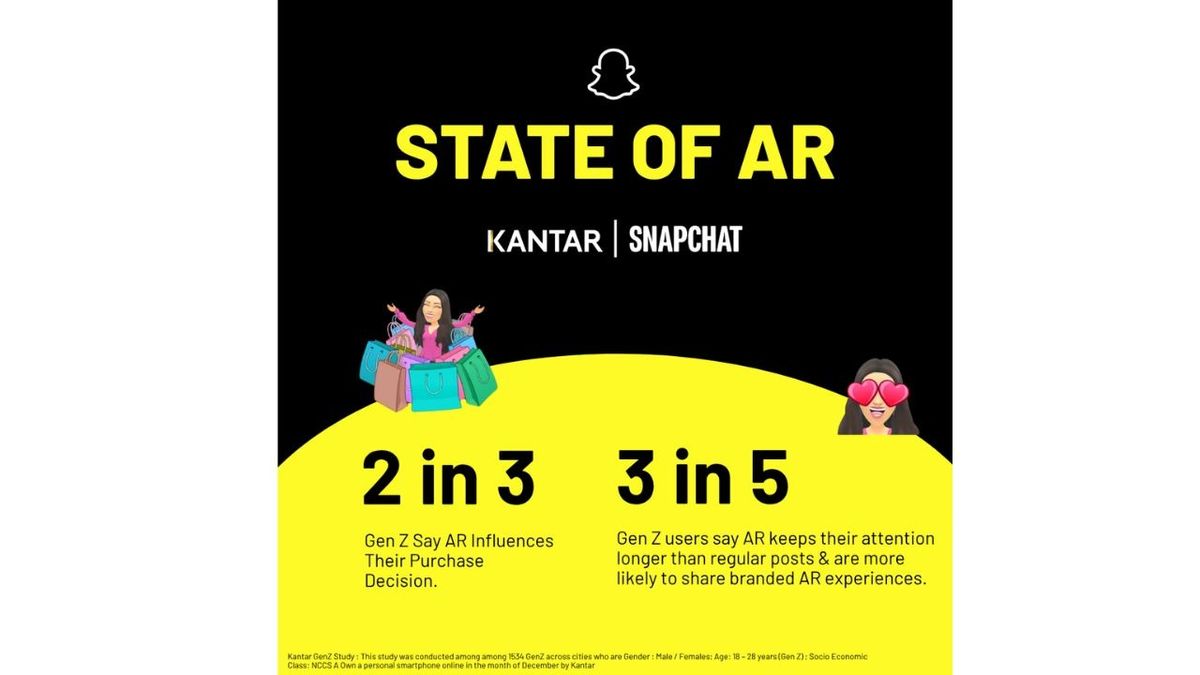
The study indicates that AR formats, particularly lenses, generate higher levels of active attention compared to traditional ad formats. Among Gen Z users, 3 in 5 respondents said AR holds their attention longer than standard posts.
Beyond engagement, AR is also influencing purchase behaviour. The report notes that 2 in 3 Gen Z users say AR helps them better understand products and informs their decision to try or buy.
Soumya Mohanty, managing director & chief client officer, South Asia, Insights Division, Kantar, said: “The data shows that AR is reshaping consumer decision-making in measurable ways. It enhances understanding, builds believability, and increases intent, three critical drivers of conversion. For marketers, this represents a significant opportunity to rethink how immersive formats can drive effectiveness across the purchase journey, not just awareness.”
Adding on, Neha Jolly Sawhney, head of Ad Revenue, India, Snap Inc., said: India is one of the most dynamic AR markets globally, and what we’re seeing is that AR is moving beyond experimentation and starting to drive real results. When two in three Gen Z consumers say AR helps them decide whether to buy, it signals that immersive experiences are no longer upper-funnel engagement tools; they are influencing real business outcomes. As a camera-first platform, we are excited to continue building AR innovation that enables brands to move from attention to action.
The report also points to AR’s role in content creation. A majority of Gen Z users prefer interactive AR formats over static posts, with many saying it makes content more engaging, shareable, and reflective of personal identity.
The findings suggest that AR is evolving beyond a novelty feature into a format that combines media, creativity, and commerce, particularly for younger audiences.