
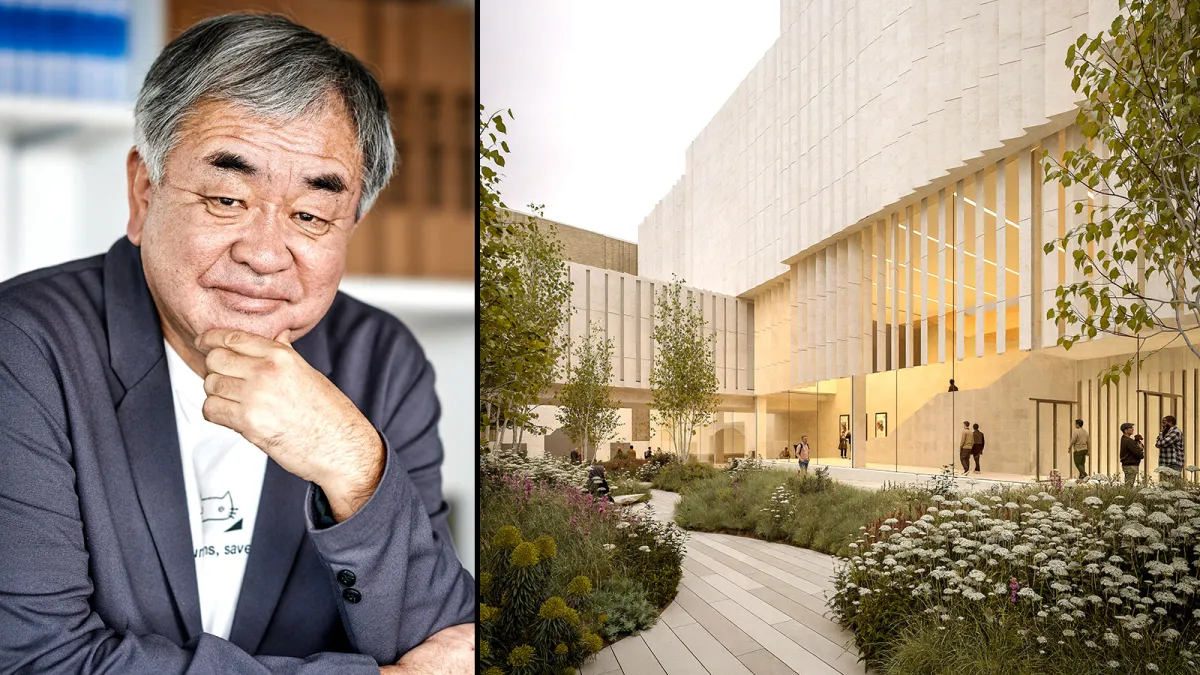
The largest and most significant transformation of the National Gallery since its creation 200 years ago will be designed by a leading Japanese architect.
A new wing, the proposed venue for the organisation’s expansion into art from the 20th and 21st centuries, will be designed by Kengo Kuma.
The gallery previously had a tacit understanding with the Tate that it would restrict itself to showing artworks in the western tradition from before 1900, leaving the contemporary field open to its fellow national museum. However, the new wing marks the tearing up of that agreement.
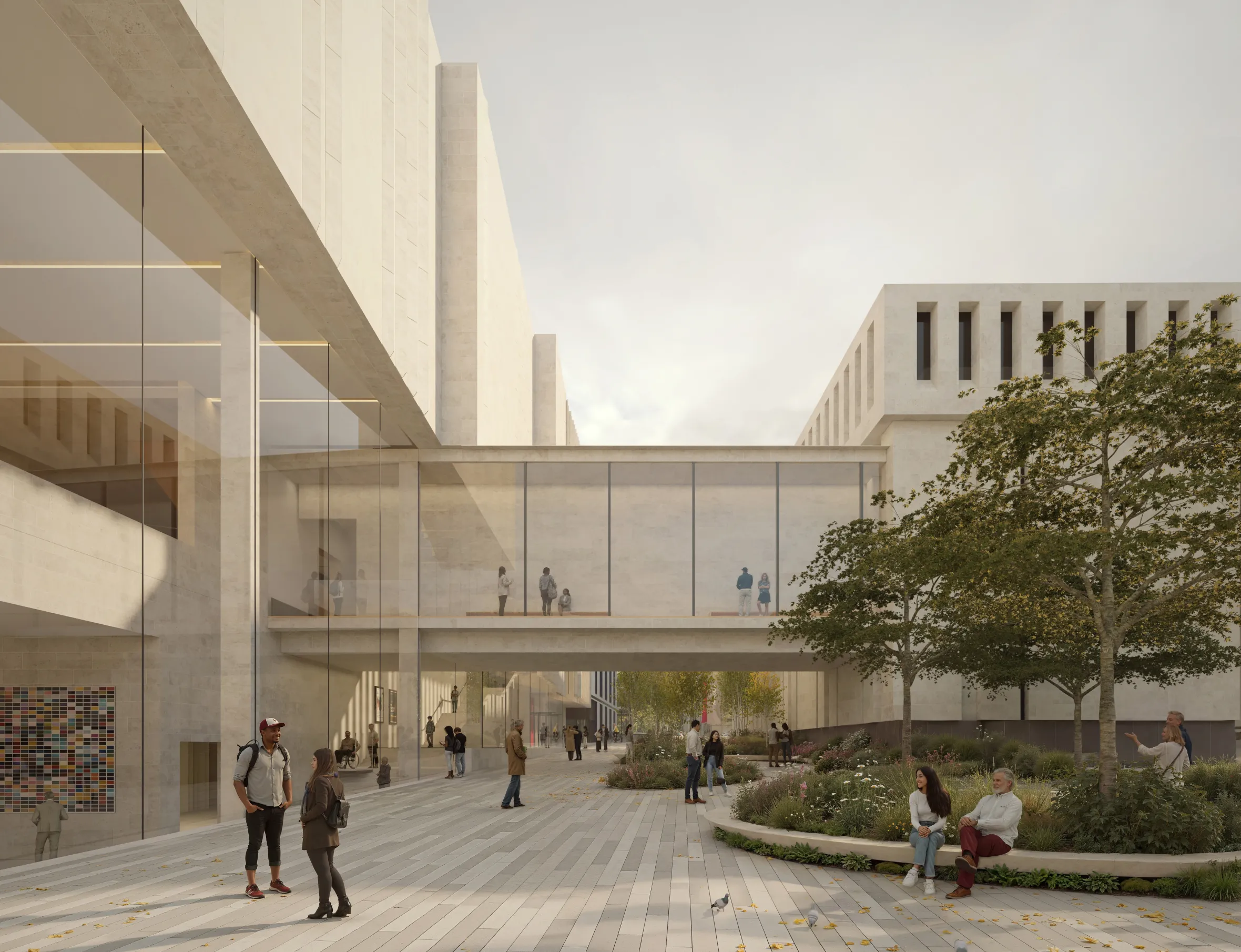 The bridge connecting the old and new wings. Below, the new rooftop terraceKin Creatives
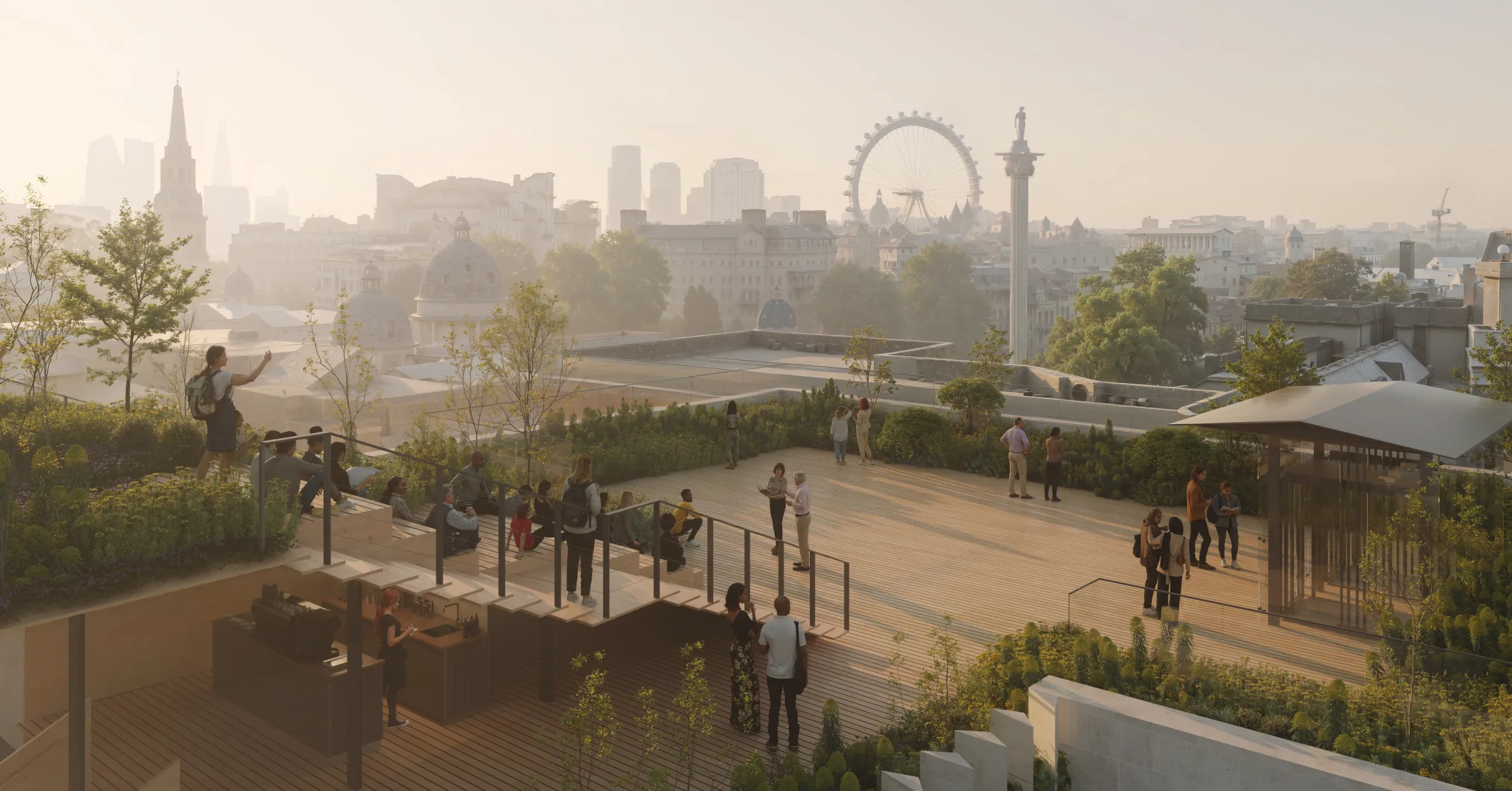 Kin Creatives
The gallery said this would make it the only museum in the world “which exclusively displays paintings, where visitors will be able to view the entire history of painting in the western tradition”. The development has drawn the two largest cash donations ever made to a museum or gallery anywhere in the world.
John Booth, the National Gallery’s chair of trustees, said Kuma had created a “beautiful design inside and out” that was sensitive to the grade 1 exteriors and gallery spaces.
He said the new building would also help “unite two of London’s most important outdoor spaces — Leicester and Trafalgar Squares — by creating enticing new public realm between them”.
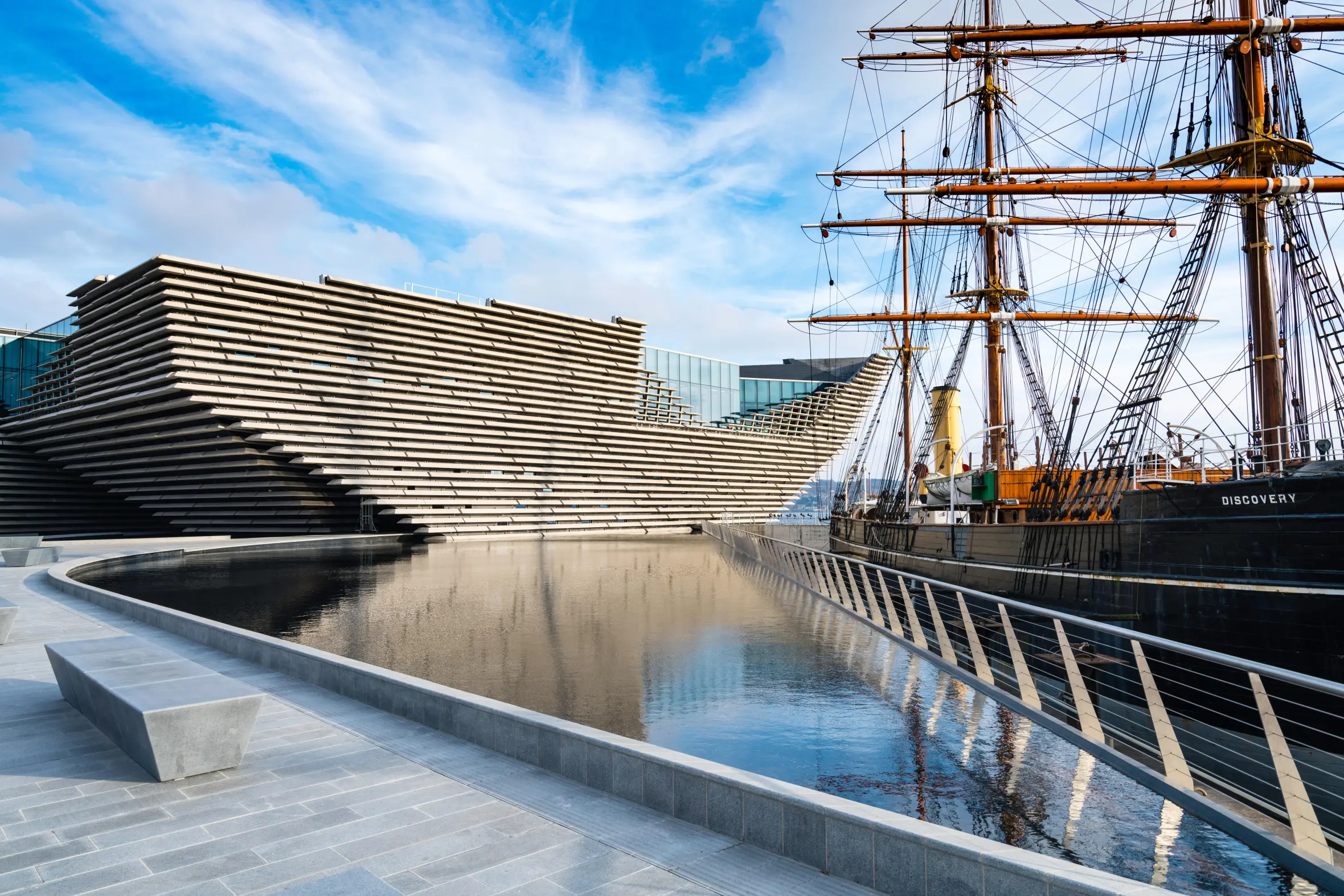
Kuma, 71, who designed Tokyo’s Olympic stadium and V&A Dundee, which opened in 2018, saw off a star-studded shortlist, including the practices led by Lord Foster of Thames Bank, Renzo Piano, Farshid Moussavi and Annabelle Selldorf.
 Kuma also designed V&A Dundee, belowSHOKO TAKAYASU/BLOOMBERG/GETTY IMAGES
 Alamy
Alamy
He was the subject of controversy this month when his design for a new porch for a 1,000-year-old cathedral in western France was described by critics as a “wart”. The €5.5 million construction will open on Thursday.
The new wing, to be built on a site bought by the gallery 30 years ago and which houses a hotel and an office complex, is part of a £750 million campaign that the organisation says will “redefine” it for the next century.
Two £150 million donations have been promised by Crankstart, the charitable foundation of Michael Moritz, and the Julia Rausing Trust. Booth and other anonymous donors have committed a further £75 million.
The £750 million fund will also be used to buy post-1900 works of art for the gallery and to provide an endowment fund.
However, the gallery faces an £8.2 million deficit which will lead to job losses and could result in fewer exhibitions, higher ticket prices and reduced international borrowing of art works.
The gallery’s previous architectural redevelopments have caused controversy. Its original choice in 1982 for what is now known as the Sainsbury Wing was scrapped after Charles, then the Prince of Wales, denounced it as “a monstrous carbuncle on the face of a much loved and elegant friend”.
The practice of Robert Venturi and Denise Scott Brown was then chosen. Their design was praised although it has been subject to a significant redevelopment in recent years. It emerged during this work — which involved the removal of a pair of columns in the gallery foyer — that the man who gave his name to the extension, Lord Sainsbury, had not been entirely in favour.
A note from Sainsbury dated July 26, 1990 had been hidden in one of the columns saying: “If you have found this note you must be engaged in demolishing one of the false columns that have been placed in the foyer of the Sainsbury Wing of the National Gallery.
“I believe that the false columns are a mistake of the architect and that we would live to regret our accepting this detail of his design,” Sainsbury said. “Let it be known that one of the donors of this building is absolutely delighted that your generation has decided to dispense with the unnecessary columns.”
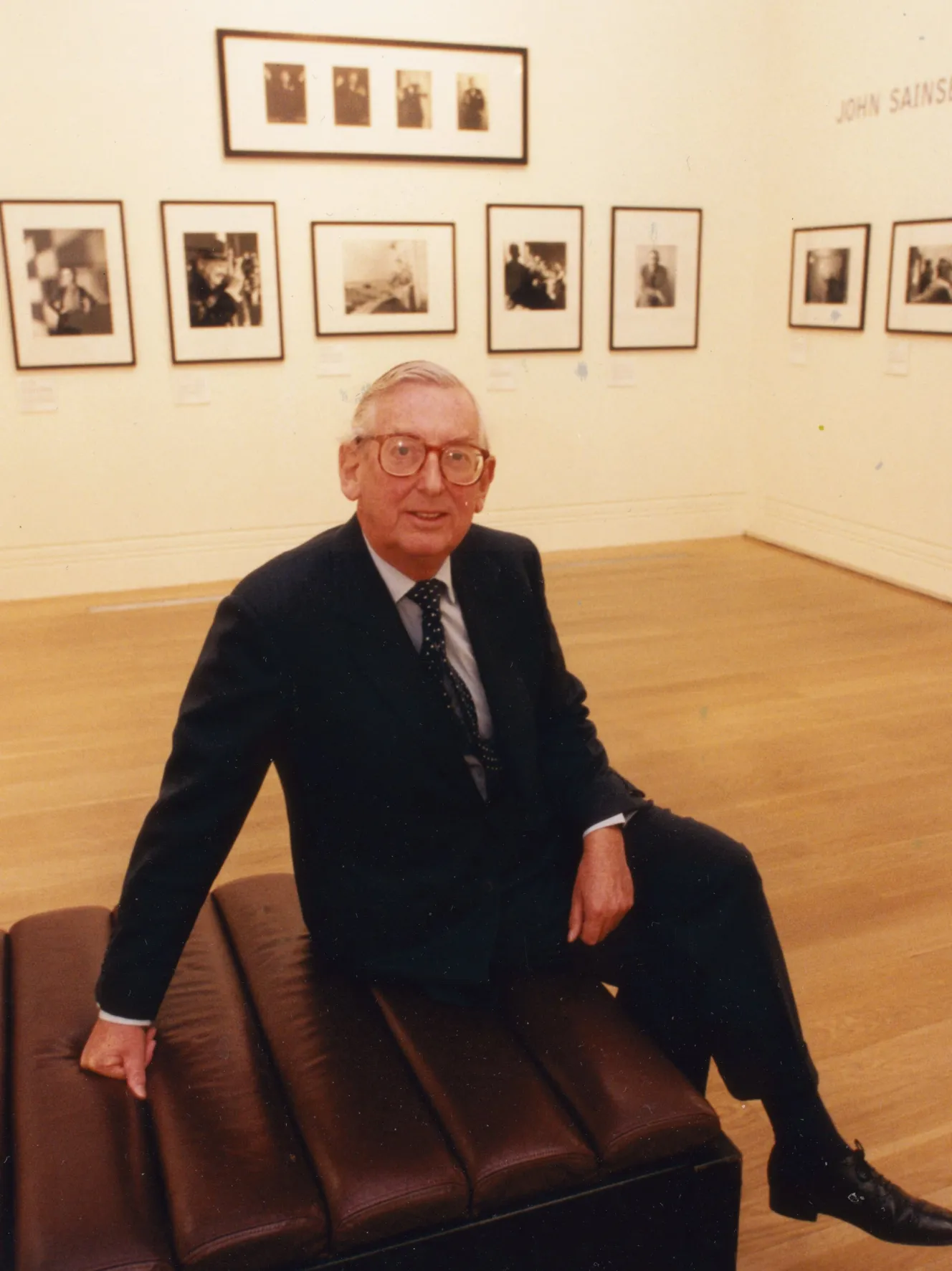 Lord Sainsbury in 1999. He did not approve of the redesign of the wing that bore his namePETER NICHOLLS FOR THE TIMES
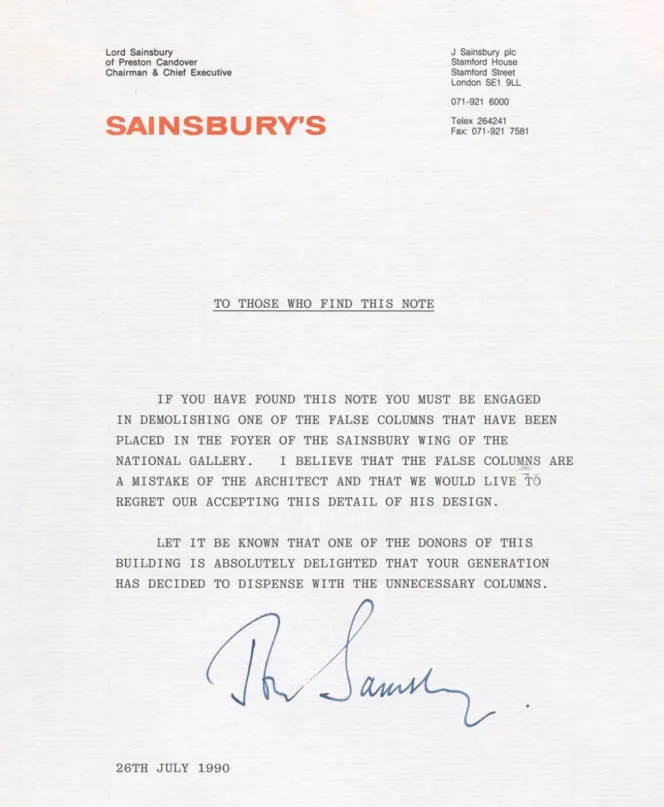
The National Gallery’s jury panel said Kuma’s design was innovative and beautiful, meeting the ambition and sensitivity required for an international gallery commission.
It said it was “respectful of the Sainsbury Wing galleries” while the “approach to the public realm and roof garden creates a generous presence, enhanced by trees and greenery”.
Gabriele Finaldi, the gallery’s director, said: “Kengo Kuma’s trajectory as an architect demonstrates exceptional design elegance, a keen sensitivity to location and to history, and a supremely beautiful handling of light and of materials. The new building will complete the National Gallery’s campus, adding distinction to some already distinguished buildings.”
Starchitects eased out of the frame
There was a time when the gallery game seemed sewn up (Laura Freeman writes). If a large museum commission came along, you could have a pretty good guess about which firm would get it: David Chipperfield (the Royal Academy of Arts, the Neue Nationalgalerie in Berlin), Renzo Piano (the Morgan Library and Whitney Museum in New York, the Art Institute of Chicago, the Los Angeles County Museum of Art) or Frank Gehry (the Guggenheim Museum Bilbao, the Fondation Louis Vuitton in Paris and a whoosh of wavy cultural centres around the world). It was the age of the “starchitect”, with twinkling guest appearances from Norman Foster and Richard Rogers.
Looking at the shortlist for the National Gallery’s new wing, the safe bets would have been Foster + Partners or Renzo Piano. Selldorf Architects, which oversaw the gallery’s Sainsbury Wing refurbishment, would have been the continuity choice. Would you have put a tenner on Kengo Kuma? Have you — be honest now — ever heard of Kengo Kuma?
We’re seeing a changing of the gallery guard. In 2015, Chipperfield was selected to redesign the Met’s modern and contemporary art wing, only to cede the project to the Mexican architect Frida Escobedo in 2022. The British Museum redevelopment went not to Chipperfield, who was on the shortlist and seemed a dead cert, but to the Lebanese architect Lina Ghotmeh. (Name two buildings by Ghotmeh and two by Kuma and you can have a prize.)
The starchitects have lost their sparkle. The new shooting stars are more likely to be female and non-European. You don’t get the big name, but then again, you might get less ego. Kuma’s design is elegant, if unexciting. No vainglorious Gehry waves here. If you’d shown me the renders cold, I’d think they were designs for a new designer flagship store. The proof will be in the building, and at least no one could call it a carbuncle.