
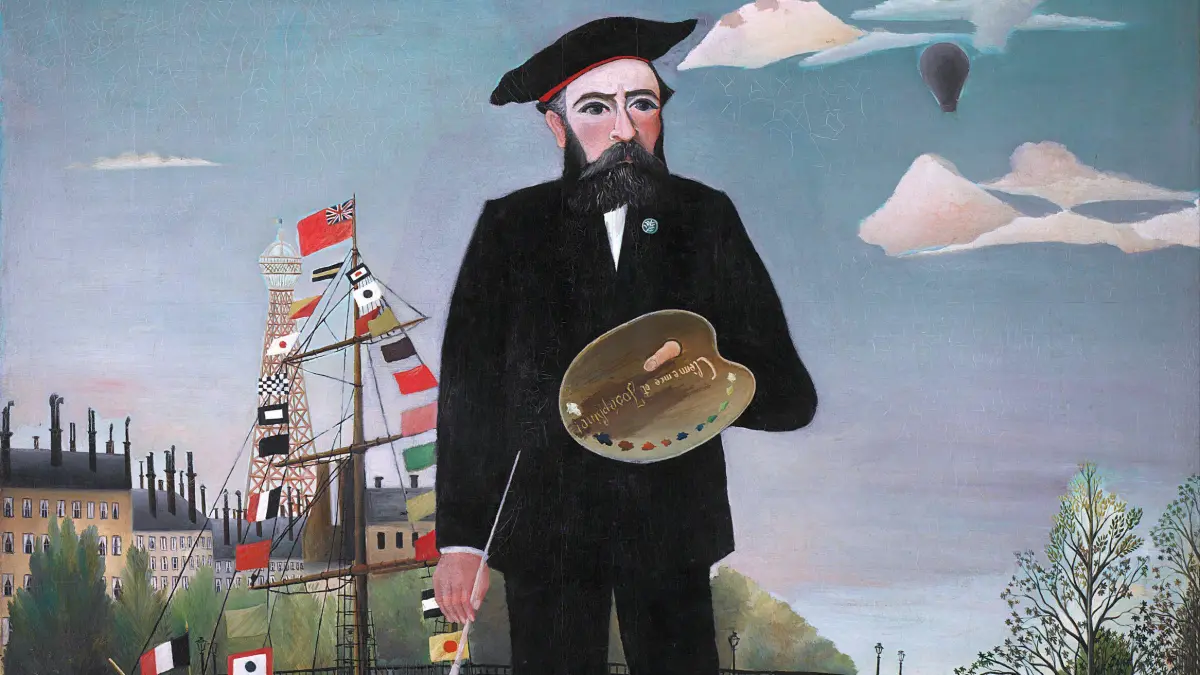
André Malraux, the novelist, once said it was naive to describe Henri Rousseau’s paintings as naive.
The label has stuck because of the self-taught artist’s almost childishly innocent style, despite his highly adult themes and his relentless quest to be taken seriously by an often hostile art establishment.
A landmark exhibition in Paris’s Orangerie museum, titled A Painter’s Ambition, explores how Rousseau, nicknamed Le Douanier because of his job as a toll collector for the city of Paris, spent decades fighting for recognition.
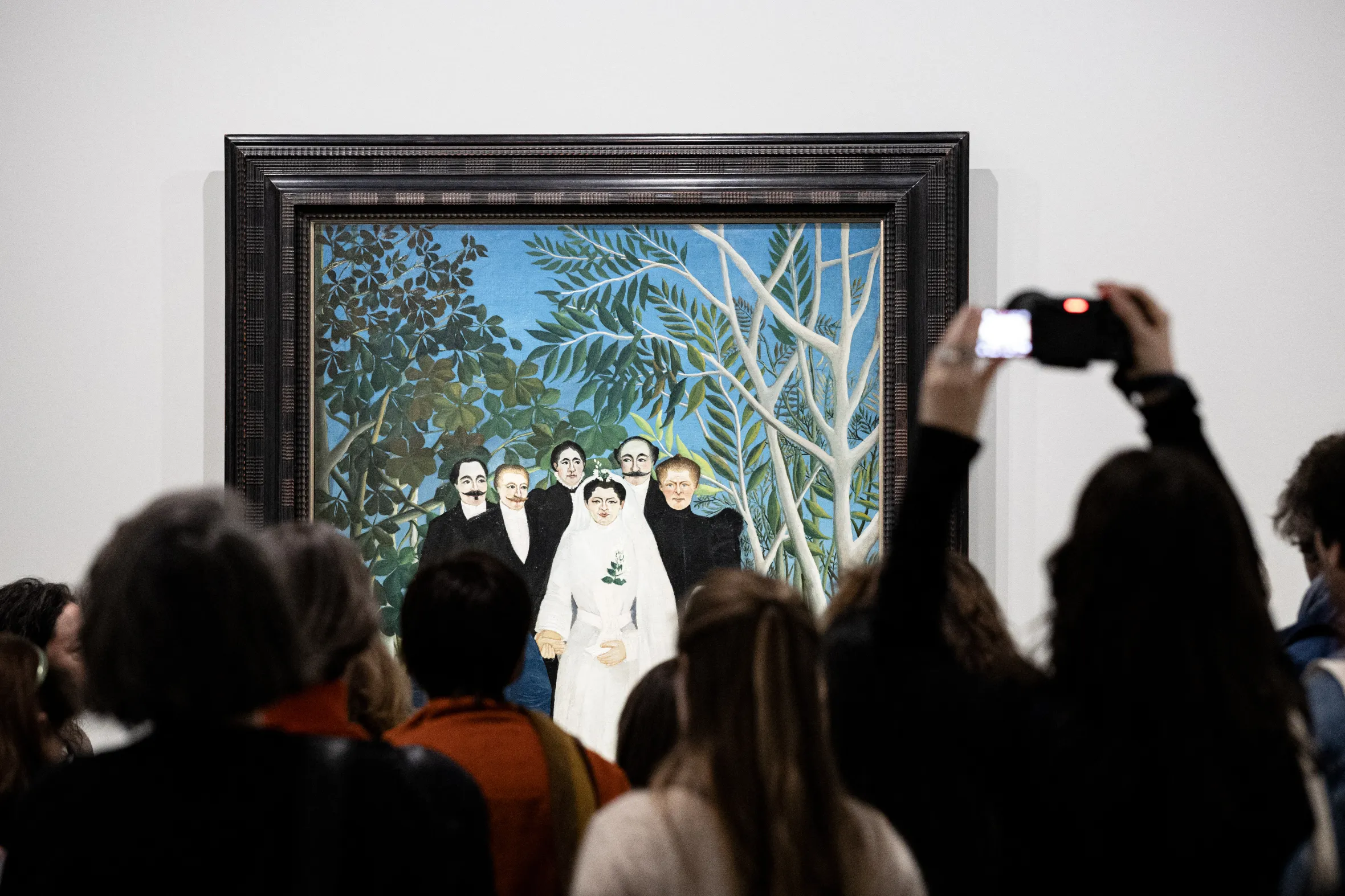 The Wedding Party, 1905Alain Jocard/AFP
He only became a full-time painter at the age of 49. His self-portrait hangs at the entrance to the exhibition, depicting him wearing an artist’s beret, holding a paintbrush and a palette.
“Rousseau was determined to present himself to the world as an artist although he had little or no formal training,” said Juliette Degennes, one of the curators.
“In the self-portrait, he’s wearing an academic medal on his buttonhole, reinforcing his claim to be an accomplished artist rather than a humble customs officer, but in fact it was never awarded to him, but to someone else of the same name.”
Along with 50 of his paintings, two letters are exhibited that reveal his ambition. In 1907 he wrote to Armand Fallières, the president of the day, proposing that the state buy some of his paintings, which he had shown at the Salon des Indépendants, the alternative to the French government’s annual art exhibition.
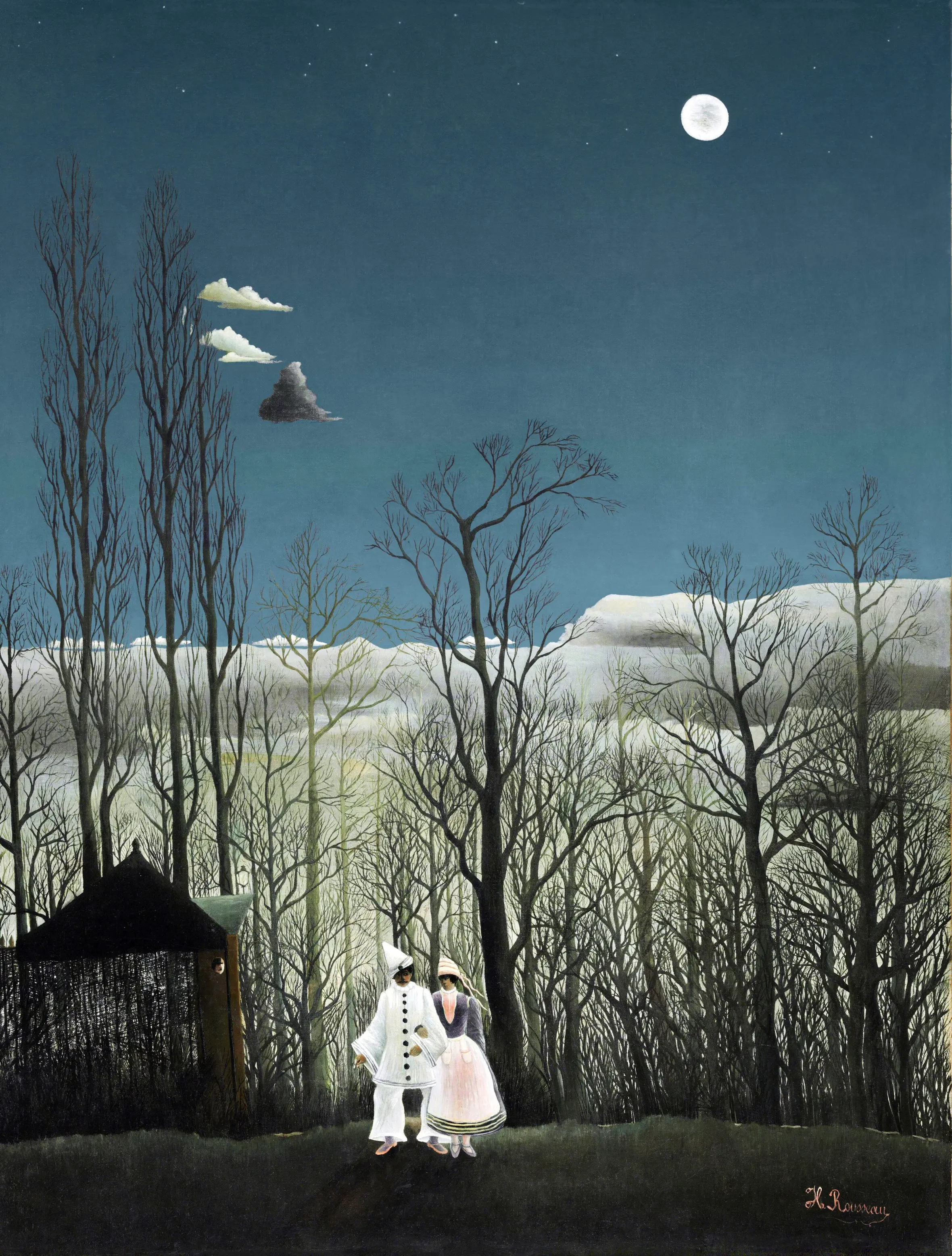 Carnival Evening, 1886Alamy
The answer was no, as it had been when he wrote nine years earlier to the mayor of Laval, his birthplace in western France, suggesting that the municipality buy The Sleeping Gypsy because he intended it as a tribute to his hometown.
“He asked for 2,000 francs, a consequential sum at the time, but the mayor laughed at the notion,” Degennes said. “The letters reveal how he tried to sell himself to the establishment as a serious artist.”
Initially mocked by critics, Rousseau’s artistic genius was eventually acknowledged and he influenced the Parisian avant-garde, including Pablo Picasso.
One of Rousseau’s strongest supporters was Guillaume Apollinaire, the poet, who helped spread the legend that the painter had drawn inspiration for his series of jungle paintings, including The Snake Charmer, from a sojourn in Mexico with troops sent there by Emperor Napoleon III.
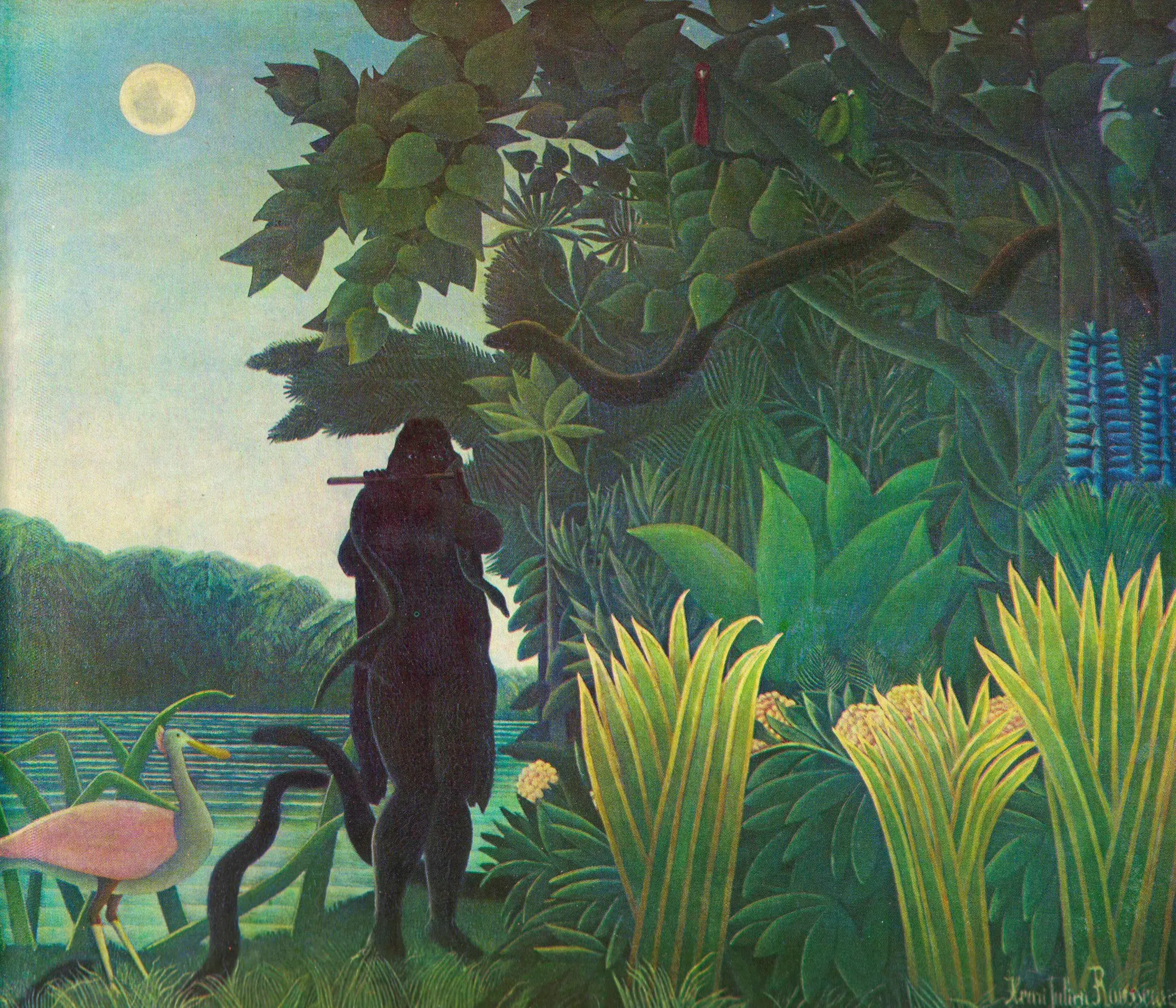 The Snake Charmer, 1907Alamy
In reality, Rousseau never set foot outside France, which he eventually admitted to a journalist in 1910, the year of his death.
His paintings are rich with lush tropical vegetation and exotic animals, but they were inspired by his frequent visits to the Paris botanical gardens and zoo.
For the first time, three of his masterpieces are being shown in the same room: The Sleeping Gypsy hangs alongside The Snake Charmer and The Hungry Lion Throws Itself on the Antelope.
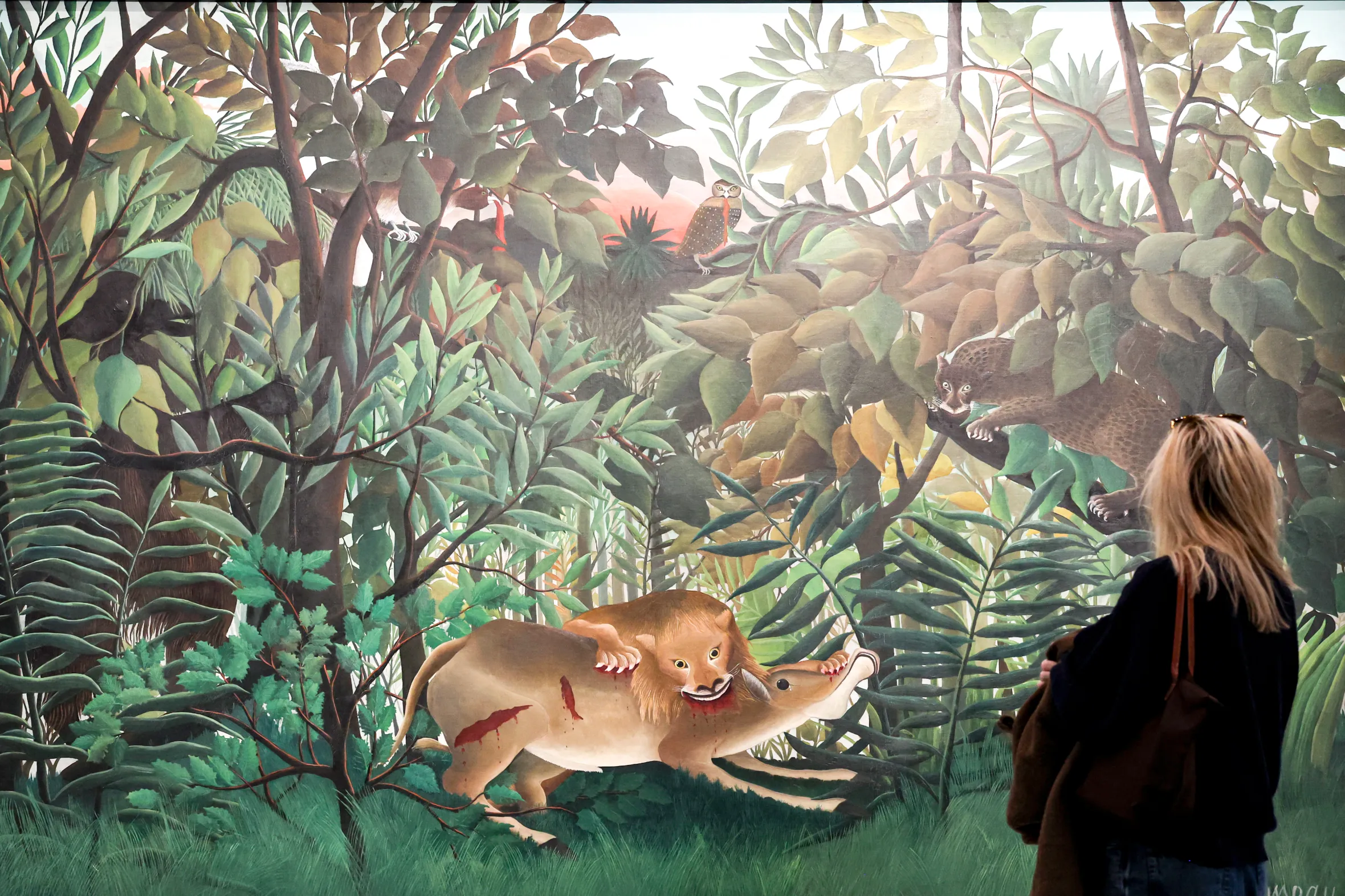 The Hungry Lion Throws Itself on the Antelope, 1905Photo by ALAIN JOCARD/AFP/Getty Images
Critics have often described Rousseau’s style and vivid colours as primitive, but he said his work was “principled”. His 1894 painting La Guerre laments the horrors of war, and later paintings such as The Dream evoke sexuality and forbidden desire.
An interactive installation at the exhibition shows that the “naive” painter worked carefully and deliberately, without hasty strokes or shortcuts.
Rousseau lived in penury, sometimes asking friends for money to buy food. In 1907 he was briefly jailed for allegedly forging cheques.
Prophetically, he once told his daughter: “You are quite mistaken not to like my paintings. One day they will be worth more than a hundred thousand francs!”
Three years ago, Les Flamants (The Flamingoes), painted shortly before his death, fetched more than $43.5 million including auction fees.