
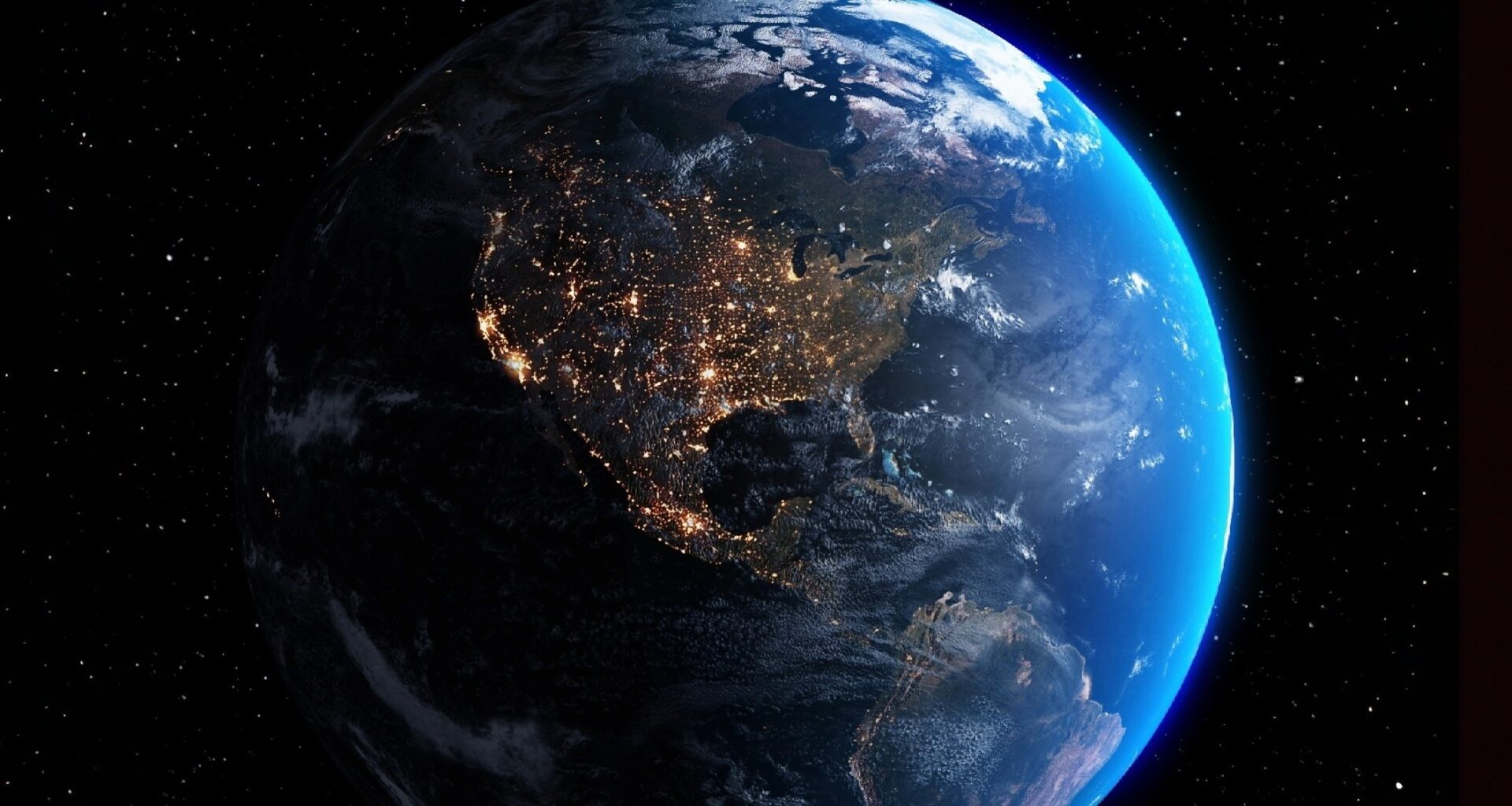
Have you ever noticed how a city looks alive at night, almost like it is breathing? Now imagine that view from space.
The Earth does not simply glow quietly, it pulses, flickers, and shifts, revealing how humans live, build, struggle, and grow.
Nighttime lights keep changing

Scientists studying satellite images from NASA and NOAA discovered something surprising. Nighttime light across Earth is increasing, yes, but not in a smooth or steady way.
The planet does not simply get brighter year after year. Instead, light appears, disappears, spreads, and fades all at once.
Some places glow more each year, while others lose brightness just as quickly. In fact, areas that changed did not stay stable. Many locations shifted again and again, almost like a rhythm that refuses to settle.
This reveals a surprising truth: the night-side of Earth is not calm but constantly restless.
Bright lights and growing cities
In regions where cities expand fast, the change feels obvious. Countries like China and India light up more each year as new buildings rise, roads stretch outward, and electricity reaches more people.
Light, in this sense, becomes a signal. It shows where life is busy, where economies grow, and where people gather. A glowing area often means development is happening right there.
At times, the change happens suddenly, as a new factory, a highway, or even a small town gaining electricity can quickly turn darkness into brightness. A place that appears dim one moment may shine clearly from space soon after.
Darkness for different reasons
Not every dimming area tells a negative story, though some certainly do. In parts of Europe, especially France, cities choose to turn off lights after midnight. This helps save energy and reduces light pollution.
But in other regions, darkness arrives for harder reasons. Economic struggles, power shortages, or damaged systems can cause lights to fade. Venezuela offers one such example, where declining infrastructure reduced nighttime brightness.
So darkness can mean two very different things. It can show careful planning, or it can reveal deeper problems.
Some changes are sudden and dramatic, as wars can darken entire regions and hurricanes can leave cities without light overnight, creating clear signals that satellites capture immediately.
Ukraine, after the Russian invasion, showed a sharp drop in light. The difference was not subtle.
This ability to see change almost instantly makes nighttime data powerful. It turns light into evidence of real-world events.
Daily data reveals real changes
Older studies looked at long time periods, which blurred many small details. Now, scientists use daily satellite images.
“Until now, no global analysis had been conducted using the full resolution nighttime data,” said Christopher Kyba, co-author from Ruhr University Bochum.
With daily data, even short events become visible. During COVID 19 lockdowns, cities across the world dimmed as activity slowed. Factories paused, streets emptied, and the night reflected that silence.
The pattern feels almost like a heartbeat. Brightness rises, then falls, and rises again. The planet responds to human actions in real time.
A world full of motion, not stability
The biggest idea from this research is simple, yet unexpected. Nighttime light is not stable. It is constantly shifting, sometimes slowly, sometimes suddenly.
Many places do not follow a single direction. Growth mixes with decline. Progress meets disruption.
This makes the night map of Earth feel alive. It reacts, adapts, and changes with every major decision and event.
Why this matters more than it seems
Light at night is not just about visibility. It connects to energy use, environmental impact, and even the health of ecosystems.
“Artificial light is a major consumer of electricity at night, and light pollution harms ecosystems,” said Kyba.
Understanding these patterns helps scientists and leaders make better choices. It guides policies, improves energy planning, and protects natural systems.
New efforts, including a planned mission by the European Space Agency, aim to study these changes in even greater detail.
As this research continues, one thing becomes clear. The Earth at night is a living record of human activity – always shifting and never still.
The study is published in the journal Nature.
—–
Like what you read? Subscribe to our newsletter for engaging articles, exclusive content, and the latest updates.
Check us out on EarthSnap, a free app brought to you by Eric Ralls and Earth.com.
—–