
In the early hours of November 19th, 2019, surveillance cameras on the MI6 headquarters, a curiously lavish art-deco structure located on the Thames, captured a disturbing image from an apartment building directly across the river. Grainy night-time footage showed a figure moving on the balcony of a brightly lit fifth-floor apartment. The person moved from one end of the balcony to the other and then jumped, or fell.
In the days after, he was identified as a 19-year-old Londoner, Zac Brettler. His body was found on the muddy bank of the river beneath the Riverwalk apartment complex early the next morning. The surveillance footage contained the haunting visual proof of Brettler’s last moments, but nothing of the sinister and scarcely believable circumstances behind not just his fall, but the glass doors within the apartment and the opaque world which the teenager had come to occupy.
Two men were arrested and questioned in relation to Brettler’s death. Verinder “Indian Dave” Sharma lived in the apartment in which Brettler had been staying when he jumped or fell at 2.24am. Sharma told police that he had been asleep at that time. Another man, Akbar Shamji , also in his 40s and an associate of Brettler, had been captured arriving at and leaving the Riverwalk apartment complex several times over the course of the night. Neither was charged.
Brettler’s parents, Rachelle and Matthew, were encouraged to believe that their son’s death was a suicide. Although investigations continued, the onset of the Covid-19 pandemic, in the spring of 2020, eclipsed the case. In the years after that, the Brettlers quietly and persistently tried to ascertain what had happened.
In the summer of 2023, they told their story to Patrick Radden Keefe, the New Yorker writer and author who happened to be visiting London and who was introduced to the couple by a friend of theirs. His magazine article, in February 2024, transformed what had been an overlooked family tragedy into an intensely sad and vital story about a bright, capricious teenager negotiating the contemporary world intersecting with the shadow-society of London nouveau wealth.
Since then, Keefe has been working on London Falling, a book which explores the extraordinary tangle of connections and friendships the teenager accumulated through his ability to tell fantastical, deceptive tales in which he was the unfailing star – including casting himself as the misfit son of a Russian oligarch. Keefe, of course, never met Zac Brettler, but has spent two years thinking about and writing about the teenager.
“I think in one respect he was really extraordinary in that he was a fabulist and was sort of brilliant at it,” he told me on a Friday when we met at a cafe near his home.
“He concocted this person and had all these perceptions,” Keefe says. “His classmates described him as having a photographic memory. And obviously, he ends up dead. But as I was writing the book, certainly as a parent, I thought, but for the grace of God go I. There was something I related to in the challenge of raising a kid, and particularly a kid growing up today with Instagram and TikTok.
“When I was growing up in the 1980s and 1990s, my parents had a rough sense of the stimuli I was exposed to – the people I ran around with, my friends at school, the places I would go. And I think there is a strangeness that we haven’t quite reckoned with as a society about the idea that your kid is sitting there on the couch in the family home not appearing to do much of anything but in fact, they are miles away surrounded by people you don’t know. And as a parent of two adolescent boys, that was an element I found quite intense, to be honest with you.”
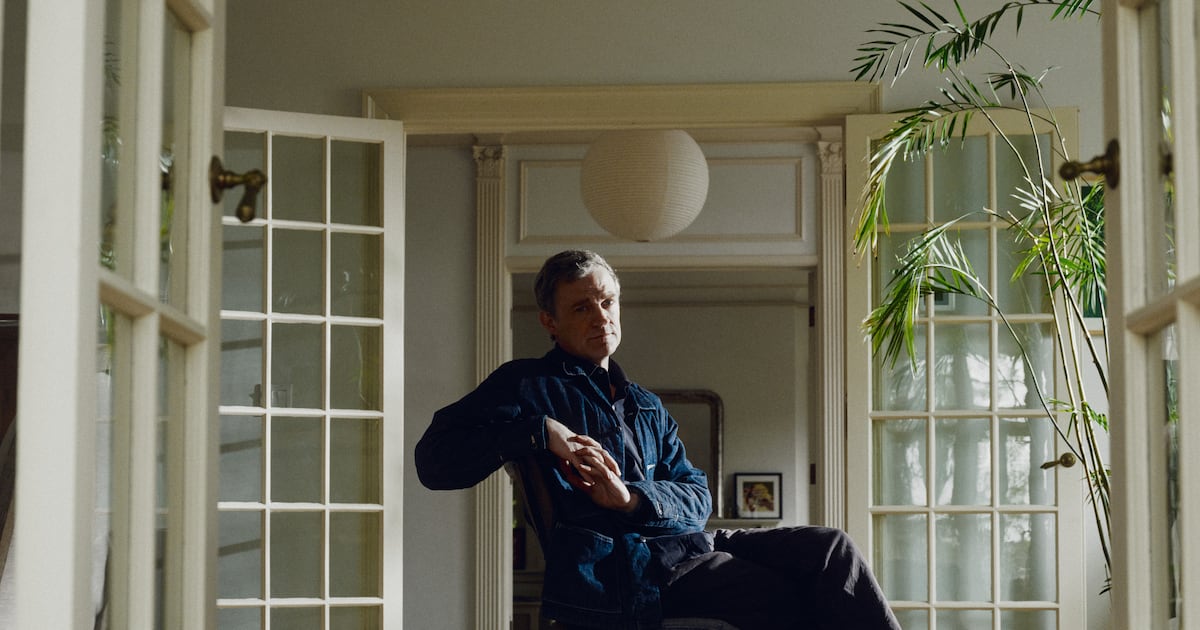
 Journalist and author Patrick Radden Keefe at home in New York. Photograph: Erik Tanner/New York Times
It is intense for the reader, also. Brettler was, clearly, a complex boy: bright, mischievous, a mimic and a lark, but also demanding of his parents and self-absorbed and selfish in the thoughtless way of adolescents. Ostensibly, he had all the advantages: devoted parents and older brother; an education in a London private school, Mill Hill, a school popular with high-wealth immigrants but, crucially, a prestige-notch below University College School, his older brother Joe’s alma mater for which Zac had failed to pass the entrance exam.
In his teenage years, Zac Brettler became obsessed with wealth and the accumulation of money, and concocted an alter ego of which his parents saw glimpses. He once showed them a fabricated bank statement showing he had £850,000 (€974,000) in assets. When he died, his bank account had a £4 balance. One of the saddest details in the entire book is his explanation to his parents after they learned he had been picked up from school in a chauffeur-driven limousine. He confessed he had paid for it himself because he “wanted to see what it would feel like”.
His willingness in – or helplessness against – projecting this fantasy life eventually brought him into the orbits of Sharma, an extraordinarily evasive and slippery Londoners who shared the younger man’s thirst for money. In short, he believed that Brettler had access to enormous wealth, and took him under his wing because of that.
“To me, so much of this book is about family relationships,” Keefe says.
Keefe is a relatively boyish almost-50-year-old who had an exuberantly Irish-American upbringing in Dorchester, the former ‘lace-curtain’ Irish enclave of Boston that has become more diverse in recent years.
Our meeting had been scheduled for the previous day, but like tens of thousands of Americans, he became caught up in the domestic airport security chaos which has brought US aviation to breaking point in recent weeks. Despite being tired, he is easy-going, amicable company. Keefe and his wife swapped the excitements of a Brooklyn apartment for the more sedate lifestyle of Westchester County, north of New York City, once they started a family. He asks that the location be kept vague. When he was tracking down former associates of Sharma in his research, one London criminal opened their meeting by pleasantly inquiring after his family. “By name,” Keefe says.
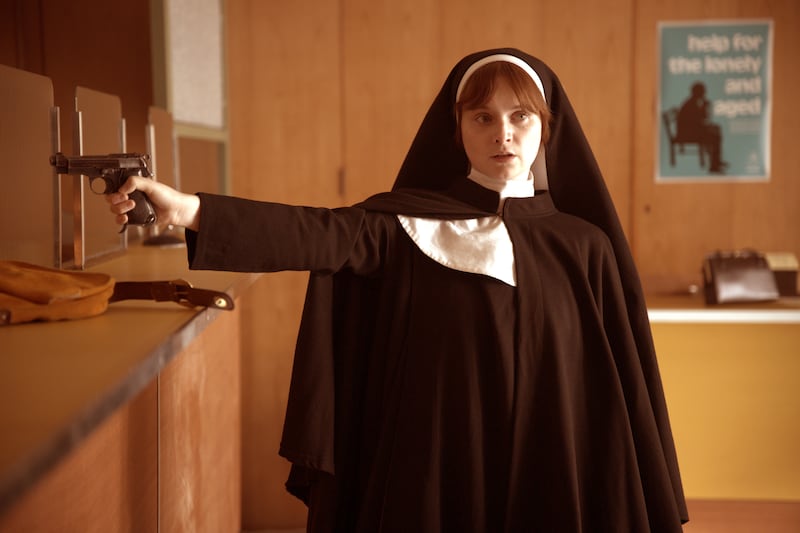 Lola Petticrew as Dolours Price in FX’s Say Nothing. Photograph: Rob Youngson/FX
Keefe’s last book was Say Nothing: A True Story of Murder and Memory in Northern Ireland, his forensic and lauded account of the abduction and execution of Jean McConville by the IRA in 1972. Disney+ turned the 2018 book into a 2024 series, and the veteran republican Marian McGlinchey (née Price) sued the streaming company for defamation last year. Her solicitors said the drama’s depiction of her as having been involved in McConville’s murder was “not based on a single iota of evidence”.
Keefe became intrigued by the story after reading the obituary for Dolours Price in the New York Times in 2013, and his research and curiosity brought him to knocking on obscure Belfast doors and making phone calls to resurrect a chapter in the city’s paramilitary history that many preferred to forget.
“I really thought I was writing that book for nobody: that it was a book for me. Because there was so much ambivalence in the book. And the Troubles is a subject about which people either didn’t care, or cared and had enough. And there were so many shades of grey. So I was startled by the reception.
“On the margins, you get people who hate the book. And with the McConvilles it has been complicated. For some of the family, I think, certainly, it would be safe to say, would prefer that there was no book, that there was no TV show. But I would resist any caricature in which some kind of vulture was coming along. I feel as though this is an important part of history, and an important story, and I think it is a story that both in the book and series has been told with real vigour and care and compassion for that family.
“One of the more difficult things that I struggle with as a writer is that, when I am writing a book, I’m not writing it for the people the book is about. And that is true of the Brettler family as it was for the McConvilles. At the point when the chief audience you have in mind is the people your story is about, I think that you have actually done a disservice to them and to your readers. Because I am interested in the truth. And the truth often makes people uncomfortable.”
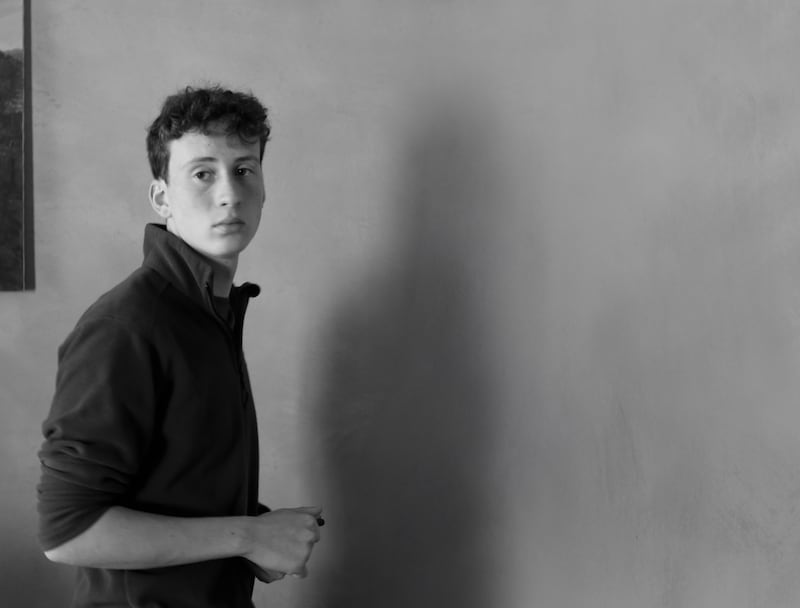 During his teenage years, Zac Brettler became obsessed with wealth and the accumulation of money. Photograph: Chris Da Costa / Doubleday
Curiously, he was in London for the filming of the television series of Say Nothing when he first heard about Zac Brettler. In a coincidence that has stayed with him, he was on a set made up to look like Scotland Yard when someone told him about this mysterious death. The apparent laxity and inefficiencies of the British police and judicial system run through his investigation into Brettler’s last days and night. Four days appear to have lapsed before a search of the apartment was conducted. Brettler’s talent for illusion, or deception, sets the tone for the entire book of contradictory accounts and timelines and alter-egos and text messages and phone calls, which Keefe painstakingly pieces together. It’s an extraordinary story, not least because of the grace and resilience with which the Brettlers persist in seeking answers in the hazy aftermath of the pandemic. Sharma died from a drug overdose about a year after Brettler’s death.
It’s clear that Brettler had become entangled with dangerous company: Sharma had a history of violence, involving the castration of one street enemy and a reputation for “heating knives” to scar, or at least terrify, those who crossed him – a detail that becomes important in this story. But the facts remain stubbornly elusive, as do the source and means of wealth of those whose lives Brettler brushed against.
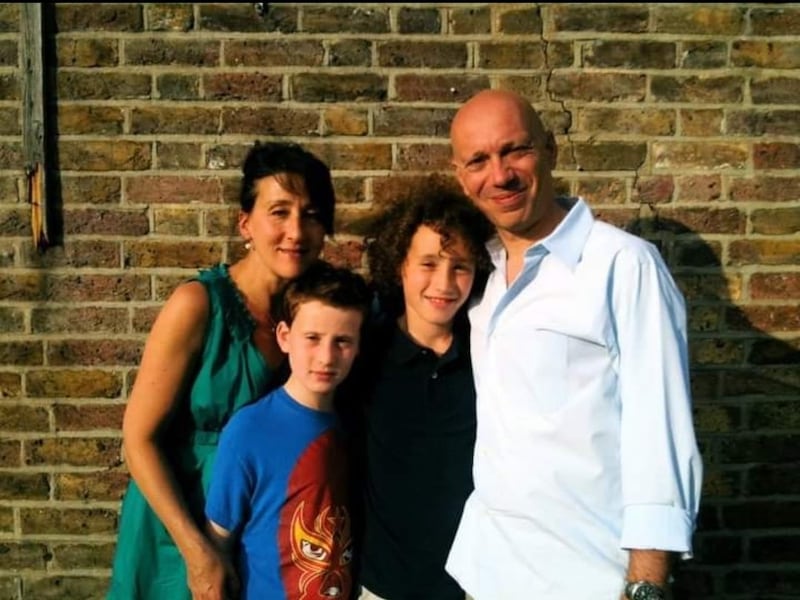 Zac Brettler as a child with his parents Rachelle and Matthew
The question of who owns the many gilded – and often unlit – properties in London’s prestige neighbourhoods also lurks in the background. It’s also a story of secretiveness – Brettler’s maternal grandfather was the prominent London rabbi Hugo Gryn, who had cultivated a secret of his own. As with the Jean McConville atrocity, the research took Keefe into the heavy, emotionally painful terrain of other people’s grief. And he was asking questions that many preferred not to hear.
The New Yorker, and his own reputation, carry significant weight and influence across many tiers of society. But he cheerfully agrees that many of the people he approached in west Belfast or London were supremely immune to that. Getting answers involved brass neck persistence and blunt rejection, to which he has happily become immune.
“The truth is that I feel that that’s most projects. Strangely, I think it’s kind of character-building. Before I was even a freelancer in journalism, I was trying to get assignments and getting rejected. Then I was freelance for six years before I went on staff at the New Yorker. So it was really helpful to have experience in my 20s and early 30s. Even now, I probably reached out to five people for every one that talked to me. I am either getting no, or nothing at all.”
It all meant that when he first sat down with Matthew and Rachelle Brettler and listened in silence for the two hours when they told him about Zac, he was aware that he had to set realistic limits to the idea that he could somehow “solve” what had happened.
We speak for a while about his formative years in London, in the late 1990s, when he was a student at the London School of Economics (LSE) and living in a dingy Southbank dormitory. He caught the last rays of Britpop London, the sprawling, ramshackle, post-empire capital which was gloriously run down and effortlessly affordable for the young and broke. Now, like many major cities, to live there is to pay a daily entry fee to a polished, glitzy theme park.
Of his new book, he says: “I should say that in some ways it is very much a London story, but it could have happened in New York or Dubai or Miami. You know, we live in this era of blingy over-consumption and aspiration and the whole of society wanting to live a little, or maybe a lot, above their station. I think there’s a kind of sickness in there, honestly, that Zac had but that I think we all have at some level.”
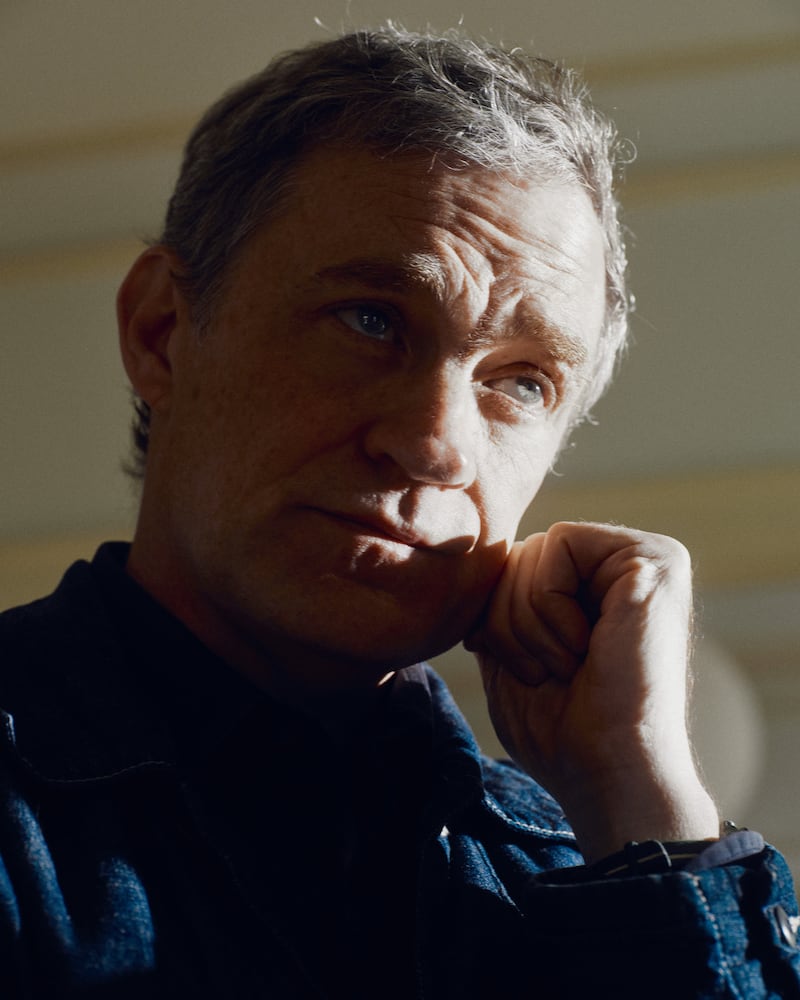 Journalist and author Patrick Radden Keefe at home in New York. Photograph: Erik Tanner/New York Times
And although this is a dark and bleak story, it’s important to note that Zac Brettler is very much alive within the pages, an exuberant and infuriating, sometimes arrogant, sometimes playful teenager trying to make his way as an impostor in the lawless terrain of uber-wealthy London. What Brettler, an adolescent, wanted from the older men was acceptance and credibility. What they wanted from him was money which they believed he had. And Sharma was capable of violence.
“Brutal violence,” Keefe confirms.
“And just sort of rapacious. Wanting to shake down everyone. And really a genuinely scary guy. There were people who were unwilling to talk to me because he was part of the story, even though he is dead.”
In cold retrospect, Brettler’s lies were foolhardy. But in many ways, he is reminiscent of one of the most beloved characters in English fiction: Richmal Crompton’s William Brown, the scheming, chatterbox schoolboy and spinner of elaborate yarns who created a world within his world. And he remains elusive too, something that Keefe still appeared to be grappling with on the eve of publication of London Falling, as the lunchtime crowd yakked away in the cafe and he prepared to return to the desk for the afternoon. I ask him what he believed Brettler’s endgame, or desired outcome, might have been.
“I don’t think he had one. He was going from one thing to the next. We know about adolescent brains, that they are not great at thinking four moves down the road. And Zac was a total chancer from, it turns out, a really early age. And I think there were rooms he wanted to get into and he realised if he told lies that he could get into those rooms. But he didn’t think through what happens if you come in and say: ‘Oh, my family is really wealthy’ and you are talking to grown-ups. At a certain point they want that money.”
But then he flips into an alternative perspective which is all the sadder, because it is persuasive.
“I think there’s a universe that if Zac can survive that night, there’s a decent chance he can become maybe a real estate developer, and really successful. The thing that is so bizarre is that there’s a version of this story where you say, oh Zac flew too close to the sun. But you know, there’s another version where you say what he had in his heart were, in fact, the skills to get ahead in the world.”
Moxie..?
“Yeah. Moxie.”
Patrick Radden Keefe will be speaking at venues in Ireland in May and June. Booking information is on patrickraddenkeefe.com
Samaritans can be contacted on freephone 116 123 or by texting HELLO to 50808. Pieta Freephone: 1800 247 247 or text HELP to 51444. Visit www.yourmentalhealth.ie