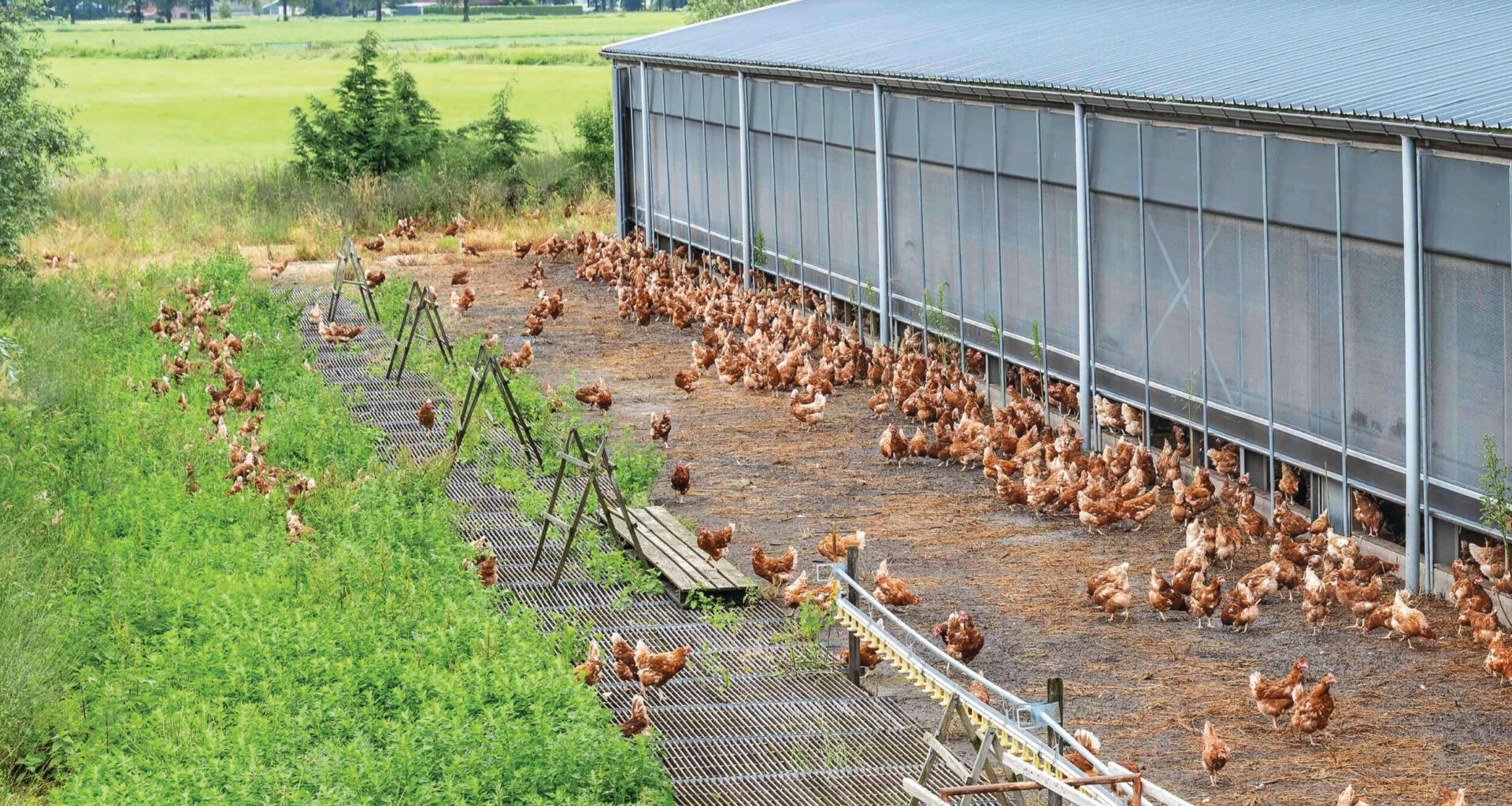
 In April, Spain announced that the housing order for poultry would be lifted. Photo: Michel Velderman
Spain and Portugal have reported relatively few avian influenza cases in commercial poultry this season. Even so, authorities say strict biosecurity and surveillance remain essential.
Spain has recorded only 16 cases of avian influenza at commercial poultry premises since July 2025, the Ministry of Agriculture reported. The last case was confirmed on 13 January in the province of León. Neighbouring Portugal recorded only 11 cases in commercially kept poultry during this avian influenza season. These figures mean that the total number of infected premises in the 2 Iberian countries is relatively low compared with, for example, 121 cases in France or 66 in Italy at the end of March.
ALSO READ: Europe’s bird flu surge: Is it time to vaccinate?
Spain lifts housing order
Spanish minister Luis Planas announced on 3 April that the housing order for poultry would be lifted, with the exception of 1,200 municipalities in some regions considered high risk. The national housing order in Spain was first announced on 13 November last year.
“Since that date, weekly monitoring of the epidemiological situation has been carried out. Now, in view of the evolution of the disease in Spain and in the areas of origin of migratory bird movements, as well as the forecast temperatures, the Ministry of Agriculture, Fisheries and Food has considered it appropriate to lift the general confinement throughout the national territory,” said the Spanish Ministry of Agriculture, Fisheries and Food.
At the end of November last year, Portugal also ordered the confinement of all poultry on the mainland. Agriculture authorities there have not yet lifted that housing order.
ALSO READ: Avian influenza: On the road to a combined approach – an expert’s opinion
Continued biosecurity on poultry farms
Spanish authorities emphasise that, despite the lifting of confinement, it is necessary to maintain and strengthen biosecurity measures on poultry farms to avoid contact with wild birds, as well as to reinforce passive surveillance in both these and poultry farms. Any suspected case should be reported to the official veterinary services, particularly in the case of domestic birds. It is recommended to minimise unnecessary contact with birds that show clinical symptoms or are found dead in the field.
Join 31,000+ subscribers Subscribe to our newsletter to stay updated about all the need-to-know content in the poultry sector, three times a week.
“*” indicates required fields