
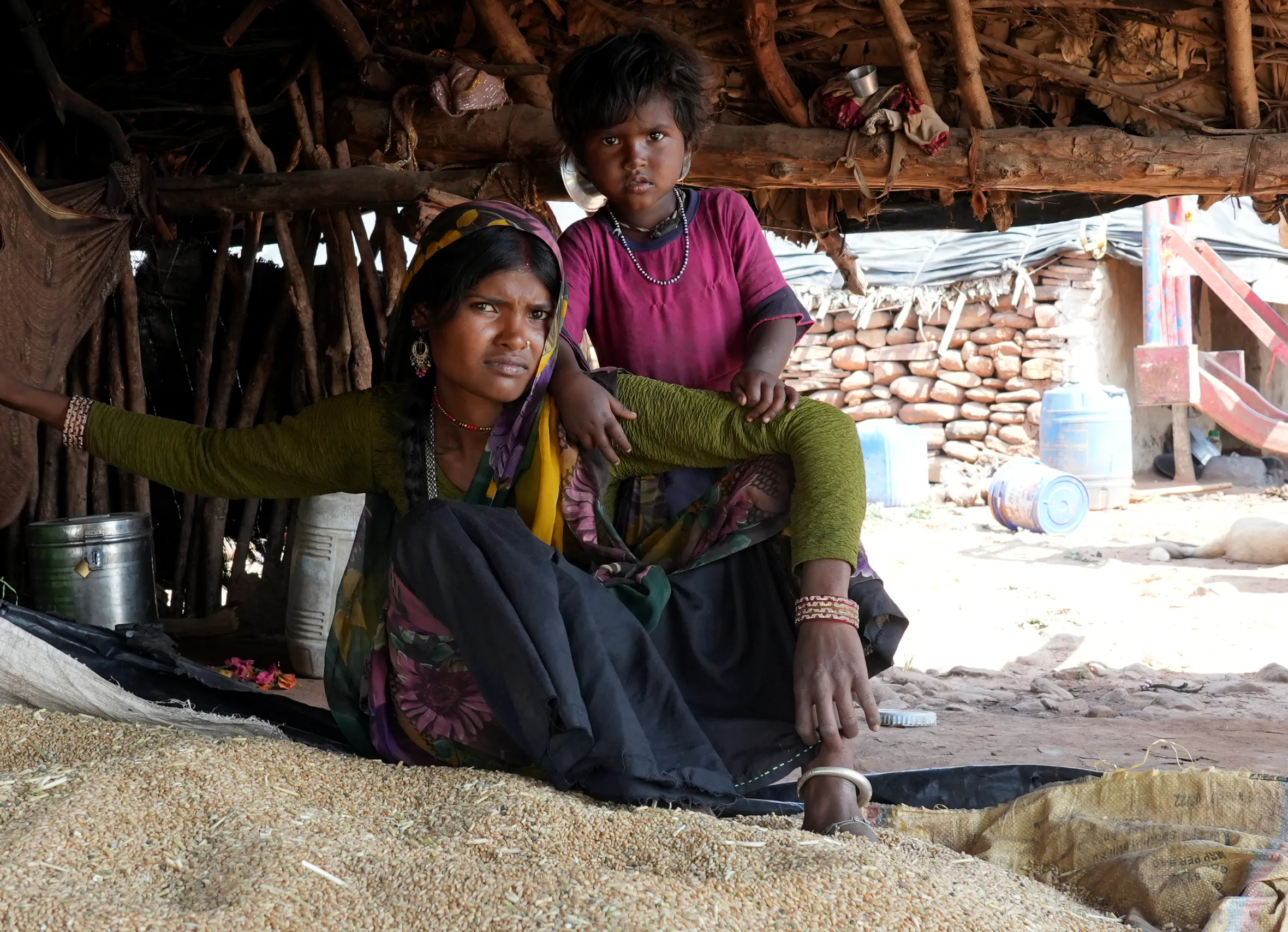
Down a dusty track lined by swathes of barren grassland and wheatfields stretching as far as the eye can see, outside a cluster of makeshift houses, a small child and her mother shelter from the sweltering heat.
Bhimla Devi says her family has been penniless since the cheetahs arrived.
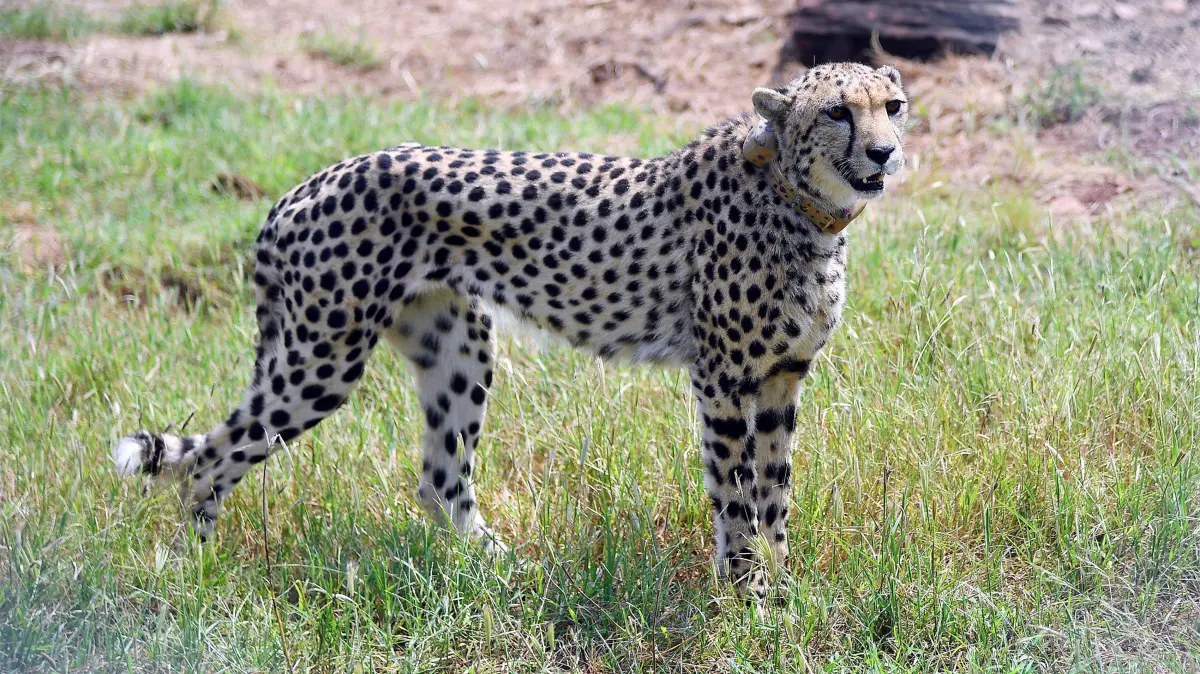
A group of them appeared from the nearby Kuno National Park, a 290 sq mile complex in the central Indian state of Madhya Pradesh, and started mauling their small herd. “Three cheetahs ate five of our goats,” she says. “We were helpless to stop it. It was a terrible day.”
According to legend, the last three cheetahs in India were shot dead by the Maharajah of Koriya, a former princely state in what is now Chattisgarh, when he went for a drive in the dark in 1947.
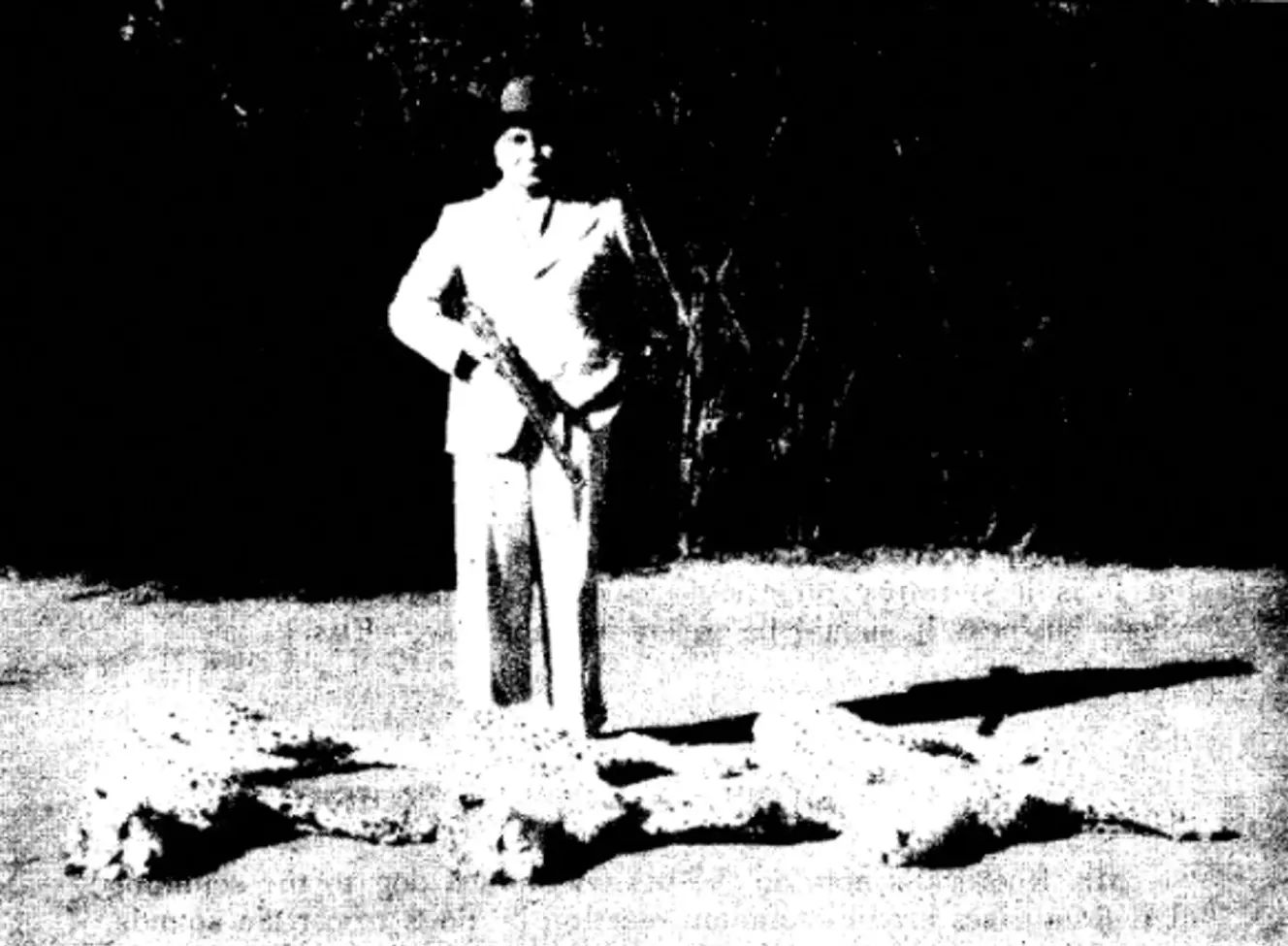 The maharajah and slain cheetahsAlamy
Sightings continued to be reported intermittently but the animals were declared extinct in India five years later due to habitat loss, prey reduction and rampant Raj-era poaching for luxury fashion.
More than 70 years later, they have returned. In 2022 Narendra Modi, the prime minister, embarked on an ambitious reintroduction programme in which 29 African cheetahs were released into two national parks in Madhya Pradesh. All but a handful are in Kuno. The animals were tranquillised on savannas in Namibia, Botswana and South Africa and flown ten hours over the Indian Ocean.
The $11 million project was the world’s first intercontinental relocation of a large wild carnivore. Modi himself released the first eight animals into Kuno on September 15, 2022, which happened to be his 72nd birthday, and hailed a “historic” moment to boost wildlife diversity.
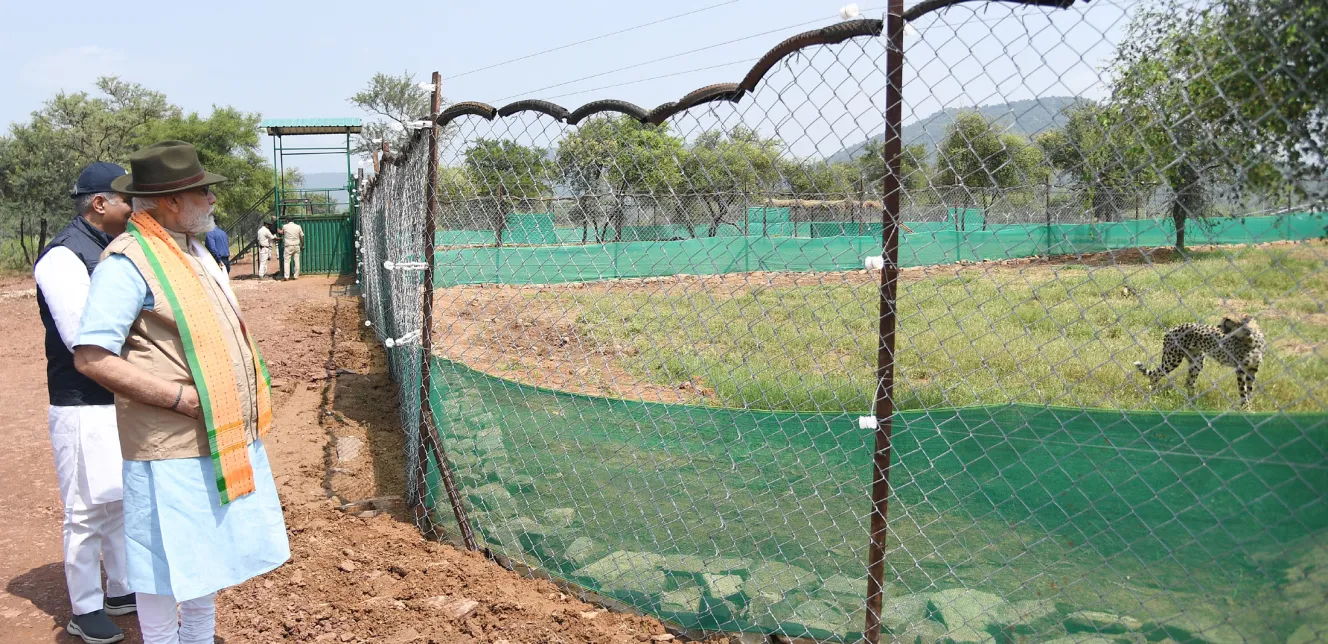 Narendra Modi on his birthday with released cheetahs Getty IMAGES
In February, nine more African cheetahs — slightly larger than their Asiatic cousins — arrived from Botswana. They landed in Gwalior airport and were flown about 100 miles in helicopters to quarantine enclosures in Kuno.
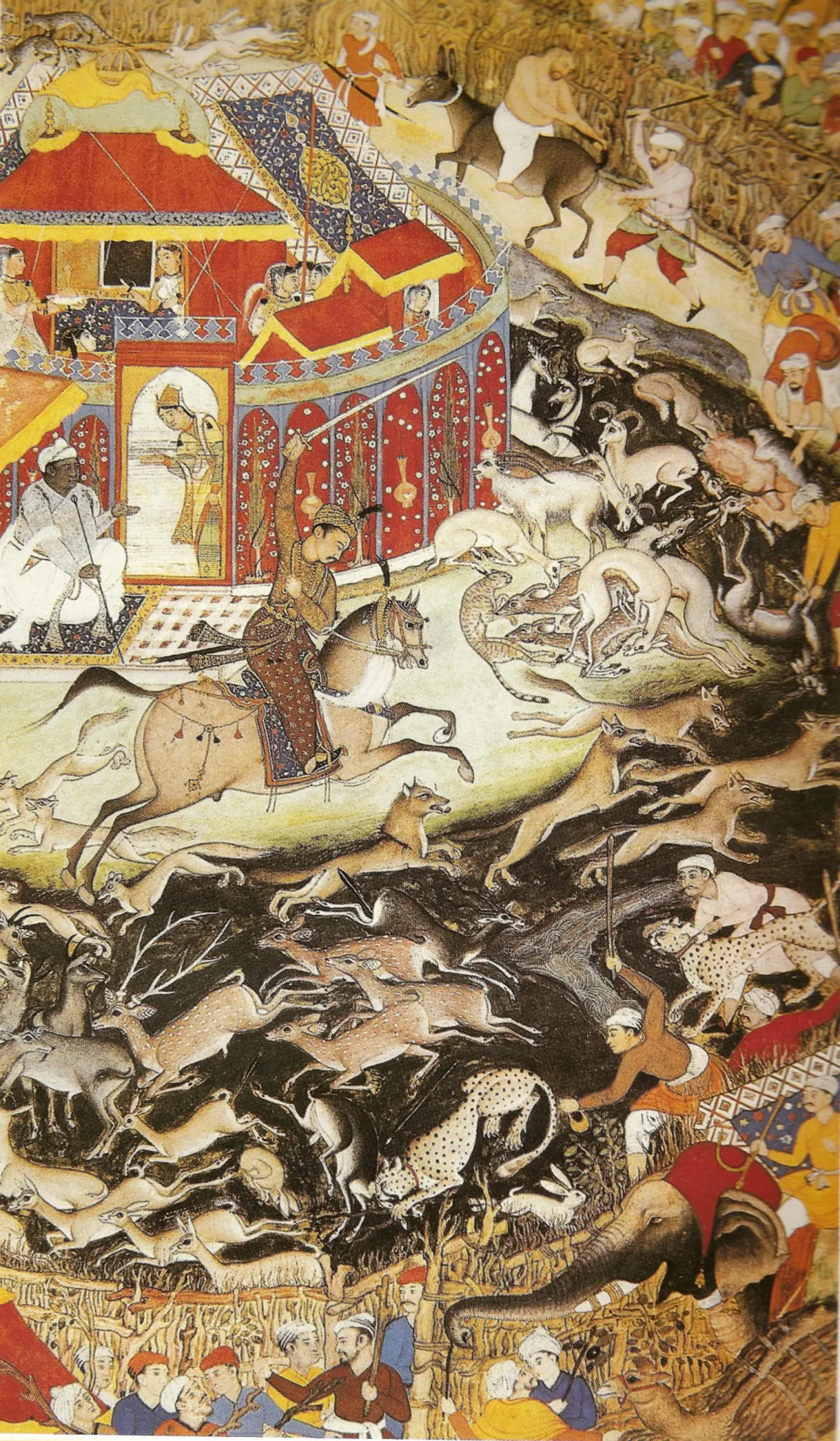
India’s links with the world’s fastest land animal date back centuries. For years — as was the case in ancient Egypt — royals kept them as pets. From the 12th century onwards they became a popular hunting animal: the Mughal emperor Akbar was thought to have collected some 9,000 over the course of his rule.
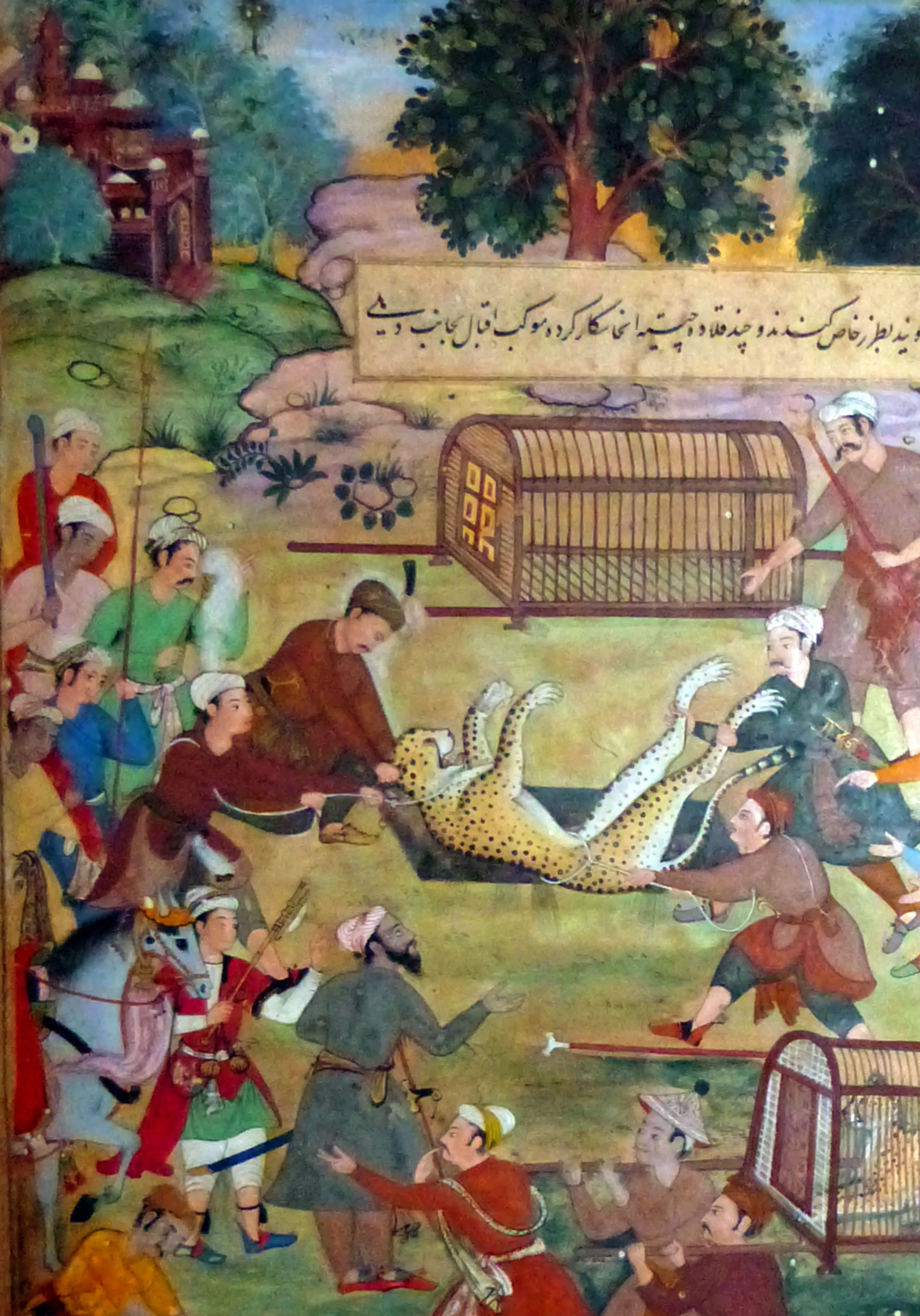 Akbar first hunted cheetahs and then is said to have hunted with them, below Alamy
 Alamy
Alamy
For decades Indian leaders dreamed of a resurrection for the big cat. The first efforts date back to the 1970s, when India attempted to swap some of its lions for Iran’s Asiatic cheetahs. Negotiations ground to a halt after the Shah was deposed. Another attempt in 2009 failed after Iran refused to part from its dwindling population. African cheetahs were the next best option.
Modi’s grand experiment has had its share of hiccups. Several cheetahs introduced to Kuno suffered septic shock and died after their cumbersome tracking collars became wet and heavy in the monsoon, causing cuts that led to deadly infections.
The transition from Africa’s savannas to India’s scrub forest ecosystems also caused initial high mortality rates due to climate stress and parasitic infections. Some 21 cheetahs have died, including 12 Indian-born cubs, two of which died two days after birth in December 2024.
International experts have raised concerns about India’s lack of space and prey for the species. MK Ranjitsinh, who chairs the committee overseeing the introduction of African cheetahs, said the project had become “more of an exercise in political propaganda than a scientific endeavour”.
“This is hand-waving in the name of conservation” Ravi Chellam, a conservationist and biologist, told The Times. “The reality is natural ecosystems are being destroyed right across India in the name of development and national security”.
This year, however, two females successfully gave birth to litters, bringing the total number of cheetahs roaming India’s savanna up to 53. On March 9 a Namibian cheetah named Jwala gave birth to five cubs at Kuno. An environment minister shared a video of the mother and her cubs on X.

“The cubs in Kuno have a high survival rate — 60 per cent, and it’s getting better each litter,” said Laurie Marker, director and founder of the Cheetah Conservation Fund, which supervised the relocation from Namibia. “As they’ve gotten more experienced, they’ve gotten much better at motherhood.
“Cheetahs in captivity alone have a 30 per cent infant mortality rate. In the wild, in the Serengeti, you can have up to a 90 per cent infant mortality rate.”
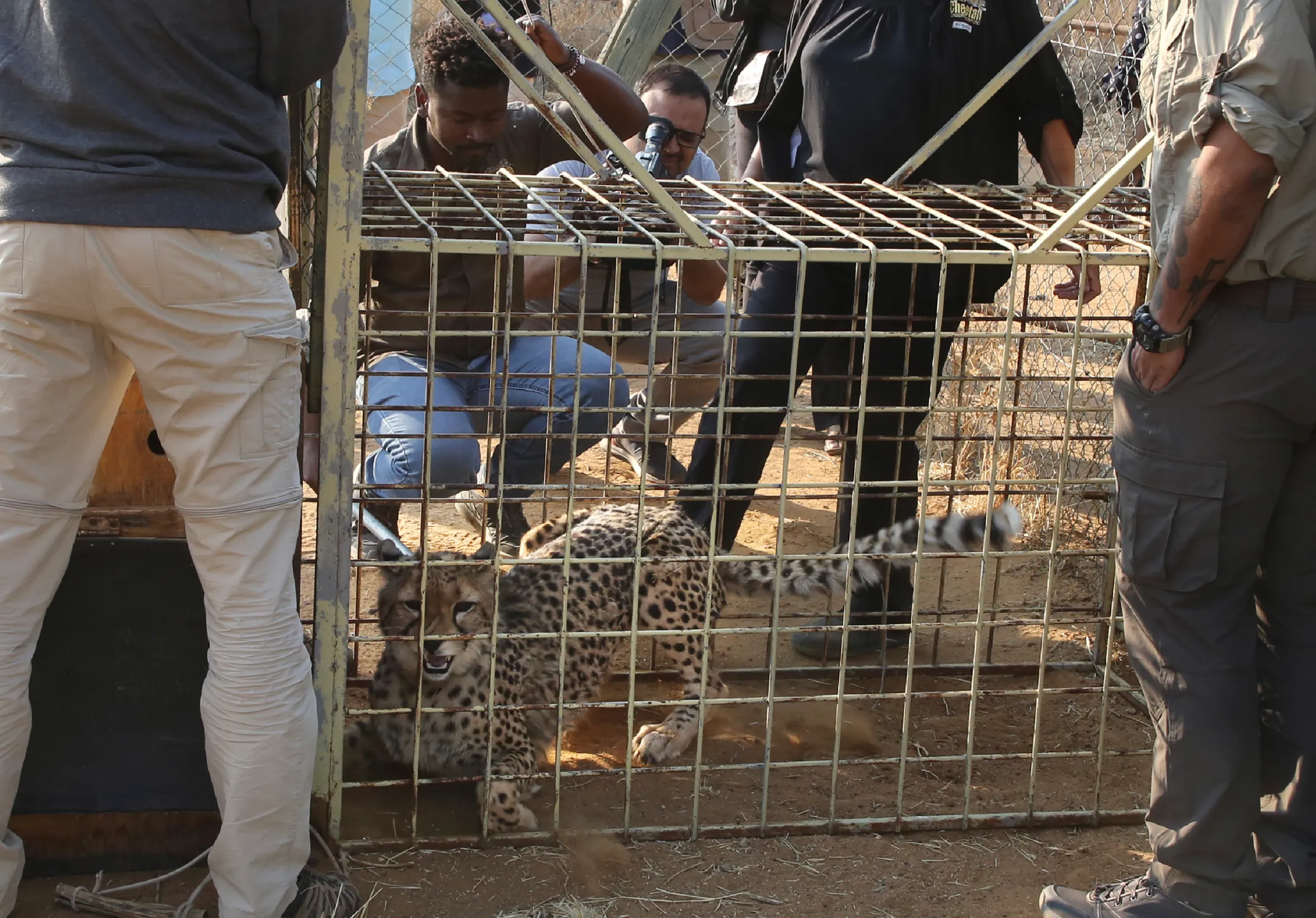 Transportation from Namibia in September 2022 was not always comfortableDIRK HEINRICH/AP
For the tribal communities that live inside the park’s buffer zone, the successes of Project Cheetah are bittersweet. In Chak Kishanpur, a village a few hundred metres from the gate, Hira Lal, 74, says: “It’s a good thing they’ve come — but they are eating a lot of goats.”
The problem, villagers say, is that they haven’t been adequately compensated for lost livestock. Bhimla Devi says she hasn’t seen a penny. She says goats are worth about 10,000 to 15,000 rupees (£90-£120) and she was forced to sell all but one of her herd. Now she and her children harvest wheat in a nearby field and take home a share of the crop instead of a salary.
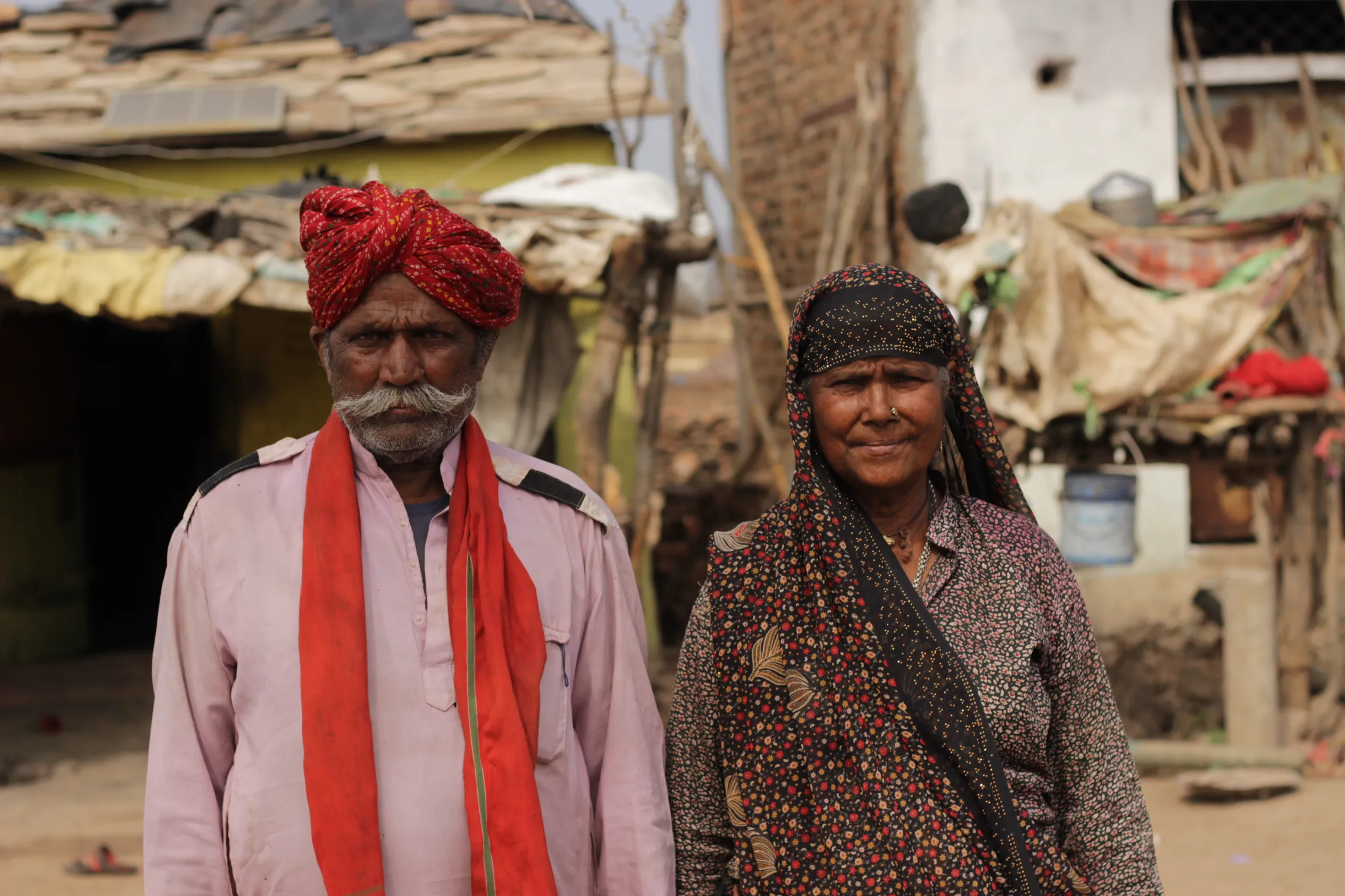 Hira Lal with his wife and, below, Bhimla Devi with her daughter ARJUNA KESHVANI-HAM FOR THE TIMES
 BILAL KUCHAY FOR THE TIMES
The communities who live on the fringes of the national park are some of India’s poorest and least educated. Many come from ancient, skilled hunting communities criminalised during British rule, which led to intergenerational poverty, loss of traditional livelihoods and a social stigma that still prevails today.
Hira Lal’s father, a member of the Mogiya hunting community, moved here after he was commissioned by a maharajah in Rajasthan to hunt down man-eating crocodiles in the Jambal river, a few miles from where he now lives. As big-game trophy hunting became lucrative many hunters were co-opted into colonial economies. Even while tribal communities were branded “hereditary criminals” via the Criminal Tribes Act of 1871, their local knowledge was exploited by European trophy hunters who recruited them as guides.
Other tribals in Chak Kishanpur voiced concerns about eviction, which has historical precedent in Kuno. Between 1999 and 2002, all 24 villages inside Kuno were moved from fertile land near the river to rocky farm plots on the park’s outskirts and inadequately compensated, according to local media. The Kuno forest department denied that plans for further evictions were underway.
One of the first steps to preventing eviction is helping communities to apply for proper documentation, says Shyam Pihari, 26, a field-coordinator for Lost Wildness Foundation, which works to rehabilitate Mogiya communities in the Kuno buffer zone.
“We are trying to help them set up permanent addresses, get government benefits, and stay in one place for their children’s educations,” said Pihari.
The new births mean the cheetahs will need more space. Kuno’s cheetahs have twice left Madhya Pradesh altogether, roaming into other states. “We tracked one cheetah which travelled all the way to Rajasthan, and it returned on its own after 250km,” a Project Cheetah official said.
Project Cheetah is taking over a third reserve but experts say officials will need to secure grasslands outside the protected area. If it is to succeed, cheetahs and humans must learn to live together. Viral videos from March last year showed villagers on the outskirts of Kuno using stones and sticks to drive Jwala away from a calf she was trying to procure for her cubs.
Still, Marker is hopeful. “In Namibia, farmers are still killing a couple hundred or more cheetahs a year,” he says. “Any animal that can be rescued and saved along those lines — it’s great.”