
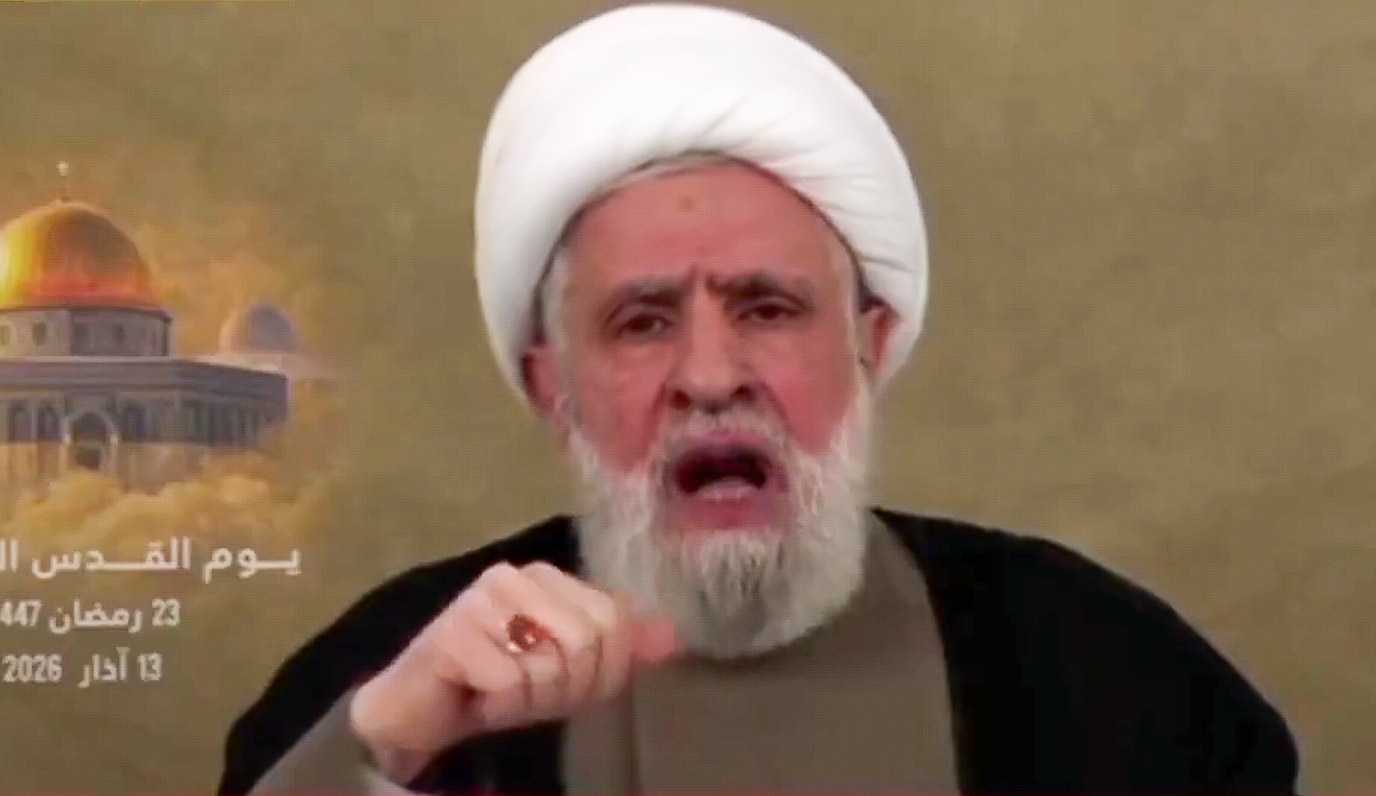
Hezbollah leader Naim Qassem on Monday urged Lebanon to cancel a planned meeting with Israel in Washington the following day, reiterating his group’s rejection of direct negotiations with its sworn enemy.
“We reject negotiations with the usurping Israeli entity… We call for a historic and heroic stance by canceling this negotiating meeting,” Qassem, whose Iran-backed terror group has been at war with Israel since March 2, said in a televised address. Hezbollah, like its patron Iran, openly seeks to destroy Israel.
The Lebanese and Israeli ambassadors to the United States are scheduled to meet in Washington on Tuesday to discuss holding direct negotiations between the two countries.
Lebanese authorities have stressed that Beirut first wants to secure a ceasefire in the Israel-Hezbollah war, but Israel has dismissed that prospect, saying it prefers instead to focus on formal peace talks with Lebanon itself, with which it has technically been at war for decades.
Prime Minister Benjamin Netanyahu said Saturday that “we want the dismantling of Hezbollah’s weapons, and we want a real peace agreement that will last for generations.”
Get The Times of Israel’s Daily Edition
by email and never miss our top stories
By signing up, you agree to the terms
Qassem, however, dismissed the upcoming talks, saying, “These negotiations are futile and require a Lebanese agreement and consensus,” and accusing the Lebanese government of becoming “a tool for Israel.”
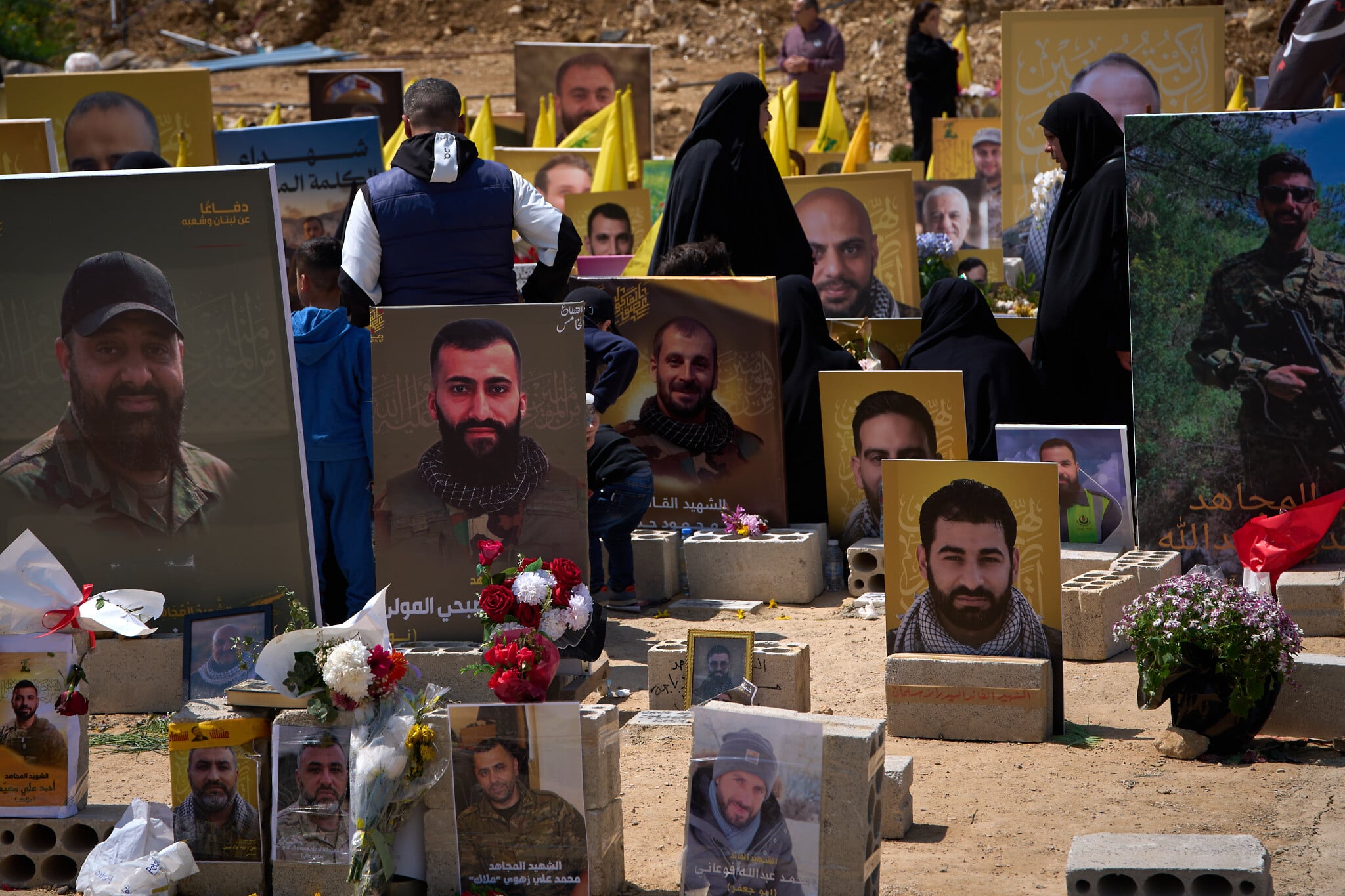
Graves bearing photos of Hezbollah fighters killed in Israeli strikes are seen in a cemetery in Choueifat, Lebanon, April 13, 2026. (AP/Emilio Morenatti)
“We will not surrender,” Qassem said as Hezbollah fighters faced off with advancing Israeli troops in southern Lebanon. “We will remain in the field until our last breath.”
The Hezbollah chief said that the terror group “has rebuilt itself” after months of intensive Israeli strikes, and also warned that “when the opportunity arises, we will capture enemy soldiers.”
Separately, a senior Hezbollah official on Monday vowed in an interview that the group will refuse to abide by any agreements that may result from the direct Lebanon-Israel talks.
Wafiq Safa, a high-ranking member of Hezbollah’s political council, told The Associated Press that “as for the outcomes of this negotiation between Lebanon and the Israeli enemy, we are not interested in or concerned with them at all.”
“We are not bound by what they agree to,” he added in a rare interview with international media. He spoke next to a cemetery as an Israeli drone buzzed overhead.
Though US-Iran talks in Pakistan over the weekend broke up without any agreement, Safa claimed Hezbollah has been informed that Iran “was able to obtain a cessation of attacks” in the entire administrative region of Beirut, including the capital’s southern suburbs — a Hezbollah-strong area known as Dahiyeh.
The IDF has not conducted any strikes against Hezbollah in Beirut since Wednesday night, though it has continued targeting the group’s facilities across southern Lebanon, as the terror group fires a steady stream of rockets and drones at northern Israel.
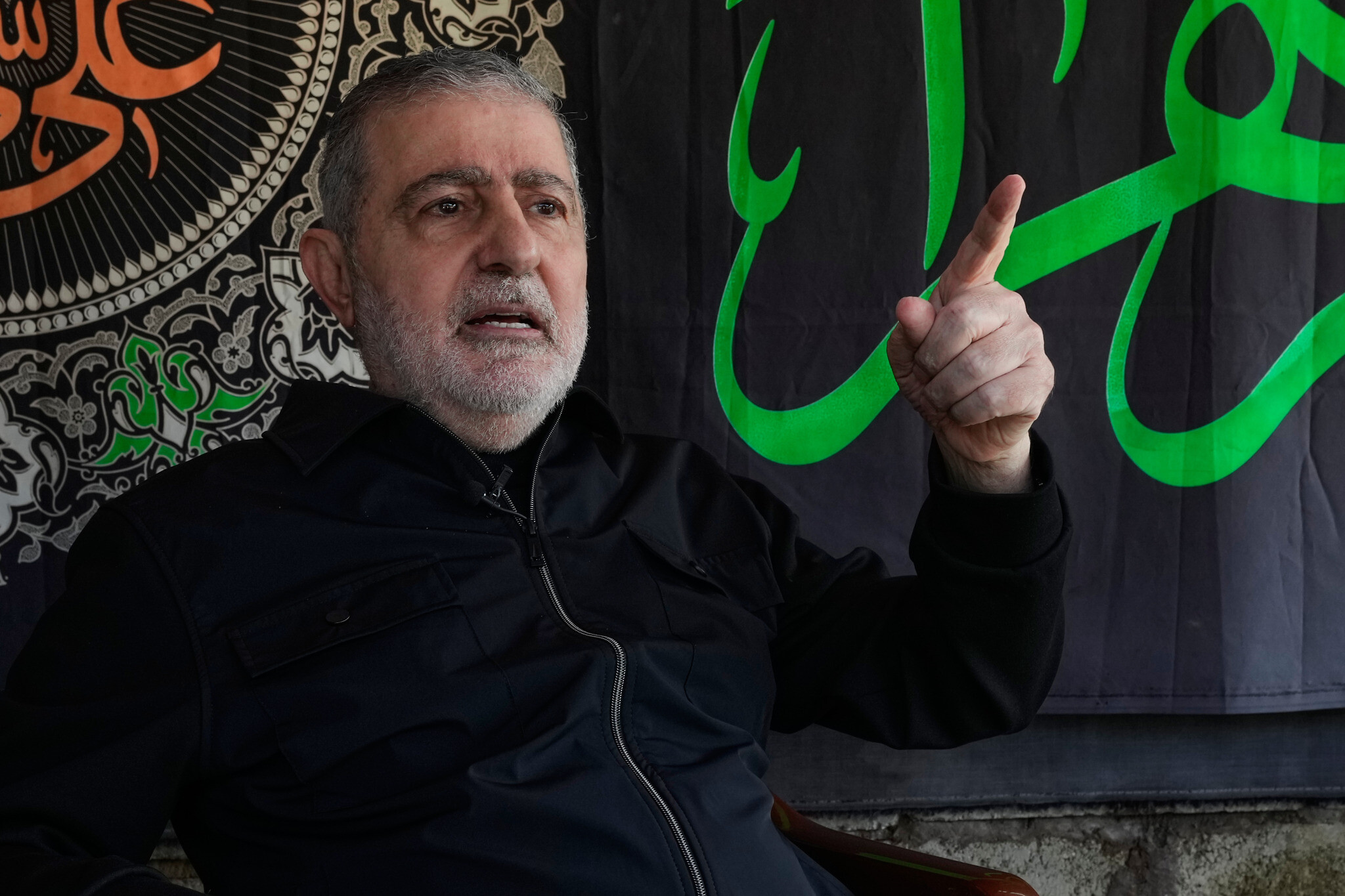
Wafiq Safa, a senior Hezbollah political council member, gestures as he speaks during an interview with The Associated Press in Beirut, April 13, 2026. (AP/Hussein Malla)
Safa asserted that Hezbollah’s actions in renewing the firing of rockets and drones at Israel last month were preemptive, because its leaders believed “Israel was preparing for a second battle with Lebanon” with the aim of destroying Hezbollah.
It was “an appropriate moment for Hezbollah… to rebuild a new equation” and restore deterrence against Israel, he said, denying any prior deals with Tehran that Hezbollah would enter the war if Iran was attacked.
Relations between the Lebanese government and Hezbollah — which is also a political party with a parliamentary bloc — have grown increasingly tense.
The government last year approved a plan to remove all weapons that are not property of the state — its security forces or military — and later said it had largely completed the task south of the Litani River, where Hezbollah is now fighting with Israeli forces. Israel pointed out that Beirut’s claim of disarming Hezbollah in the area has been proven to be untrue by the fighting in recent weeks.
After March 2, the Lebanese government went further, declaring Hezbollah’s armed wing illegal.
Safa said Hezbollah is currently not directly speaking with President Joseph Aoun or Prime Minister Nawaf Salam, but that all its communications are going through Parliament Speaker Nabih Berri, the head of the Hezbollah-allied Amal party.
Safa said that if there is a ceasefire and a withdrawal of Israeli troops from Lebanon, Hezbollah — which calls itself a “resistance” movement against archenemy Israel — is ready to negotiate with the Lebanese government about the fate of its weapons.
“The issue of resistance weapons is a Lebanese matter that has nothing to do with Israel or the United States,” he said.
You appreciate our wartime journalism

You clearly find our careful reporting of the Iran war valuable, at a time when facts are often distorted and news coverage often lacks context.
Your support is essential to continue our work. We want to continue delivering the professional journalism you value, even as the demands on our newsroom have grown dramatically during this ongoing conflict.
So today, please consider joining our reader support group, The Times of Israel Community. For as little as $6 a month you’ll become our partners while enjoying The Times of Israel AD-FREE, as well as accessing exclusive content available only to Times of Israel Community members.
Thank you,
David Horovitz, Founding Editor of The Times of Israel