
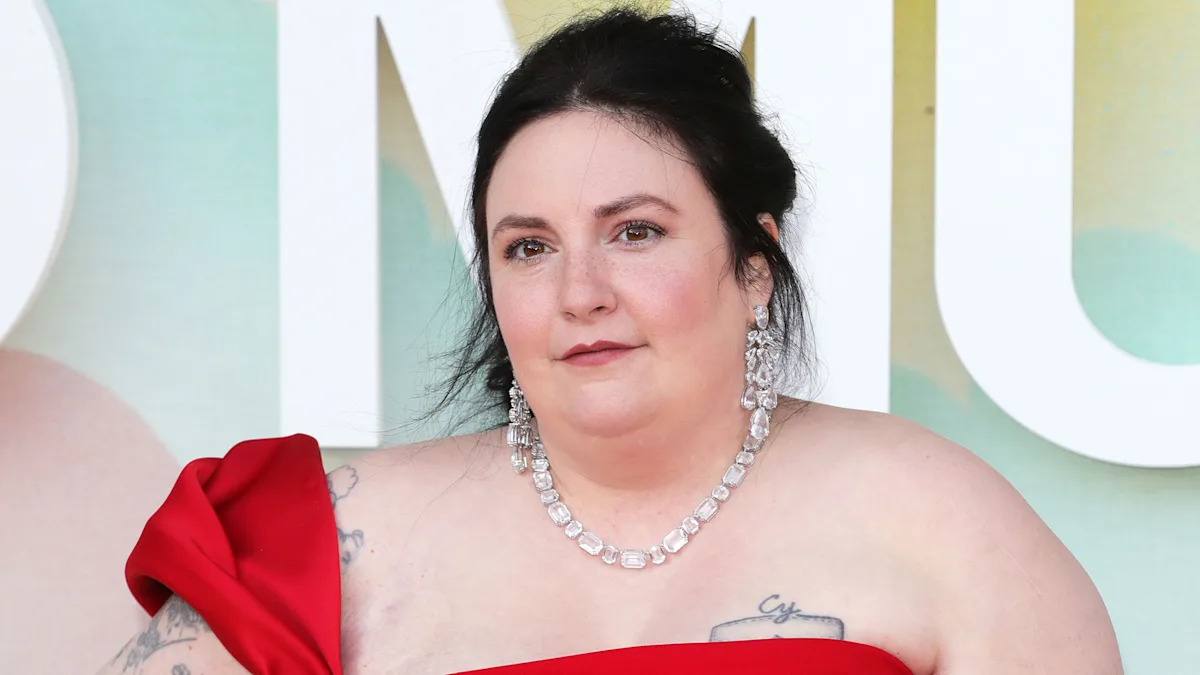
Lena Dunham has been famous for a long time. When Girls, the hit HBO series that she created and starred in, premiered in 2012, Dunham was just shy of her 26th birthday. She famously played the show’s chaotic and existential leading lady, Hannah Horvath, for which she faced intense media scrutiny. Now, on the cusp of turning 40, Dunham is ready to reflect on that pivotal time of her life.
“Famesick is, ostensibly, about the years 2010–2020 — a decade in which my life changed profoundly and permanently, in which nearly every strand of my DNA reconstituted itself,” Dunham wrote on Instagram last September, when she first announced the memoir. “But it’s also about illness as teacher, body as tattletale, our societal relationship to women on the edge, and the conditions that create art vs. the conditions that create happiness.”
Dunham may have retreated from the spotlight, but with Famesick, she’s cautiously reemerging on her own terms.
“This has definitely been the most public period of my life since the almost 10 years that Girls went off the air, and it’s cool to see how different it is for me this time around,” Dunham recently told People.
Below, read Yahoo’s roundup of everything Dunham has said about Famesick so far — from her romance with musician and producer Jack Antonoff to her allegedly volatile working relationship with actor Adam Driver and everything in between.
On her relationship with Jack Antonoff and feeling like a ‘really late bloomer’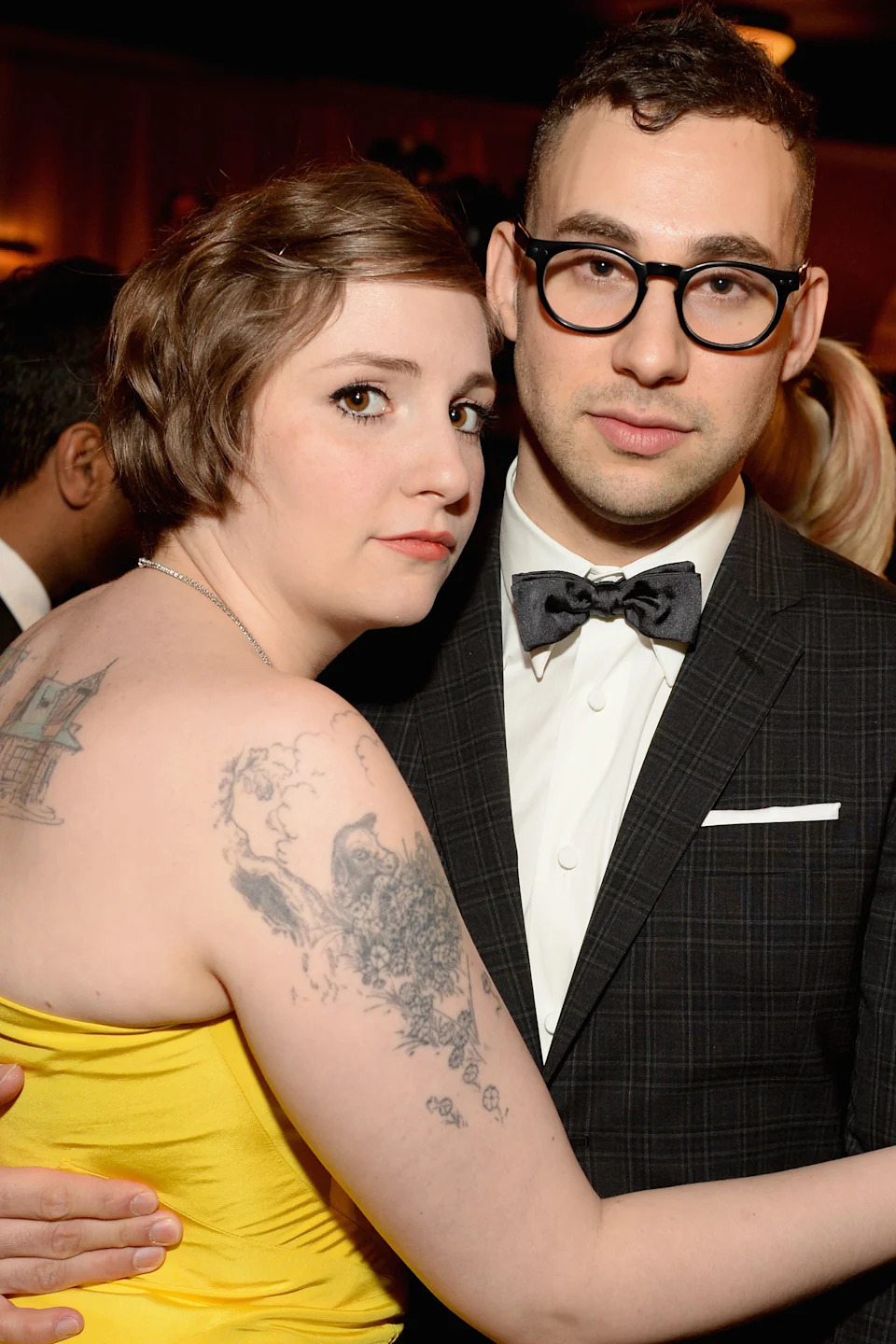
Lena Dunham and Jack Antonoff at the 71st annual Golden Globe Awards on Jan. 12, 2014.
(Michael Kovac/Getty Images for Moet & Chandon)
Dunham and Antonoff dated for about five years, from 2012 to 2017. Their romance began shortly after Girls premiered, while Antonoff was finding success as the lead guitarist of the band Fun. The couple called it quits in late 2017 after reportedly “growing apart.”
In an interview with the New York Times, Dunham spoke about how fame affected her relationship with Antonoff — and how difficult that breakup was.
“It’s a unique privilege to have every breakup song you love written by your ex,” Dunham said. “I feel blessed. I was a really late bloomer. That was my first. I felt like you fall in love with someone and then you’re together for the rest of your life.”
The Girls creator continued, “That ending was extremely intense for me. I looked around and was like, Is everybody this upset about their breakup? But it was also because of what it represented publicly for me: If you have this dynamic, intelligent, talented man who is signing off on you, how bad could you really be?”
On working with Adam Driver and tolerating his ‘male genius’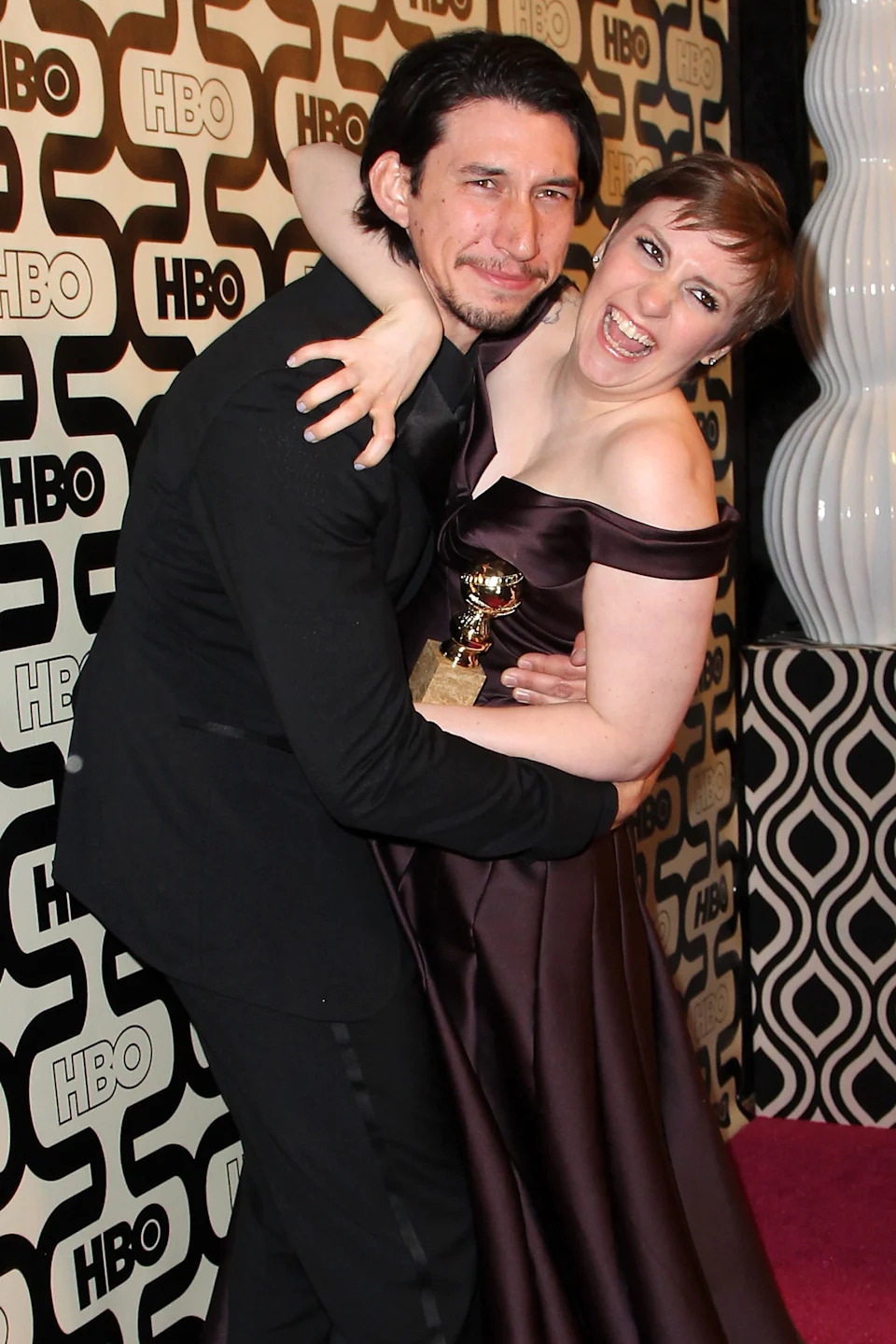
Adam Driver and Lena Dunham in 2013.
(FilmMagic via Getty Images)
Among the most shocking revelations in Famesick is Dunham’s alleged experience working with Adam Driver on the set of Girls. Before he became an Oscar-nominated actor known for films like Marriage Story, The Last Duel and Megalopolis, Driver played Adam Sackler, a brooding actor and woodworker who has a toxic on-again, off-again romantic relationship with Dunham’s character.
In her book, Dunham recounts Driver’s alleged toxic behavior on set, which included allegedly screaming in her face, throwing a chair at a wall next to her and punching a hole in his trailer wall, the Guardian reported.
Dunham told the outlet that she didn’t have the foresight to confront Driver about it: “At the time, I didn’t have the skill to. … It never entered my mind to say, ‘I am your boss, you can’t speak to me this way.’ And, at that point in my 20s, I still thought that’s what great male geniuses do: Eviscerate you. Which is weird, because I was raised by a male genius who would never do that.”
The Too Much creator was also keen to acknowledge the “amazing men” in her life, including Judd Apatow, Tim Bevan, Sam Levy and Mark Ruffalo.
“There’s plenty of them walking around,” Dunham told the Guardian. “But there were years when I thought: ‘Can’t I just make things that only have women in them?’”
On the internet being ‘a game you want to win’ in your early 20s
From left, Zosia Mamet, Jemima Kirke, Lena Dunham and Allison Williams attend the New York premiere of “Girls” in April 2012.
(Stephen Lovekin via Getty Images)
Dunham was just 23 when she sold Girls to HBO, and 25 when the series premiered. Describing herself and her fellow Girls costars Allison Williams, Jemima Kirke and Zosia Mamet as “lambs to the slaughter,” Dunham spoke to the Guardian about the extensive online criticism she faced in the early 2010s — and how she tried to work through it.
“If you have an addictive personality, which clearly I do, any hit of the dopamine of positivity [is welcome] and there’s also a hit of adrenaline that comes from the negative,” Dunham explained. “And then, because you see something negative, you want to see something positive to erase it, and you end up in this cycle. It’s easy when you’re young to feel the internet’s a game you want to win.”
On ‘genuinely’ loving rehab
In April 2018, Dunham checked into a 28-day rehab program for an addiction to benzodiazepines, a prescribed anxiety medication that she began to abuse. She checked out of rehab on her 32nd birthday and is eight years sober this month.
“I loved rehab. I genuinely did,” she told the New York Times. “A lot of addiction is feeling a positive feeling that is in direct contrast with the rest of your life. Your life is falling apart and you’re sitting on your bed in a good mood. There’s nothing in that. I want to have good feelings where you look under them and there are more good feelings.”
On dealing with chronic illness and processing sexual trauma
Dunham also spoke to the New York Times more broadly about her health, including coping with chronic illnesses and lacking control over what’s happening to her body.
In 2018, Dunham made the decision to undergo a total hysterectomy at 31 to treat the intolerable pain caused by severe endometriosis. In 2024, she announced her diagnosis of Ehlers-Danlos syndrome, a genetic condition that affects connective tissues in the skin, joints and blood vessels. Symptoms include chronic pain, joint dislocations and severe bruising.
“Illness, like fame, can make you contract into self because physical pain is one of the most selfish feelings that exists. All you want is to be out of it. Also, illness is scary to people,” Dunham told the New York Times. “Somehow my health picture kept getting less clear, not more, which also makes it very hard for other people to empathize with, because it seems abstract, amorphous.”
Sexual traumas have also affected Dunham’s relationship with her body. In Famesick, Dunham writes about being molested by a babysitter and having abusive sexual relationships, according to the New York Times. Dunham recounted a conversation with the bestselling author Dr. Gabor Maté that helped her make sense of her bodily traumas.
“Maté said, ‘Lena, once you have that experience as a kid, it’s like the weak wolf that gets picked off the pack. Someone who is looking for that sees you,’” Dunham said. “These experiences build up in you, you develop more distance from your body, people who want to cross boundaries are able to identify that you are someone who might not know how to deflect that. I needed some narrative cohesion to understand why there was this consistent pattern of feeling violated, and that was really soothing to me.”