
Rabia Iclal Turan
14 April 2026•Update: 14 April 2026
The US, Israel, and Lebanon agreed to begin direct negotiations following a trilateral meeting at the State Department in Washington, DC, on Tuesday, according to a statement released following the meeting.
The meeting, hosted by Secretary of State Marco Rubio and attended by Lebanese Ambassador to the US Nada Hamadeh and Israeli Ambassador Yechiel Leiter, included “productive discussions” on steps toward initiating direct talks, State Department spokesperson Tommy Pigott said in the statement.
“All sides agreed to launch direct negotiations at a mutually agreed time and venue,” it said.
“The United States expressed its hope that talks can exceed the scope of the 2024 agreement and bring about a comprehensive peace deal,” it added.
“The United States affirmed that any agreement to cease hostilities must be reached between the two governments, brokered by the United States, and not through any separate track,” the statement said.
According to the statement, Israel “expressed support” for disarming non-state armed groups and dismantling militant infrastructure in Lebanon, while committing to “direct negotiations” with Lebanon to “achieve that goal to ensure security for the people of both countries.”
Lebanon reaffirmed the “urgent need” for the full implementation of the Nov. 2024 deal, stressing territorial integrity and sovereignty and calling for a ceasefire and “concrete measures” to address the country’s worsening humanitarian crisis, the statement added.
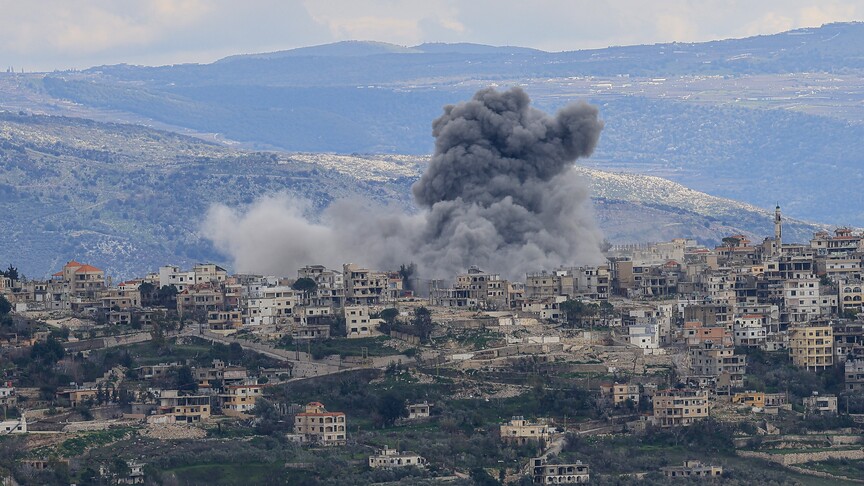
The talks, the first direct diplomatic engagement between the two countries in more than 30 years, came as Israel continues an air and ground offensive in southern Lebanon targeting Hezbollah following a March 2 cross-border attack, despite the November 2024 ceasefire.
Rubio told reporters ahead of the meeting that the talks marked the start of a “process,” saying a lasting solution would take time but could help build a framework for a “permanent” peace.
“All of the complexities of this matter are not going to be resolved in the next six hours, but we can begin to move forward to create a framework where something can happen, something very positive, something very permanent,” he said.
The Israeli army has expanded its air and ground offensive across Lebanon since a cross-border attack by Hezbollah on March 2, despite a ceasefire deal that took effect in November 2024.
According to Lebanese health authorities, at least 2,089 people have since been killed and 6,762 injured in the Israeli assault.
Hezbollah has rejected the planned negotiations in Washington, calling them “futile” and urging the Lebanese government to focus on confronting Israeli “aggression.”
Israel occupies areas in southern Lebanon, some for decades and others since the previous conflicts in October 2023 and November the following year.