

Listen to this article
Estimated 4 minutes
The audio version of this article is generated by AI-based technology. Mispronunciations can occur. We are working with our partners to continually review and improve the results.
Members of the St. John’s medical community are speaking out against a new federal co-payment system they say will hurt access to care for refugees.
The federal government will implement a co-pay system under the Interim Federal Health Program (IFHP).
That program provides certain medical and health benefits to refugee claimants — individuals seeking refugee status in Canada due to claims of persecution, torture or other harms — before they’re eligible for provincial coverage.
The change would kick in May 1, and introduce a $4 fee on every prescription dispensed and a 30 per cent fee on things like dental, vision and mental health care.
“The goal is that the federal government realizes that there’s widespread opposition to these cuts,” Dr. Christine Aubrey-Bassler, a St. John’s family physician, told CBC News Tuesday at an event to highlight and oppose the government’s move.
“They’re really targeting the most vulnerable people in our population, and are going to make a lot of health-care inaccessible for a lot of people.”
Aubrey-Bassler is the Newfoundland and Labrador campaign lead for the No Cuts to Care Coalition, a national coalition opposing the co-pay program. St. John’s was one of nine cities across Canada to host Day of Action events on Tuesday, she said.
A February report issued by the Office of the Parliamentary Budget Officer found the annual cost of the IFHP rose from $226 million in 2021 to $896 million in 2025.
Federal government says basics still covered
In a statement to CBC News, Immigration, Refugees and Citizenship Canada (IRCC) said that the changes to the program were made in the name of “sustainability.”
The IRCC said the new co-pay only applies to supplemental health services, and things like doctor visits, hospital stays, vaccinations and diagnostic testing remain fully covered under the program.
“This approach will allow the government to continue supporting eligible beneficiaries while keeping the program fair and consistent with other publicly funded health insurance programs that provide supplemental benefits, including those available to many social assistance recipients,” spokesperson Isabelle Dubois said in an email.
Dubois went on to say that the measure is expected to save the federal government $126.8 million in savings this fiscal year and $231.9 million onwards.
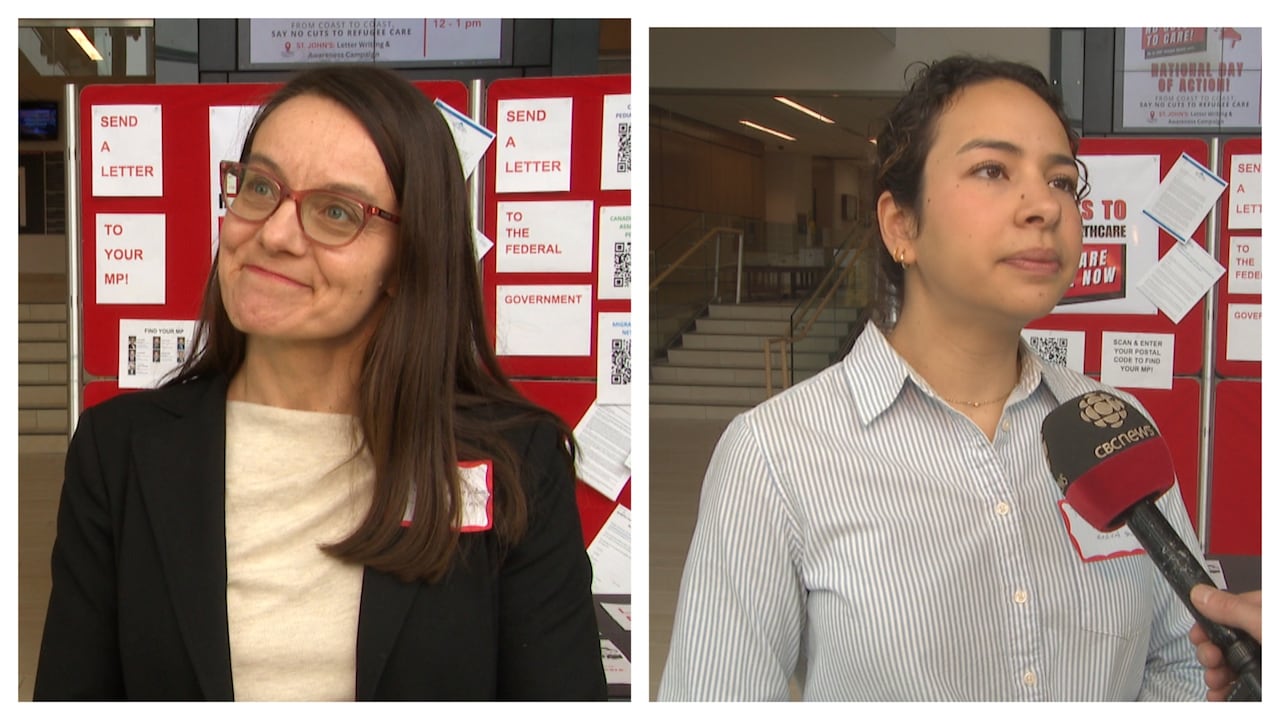 Dr. Christine Aubrey-Bassler, left, and medical student Maria Saleeb say the co-pay system will harm access to care for refugees. (Mark Quinn/CBC)
Aubrey-Bassler said she sees the co-pay as an attack on universal health care, saying the added cost that will come with co-pay will act the same as a cut — impacting claimants’ ability to seek the care they need
“Adding co-pays costs money. So in Canada and internationally, there’s research that shows that less prescriptions are filled,” she said. “If you don’t have your blood pressure medication, you’re more likely to have a stroke, so the cost of having a stroke versus the medication is much higher.”
Canadian Medical Association President Dr. Margot Burnell has also called the implementation a step backward in care.
In commentary posted on March 27, Burnell pointed to a similar implementation in 2012 that was ultimately shut down by the Federal Court of Canada because it resulted in “cruel and unusual treatment” for claimants.
Maria Saleeb, a second-year medical student and co-ordinator of a student-led appointment clinic for refugees, said both friends who are refugees and patients she spoken with about the system are already concerned.
“Four dollars might not seem like a big amount to you and I, but when you’re talking about people with chronic health conditions … you can see up to 10 medications per patient,” Saleeb said, adding refugee claimants coming to Canada often already face steep financial barriers.
“You’re adding that cost. Again, that’s a huge barrier. Patients are already skipping their medications [because of it.]”
Ahead of its implementation on May 1, Aubrey-Bassler said the coalition is calling on concerned residents to speak out against the co-pay system to their member of Parliament.
Download our free CBC News app to sign up for push alerts for CBC Newfoundland and Labrador. Sign up for our daily headlines newsletter here. Click here to visit our landing page.