
A series where artists share their musical firsts and lasts.
“I started making money by playing in bands at eleven or twelve. I got up, sang two songs, and they paid me $10.”
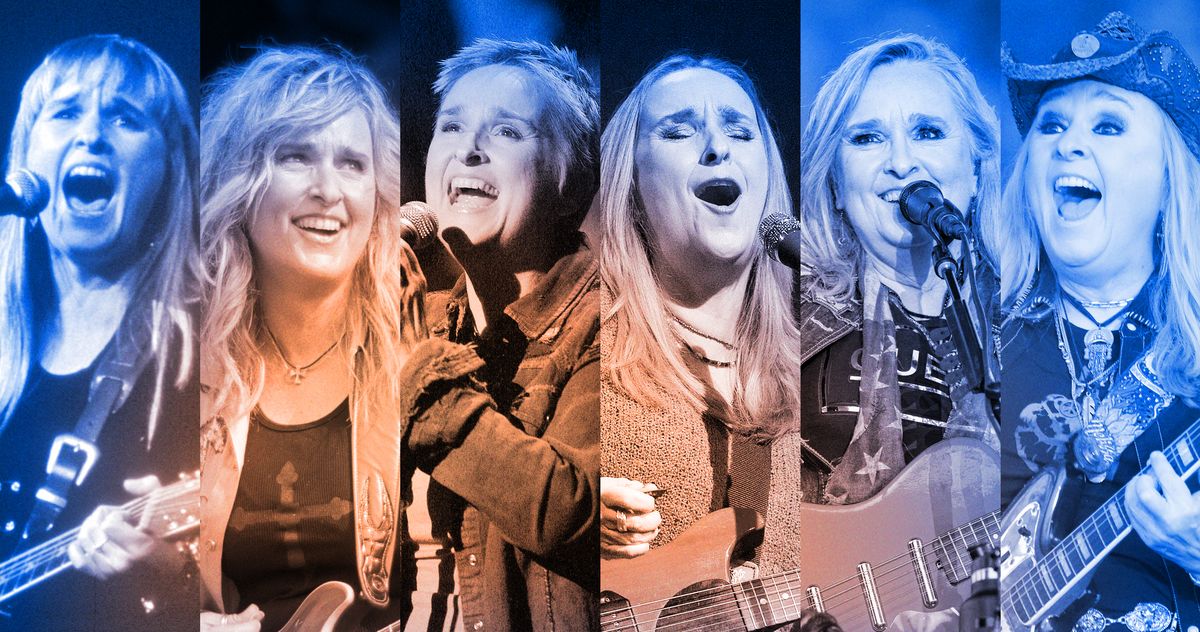
Photo-Illustration: Vulture; Photos: Getty Images (Anna Krajec/Michael Ochs Archives, Daniel Knighton, Amy E. Price), FilmMagic (J. Merritt, Debra L Rothenberg), Clayton Call/Redferns
Melissa Etheridge’s 2026 has been a banner year so far. Prior to the release of her 17th — damn! — studio album, Rise, the singer-songwriter and activist received her inaugural nomination for the Rock & Roll Hall of Fame, which she admits “meant more to me than I thought it did.” (She didn’t make the final cut this time around, so we’ll all have to campaign harder next year.) You can catch Etheridge as she embarks on an extensive tour throughout the country this spring and summer, giving us the perfect excuse to rock out to “Come to My Window” with a can of rosé in hand. Before the craziness of the tour kicked in, Etheridge joined us for our latest episode of “Music History,” in which she discussed how unexpectedly freeing her first label deal was, her television debut in David Letterman’s freezing-cold studio, and the Lilith Fair appearance that never was.
I had a sister four years older than me — she was deeply into the Beatles. The Beatles had just hit when I was about 3 or 4, and I remember the album Beatles ’65 and the way that the songs sounded. “The Night Before” would make me feel this certain way as a kid. I don’t think people understand how groundbreaking George Martin was for the Beatles. I was always a John Lennon fan. My sister was all about Paul McCartney, but I always preferred John. I thought he was an amazing songwriter and person.
My father, when I was 8 years old, brought home a guitar for my sister. I had already been jumping around my house. I found an old badminton racquet and I watched The Archies on television and I remember wanting to be Reggie. I wanted to play guitar. So when he brought one home, I thought, Oh, that’s for me. Then he said, “No.” And the guitar teacher said, “You’re too young.” I was like, What? They said, “Your fingers are going to bleed and you’ll stop.” They finally allowed me to take a lesson, and I never stopped. The first song I learned with notes was “Twinkle, Twinkle, Little Star.”
I started “writing” when I was 10, basically copying other songs. My grandmother passed away when I was 12, and up until then, she was pretty much the only one that would listen to me. She had been getting sick — she had cancer, and back then you didn’t talk about cancer. So she was just in bed. I didn’t know why I would go sing to her. I played this little song I had seen in a book of children’s verses, made up a little song to one of the verses, and played that for her. She said to me, “Oh, Missy, that’s so beautiful. When I die, will you put that in my casket?” No one ever said she was dying. No one. They didn’t talk about it back then. That made me realize, Oh my goodness, she’s actually dying.
A few weeks later, she passed away. I wrote down the words and gave them to my aunt. I couldn’t do it myself. But then I went home and wrote my first real song. It was called “Lonely As a Child,” and it had the same melody and chords. So that was my first song. “Lonely is a child waiting for his mother to come home / Lonely is a child waiting for his mother, but a mother he has none.” It’s about the war. It was a full folk song.
I started making money by playing in bands at 11 or 12. I got up, sang two songs, and they paid me $10 or whatever. I was like, I’m all for this, man. This is good. When I started having money, my parents would literally drop me off at the record store and come back and get me three hours later. I remember getting Bonnie Raitt’s “Runaway.” My father previously bought me Carole King’s Tapestry and the Beatles’ Sgt. Pepper’s Lonely Hearts Club Band. That was a big one for me.
Mine was a story of things opening up little by little but always going in the right direction. A man named Bob Hamill came to Leavenworth, my hometown in Kansas, and he put together a talent show at the mall that my parents used to drop me off at. He put a bunch of kids together in this variety-show act. That’s the first time I felt like, Oh, this guy thinks I can do that part. No one was ever very effusive or “You’re going to make it,” but things kept growing. Years later, my manager at the time and I had a joke: We were always like, “Someday we’re going to have that bottle of Champagne and celebrate that we made it.” And we never did. It’s that slow. You can get a manager, but it doesn’t mean you’re going to go any further. You can get signed to a record deal, but it doesn’t mean your record is ever going to get out. When I was nominated for a Grammy, where I didn’t win but I got to perform, I felt like I won. It was like, Whoa, okay. I’ve made it to a certain point that I can look back and go, “I’ve done something here.”
My manager found me playing at a small little tiny women’s bar in Pasadena. I’m playing two different women’s bars, actually, one in Long Beach as well, five nights a week. So I’m making $25 a night, sometimes $50, plus tips. He found me because his wife played soccer with some girls that would come down to see me — that’s how it goes. He had managed Bread and Deniece Williams, a for-real manager. So he starts bringing record companies to me and he says, “You know what? Stay here. You’re making money. You’re working on your songs. This is good.” And for the next four years, every single record company in Los Angeles came to see me: Warner Bros., Virgin America, and so on. They would come in — some of them would come back the next week, and some of them would come back for a whole month. Then they’d say, “We just don’t hear a hit.” They were surrounded by lesbians. It was obvious I was a lesbian. This is 1985 and no one’s out and nobody’s a lesbian. I don’t know if that had much to do with it. I’m not going to blame that.
But I wasn’t what they wanted until a producer told me, “You know who needs to hear you? Chris Blackwell at Island Records. He signed Bob Marley and brought U2 into the world.” This producer told Chris, “We’re going to go listen to a girl down the street,” and he drove him an hour to Long Beach. Chris is like, “You’ve kidnapped me. What are you doing?” But he came in and heard four songs. He looked at me and goes, “I want you on my record label. I don’t know why you’re not signed.” That was it. Boom. This person signed me right there. From the get-go, he said, “Just be that girl I saw in the bar,” and he supported that for six albums over ten years. I never had an A&R guy. I just turned in the music and he was 100 percent supportive. I don’t think he was ever really a fan of my music, but he understood my talent and he got out of the way. I really appreciated him. I think he wasn’t afraid of me being gay. That didn’t throw him off at all. He saw a girl who could write songs. He saw a powerful voice and that I could perform.
David Letterman — this is back when he was Late Night. He was known for bringing the cool music people on. If you go back and find that clip, you’ll hear David say, “In her national television debut, this is Melissa Etheridge.” His studio was always freezing cold. If you talk to anybody, they’ll say it’s beyond colder than any studio ever. You had to wear a winter coat there in the summer. But he was very kind, and I’ve been on his show many times. I played with his band and had a really good time. I always liked going back and playing with them.
Something I’ve learned that my manager used to tell me is “Nobody remembers whether you win or not, unless you’ve got five Grammys in your hands. But they remember if you perform.” So I would say the first time I performed had more of an impact than the first time I won. I played “Bring Me Some Water.” I think I had sold 60,000 albums, but I was being played on this cool radio station in Los Angeles and got a lot of exposure through that. I was at the Grammys for Best Rock Female Vocalist. It was Tina Turner, Pat Benatar, Toni Childs — if you remember her — and Sinéad O’Connor. Best Rock Female Vocalist isn’t even a category now, and let me complain. They would say, “Oh, there’s not enough women,” which always mystified me. I was like, What do you mean there’s not?
Pat and Tina didn’t show up, but the other three of us were there, and they wanted to combine us three together in one performance. My manager said “no.” He held out. I was like, Oh my God, I might lose any chance of doing it. But he really held his ground. So Toni Childs, Sinéad O’Connor, and myself, each of us got to do a full song. That was the year that Tracy Chapman took off. It was a really big female year, and I got to sing my song. I went from 60,000 records to, like, 500,000 records basically overnight. That performance was huge for me. Now, the first time I won a Grammy was my third album for “Ain’t It Heavy,” which is not one of my big hits. I mean, it’s okay, but it was off-camera. So it was great to get the hardware, but I don’t have a big connection to that win.
Lilith Fair was right after my big fourth and fifth albums, which were Yes I Am and Your Little Secret. I had just finished my big world tour and they were putting this thing together and I wanted to get up and be a guest or whatever in Los Angeles. I put that out there. And the answer that came back to me was ‘We don’t have a place for you.’ It’s funny how many people tell me that they saw me at Lilith Fair, but I wasn’t there.
I tell this to my children’s friends and anyone I want to impress. It was in the early 2000s and I was getting an award or something. This young girl was also getting an award, and she came up to me and said her parents took her to a Melissa Etheridge concert, saw me play the 12-string guitar, and that’s why she learned to play the guitar. And her name was Taylor Swift. She was really the first to just walk up and go, “I’m a huge fan.”
Family Guy. If there’s any sort of lesbian scene, they’re going to want to play “Come to My Window.” It becomes this sort of thing. But one of my other favorites was Parenthood. I did a Christmas album where I wrote some original songs, and they played “Glorious.” It’s a really sweet moment when she’s in the hospital, and it’s well done.
After the dress rehearsal, I discovered that my show was four hours long and that I should probably cut it down. So after the first preview, it was probably two and a half hours. It was still really long. I got to tell you: The Broadway thing, I have such respect for those people. It’s such hard work, and people are like, “Oh, you’re going to do that again.” I’m like, “No.” From a performance standpoint, it was really, really difficult to go in there every single day and do the same thing over and over. It’s routine, and there’s things I have to stick with. I can’t eat two hours before, and sleep is extremely important.
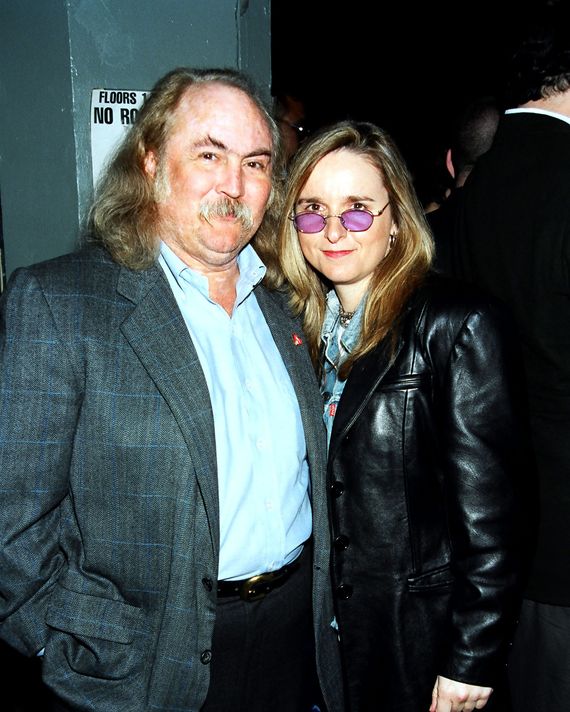
With David Crosby.
Photo: Jeff Kravitz/FilmMagic
I know it’s a funny thing. This was the early ’90s. It was rare to be gay “out,” and to have kids was unheard of. My girlfriend had been adopted, so she wanted her kids to know who the parent was. I said, “That’s great, but I don’t want someone who wants to be a parent.” I want to be the other parent. Brad Pitt was a good friend of mine and would have been the obvious choice at the time. But Brad really wanted kids and loved kids. I was like, I can’t say, “Can I have your child?” So we were looking around, and I knew David and his wife, Jan. We had gone to visit them in Hawaii, and they had just had their son Django and were so grateful. We told them how we were thinking about it, and Jan actually said, “Well, why don’t you use David?” And David’s like, “Yeah, well, okay.” We thought about it and came back and we said, “Hey, if you’re serious, that’s perfect.” They had their child and didn’t want to raise anybody else. Our children called him “Bio Dad” for a while. It was more like an uncle relationship. It was perfect.
Every year, I’d be like, Whatever. I did see a change once Mr. Jann Wenner was not in charge anymore. But it really was out of my mind. It’s not something that I focused on. When I did get the call, I was moved. Wow, I’m being recognized by my peers and by the whole rock-and-roll community. And that meant a lot. Grammys and Oscars — those are great. This is, like, a lifetime thing. I understand how difficult it is to say who belongs in the Rock Hall because rock and roll is an idea; it’s not just a specific genre. Rock and roll is a feeling. I’d love to see Rickie Lee Jones, Joan Armatrading, and Fanny also get inducted.