
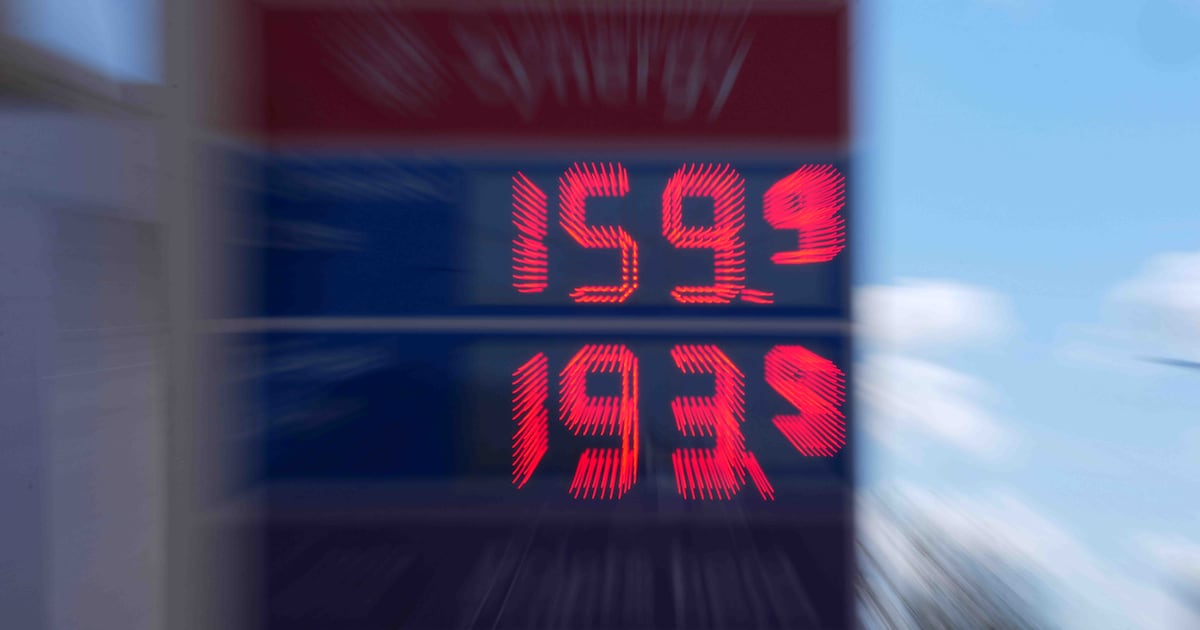
The war in Iran and the closure of the Strait of Hormuz – through which about one fifth of the world’s oil and natural gas flows – has seen fuel costs rise sharply in the past month.
With the disruption expected to have a lasting impact on prices, governments around the world are scrambling to introduce measures to help cushion the impact on consumers and the wider economy. Irish Times correspondents report on the measures taken so far:
United Kingdom: steep rises due
Petrol: €1.77/litre Diesel: €2.14/litre
Britain’s government has so far resisted introducing a big package of fuel price cuts for consumers, in part because previous packages have been extended until now, but also because UK government debt is so high.
After the Ukraine invasion in 2022, then chancellor of the exchequer Rishi Sunak brought in a 5p (5.7 cent) per litre reduction in fuel duties at a cost of about £5 billion per year.
Successive UK governments have renewed the fuel duty cut, which was originally intended to last for 12 months.
A gradual return to the pre-2022 duty level was planned from next September. Now there is political pressure on the UK government to extend the cuts, although that would require chancellor Rachel Reeves to redo her budgetary sums.
Energy – gas and electricity – costs fell in April by an average £150 per family (€173) when the UK government removed green levies from bills. The green levies will be funded from general taxation instead.
However, steep rises are expected from July once new energy company price caps are introduced.
The only specific financial support brought in as a result of the war in Iran was a modest £50 million (€58 million) package targeted at those who use home heating oil. Most UK consumers are on the gas network but in Northern Ireland in particular, there are clusters of homes reliant on expensive oil fuel. Mark Paul in London
Slovenia: fuel rationing
Petrol: €1.61/litre Diesel: €1.77/litre
Slovenia announced the temporary rationing of fuel at the pumps 3½ weeks ago to preserve the country’s supply of petrol and diesel.
Part of the problem is that – bizarrely – the price of gas is too low when compared with neighbouring countries. There have been reports of large numbers of motorists crossing the border from Austria to fill up their tanks in Slovenia, leading some service stations to run dry.
Prime minister Robert Golob announced that people would be limited to purchasing 50 litres of fuel a day, and 200 litres for private companies and farmers. The measures were to be enforced by filing stations. The prime minister said the small central European country’s fuel supplies were not at risk.
The government has said EU rules prevent it from doing anything about motorists from neighbouring countries crossing to buy petrol in Slovenia.
The country separately cut excise duties on fuel to the lowest point allowed under EU law and introduced a “temporary and extraordinary” measure to mitigate the impact of its carbon tax.
The administration is exploring whether it could lease extra storage capacity overseas, to build up a strategic reserve of gas. Slovenia is also mulling a possible cut to VAT charged on essential food and groceries. Jack Power in Brussels
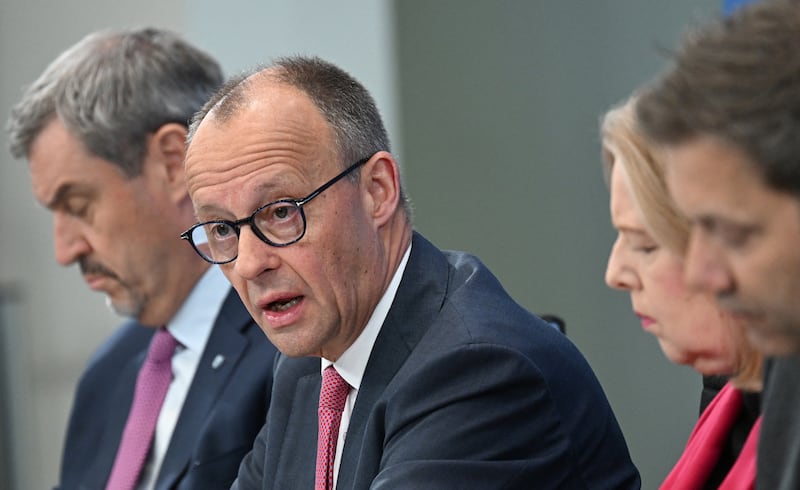 German chancellor Friedrich Merz unveiled a two-month cut of 17 cent a litre on petrol and diesel. Photograph: Ralf Hirschberger/AFP/Getty Images Germany: temporary tax cuts
Petrol: €2.24/litre Diesel: €2.43/litre
Germany has unveiled a temporary fuel tax cut and other stimulus measures to cushion the knock-on costs of the unresolved Iran crisis. The measures have also been introduced to tackle growing tensions inside the ruling coalition.
After days of public political squabbles and an emergency weekend summit, German chancellor Friedrich Merz unveiled a two-month cut of 17 cent a litre on petrol and diesel to “improve the situation for motorists and businesses in the country”.
The centre-right leader, aware such interventions are unpopular within the conservative-liberal end of his Christian Democratic Union (CDU), said the state “cannot compensate for every market event”.
German motor-fuel prices are, along with Denmark and the Netherlands, among the highest in Europe. Derek Scally in Berlin
Spain: renewables keep prices low
Petrol: €1.55/litre Diesel: €1.81/litre
Spain is a significant investor and European leader in renewable energy, something that will shield the Iberian country from the worst impacts of the fuel crunch.
About half of electricity used comes from renewable sources, such as solar, hydro and wind, which alongside its nuclear power supply, has kept bills low.
Spain’s prime minister Pedro Sánchez announced a €5 billion package of supports in response to the shock from the Iran war.
That included a cut to VAT on fuel from 21 per cent to 10 per cent and a cut to the price of fuel set at 30 cent per litre. Spain has announced fuel subsidies for farmers and the transport sector, set at 20 cent per litre. Sánchez, however, is under pressure from his coalition partners to do more. Jack Power in Brussels
Poland: cap on fuel prices
Petrol: €1.43/litre Diesel: €1.80/litre
Poland has introduced a cap on the price of fuel to make sure cuts to excise duty and tax are passed on to customers at the service station pump. The level of the cap is set daily by the energy ministry using a mechanism that takes account of the fluctuation in global markets and the margins of fuel suppliers.
Poland has more than halved VAT on fuel from 23 per cent to 8 per cent, and cut excise duty to the minimum allowed under EU law. It is estimated those reductions will cost the state about €370 million a month.
Prime minister Donald Tusk said a tax would be levied on the “excessive profits” on energy corporations during the spike in the price of fuels.
The government is also monitoring for significant increases in “fuel tourism”, where motorists are crossing from Germany to buy petrol in Polish filling stations, but has said the issue hasn’t become a major problem yet. Jack Power in Brussels
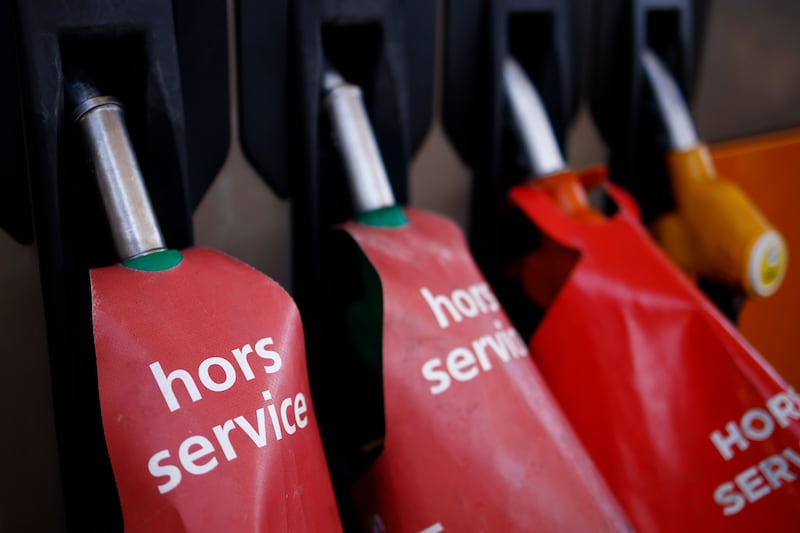 ‘Out of service’ signs on pumps at a petrol station in Romainville, near Paris. Photograph: EPA France: price gouging inspections
Petrol: €2.03/litre Diesel: €2.23/litre
In response to the price shock, the French government announced it would almost double funding for electrification to speed up a national goal to cut France’s dependency on fossil fuels from 60 to 40 per cent by 2030.
“The issue is no longer only about climate, it now concerns national interest,” prime minister Sébastien Lecornu said.
Subsidies of €100,000 are available for electric vans and trucks, gas boilers are to be phased out, and policies will promote the widespread adoption of heat pumps and electric vehicles.
In the short term the government has made a range of subsidies available for affected sectors.
Excise duty has been abolished on agricultural diesel for April. Small haulage companies can avail of a 20 cent per litre subsidy this month, as can the fishing industry. The transport, agriculture and fishing sectors have been allowed to delay social security and tax payments without charge, and have been offered short-term loans.
The government is also considering reviving pandemic-era unemployment supports to allow business to cut staff costs while keeping people employed.
Perhaps the most eye-catching measure has been the state inspections of fuel prices at petrol stations to ensure there is no gouging at the pump. Naomi O’Leary in Paris
China: little disruption
Petrol: €1.19/litre Diesel: €1.02/litre
As the world’s biggest importer of oil through the Strait of Hormuz, China imports as much of it from the Gulf as India, Japan and South Korea combined. But while other Asian countries are introducing emergency measures to deal with the impact of the war in Iran on the price and supply of fuel, China has weathered the conflict with little disruption.
China has been stockpiling oil in recent years so that its strategic reserve has 1.3 billion barrels of crude oil, enough to last for several months even if there were no imports. And the supply of oil from the Gulf has not yet stopped, with a number of tankers bound for China sailing through the strait with Iran’s permission before the United States imposed its blockade this week.
China’s rapid expansion of its renewable energy capacity has helped too, with solar, wind and hydropower fulfilling a much greater proportion of the country’s energy needs. But Chinese manufacturers and consumers have not been entirely protected from rising fuel prices, which have introduced inflation into the economy in recent weeks after months of deflation.
The authorities have intervened to keep gas and diesel prices down in an attempt to protect farmers and they have limited the export of fuel and fertilisers. But transport fuel costs rose by 10 per cent in March and airlines have hiked fuel surcharges, which could hit tourism as the holiday season begins. Denis Staunton in Beijing
Note: All fuel prices are based on figures compiled on April 6th. Source: globalpetrolprices.com and Tolls.eu