
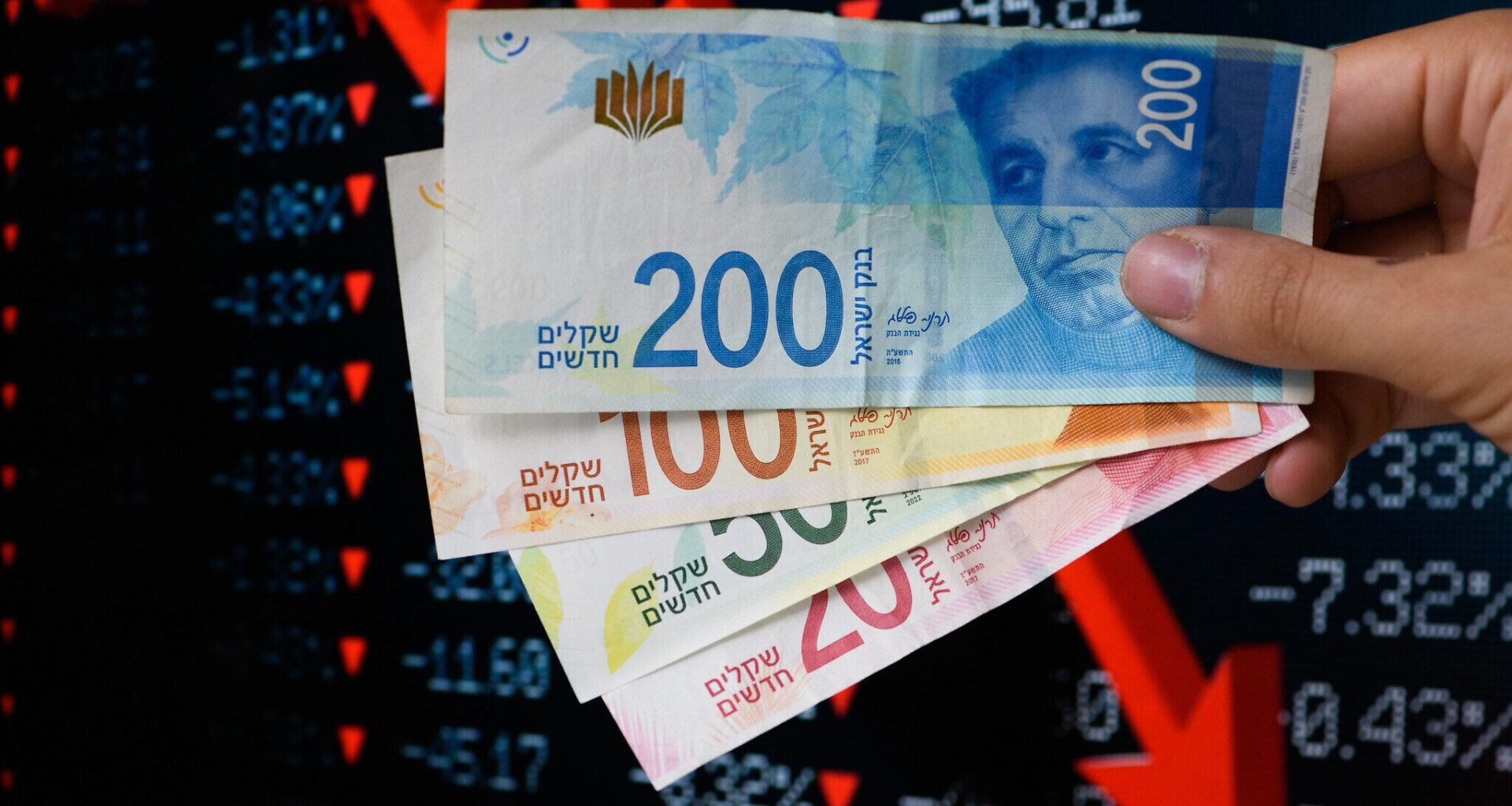
The shekel on Wednesday crossed below the threshold of NIS 3 per dollar, its strongest level in more than 30 years, fueled by growing optimism over an end to the war with Iran and a ceasefire in Lebanon. But manufacturers and exporters warned that the strength of the currency presented a risk to the economy.
The shekel was trading at 2.993 to the dollar at one point on Wednesday, its strongest showing since October 1995. The local currency has appreciated more than 5 percent against the dollar so far in 2026, and more than 20% over the past year, despite an economy strained by military campaigns with Iran and ballooning war costs.
“A dollar exchange rate below NIS 3 is a death blow to export profitability,” warned Israel Manufacturers’ Association President Avraham Novogrocki. “A cumulative change of about 20% in the exchange rate completely erases profit margins and pushes factories to the brink of closure.”
The overly strong shekel has a deflationary force as it makes imports cheaper, restrains price rises and credit costs for consumers, and enables the Bank of Israel to lower interest rates. However, it also erodes the competitiveness of Israeli manufacturers, especially businesses reliant on exports and earning in dollars, while paying expenses including salaries in shekels.
Novogrocki cautioned that the industry is grappling with “collapsing dollar revenues and rising shekel expenses,” which will have broader consequences, including reduced activity and investments, and layoffs.
Sign up for the Tech Israel Daily
and never miss Israel’s top tech stories
By signing up, you agree to the terms
“High-tech and multinational companies are also already considering relocation to shift operations from Israel,” said Novogrocki. “This will dramatically harm state revenues, and raises real concerns about tax revenues.”
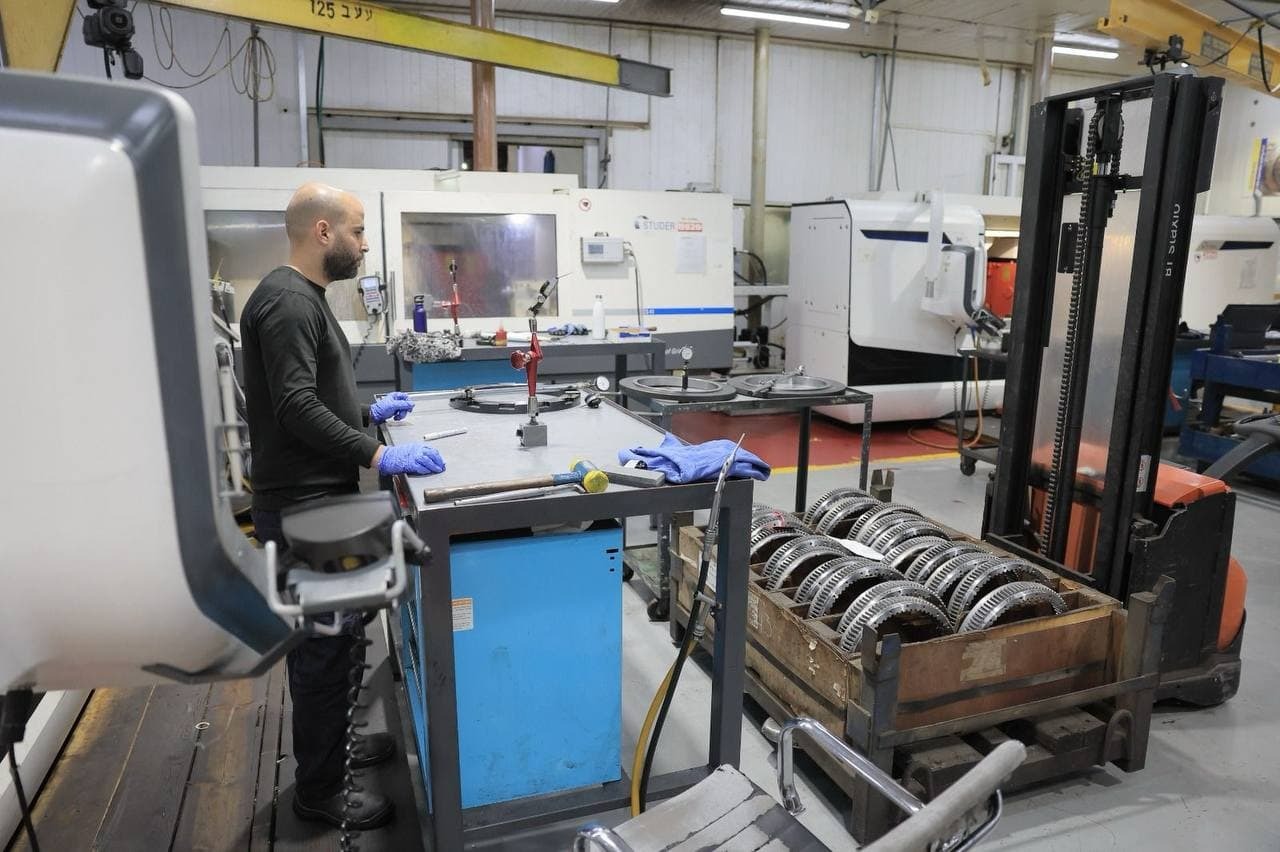
Illustrative: Machinery in an armored vehicle manufacturing factory, December 27, 2023. (Defense Ministry)
“Without immediate action, the entire economy will pay the price,” he said.
Exports make up as much as 40% of Israeli economic activity. Exports of goods were down 7.4% in 2025 in shekel terms, according to Central Bureau of Statistics data.
So far, the Bank of Israel has not rushed to intervene in the market by buying tens of billions of dollars to moderate the shekel’s gains, as it has done in the past, or by cutting interest rates.
“When the shekel strengthens, the consumer is able to import and travel abroad cheaply, but exporters face the brunt,” said Leader Capital Markets chief economist Jonathan Katz. “It’s an erosion of their competitiveness, which at some point impacts our export performance.”
“However, the Bank of Israel is not likely to intervene as this is not a bubble, the economy has been resilient, and there is no threat to inflation,” said Katz.
The Bank of Israel has previously indicated that it will act in the foreign exchange market in the event of unusual movements in the exchange rate that are inconsistent with underlying economic conditions, or when there is a market failure.
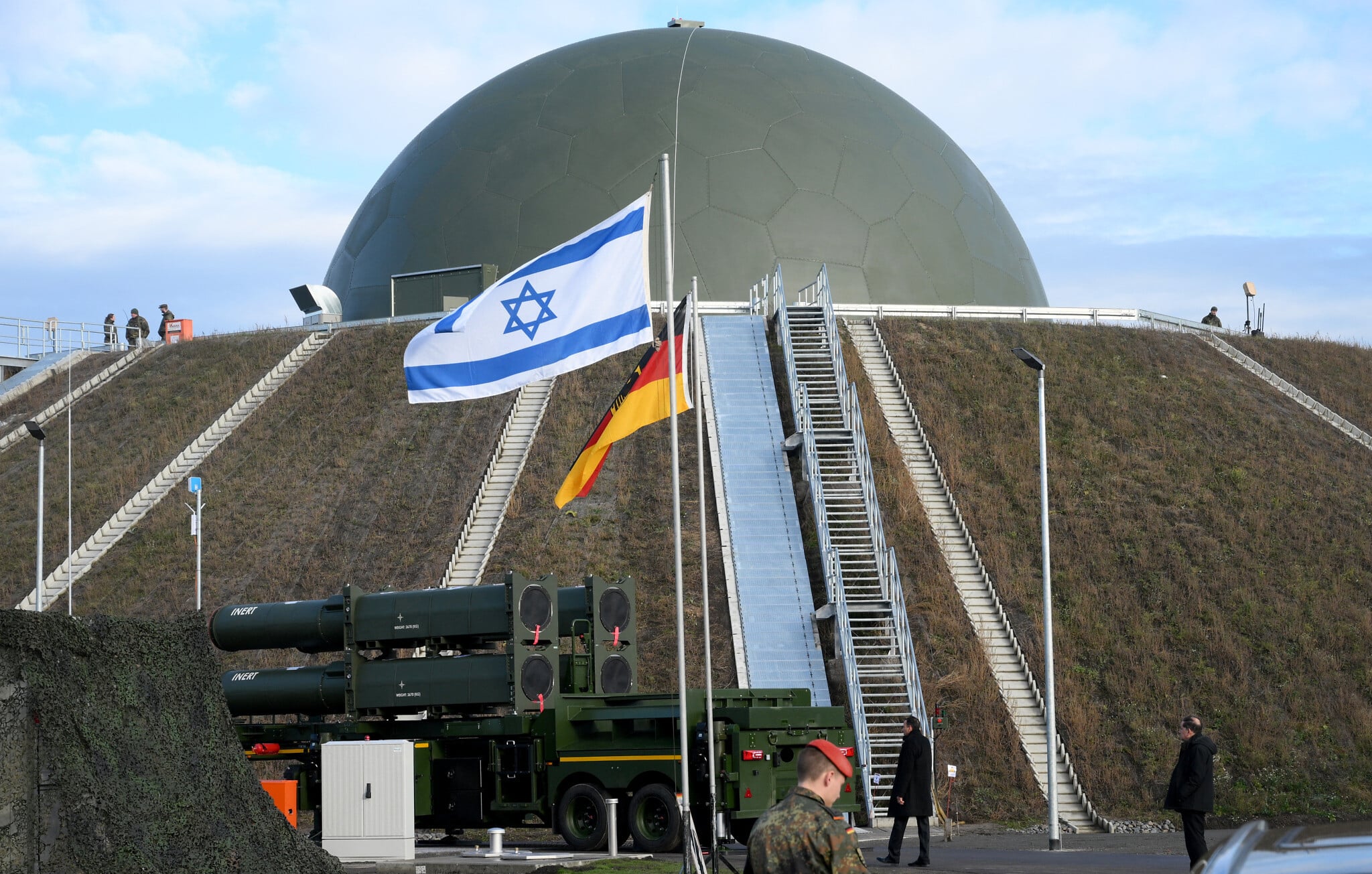
Illustrative: The flags of Israel and Germany fly in front of the Arrow 3 missile defense system and a radar dome during an event of the German Air Force at the Holzdorf Air Base, eastern Germany, on December 3, 2025. (RALF HIRSCHBERGER / AFP)
“The Bank of Israel will consider intervening in the foreign exchange market if there are sharp shekel fluctuations during a short period of time that are not reflective of the economic and geopolitical reality,” said Katz.
Mizrahi Tefahot Bank’s chief markets economist Ronen Menahem said that mainly local market forces and economic fundamentals are continuing to drive strong demand for the shekel.
“The market anticipates a reduction in geopolitical risk amid optimism for an end of war in the region and prospects for agreements with neighboring countries, including Saudi Arabia, which will further boost the growth potential of the Israeli economy,” said Menahem.
“The optimistic scenario is attracting foreign investors to the local stock market and direct investments from abroad into the high-tech sector, alongside increased defense export sales, which are all factors driving demand for the shekel.”
You appreciate our wartime journalism

You clearly find our careful reporting of the Iran war valuable, at a time when facts are often distorted and news coverage often lacks context.
Your support is essential to continue our work. We want to continue delivering the professional journalism you value, even as the demands on our newsroom have grown dramatically during this ongoing conflict.
So today, please consider joining our reader support group, The Times of Israel Community. For as little as $6 a month you’ll become our partners while enjoying The Times of Israel AD-FREE, as well as accessing exclusive content available only to Times of Israel Community members.
Thank you,
David Horovitz, Founding Editor of The Times of Israel