
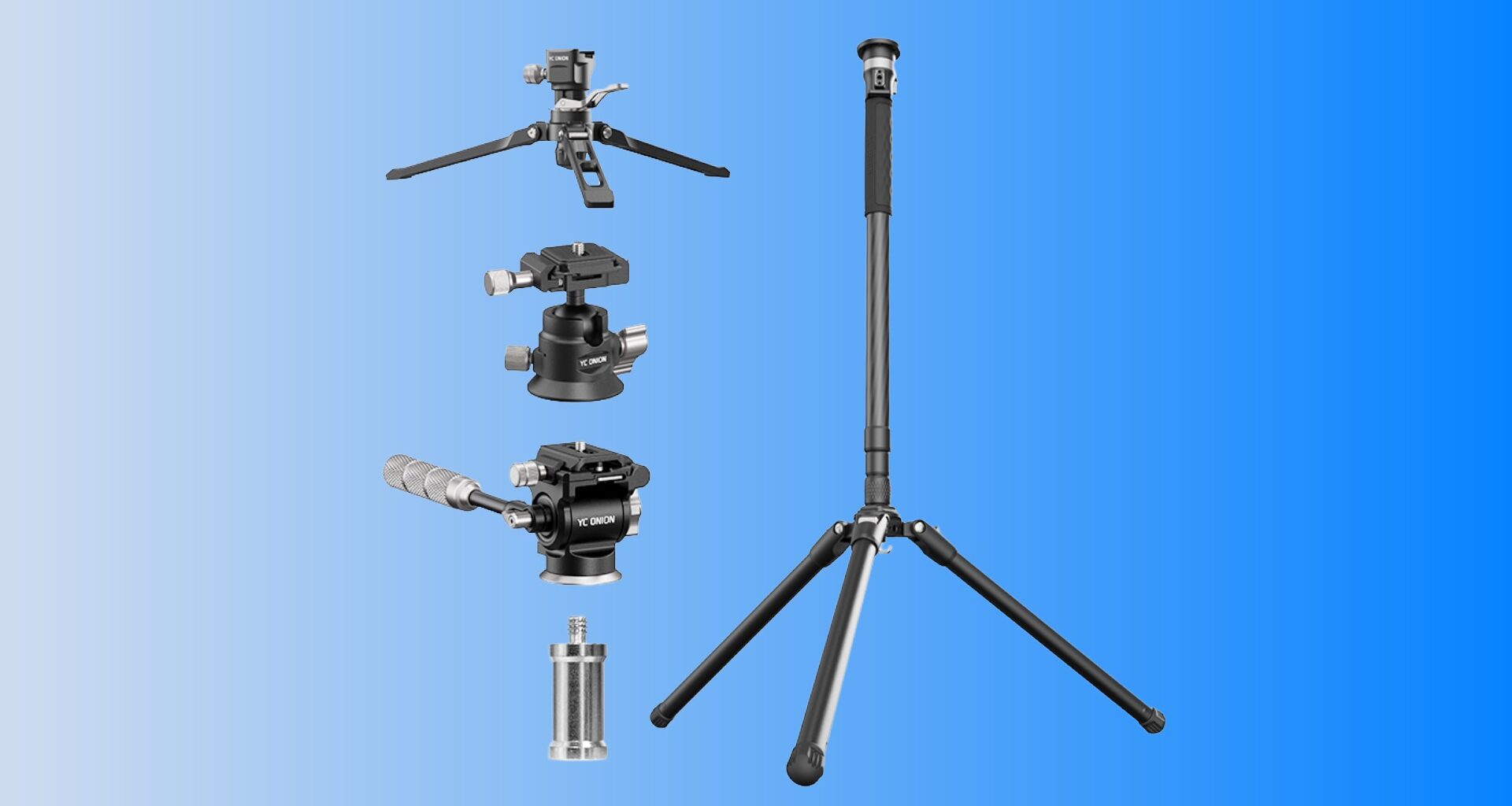
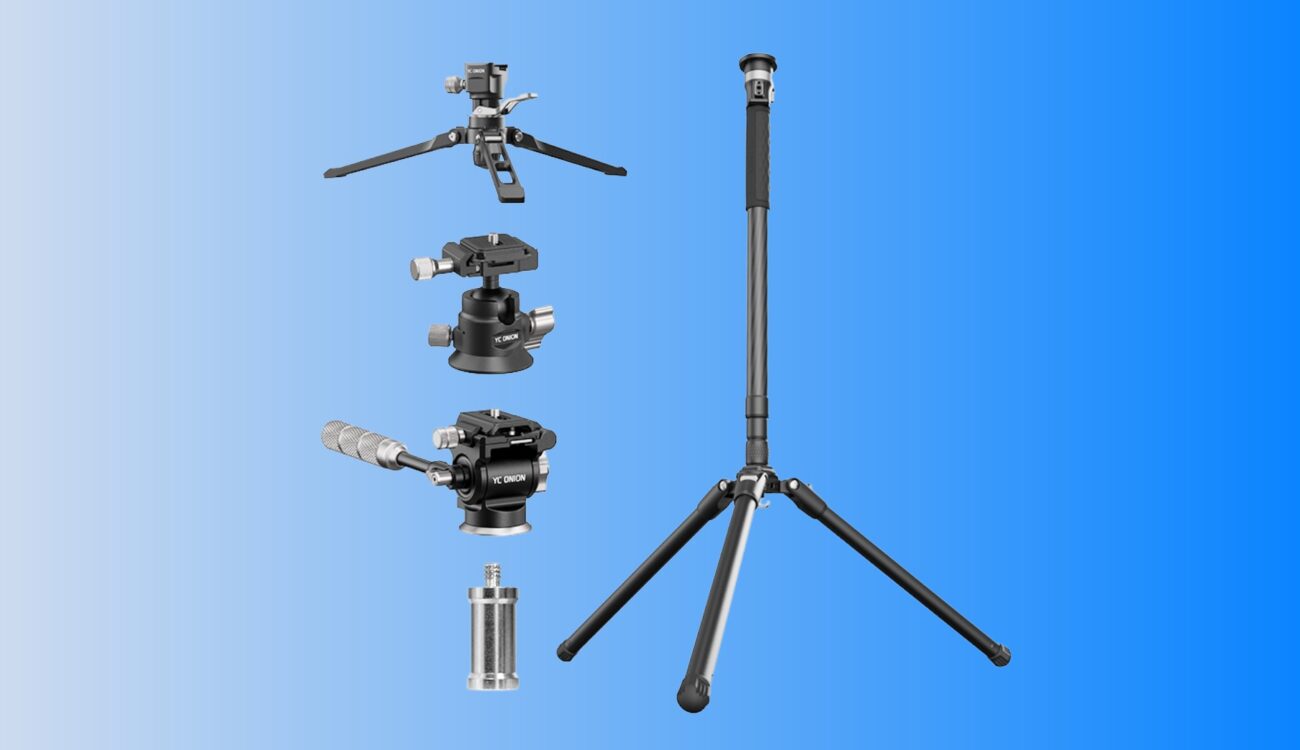
YC Onion has officially released its Tako Nano, a compact carbon fiber monopod kit aimed at hybrid shooters and run-and-gun filmmakers who need a lightweight, multi-purpose support system without breaking the budget. Priced from $119, the Tako Nano extends to 172cm / 67.7 in, collapses to a travel-ready 690mm / 27.2 in, and offers a surprisingly deep feature set for its price point.
Chinese camera support manufacturer YC Onion has been steadily building out its product lineup over the past few years. We’ve covered the company’s Pineta Pro monopod with its one-handed trigger lock system, the Tako carbon fiber tripod announced at IBC 2024, and the more recently released Cedar CB7 counterbalanced fluid head. The Tako Nano sits beneath all of those in terms of price but retains the “Tako” family branding and borrows several thoughtful design details from the more expensive Pineta line.
The Tako Nano is aimed at a different shooter than the Pineta Pro. Where the Pineta Pro targets professional videographers who need a self-standing free-arm monopod with a complex pedal base and one-handed operation at around the $350+ mark, the Tako Nano is designed for hybrid creators, event shooters, and travel filmmakers who want maximum versatility in a minimal package at an accessible price.
Build and construction
The Tako Nano uses a four-section carbon fiber tube with an aluminum pedal base. The carbon fiber tube alone weighs 573g, and the pedal base adds another 537g, bringing the combined weight to approximately 1.11kg / 2.4lbs. The tube has a 32mm diameter, which sits in comfortable territory for one-handed carrying and balancing.
The locking mechanism is a one-flip twist lock, which is a different approach to the trigger-based system on the Pineta Pro. With the one-flip design, you twist once to release all sections simultaneously, slide to your desired height, and twist back to lock. YC Onion specifically warns users not to force the extension when locked, as this can degrade the locking torque over time. That’s standard care advice for twist-lock monopods, but worth flagging for users coming from lever-style systems.
The pedal base legs deploy at two positions: 78° and 40°, giving you a reasonably wide stance for freestanding stability. The folded footprint is compact: 690mm / 27.2in closed, with a plate diameter of 77mm. Low-angle shooting is possible at a minimum height of 132mm / 5.2in from the ground, which is a useful spec for documentary and event work where a high angle isn’t always ideal.
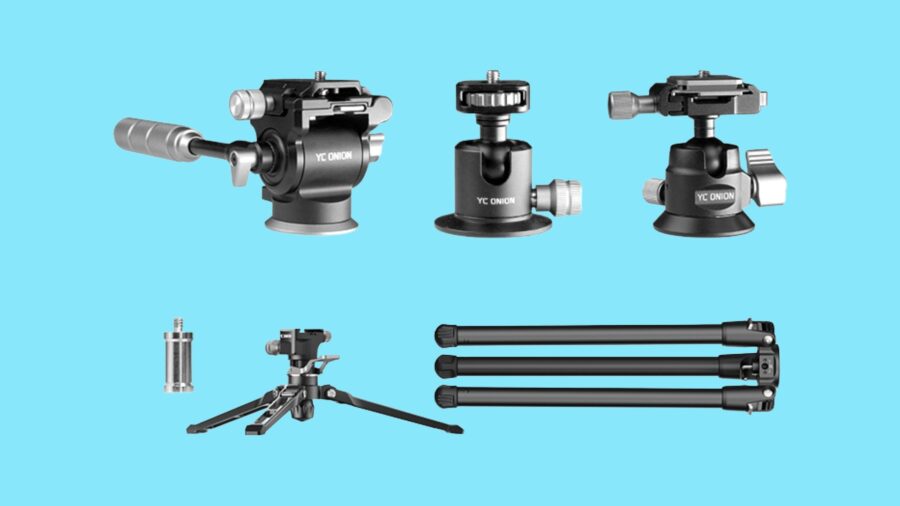 YC Onion Tako Nano. Credit: YC OnionA surprisingly functional accessories platform
Beyond the monopod shaft itself, the Tako Nano introduces a few features that push it beyond basic territory. The top mount includes “ARRI-style” positioning screw holes alongside the standard 1/4″ and 3/8″ threads, allowing users to add a magic arm, monitor, or on-camera LED light directly to the top of the monopod without an additional clamp. The bottom of the shaft includes a concealed 3/8″ thread that effectively turns the monopod into a boom pole when the pedal base is removed — a detail that sound recordists and smaller crews running double duty may find genuinely useful.
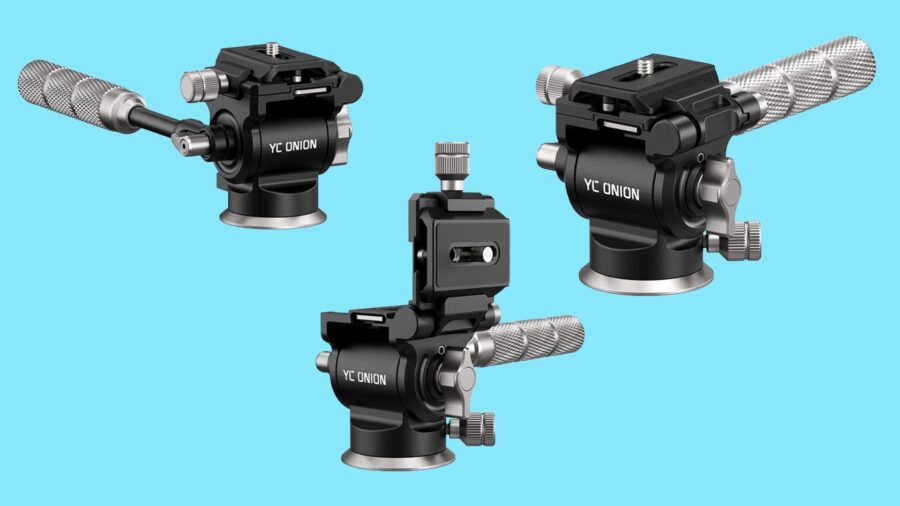 FX50 fluid head. Credit: YC Onion
The FX50 fluid head variant includes a built-in L-bracket, enabling landscape-to-portrait switching without an add-on plate. The FX50 itself offers a +85°/-62° tilt range with a bubble level, which is a workable spec for most event and documentary video work. The tilt angle of the monopod shaft itself is ±18°, consistent with most monopods of this form factor.
A convertible light stand system
One of the more distinctive design choices on the Tako Nano is that the pedal base is designed to accept YC Onion’s telescopic light stand legs (sold separately at $49), converting the monopod into a freestanding light stand for small LED panels or on-location practical lights. This kind of dual-use design makes practical sense for solo filmmakers who don’t want to carry an additional stand for every small light. The combination kit with the light stand is available for $115, making it the most affordable configuration in the lineup.
This modular approach also reflects how YC Onion has been thinking about their ecosystem more broadly. The Tako Nano’s accessories, including the FX50 fluid head ($65 separately) and BC26 ball head ($35 separately), are sold individually, giving users the flexibility to build up the system incrementally.
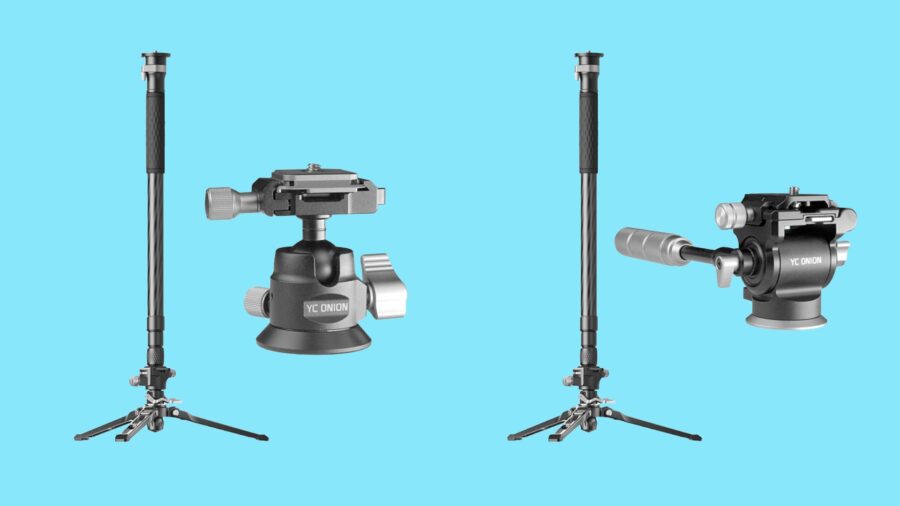 YC Onion Tako Nano Carbon Fiber Monopod. Choose between two heads. Credit: YC OnionPricing and kit configurations
The Tako Nano is available directly through YC Onion’s website with shipping from CN, US, and EU warehouses (note that not all configurations are in stock at all warehouses at the time of writing). The base monopod alone is $119. The monopod bundled with the BC26 ball head is $139, and with the FX50 fluid head it is $169. The full professional version, which includes the monopod body alongside the FX50, BC26, and light stand accessories, is $212. The Tako Pedal Base alone is available for $65 for users who want to add it to an existing compatible setup, and the AQR38 quick release plate is $29.
For context, the YC Onion Pineta Pro starts at around $349 and offers a significantly more refined freestanding monopod experience with one-handed trigger operation and a higher recommended payload. The Tako Nano doesn’t try to compete with it directly; instead, it targets creators for whom the Pineta Pro’s feature set is more than needed, and $350+ is too steep.
Quick specs overview
The Tako Nano has a maximum height of approximately 172cm / 67.7in across four sections, a folded length of 690mm / 27.2in, a 32mm carbon fiber tube diameter, and a safe payload of 8kg / 17.6lbs. The pedal base legs adjust to two angles (78° and 40°), with a minimum shooting height of 132mm. Thread compatibility at the top is 1/4″ and 3/8″, with “ARRI-style” locating holes. Total combined weight with base is 1.11kg / 2.4lbs.
Given the feature set and price point of the YC Onion Tako Nano Carbon Fiber Monopod, this one looks like a credible option for hybrid shooters on a budget — but does the light stand conversion feature make it more compelling to you, or is it a gimmick? Don’t hesitate to let us know in the comments below!