
As the world’s preeminent electrostate, China will gain a substantial advantage from the energy leapfrog. Having built out its own electrical system over the last two decades, it is primed to provide power lines, transformers, and other grid hardware to the rest of the world. China is also increasingly able to supply software that allows grid operators to manage a diverse and variable mix of renewable and other resources. Chinese state-owned firms will even build and manage an entire regional or national grid, as they are doing across South America and southern Europe.
Finally, China’s investments in research, development, and demonstration (RD&D), as well as plans to deploy new energy technologies, suggest that it will bolster its position in the future. Chinese scientists’ and inventors’ share of high-quality publications and patents in these fields is surging. The central government announced about 150 large-scale demonstration projects to prove new technologies at commercial scale in 2024 and 2025. The latest five-year plan, finalized just weeks ago, adds clean aluminum, green hydrogen, and a host of other advances to its energy technology priority list.
The accelerated export of China’s electrostate model will likely reduce climate-damaging greenhouse gas emissions in the long run. Electric vehicles are generally cleaner than their combustion counterparts, for example, even when emissions embodied in their batteries are taken into account. In the short and medium run, however, the rising demand for electricity is likely to increase reliance on coal, the dirtiest fossil fuel. China’s heavy dependence on coal for power generation is only beginning to be shaved by renewables, and much of its massive manufacturing sector still uses emissions-intensive methods.
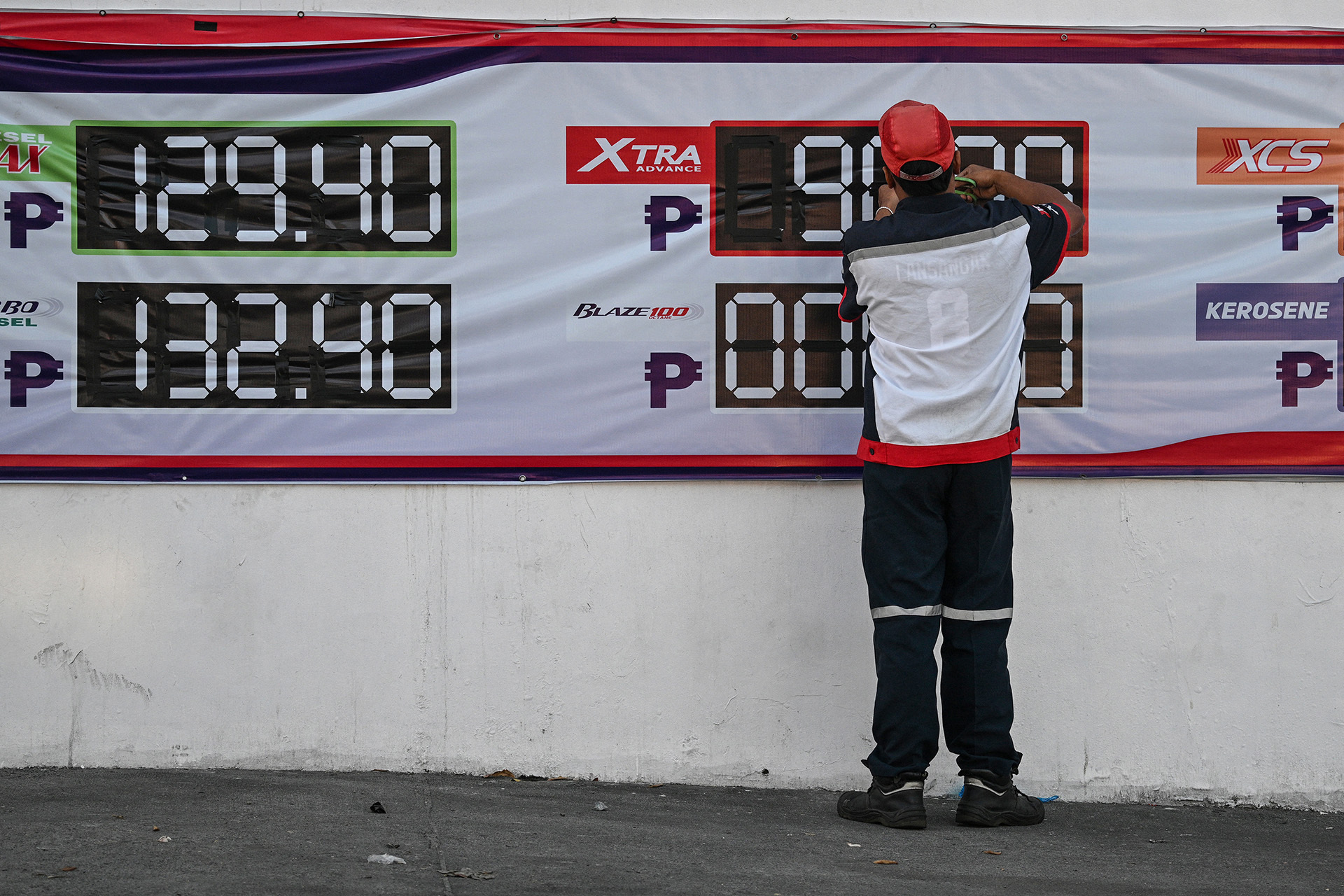 An employee changes the price signage of fuel at a petrol station in San Fernando, Pampanga province, the Philippines, on April 3, 2026.
Ted Aljibe/AFP/Getty Images
On the other hand, the shift from coal to LNG, which was one of the most promising pathways to reduce global emissions in the medium term, is likely to slow considerably as a result of the war. Physical damage to LNG production facilities in Qatar will take several years to repair. Repairing the psychological damage incurred by the cutoff of the strait, however temporary it proves to be, could take even longer.
The United States appears at first glance to be well positioned to step into the breach. The world’s largest LNG exporter was already in the process of doubling its capacity before the war. Yet, President Donald Trump’s coercive approach to diplomacy could cause potential customers to be cautious. He has regularly sought to strongarm trade partners to expand LNG imports from the United States. The war itself cavalierly put the energy security of U.S. partners and allies at risk. Meanwhile, the Trump administration is proposing massive cuts to federal funding for energy RD&D, has decimated tax incentives for renewables and EVs, and attacked some emerging technologies like offshore wind.
If future geopolitics are defined in part by a struggle for global influence between a Chinese electrostate and a U.S. petrostate, the Iran war is a self-inflicted wound. In the short run, the first rule of holes applies: “Stop digging.” In the long run, the United States should recognize the grave limits of the resource dependent, environmentally unsustainable petrostate model and compete more effectively for leadership in the “Age of Electricity.”
This work represents the views and opinions solely of the authors. The Council on Foreign Relations is an independent, nonpartisan membership organization, think tank, and publisher, and takes no institutional positions on matters of policy.