
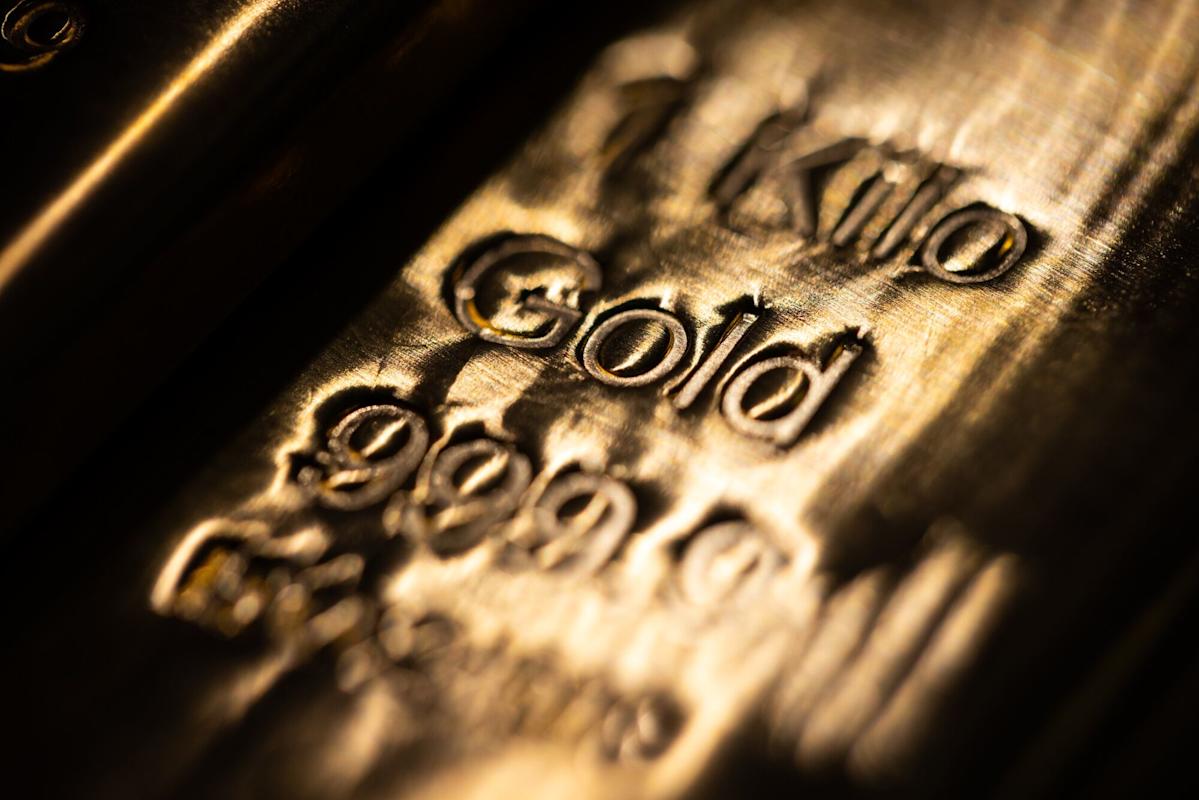
(Bloomberg) — Gold trimmed gains as traders weighed the progress on a potential deal between the US and Iran, despite the effective closure of the strategic Strait of Hormuz.
Bullion gave up most early gains after the semi-official Iranian Students’ News Agency reported that Iran’s planned Hormuz toll will be paid via Iranian banks, injecting further uncertainty into the situation in the Middle East. Bond yields pushed higher, weighing on gold as it doesn’t pay interest. Benchmark US oil futures remained above $94 a barrel while equities retreated from record highs.
US President Donald Trump said prospects for a deal with Iran are promising as the two sides are in discussions to extend a ceasefire ahead of its expiration next week.
“It’s looking very good that we’re going to make a deal with Iran, and it’s going to be a good deal,” Trump told reporters at the White House. Talks between Washington and Tehran could resume this weekend, he added.
Pakistan stepped up efforts to ensure the US and Iran extend the ceasefire and allow more time to negotiate a lasting peace deal. Optimism has been growing in recent days, with many stock exchanges reversing wartime losses and even hitting record highs.
Gold will find support from market volatility as long as Trump is in the White House, ACG Metals Ltd. Chairman Artem Volynets told Bloomberg Television. Geopolitical events may spur central bank gold-buying as they shift away from the US dollar, he noted.
The swap market is still betting that the US Federal Reserve will hold rates steady this year, a view supported by comments from Fed Bank of St. Louis President Alberto Musalem and Fed Bank of Cleveland President Beth Hammack.
“Given the fragile ceasefire and switch to focus on real yields, gold is not yet out of the woods,” Suki Cooper, global head of commodities research at Standard Chartered Plc., wrote in a note. With the competing risks of inflation and slower growth, “the policy response will be key,” she said, as gold “transitions away from moving in-step with risk assets.”
What Bloomberg Strategists say…
“Gold is poised for a reprieve as stocks bounce back, but it needs ETF demand to cement a recovery from declines since the Iran war broke out.”
— Tatiana Darie, Macro Strategist, Markets Live
For the full analysis, click here.
Gold has fallen about 9% since the start of the war, with a liquidity squeeze in the early weeks of fighting leading investors to offload holdings and cover losses elsewhere. In a sign that buyers are coming back to the market, bullion-backed exchange-traded funds have added around 25 tons so far this month, after cutting around 94 tons in March, according to a Bloomberg tally.