
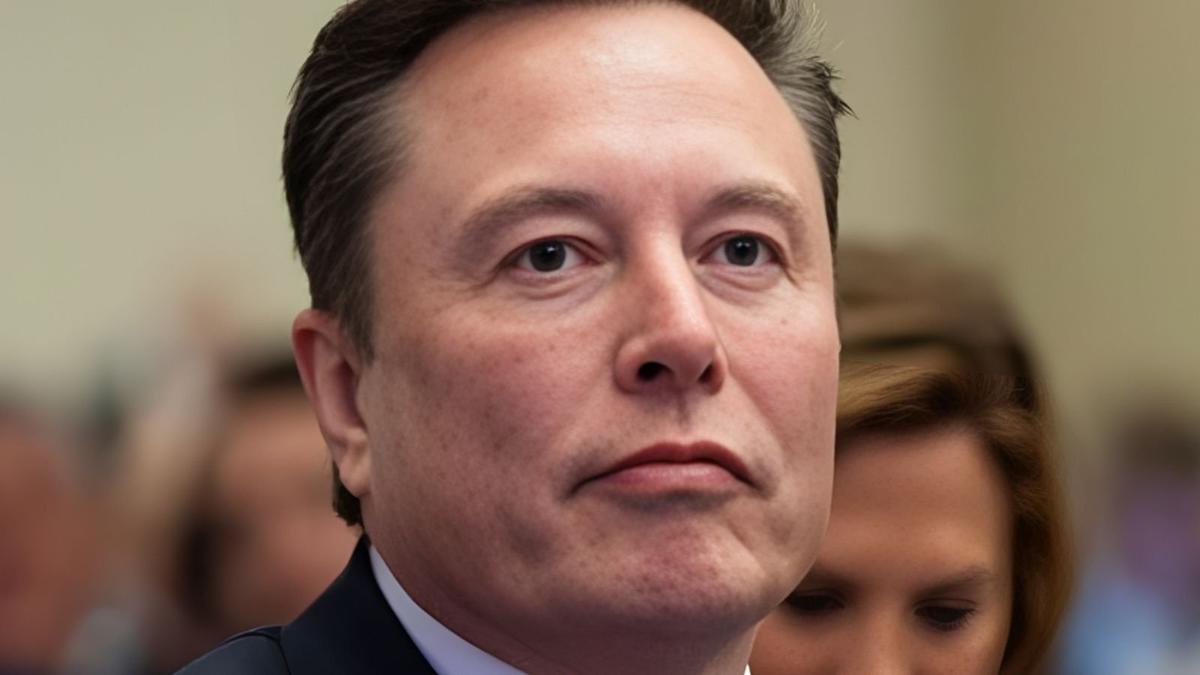
 Screenshot from musk_fan_daily/Instagram. Used under fair use for editorial commentary.
Elon Musk is once again sounding the alarm on artificial intelligence, but this time, he’s offering a bold solution that’s already sparking intense debate online.
In a recent statement, Musk argued that governments should prepare for a future where AI replaces a massive number of jobs. His answer is not just support payments or welfare. He’s calling for something far more ambitious, a system he describes as universal high income.
Musk believes that as AI and robotics advance, millions of people could lose traditional jobs at a scale never seen before. Instead of resisting that shift, he says governments should lean into it and redesign the economy around it.
His proposal is direct.
“Universal high income via checks issued by the Federal government is the best way to deal with unemployment caused by AI.”
This goes beyond Universal Basic Income. Musk is not talking about survival-level payments. He is describing a future where people receive enough money to live comfortably, even without working.
The assumption is clear. Work may no longer be the foundation of income in an AI-driven world.
One of the biggest objections to direct payments is inflation. More money in circulation usually leads to rising prices. Musk rejects that concern entirely.
He argues that AI and robotics will flood the economy with goods and services, creating so much supply that prices will drop instead of rise.
“AI/robotics will produce goods and services far in excess of the increase in the money supply, so there will not be inflation,” he explained.
In his view, production will outpace money creation so significantly that the usual rules of inflation simply won’t apply.
Musk takes the idea even further by predicting deflation, not inflation. He frames it as a ratio between output and money supply.
“If the rate of growth of goods and services exceeds the rate of growth of the money supply, then you will have deflation,” he said.
That means more products, more services, and lower prices, even as governments issue regular payments to citizens. It flips the traditional fear of “too much money chasing too few goods” into the opposite scenario.
Story continues
Musk did not provide exact figures, but the concept suggests a system where people receive consistent income regardless of employment status. Basic needs could become easier to meet, and work could shift from necessity to choice.
This would be a massive transformation of how economies function. It would redefine productivity, value, and even purpose for millions of people.
It also raises difficult questions about funding, structure, and long-term sustainability that have not yet been fully answered.
As expected, Musk’s comments triggered strong reactions on X, with users sharply divided on whether this future is realistic or dangerous.
Some responses were deeply skeptical, arguing that such a system would never work in the real world. One user wrote that it would “never happen or end well,” pointing out that it assumes the existence of a benevolent government, something they believe does not exist. Another warned that only a handful of advanced nations could even attempt such a system, leaving the rest of the world behind in what they described as a chaotic, survival-driven environment.
Others took a more alarmist view, questioning the long-term impact of AI itself. One commenter suggested that society could decline into dysfunction before any benefits materialize, arguing that people are already struggling financially and that the timeline Musk describes may be too optimistic.
But not all reactions were negative.
Some users agreed with Musk’s logic, saying the math makes sense if AI truly produces more value than it consumes. One response framed the issue not as an economic problem, but a political one, arguing that the real challenge is whether governments have the will to implement such a bold policy.
Another user added a more technical perspective, saying redistribution could work, but only if there is a reliable way to measure the economic output of AI and robotics. Without that, they argued, any attempt to distribute wealth fairly would be based on guesswork rather than data.
Musk’s vision presents a future where machines handle production and humans receive income without traditional work. For some, that sounds like progress and freedom. For others, it raises concerns about dependency, inequality, and the role of government.
The reactions online show one thing clearly. This idea is not just about economics. It touches on trust, power, and what people believe governments and technology should be allowed to control.
If AI really does replace jobs at scale, what comes next will shape how people live for generations.
Do you think universal high income is a solution, or the start of a much bigger problem?