
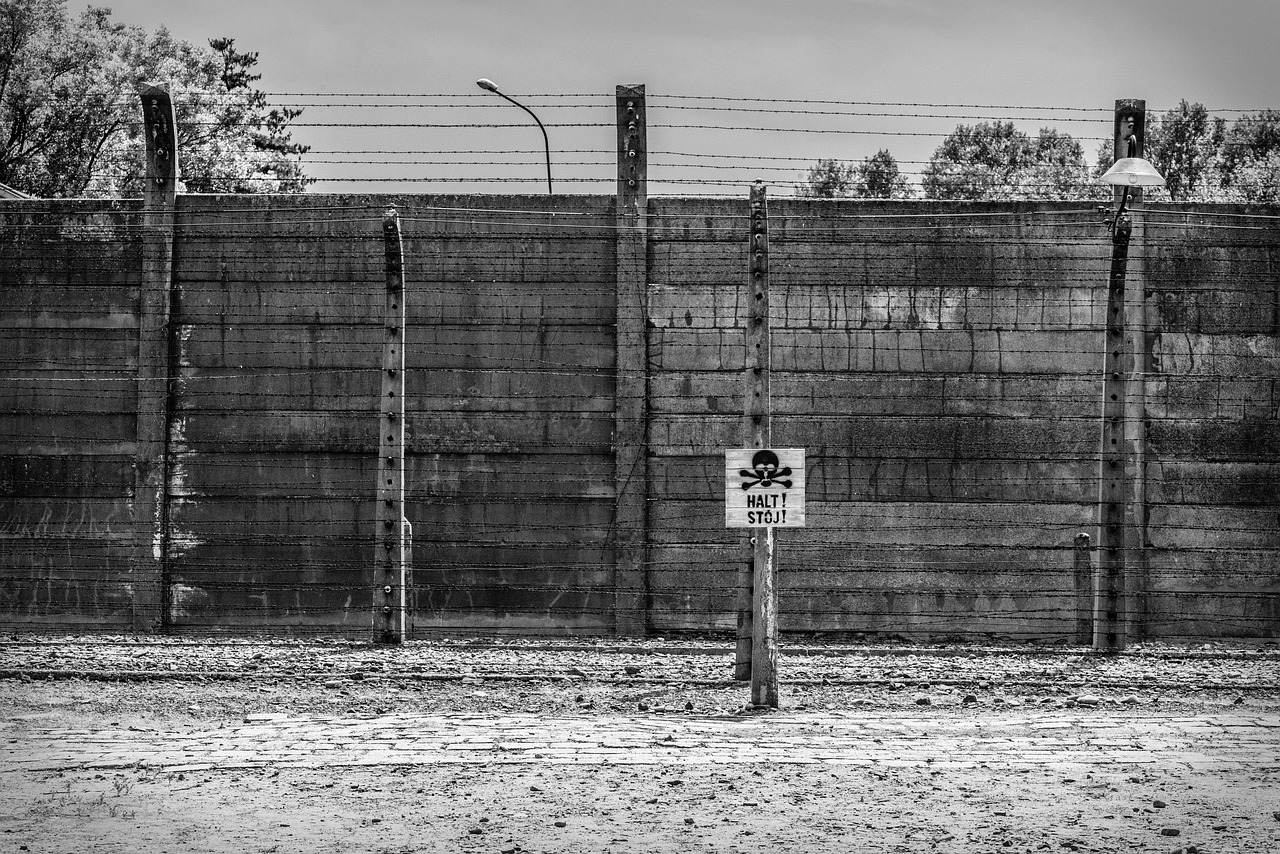
As Jews worldwide mark Holocaust Remembrance Day, the co-founder of L’chaim! Jews Against the Death Penalty asks how Israel’s Knesset could pass a law whose openly unequal application echoes the darkest chapters of twentieth-century legal history.
Israel’s new death penalty law is one of the most discriminatory pieces of execution legislation that the world has witnessed since Hitler’s Third Reich. This incontrovertible truth is yet another reason why the Israeli Knesset’s recent passage of its heinous “Death Penalty for Terrorists” law on March 30 has effectively defiled this year’s observance of Yom Hashoah, the consummate Holocaust commemoration for Israel and Jews worldwide that is taking place as I write these very words.
Let there be no doubt: the thousands of members of “L’chaim! Jews Against the Death Penalty” in Israel and abroad are against the death penalty in all cases. As the co-founder of this group, I am keenly aware that this has been the case since our founding in 2020, from the perpetrator of the Pittsburgh Tree of Life Synagogue Shooting in 2018 to the Washington, D.C., Israeli Embassy murders in 2025, and countless other Jewish and non-Jewish men and women condemned to death across the world. We carry the torch of Holocaust survivor, Nobel laureate, and passionate death penalty abolitionist Elie Wiesel (1928-2016), who, when asked about capital punishment, responded without equivocation that “death should never be the answer in a civilized society.” L’chaim members adhere to Wiesel’s reflections on the death penalty in the wake of the Holocaust, firmly stating: “With every cell of my being and with every fiber of my memory, I oppose the death penalty in all forms. I do not believe any civilized society should be at the service of death. I don’t think it’s human to be an agent of the Angel of Death.” Countless other Jewish and rabbinic abolitionists since the Holocaust have shared Wiesel’s position. Many of them recognized the direct Nazi legacies of various execution methods in the United States and elsewhere, from lethal injection and gassing to the firing squad.
Like the Dayinu song litany of the recent Passover Seder, which Minister of National Security Itamar Ben-Gvir desecrated by his pre-Pesach death penalty victory celebration in the Knesset, these reasons, in and of themselves, should be enough to give the most staunch proponent of Israel’s death penalty bill pause this Yom Hashoah. Yet, there is one other awful synchronicity that this year’s Holocaust Memorial Day also highlights. That damning factor is the fact that the egregiously discriminatory nature of Israel’s new law is one of the most prejudicial of its kind since those enacted by the Nazis.
Discriminatory Aspects of Nazi Execution Protocols
Nazi execution laws and protocols were arguably the most racist and vile of the modern era. They functioned not as a system of justice, but rather as a tool for racial persecution, social engineering, and the systematic elimination of the entire Jewish people and other perceived enemies. The laws targeted specific groups — primarily Jews, Roma, people with disabilities, and political opponents — based on the Nazi ideology of biological racism and the concept of “racial purity.”
The infamous Nuremberg Laws of 1935 formalized such discrimination. Among other deplorable rulings, these ordinances determined who was considered Jewish based on ancestry, rather than religious practice. They stripped Jews of German citizenship and made marriage or sexual relations between Jews and “Germans” a crime, often resulting in death or imprisonment in concentration camps. Specifically, the “Law for the Protection of German Blood and Honor, 15.9.1935” introduced the concept of Rassenschande (race defilement/shame). Jews were executed for having relationships with non-Jews, often under the guise of “racial pollution.”
The Nazi regime dramatically increased the number of offenses punishable by death and applied them in a blatantly discriminatory manner. A “non-Aryan” would be executed for a crime that a “German” might only be penalized for mildly. In occupied territories, particularly Poland and the Soviet Union, German forces (such as Einsatzgruppen) carried out mass executions of Jews, Roma, and Polish intelligentsia without trial, labeling them as “anti-partisan pacification measures.”
Other discriminatory aspects of Nazi policy included Aktion T-4, the “Euthanasia” Program. In this protocol, which Hitler’s personal physician, Dr. Karl Brandt, devised, the Nazis enacted laws under the guise of a health initiative that allowed for the systematic murder of people with physical or mental disabilities. Nazis justified this policy with the belief that such individuals were “biologically inferior” and a “burden” to the state. That thinking led to the murder of 250,000–300,000 people under T-4. The Nazis, of course, were the first in the world to use lethal injection on prisoners, a protocol that the United States utilizes regularly for its maniacal execution machine.
It is crucial to add that the Nazis used the Nuremberg Laws to target groups labeled “asocial” or “professional criminals,” which included homosexual men, homeless people, and “beggars.” The laws relegated these individuals to concentration camps, where death was common. Like those of Jewish heritage, these human beings’ systematic dehumanization made their gruesome fate all the more palatable for Nazi society members. In all, these laws were applied with a total disregard for traditional judicial principles, ensuring that the “Aryans” benefited while targeted groups were systematically eliminated.
Discriminatory Aspects of Israel’s ‘Death Penalty for Terrorists’ Law
Israel’s new death penalty law is far from the same as the above Nazi legislation. Yet, by calling for death specifically for Palestinians convicted of killing Israelis, while effectively excluding Israeli citizens and residents, it achieves something that few other societies have done since the time of the Nazis by entrenching an openly two-tiered system of capital “justice.” There can be no doubt that the Nazis’ targets of their dehumanization campaign were wholly innocent of any crimes. They selected their victims for who they were, not what they may or may not have done. This unequivocally contrasts with the would-be victims of Israel’s death penalty law, each of whom is ostensibly convicted of murderous terrorist actions. Still, a similar campaign of dehumanization of those ultimately condemned to death links both systems. The underlying narrative identifying perpetrators of any terrorist act as “monsters” is precisely the kind of thinking that allows an otherwise reasonable person – or “civilized society,” per Wiesel – to deem state-sponsored killing digestible. It is an insidious process that essentially removes the “human” from human rights.
It goes without saying that the American death penalty system is also racist in practice. Cases involving white victims result in significantly more death sentences at the state and federal level than those in which victims are people of color, according to the Death Penalty Information Center. As awful as this is, at least the United States’ system maintains the pretense, albeit false, of being blind to race. Israel’s new law, like that of Nazi Germany, does nothing to hide its explicitly inequitable death sentencing system, which human rights groups and international observers have described as part of a wider system of apartheid. This willfully prejudiced legislation aligns Israel with such horrific executing regimes as Iran, Yemen, Saudi Arabia, and China, as well as Uganda, whose anti-LGBTQ+ laws L’chaim has equally condemned over the years.
There are various key aspects of how Israel’s law is discriminatory. First and foremost is its targeted application. The law, aimed at those who kill with the “intent of harming the state of Israel or the rebirth of the Jewish people,” is structured to apply only to Palestinians in the occupied West Bank who are tried in military courts. This leads to the second point: the law’s enabling of dual legal systems. It stipulates that military courts — which have a 96-99% conviction rate — will be the location of capital trials for Palestinians from the occupied West Bank. Conversely, civilian courts, which are not subject to this law, will serve as the venues for Israeli settlers’ trials.
The accelerated nature of certain executions constitutes the third major unjust aspect of this legislation. The law mandates a 90-day execution timeline, limits the ability to appeal, and restricts judicial discretion in sentencing, creating a more severe, faster process for Palestinians compared to any legal proceedings an Israeli might face. Last but not least, the law’s inherent exclusion of Jewish terrorists is also undeniably prejudicial. Legal experts argue the language of the law is designed to exclude Jewish terrorists who kill Palestinians from the death penalty, ensuring the punishment is reserved for Palestinian detainees. Considered together, these discriminatory factors not only condemn this law outright; they also suggest that it is an attempt to cement control over occupied territories. UN experts note that it is part of a pattern of practices that violate international law and the right to life. Amnesty International, Human Rights Watch, and various UN experts have called the law a “public display of cruelty, discrimination, and utter contempt for human rights.”
There is always a danger in invoking the death penalty in the context of Holocaust remembrance. First and foremost, one must contend with the often-cited counterexamples of the highly contentious executions of Nazi defendants at Nuremberg, as well as SS officer and Final Solution engineer Adolf Eichmann, regardless of the ultimate futility of invoking those instances as part of the death penalty debate. More insidious is the claim that reducing Holocaust memory to a discussion of the death penalty discredits the memories of Holocaust victims and survivors. L’chaim members know all too well that the reality is the diametric opposite. On the contrary, capital punishment in any form inherently disgraces and degrades the memories of Holocaust victims. It is nothing short of a slap in the face of their descendants, who comprise many of us in L’chaim, including this author. The fact that the discriminatory nature of this law hearkens back to Nazi execution laws only solidifies why Abraham J. Bonowitz of Death Penalty Action and L’chaim called this legislation a wholesale “shanda.”
The Supreme Court of Israel now has the opportunity to repeal this monstrosity. On this Yom Hashoah, Israelis and Jews everywhere must therefore call upon the justices of that court to vote “no” to the legality of the death penalty law, and “yes” to civilized humanity, once and for all. Those justices would do well to heed the words not only of Jewish icons like Wiesel. They should also consider the sentiments of their former Israeli Supreme Court Justice and death penalty abolitionist, Haim Herman Cohen (1911-2002). Cohen famously stated of capital punishment: “We cannot uproot evil by recycling it through us.” Indeed, unconditional repeal is the only step forward now to begin to unveil the trauma-laden, insidious revenge impulse that fuels this law, releasing it at last from behind its mask of false notions of deterrence. Only then will the cycle of violence and killing truly have a chance at ending in Israel. Only then can true restorative justice and reconciliation begin.
Michael J. Zoosman is the co-founder of the advocacy group “L’chaim! Jews Against the Death Penalty” and a Jewish chaplain who formerly specialized in serving prison and psychiatric hospital populations.
Opinions expressed in JURIST Commentary are the sole responsibility of the author and do not necessarily reflect the views of JURIST’s editors, staff, donors or the University of Pittsburgh.