
This story originally aired on CPR News.
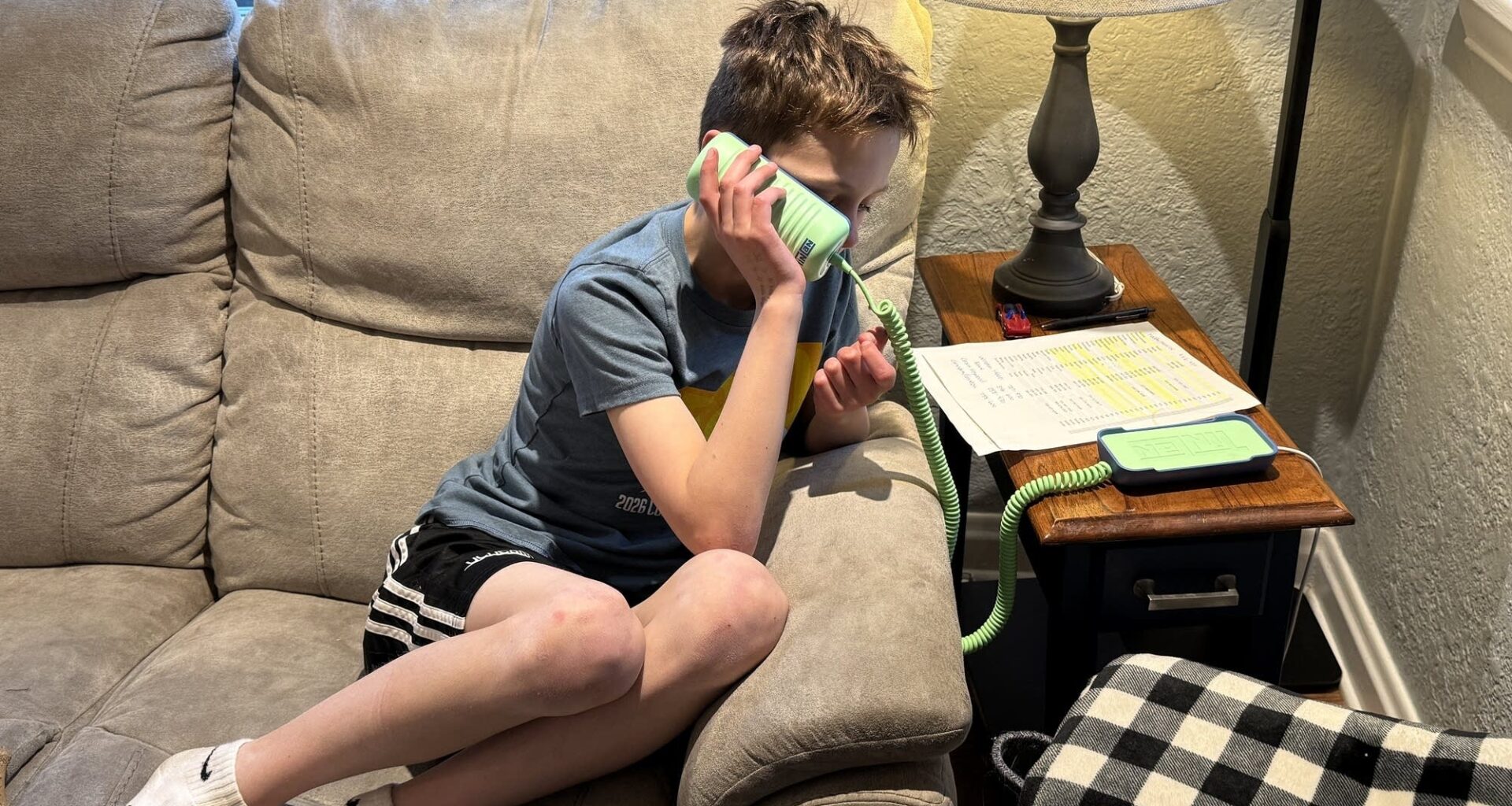
When Lauren Zobec decided to get her two young sons a plastic turquoise landline telephone, she had no idea how slow they would be to understand it.
“They were like aliens when they first got it — they were holding it out to here. And I think they were so used to FaceTime that they don’t know when you answer the phone, you have to say, ‘Hi Winston, this is Zach,’” Zobec said.
Their phone is called a Tin Can, and it’s one of a few companies trying to bring back the landline. Founder Chet Kittleson discovered an almost insatiable demand a little more than a year ago in his Seattle neighborhood.
“I would go into a house, set it up, I’d meet them, tell them how it works,” Kittleson said. “And oftentimes when I was at a parent’s house, by the time I’d left, I would have five to six text messages from their friends saying, ‘How can I get one?’”
Tin Can phones connect via the internet and are only able to call or receive calls from numbers designated by an adult.
“We’re actively more aware of some of the challenges of cell phones, so we are pushing that age back, and the more we do it, we are creat[ing] a new problem,” Kittleson said. “‘OK, great you don’t have a cell phone, but now you have nothing and that’s not good either. Now, you feel isolated, and you’re not learning how to use your voice.’”
Tin Can says its call volume is up more than 100 times what it was in December.
Jules Wiseman, a second-grader in Denver, said he appreciated the newfound independence. “I like that you can make like arrangements with friends for playdates,” he said.
In East Denver, roughly 100 families from the same elementary school all have a Tin Can phone.
At the Wiseman home, Miles, who is 9 and Jules’ older brother, is working on the art of crank calling.
“‘Hi, would you like the $2-million-dollar meal deal? It comes with everything you can imagine.’ And when they ask my name, I say ‘Larry Stinkenstein’ or something,” he said.
Dr. Yalda Uhls is a research scientist studying technology and adolescent development at the University of California, Los Angeles. Like Wiseman, she said landlines restore a sense of freedom in young kids.
“I love the fact they’re arranging their own playdates … I definitely think we coddle our children a lot and we don’t feel comfortable letting them have agency and independence,” Uhls said.
Full disclosure: This reporter and her family have been playing around with landlines, as have many of her neighbors. The latest guidelines recommend that we wait until kids are 16 for a smartphone.
Related Topics