
 2 min read
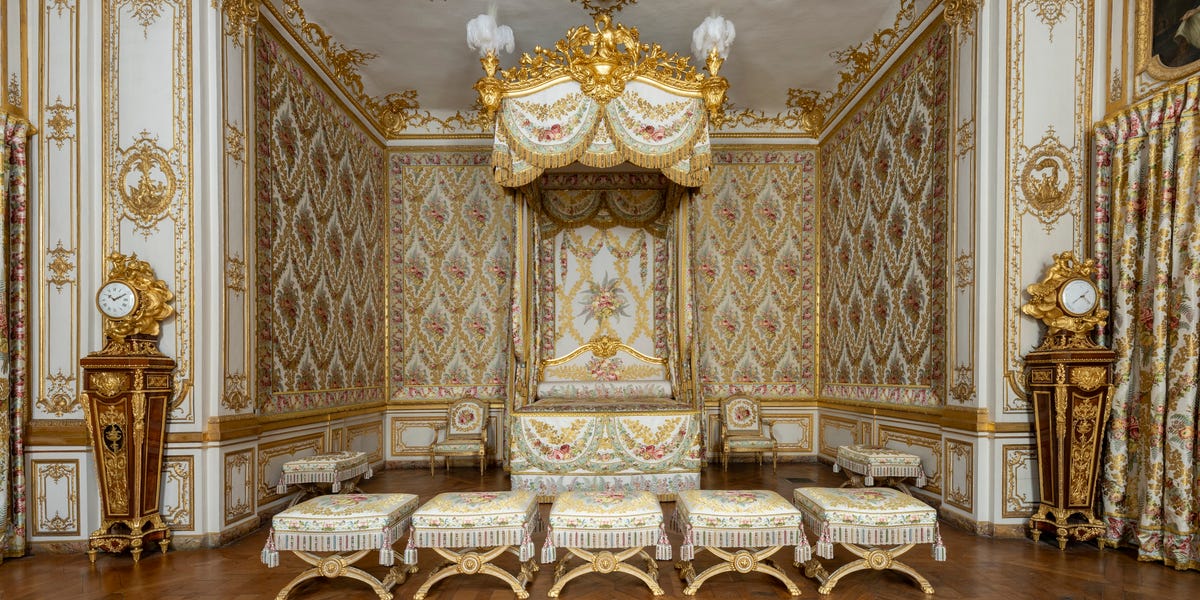
During the French Revolution in 1789, unrest quickly reached the monarchy at the Palace of Versailles. On October 6 of that year, the royal family was forced to leave the château after a procession of mostly women confronted the royal court about the bread shortage and its high cost. King Louis XVI, Marie Antoinette, and their children moved to Paris, abandoning a suite of private rooms at Versailles and never returning. More than two centuries later, one of those spaces—a bedroom within the King’s Private Apartments—has been fully restored to reflect its appearance on that pivotal day.
The chamber, built in 1728 for Louis XV, sits within the vast 2,300-room palace. Unlike the public-facing state rooms, this suite gave the king a more private space that was still luxurious. Father-and-son architects Jacques V Gabriel and Ange-Jacques Gabriel designed the space. It was then decorated with elaborate Rocaille details and Rococo carvings from sculptor and ornamentalist Jacques Verberckt, whose gilded woodwork appears in multiple locations at Versailles.
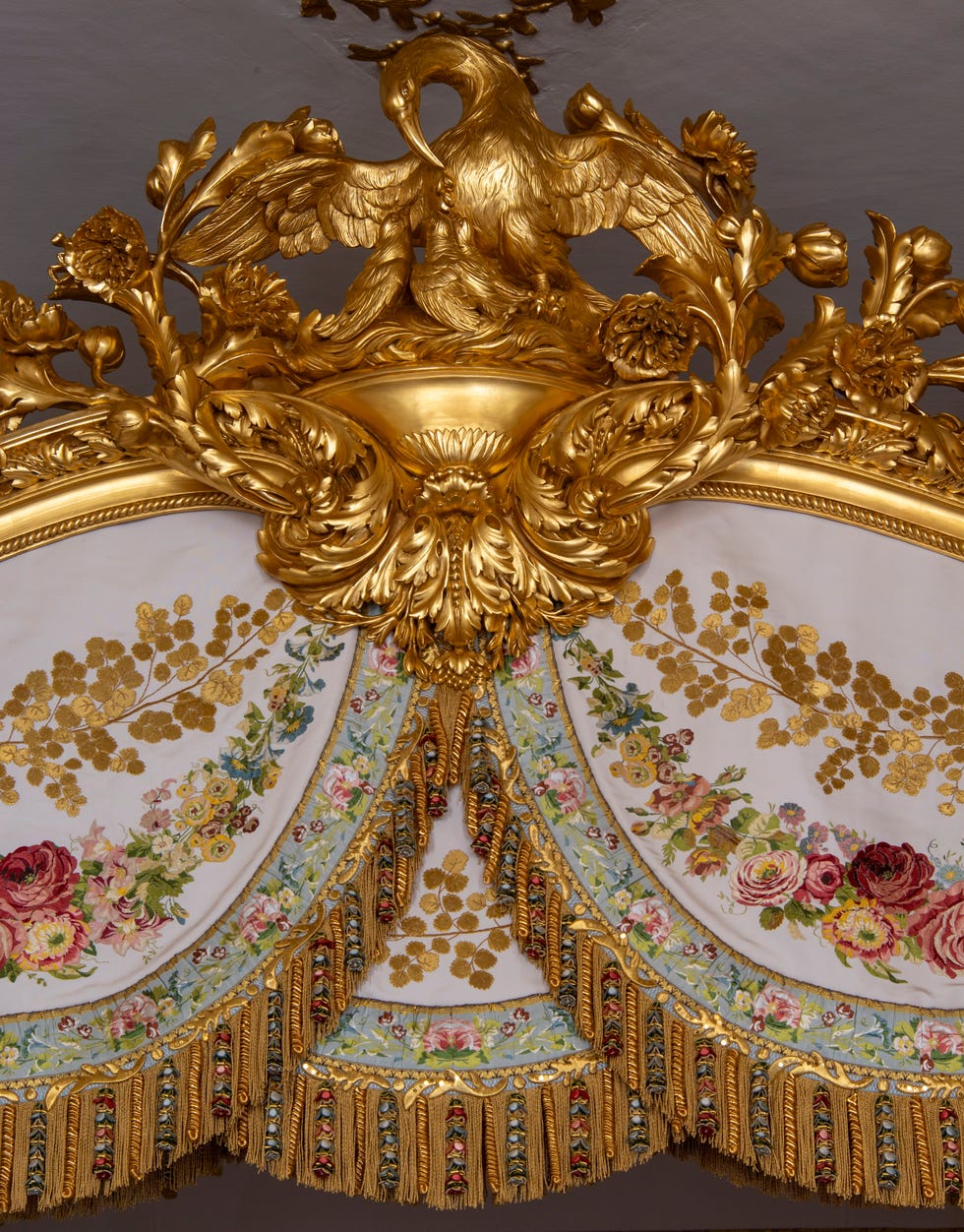 Château de Versailles / D. Saulnier
The bed canopy features a gilded pelican sculpture and embellished floral textiles.
Over time, the chamber accumulated layers of furnishings, artworks, and scientific instruments, reflecting the interests and evolving tastes of Louis XV and later Louis XVI. Textiles also helped shape the space, with Lyon-produced silks, brocades, and velvets periodically swapped between summer and winter arrangements. The rotations gradually traced the stylistic movement from Rococo excess toward Neoclassical refinement.
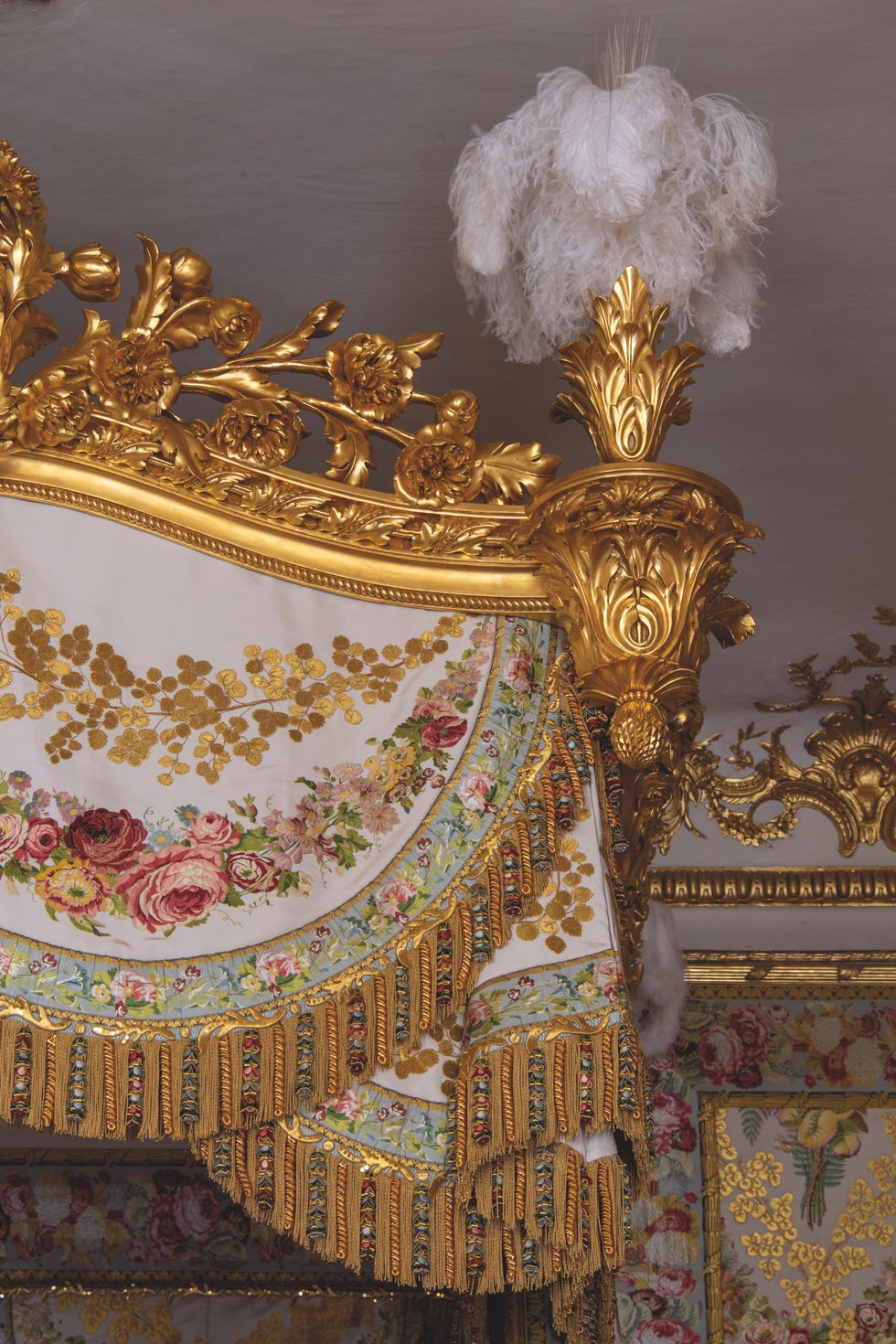 Château de Versailles / D. Saulnier
The covering also has a plume adornment.
The restoration, which began in the mid-1980s, sought to reconstruct the room’s final historical state before the monarchy’s departure. According to a press release, the project relied on extensive archival research. Surviving material fragments were also used to recreate fabrics and decorative styles using artisanal methods and traditional weaving techniques.
One of the hardest pieces to restore was the chamber’s bed, which had been lost during the French Revolution. Without original drawings, craftsmen reconstructed it from detailed written descriptions preserved in archival records. They carved the replacement from linden wood, finishing it by gliding water, per historic methods, over several thousand hours of work.
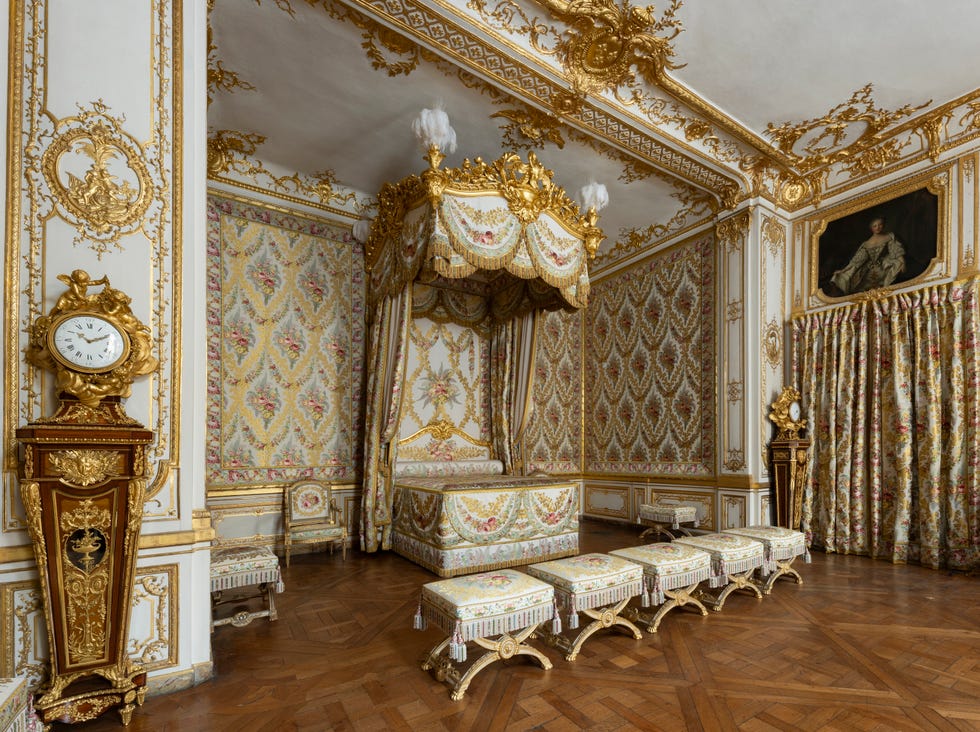 Château de Versailles / C. Fouin
The restoration was complete with gilded pedestal clocks and upholstered folding seats.
The Versailles press release explained that remaking the bed “restores not only the decorative coherence of the whole, but also the function and symbolic significance of this space, both a place of life of the sovereign and refined expression of the monarchy on the eve of the Revolution.”
With the final details now in place, the chamber is open to visitors through guided and independent tours.

Brea Cubit is an award-winning journalist who covers culture, entertainment, fashion, business, and more. When she’s not writing and editing, she enjoys listening to live music, binge-watching nostalgic TV, and shopping at artisan markets.