
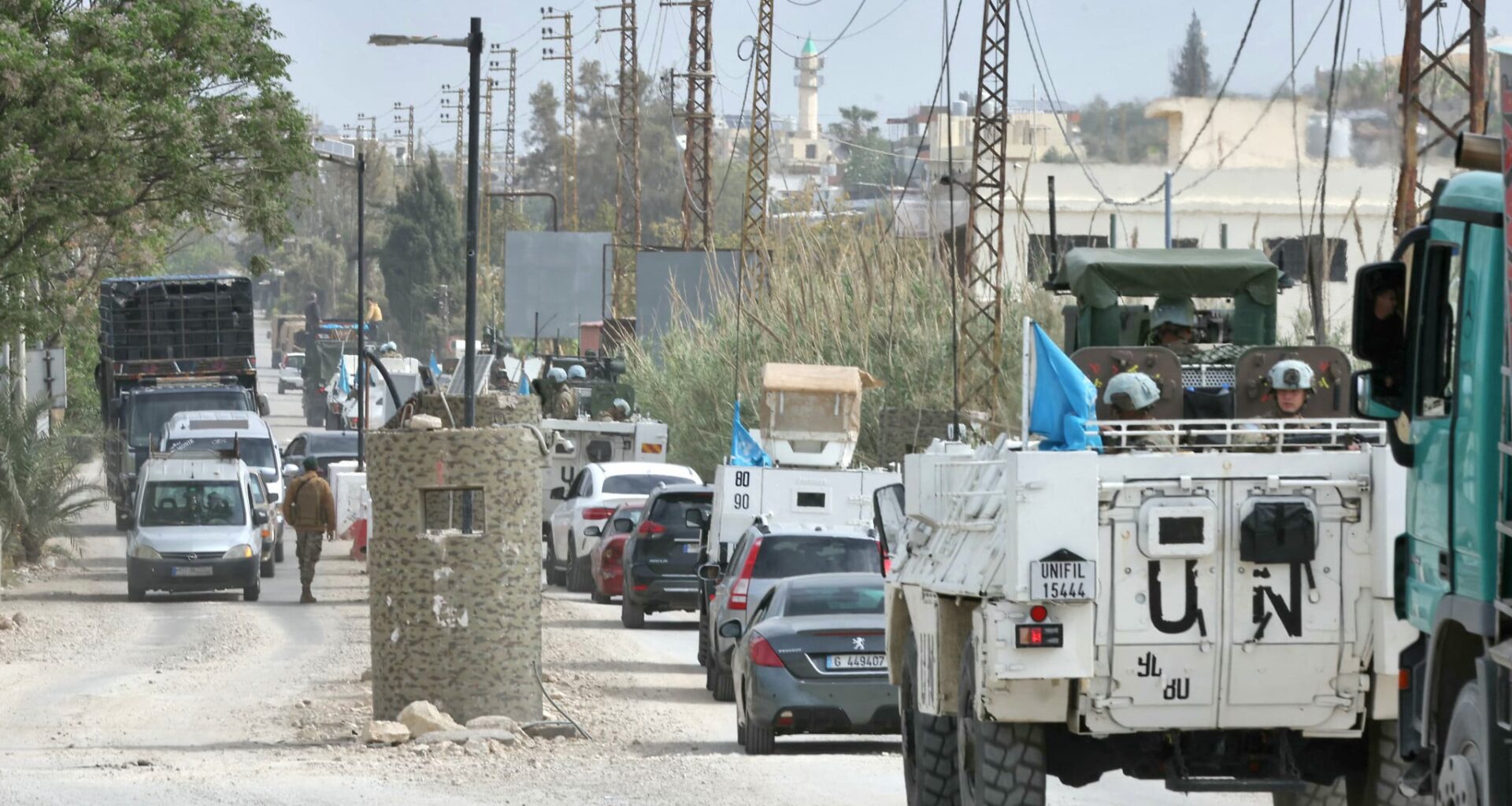
A second French soldier has died of wounds suffered in a weekend ambush against UN peacekeepers in Lebanon blamed on Hezbollah, French President Emmanuel Macron announced Wednesday.
“Corporal Anicet Girardin… brought home yesterday from Lebanon, where he was badly wounded by Hezbollah fighters, died this morning of the consequences of his wounds,” Macron posted on X.
Another French soldier, Staff Sergeant Florian Montorio, was killed in the attack on April 18, which occurred when the UNIFIL peacekeepers were clearing unexploded ordnance in a village in southern Lebanon.
Three other troops, including Girardin, were wounded in the incident, with one more described as being in serious condition.
Girardin, a member of a specialist dog-handling unit, was part of a mission “to clear a route booby-trapped with an improvised explosive device,” Armies Minister Catherine Vautrin posted on X.
Get The Times of Israel’s Daily Edition
by email and never miss our top stories
By signing up, you agree to the terms
“Coming under sustained fire from concealed Hezbollah fighters at very close range, he moved to aid his section leader who had just fallen, only to be seriously hit in turn,” she added.
Le caporal-chef Anicet Girardin du 132ème régiment d’infanterie cynotechnique de Suippes, rapatrié hier du Liban où il avait été gravement blessé par des combattants du Hezbollah, est mort ce matin des suites de ses blessures.
Il est mort pour la France.… pic.twitter.com/1eokASMl57
— Emmanuel Macron (@EmmanuelMacron) April 22, 2026
Macron and Vautrin offered their condolences to Girardin’s family and loved ones.
He is the third French soldier to die since the start of the recent round of fighting in the Middle East, after Montorio and the killing of Arnaud Frion last month by an Iranian drone in Iraq’s Kurdistan region.
Both Macron and UN Secretary-General Antonio Guterres have blamed Iran-backed Hezbollah for the Saturday attack on peacekeepers belonging to the United Nations Interim Force in Lebanon (UNIFIL).
French soldiers in UNIFIL “are working bravely and determinedly in service of France and peace in Lebanon,” Macron wrote.
While France and the UN leader named Hezbollah in their statements on the attack on the peacekeepers, UNIFIL itself refrained from doing so explicitly, instead blaming “non-state actors,” code for the Iran-backed terror group.
Hezbollah has denied any involvement, expressing its “surprise at positions that rushed to make baseless accusations” against the group.
During a visit to Paris on Tuesday, Lebanon’s Prime Minister Nawaf Salam said he was personally following the investigation into the incident.
“I have instructed the police force to carry out all necessary inquiries in order to identify those responsible and bring them to justice,” he said.
France, which has deep historical ties to Lebanon, has about 700 troops as part of the UNIFIL mission.
Girardin’s death adds to the growing toll of UNIFIL troops killed recently in southern Lebanon. Three Indonesian peacekeepers were killed last month, with a preliminary UN investigation finding one was killed by Israeli tank fire, while the two others were killed by an improvised explosive device likely planted by Hezbollah.
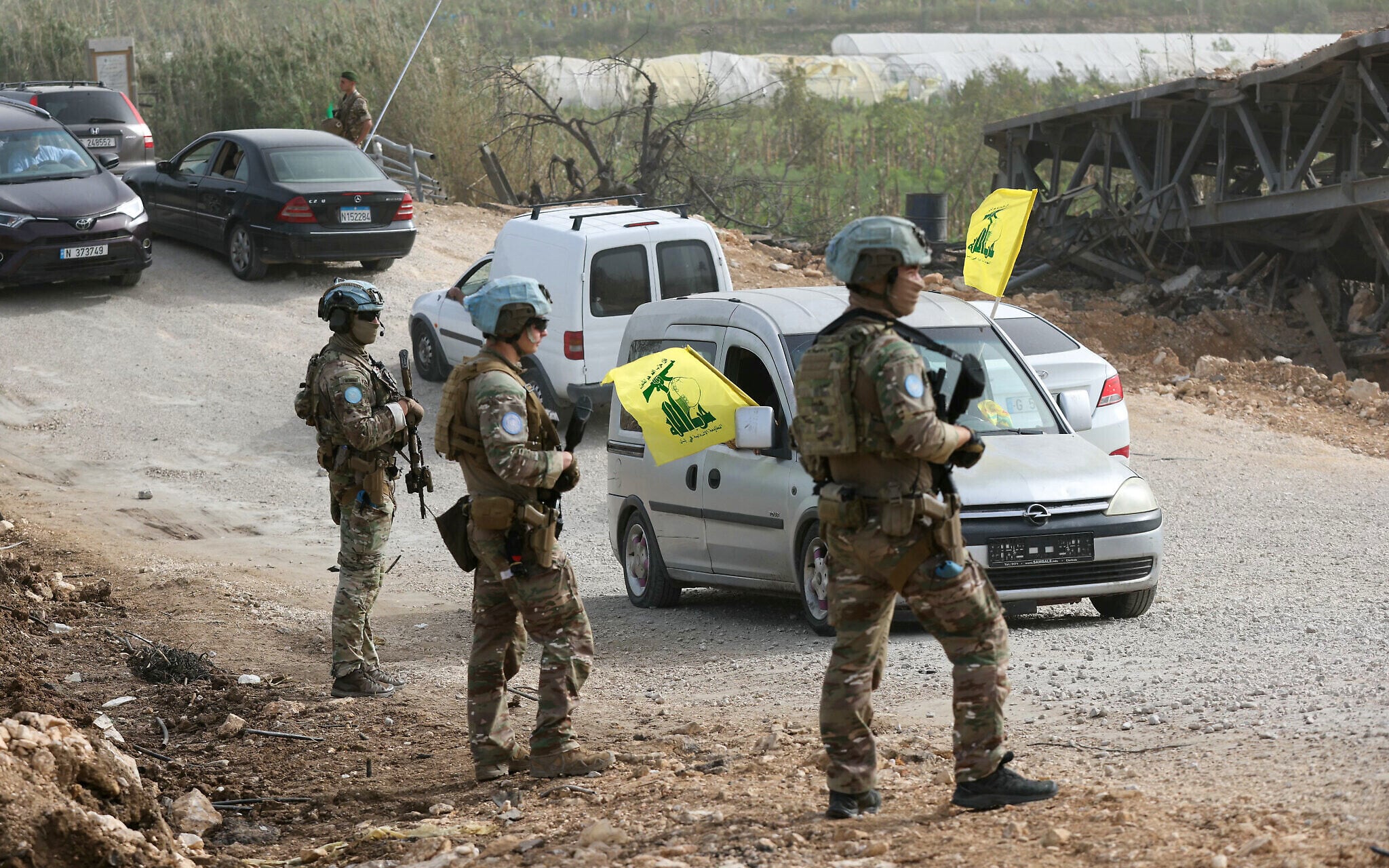
A French contingent of UNIFIL peacekeepers patrols the area as displaced residents waving Hezbollah flags make their way back to their homes on a makeshift road, built at the site where the Qasmieh bridge was destroyed in Israeli strikes, in the southern Lebanese area of al-Qasmiyeh on April 18, 2026. (Mahmoud Zayyat/AFP)
Lebanon was drawn into the Middle East conflict on March 2 when Tehran-backed Hezbollah attacked Israel to avenge the death of Iranian supreme leader Ali Khamenei, with Israel responding by firing waves of strikes at Hezbollah targets and launching a ground offensive. A 10-day ceasefire was declared by the US last week, following direct talks in Washington between Israeli and Lebanese envoys, and Beirut is currently pushing for an extension of the truce to allow for further negotiations.
UNIFIL is stationed in southern Lebanon to monitor hostilities along the border. The mission, which will be halted at the end of 2026, has been sporadically caught in the crosshairs of both Israel and Hezbollah over the last few years.
Israel has long argued that the observer force has failed in its mission, doing little to block Hezbollah from building up its forces near the Israeli border over the decades.
You appreciate our wartime journalism

You clearly find our careful reporting of the Iran war valuable, at a time when facts are often distorted and news coverage often lacks context.
Your support is essential to continue our work. We want to continue delivering the professional journalism you value, even as the demands on our newsroom have grown dramatically during this ongoing conflict.
So today, please consider joining our reader support group, The Times of Israel Community. For as little as $6 a month you’ll become our partners while enjoying The Times of Israel AD-FREE, as well as accessing exclusive content available only to Times of Israel Community members.
Thank you,
David Horovitz, Founding Editor of The Times of Israel