
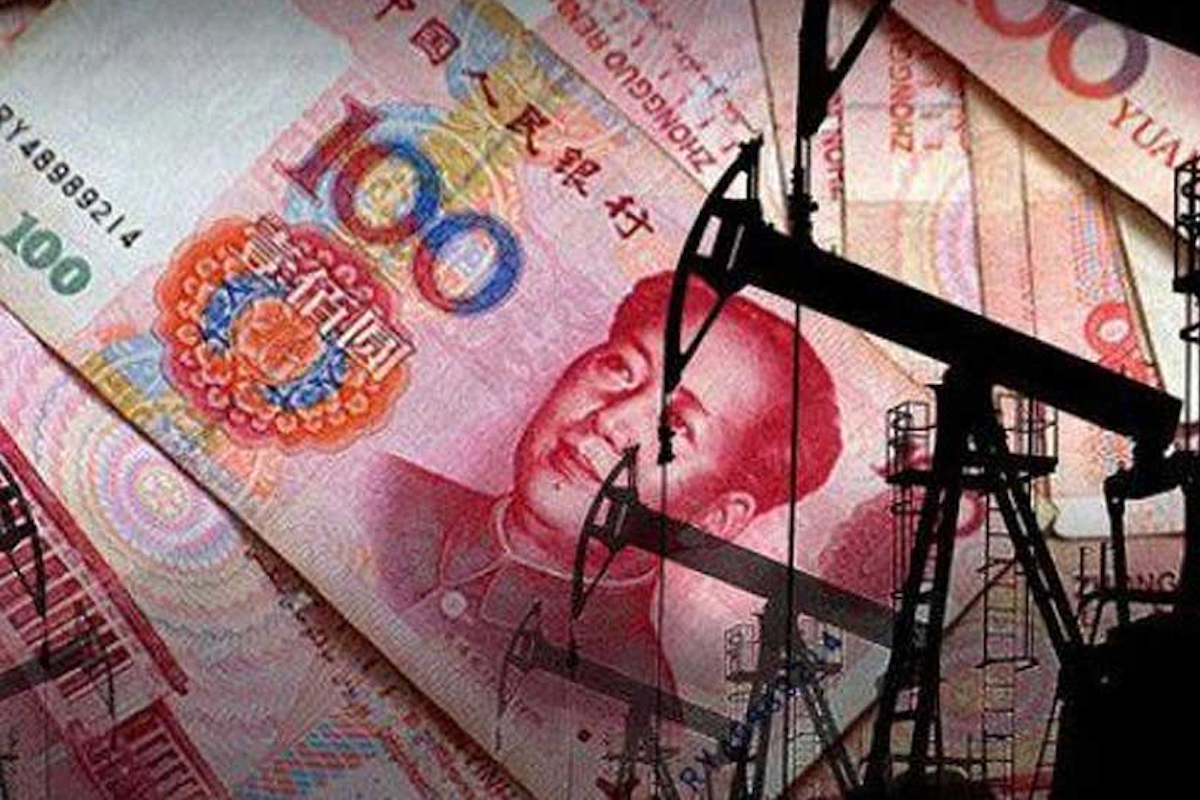
The petroyuan — oil and energy trades settled in Chinese yuan rather than US dollars — is not emerging exclusively because countries want to ideologically hammer the dollar, although that it is inevitably part of it.
It is emerging as a financial force because, under pressure, nations need another way to get deals done. The distinction matters because it will define how the petroyuan evolves relative to the petrodollar.
Most analysis still treats the shift as structural and gradual: a slow erosion of dollar dominance reflected in reserve allocations and payment shares over time. The data, however, do not support that as the primary mechanism.
The dollar still accounts for roughly half of global payments on SWIFT and close to 60% when payments between eurozone members are stripped out. The yuan remains in the low single digits. On foreign reserves, the gap is wider still.
Those numbers are real. But they are also misleading because they describe stability at the core of the system and say very little about what happens at the edge — when the system is under strain.
Energy markets operate at that edge. Around a fifth of global oil supply moves through the Strait of Hormuz, and Asia depends on Middle Eastern crude for roughly half or more of its imports.
When that flow is disrupted, the question is not which currency is dominant. The question is which currency can clear the transaction. This is where the petroyuan comes into the picture.
Recent trades give a clear signal. Indian refiners have already settled Iranian cargoes in yuan under US-sanction-constrained conditions. African banks are building direct yuan settlement channels to avoid routing through the dollar.
These are not ideological moves — they’re operational decisions. That is why the petroyuan will not grow in a straight line but rather will gain traction in bursts.
The next phase is likely within the next 12 months. Another disruption to Gulf energy supply — whether through shipping constraints, sanctions tightening or military escalation — will force a portion of marginal oil flows outside long-term contracts and established supply chains into alternative settlement channels.
In that scenario, yuan usage will spike — not across the board, but enough to register in flows and pricing behavior.
It will then likely fade as tensions ease, dollar channels reopen and liquidity returns. The incentive to use the petroyuan’s alternative routes will decline and yuan settlement activity will pull back. On the surface, it will look like nothing has changed. That reading will be wrong.
Each episode will leave residue. More counterparties will be willing to transact in yuan. More banks will be able to intermediate in the Chinese currency. More corporates will be comfortable holding working balances in yuan. The infrastructure for petroyuan trading will expand quietly in the background.
The system will not flip – it will steadily accumulate. This will create a pattern markets are widely unprepared for: intermittent, crisis-driven surges in petroyuan usage, each one larger and more effective than the last.
Currency markets are built on marginal flows. They respond not to the bulk of transactions, but to changes at the edge. If even a small share of energy trade diverts away from the dollar during a crisis, the way stress moves through the financial system, or the transmission mechanism, changes.
In a standard oil shock, demand for dollars spikes immediately. Importers need funding as corporates hedge and banks tighten liquidity. The result is synchronized: the dollar strengthens quickly and broadly.
Introduce a parallel settlement channel and that uniformity breaks. Many transactions, of course, will still require dollars. But increasingly, others will not. Demand will become uneven as part of the system will start to clear immediately through alternative channels.
The effect is not a collapse in the dollar. It is a distortion in how stress moves through the system. Dollar rallies will become less clean. Funding pressure will become less synchronized. Pricing will become less predictable.
That is where the first real impact will be felt — not in reserve data, not in headline market share, but in market behavior during stress. There is a second-order effect that is more important over time. Once a workaround proves effective in a crisis, it becomes part of standard practice.
Treasury functions do not revert to a single-currency model after discovering a viable alternative. They retain optionality, build flexibility into contracts and diversify settlement pathways.
This is how temporary adjustments become permanent features. The petroyuan does not need to displace the dollar to matter. It needs to function reliably when the dollar system is constrained or under stress.
This threshold is lower than most investors assume. The petroyuan will mature through repeated episodes of geopolitical stress. Each crisis will expand its usage. Each period of calm will obscure it. The cycle will repeat, with a higher baseline each time.
Within the next three years, the process will be clearly visible in market behavior. Energy shocks will no longer produce a single, immediate surge in dollar demand. The response will be staggered, fragmented and harder to price. That is when the real petroyuan shift will take hold.
Nigel Green is CEO and founder of the deVere Group