
A surge in demand for electric vehicles across Europe may be evidence of what George Monbiot greeted as the silver lining of the Iran war. Sales of electric cars in continental Europe rose by 51% in March.
The International Energy Agency has called the disruption in the strait of Hormuz the “biggest energy crisis in history”, but it appears, on one level, to be accelerating Europe’s green revolution. Yet, even if car-owners are rushing to the EV showrooms, some European governments, facing a groundswell of anger over soaring petrol and gas prices, are at risk of sending the clean energy transition into reverse.
You can’t envy leaders balancing the tension between fuel-related cost pressures, a global economy threatened with tanking and climate goals. But a panicked response could prolong the collective suffering, experts say.
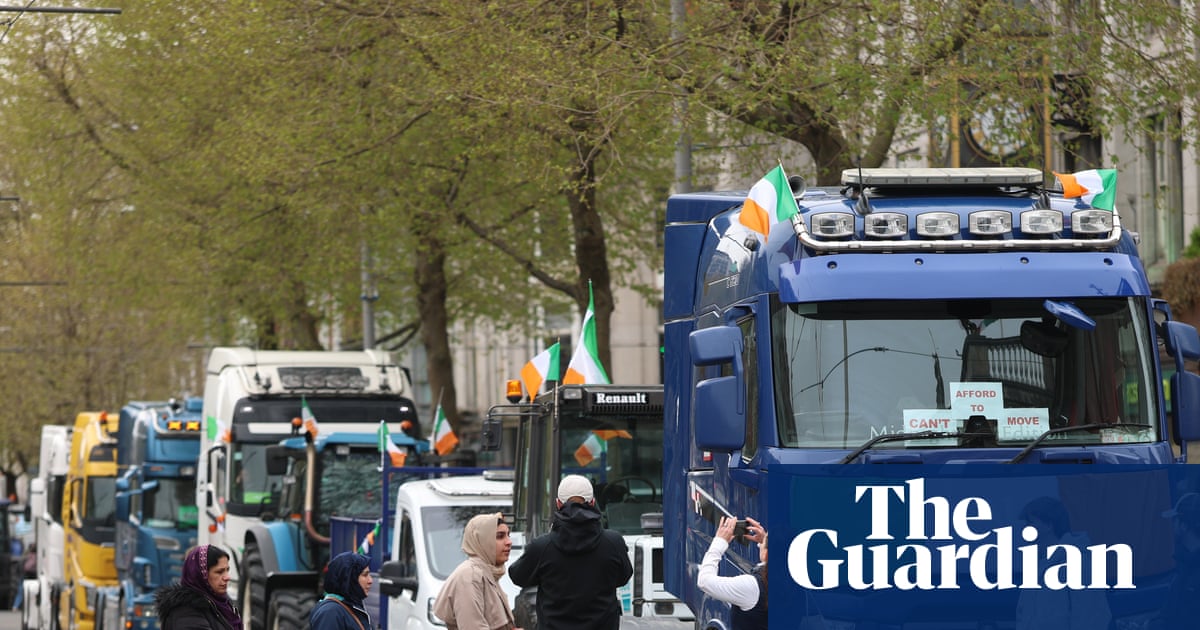
Ireland was rocked by fuel protests earlier this month as truckers and farmers brought the country to a standstill. Protesters in convoy, claiming to be in severe financial distress, used their vehicles to blockade ports, fuel depots and Ireland’s only refinery.
Their anger at pump-price hikes though, was not directed at Donald Trump or even profiteering energy companies, but rather at fuel taxes. As the action escalated – and came perilously close to hobbling critical infrastructure such as water treatment plants – there was a palpable sense of bafflement in the rattled political class.
Had they studied previous fuel-driven, grassroots, semi-leaderless, rural mobilisations elsewhere in Europe (think of France’s Gilets Jaunes or the 2024 German and Italian tractor protests), ministers might have seen this coming. It was, nevertheless, an unusually destabilising moment for Ireland.
After a tense six-day stand-off, the government gave in. It cut excise duties on diesel and petrol along with offering handouts to hauliers and agricultural contractors. Most significantly, it delayed a planned increase in the carbon tax, which is levied on all polluting fuels, by six months.
Hannah Daly, a professor of sustainable energy at University College Cork, told me that the carbon tax, a pillar of global and EU climate policy, had become “a lightning rod” – and not just among households unfairly penalised by it, such as renters who lack the right to replace their gas or oil-fired heating with solar panels or heat pumps.
The €505m rescue package was an expensive remedy for Ireland’s failure to plan for a clean energy future. It was, in effect, a “ransom” to the fossil fuel system, as Daly put it. Subsidising demand makes fuel cheaper, perpetuating the very thing that keeps people locked in addiction to imported oil, and at the mercy of future geopolitical shocks.
“[The rescue package] has artificially shielded motorists and others who are dependent on fuel, from an international fuel crisis. But it is temporary relief, at huge expense, that everybody is paying for,” said Daly.
Lessons for Europe
‘A no-brainer’ … huge progress in battery technology is making EVs an increasingly sensible option. Photograph: Phil Wilkinson/Alamy
Similar frustration over fuel prices is now felt across much of Europe, and energy experts worry that bigger economies like Germany and Poland will opt to roll out blanket fuel subsidies rather than targeted income supports for vulnerable groups. Campaigners are dismayed at Germany’s reluctance, even in this crisis, to dampen petrol demand via autobahn speed limits, as Ajit Niranjan reported.
On Wednesday, the European Commission outlined plans to bring relief from the energy shock to households, with tax cuts aimed at favouring electricity over oil and gas. Brussels also said it would set targets to electrify all road transport. “That could be done; there are huge strides in battery technology that make it a no-brainer for any new car, van or bus,” Daly said. Despite the news about EV registrations surging, 96% of the EU transport fleet runs on petrol or diesel. In Norway, by contrast, EVs account for 32% of all passenger cars. Ireland has an exceptionally high reliance on road transport but, Daly said, only one electrified heavy goods vehicle had been registered in Ireland by April of this year.
One of the ironies of the latest crisis is that Europe’s climate policies and geopolitical pressures are now aligned. The EU’s green deal means even in the most fossil fuel-dependent economies, such as Ireland’s, people now have real and affordable alternatives, although too many barriers remain. “It’s too late to say I told you so,” said Daly, “but if we had gone faster we wouldn’t be facing this pain.”
Spain and Denmark by contrast, made generous investments in domestic renewables earlier, and are reaping the clean energy rewards in lower and more stable electricity prices.
Ireland’s fuel blockades opened a Pandora’s box of unhelpful culture-war, climate-sceptic narratives. But Daly thinks the protests may also have marked a turning point on the road to cleaner, greener energy use. There was widespread public sympathy for the protests, yet the tactics deployed demonstrated the alarming price of fossil fuel vulnerability better than any climate protest could.
Nordic countries, such as Sweden, dramatically reduced their exposure to energy shocks after the 1973 oil crisis. They implemented bold solutions, from home insulation to extensive public transport, that had lasting benefits. The latest fossil fuel crisis could turn out to be Europe’s last, Daly said. “But only if the right lessons are learned.”
To receive the complete version of This Is Europe in your inbox every Wednesday, please subscribe here.