
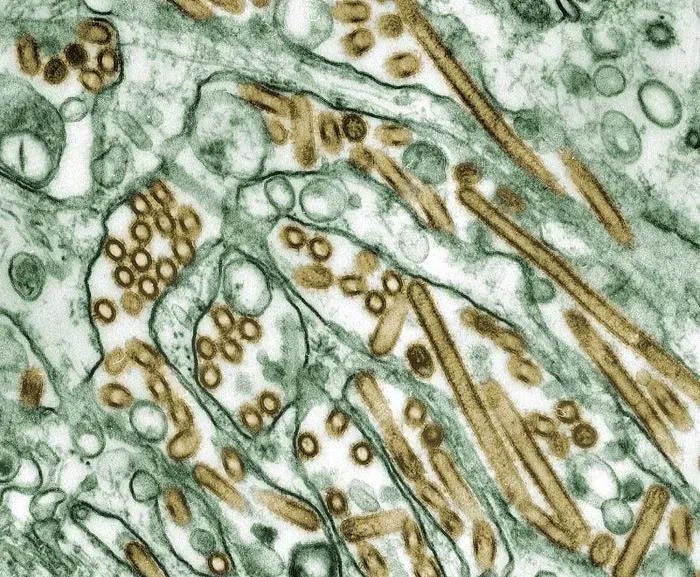
The Cambodia Ministry of Health reports an additional human case of H5N1 avian influenza in a 66-year-old woman who was confirmed to be positive on April 21, 2026 by the National Institute of Public Health.
This is the fourth human case confirmed in Cambodia in 2026 (#1, #2, #3).
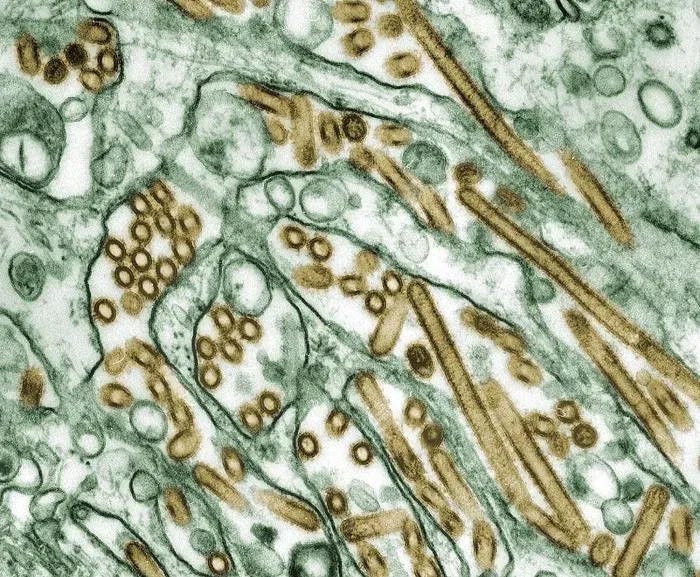 Image/CDC
The patient is a resident of Trapaing Thkov village, Pong Teuk commune, Romduol district, Svay Rieng province.
The patient has been placed in isolation at the hospital and is receiving intensive medical care.
Investigations revealed that from April 2 to 13, there were sick and dead chickens in the village and the patient’s house, which were used for cooking.
According to the World Health Organization, H5N1 is one of several influenza viruses that causes a highly infectious respiratory disease in birds called avian influenza (or “bird flu”). Infections in mammals, including humans, have also been documented.
H5N1 influenza virus infection can cause a range of diseases in humans, from mild to severe and in some cases, it can even be fatal. Symptoms reported have primarily been respiratory, but conjunctivitis and other non-respiratory symptoms have also been reported. There have also been a few detections of A(H5N1) virus in persons who were exposed to infected animals or their environments but who did not show any symptoms.
Subscribe to Outbreak News TV on YouTube
Almost all cases of H5N1 virus infection in people have been associated with close contact with infected live or dead birds, or H5N1-contaminated environments, for example live bird markets. There have been some instances of spread from infected mammals to humans as well. While there may have been some cases that were not detected, the virus does not seem to easily infect humans or spread from person to person, based on the current knowledge and understanding.
More than 970 cases of human infection with highly pathogenic avian influenza A(H5N1) have been reported to the World Health Organization (WHO) since 2003, with over 460 fatalities resulting in a high mortality rate exceeding 50%.
If you like the reporting on Outbreak News Today, please consider a paid subscription for $5/month or $30 a year. Help support the cause of this niche journalism. It is appreciated.