
Bright Laser Technologies (BLT), a Chinese metal additive manufacturing company, collaborated in the development of smartphone manufacturer OPPO’s Find N6 foldable smartphone by producing titanium 3D printed hinge components used to improve display flatness and minimize creasing. The project followed BLT’s earlier work on the hinge system for the OPPO Find N5 and focused on one of the foldable phone sector’s most persistent technical problems: reducing visible creases without compromising hinge durability or user experience.
At the center of that effort are the wing plates on both sides of the hinge, which bear the majority of folding stress. In earlier designs, these parts required up to 13 individual components that had to be machined and assembled with precision. For the Find N6, BLT used titanium 3D printing to consolidate those parts into a single lightweight structure. That wing plate combines high strength, reduced weight, and intricate lattice geometries, while enabling designs that are difficult or impossible to achieve with conventional CNC machining. Consolidation also simplified assembly and production.
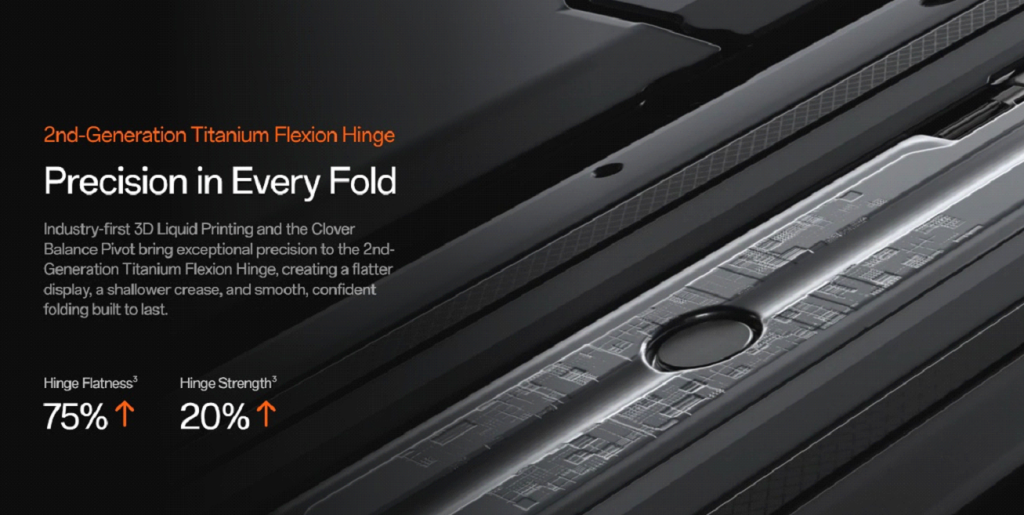 Second-generation titanium flexion hinge for OPPO Find N6. Image via OPPO.
“The supporting surface flatness of the OPPO Find N6 wing plate has improved by 50% compared to last year,” said Vincent Yang, General Manager at Bright Laser Technologies (Shenzhen) Co., Ltd. “Achieving this level of precision once seemed extremely difficult—even unattainable—but through continuous iteration and rigorous testing, our team was able to meet and even exceed expectations.”
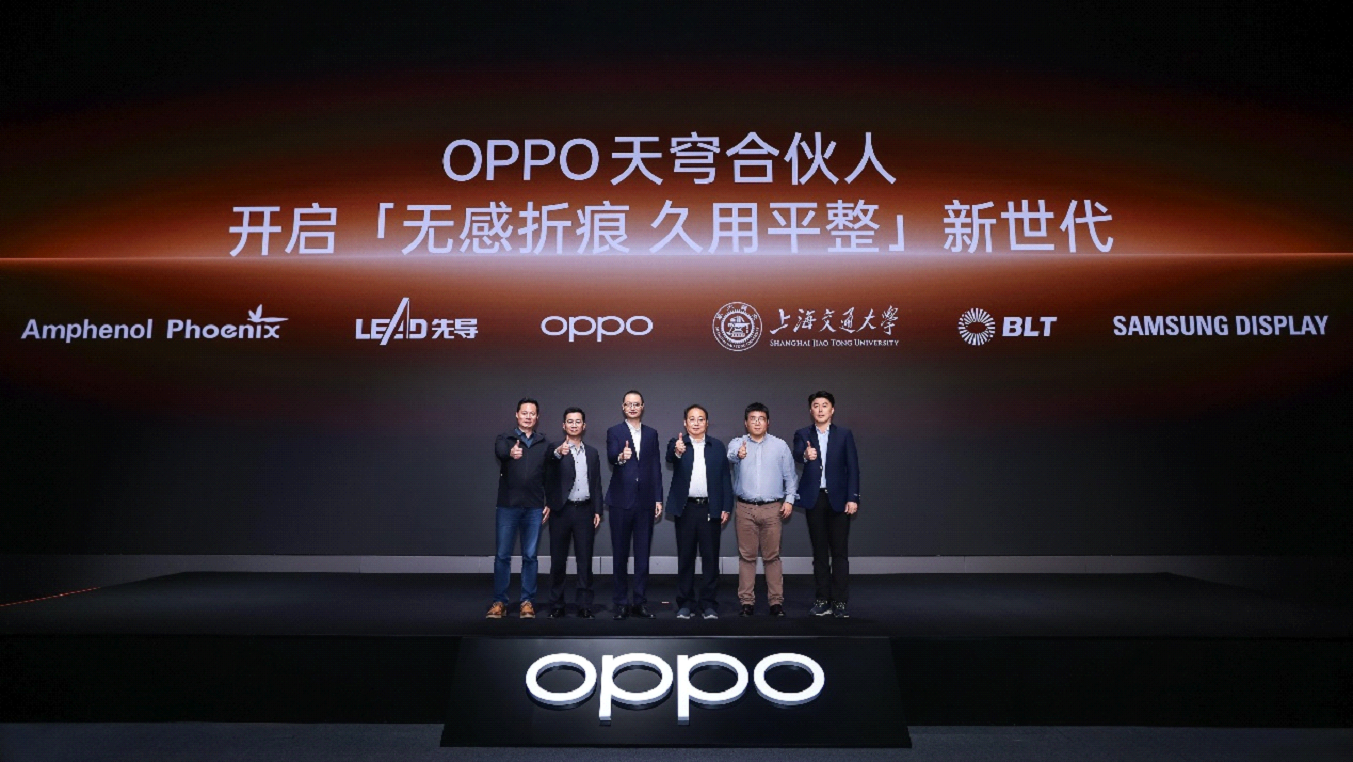
Development of the device took place through Tianqiong Partners, an industrial alliance initiated by OPPO, to bring together suppliers, research institutions, and other industry stakeholders. That alliance was created to address key technological challenges in foldable devices through joint development and knowledge sharing. OPPO said the Find N6 also uses its next-generation titanium Tianqiong hinge and Tianqiong memory glass. “Achieving a crease-free and durable foldable display depends not only on advanced technologies such as the next-generation titanium Tianqiong hinge and Tianqiong memory glass, but also on the collective efforts of the engineers within the Tianqiong Partners ecosystem,” said Liu Chang, OPPO Vice President and President of Hardware Engineering. “The Find N6 represents a significant step forward in foldable display technology, as well as a meaningful improvement in user experience.”
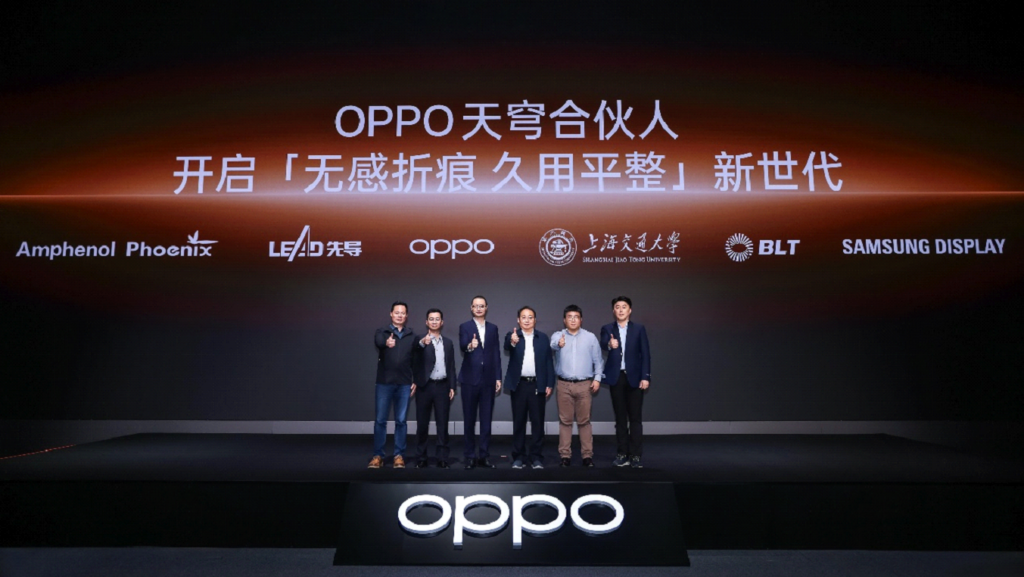 Tianqiong Partners alliance supporting OPPO Find N6 development. Photo via OPPO.
Find N6 passed 600,000 folding cycles certified by TÜV Rheinland. The Chinese metal additive manufacturer described its role in the project as part of an end-to-end metal additive manufacturing process covering powder development, process optimization, component production, and post-processing. That manufacturing chain was used to produce a foldable smartphone hinge component with demanding requirements for strength, precision, weight, and manufacturability at an industrial scale.
3D printing takes on more demanding roles in smartphone development
Apple’s recent use of additively manufactured parts in the iPhone Air and Apple Watch Series 11 showed how 3D printing is being applied to consumer electronics components shaped by tight design and material constraints. In the iPhone Air, Apple used 3D printing to produce the USB-C port, a move it said made the connector thinner and stronger while using 33% less material than conventional forging. Apple also introduced 3D printed titanium cases for the Apple Watch Series 11, which it said consume about 50% less raw material than the previous process.
A different smartphone use case has emerged around modularity and accessories rather than internal hardware. In a recent Prusa Research design contest for CMF by Nothing’s modular CMF Phone 2 Pro, participants were invited to create custom back covers, attachments, and other phone-specific accessories, with 225 submissions recorded at the time of writing. That challenge followed an earlier collaboration with Bambu Lab around the CMF Phone 1, where designers received STEP files and technical specifications to build precise add-on components for the device.
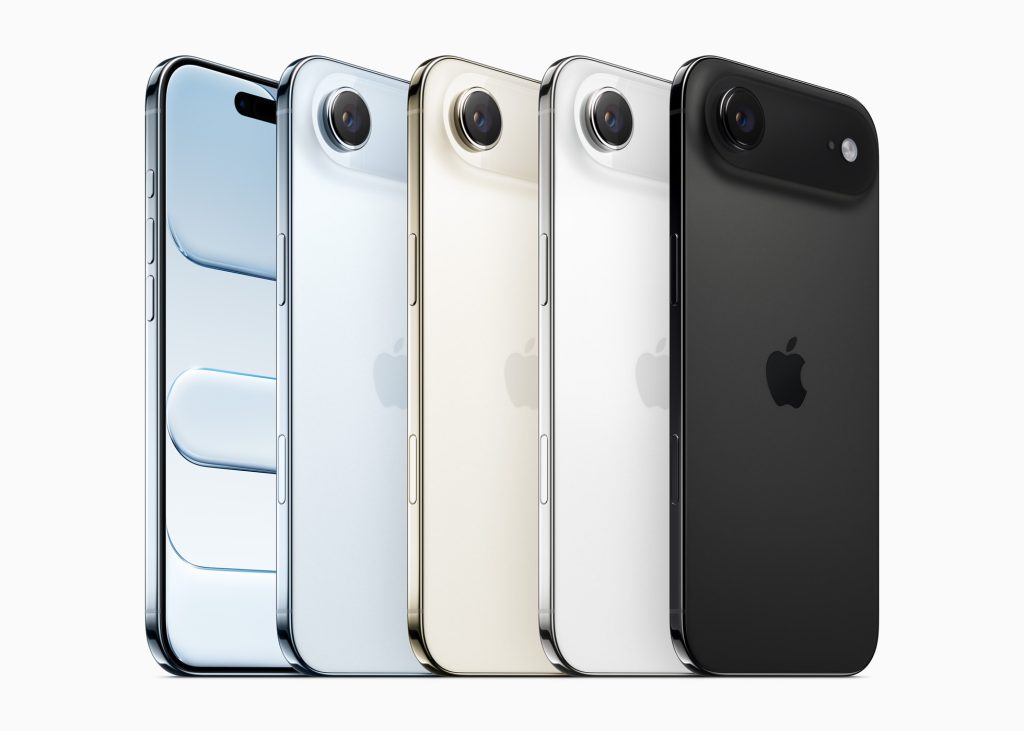 Apple iPhone Air color lineup. Photo via Apple.
3D Printing Industry is inviting speakers for its 2026 Additive Manufacturing Applications (AMA) series, covering Energy, Healthcare, Automotive and Mobility, Aerospace, Space and Defense, and Software. Each online event focuses on real production deployments, qualification, and supply chain integration. Practitioners interested in contributing can complete the call for speakers form here.
To stay up to date with the latest 3D printing news, don’t forget to subscribe to the 3D Printing Industry newsletter or follow us on LinkedIn.
Explore the full Future of 3D Printing and Executive Survey series from 3D Printing Industry, featuring perspectives from CEOs, engineers, and industry leaders on the industrialization of additive manufacturing, 3D printing industry trends 2026, qualification, supply chains, and additive manufacturing industry analysis.
Featured photo shows Tianqiong Partners alliance supporting OPPO Find N6 development. Photo via OPPO.