
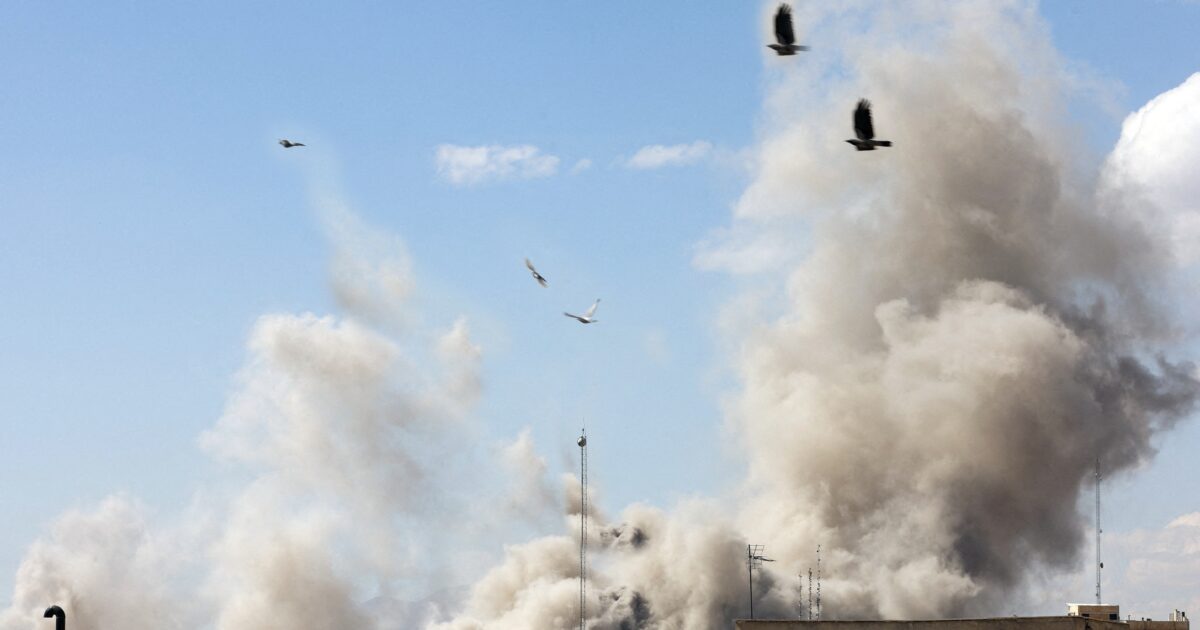
For decades, Gaza was relegated to the margins of world attention. Then, October 7 happened, a genocide followed, and Gaza moved the entire world, setting off a chain of events that now threatens the place of America in the Middle East and demonstrates the limits of U.S. power. But tragically, the events Gaza set in motion have now overshadowed it. Since the so-called ceasefire in October 2025, the world has “moved on” from Gaza.
But Israel has not, and it’s planning on returning to war.
When the U.S. entered into a ceasefire with Iran — much to the chagrin of the entire spectrum of Israeli politics — Israeli Prime Minister Benjamin Netanyahu stated that Israel will now “focus on Hamas,” suggesting a return to the war in Gaza.
The suggestions turned explicit when Israel’s Channel 14 reported last weekend that Israeli forces were preparing to resume war in Gaza “as early as next month.” According to the report that aired on the channel’s live broadcast, Israel is considering resuming its operations in Gaza after the refusal of Hamas and other Palestinian factions to disarm.
The refusal of disarmament came on the heels of a series of meetings in mid-April between representatives of Palestinian factions and Nickolay Mladenov, the “High Representative for Gaza” in Donald Trump’s Board of Peace, who demanded that the factions accept a U.S. plan for disarmament.
But why is Israel insisting on resuming the genocide now, as the war with Iran might resume following Trump’s blockade of Iranian ships in the Straits of Hormuz? Here is how Iran and Gaza are connected.
Making up for Israel’s failure
The fact that the Gaza ceasefire has moved out of U.S. and international priorities is, of course, due in large part to the war in Iran. But the connection is even more direct, because the war on Iran was meant to be the final move to remove all opposition to Israel’s dominance in the region. The outcome of the war could determine the way in which Israel would deal with other portfolios in the region, starting with Gaza itself.
The removal of Iranian opposition to the U.S. and Israeli agenda in the region would strip Hezbollah and Hamas of their backing, leaving them hollowed out and contained. With them out of the way, Israel would be free to pursue its most maximalist ambitions, discarding any agreements or deals that stood in its path.
Given the stakes, Israeli Defense Minister Israel Katz said on Friday that the Israeli army was waiting for a “green light” from the U.S. to resume its war on Iran, vowing that “this time the attack will be different and deadly.” Katz added that Israel was prepared to send Iran back to the “age of darkness and stone” by targeting central energy and electricity infrastructure.
In other words, this is Israel’s final gambit to save Israel’s impunity and to guarantee its place as a regional hegemon. However, even if the U.S.-Israeli war on Iran fails, that doesn’t mean Israel will suddenly be contained by Iranian power when it comes to Gaza. In fact, Israel would seek to compensate for its failure against Iran through maximalist expansionism in its backyard: resuming its wholesale attack on the Strip and annexing the West Bank before its international impunity expires.
This risk is compounded by Israel’s looming political crisis. Elections are months away, which Netanyahu’s coalition is likely to lose according to polls, and keeping a war front open until then would give Israeli leaders a powerful tool for distraction: postponing, yet again, an independent inquiry into the security failure that led to October 7, the ultra-Orthodox military draft, and Netanyahu’s pending corruption cases.
The world against Gaza
According to Palestinian media reports, the Palestinian delegation that met with Mladenov in mid-April included representatives of Hamas, Fatah, the PFLP, the DFLP, and the Palestinian Islamic Jihad, who refused to discuss disarmament before Israel met all its obligations under the ceasefire’s incomplete first phase, namely the free entry of goods into Gaza and the beginning of reconstruction.
Earlier in April, representatives of Fatah and Hamas met in Cairo and discussed the practical steps to move to the post-war phase in Gaza, including reconstruction and disarmament, according to Arabic-speaking media reports.
These developments come three months after the formation of the National Committee for the Administration of Gaza — known as the “technocratic committee” made up of Palestinians charged with administering the Strip. Although the committee is subordinate to the Board of Peace and independent of Palestinian political institutions, Palestinian factions, including both Hamas and Palestinian President Mahmoud Abbas, welcomed it for the sake of starting the humanitarian recovery of Gaza. However, the committee hasn’t yet been allowed to enter the Strip. All of this takes place amid the continued fracturing and paralysis of Palestinian politics.
Yet this continued state of stagnation in Gaza is not new. Prior to the genocide, Gaza had been experiencing a protracted period of humanitarian and political stagnation for almost two decades. Gaza had been declared “uninhabitable” by the UN in 2020, after almost two decades of partial Israeli blockade and multiple Israeli bombing campaigns. Gazans protested in massive numbers during a series of popular demonstrations known as the Great March of Return, which was met with live fire from Israeli snipers. Yet there was little to no international reaction.
Eventually, October 7 happened, and Israel claimed that the situation in Gaza could only be changed by force, proceeding to flatten the Strip and killed at least 70,000 Palestinians in the process.
Yet as the Gaza front wound down and Israel launched a war on two other fronts in Iran and Lebanon, Gaza was sidelined once more. As the prospects of a protracted and drawn-out negotiation process with Iran grows likely, and with an on-again, off-again war in Lebanon, Gaza is poised to fade into irrelevance as its people continue to be starved and bombarded. The entire Gaza question, as it has always been, would be the next Israeli government’s problem.