
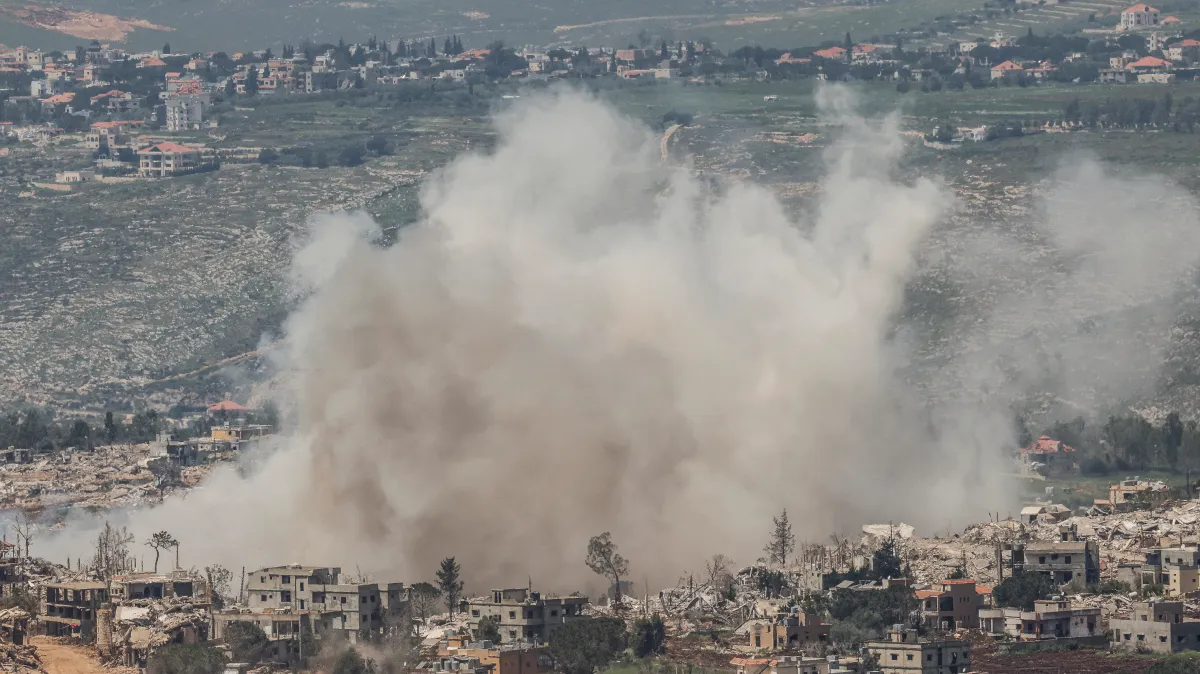
What you need to know
Israel Katz, the Israeli defence minister, threatens catastrophic consequences for Lebanon after Naim Qassem, Hezbollah’s leader, rejected proposed direct talks
Vladimir Putin, the Russian president, met Abbas Araghchi, the Iranian foreign minister, and said he hoped Iranians would weather ‘a difficult period’ and that peace would prevail
Iran has submitted a new peace proposal to the US, which focuses on lifting of the maritime blockade, officials in Washington have claimed
Friedrich Merz, the German chancellor, questioned the US exit strategy and said “an entire nation is being humiliated by the Iranian leadership”
Listen to live updates on Times Radio
9.12pm
Iran foreign ministry: the Americans are pirates
Iran’s foreign ministry has described the US naval blockade of vessels going to and from Iranian ports as “piracy and armed robbery on the high seas”.
Esmail Baghaei, a spokesman for the ministry, wrote on X: “Welcome to the return of the pirates — only now, they operate with government-issued warrants, sail under official flags, and call their plunder ‘law enforcement’.
“The United States must be held fully accountable for this brazenly lawless behaviour, which strikes at the heart of international law and international free trade, and threatens the basic principles of maritime security.”
7.32pm
Archbishop of Canterbury praises Pope Leo’s call for peace
The Archbishop of Canterbury has condemned the “terrible violence inflicted on innocent people” in global conflicts and praised the Pope for speaking out against “many injustices” in a historic first meeting in Rome (Kaya Burgess writes).
Leo XIV became the 267th pope — and first American — in May last year. The Most Rev Sarah Mullally was confirmed as the 106th Archbishop of Canterbury — and the first woman to hold the role — at a ceremony in January.
They prayed together at the Vatican on Monday, just over 60 years after the landmark 1966 meeting of Archbishop Michael Ramsey and Pope Paul VI, the first since the Church of England split from Rome in the Reformation.
7.28pm
Starmer faced ‘huge pressure’ to enter Iran war
The prime minister said he has faced a “huge amount of pressure” to change his mind about UK involvement in the Iran war.
Asked by Sky News about Trump’s criticism of the UK, Sir Keir Starmer said he decided the UK would not be dragged into the conflict at the outbreak of the war.
He admitted he had faced a “huge amount of pressure” to change his mind but insisted he was “not going to do so”.
Starmer said he would act in the national interest and noted that he had drawn a “number of lessons” from the Iraq war.
7.07pm
Starmer’s message to UK on economy: don’t panic
Sir Keir Starmer said Britons should not panic over the economic impact of the Iran war but acknowledged people might have to change their shopping habits and holiday plans.
The prime minister told The Cathy Newman Show on Sky News: “There is going to be an impact on the UK. There already is.
“And I think it’s really important that I level with the public that we are doing everything we can to get the Strait of Hormuz open, because obviously that is vital in terms of minimising the impact.
“But I don’t want anybody to think that, once the Strait is open, that that’s the end of the damage. It will go on longer than that.”
He said: “I can see that, if there’s more impact, people might change their habits … where they go on holiday this year, what they’re buying in the supermarket, that sort of thing.”
Asked for his message to the public, Starmer said: “Don’t panic. But, we chose not to get involved in this war. That was the right thing to do but we must protect the British people from the impact of it.”
7.05pm
Ukraine warns Israel against accepting ‘stolen grain’
Ukraine has warned Israel against accepting “stolen grain” from Russian-occupied areas after a cargo ship docked in Haifa, which Kyiv said risked harming diplomatic relations.
Andrii Sybiha, the Ukrainian foreign minister, said he had summoned the Israeli ambassador to Kyiv to hear representations on Tuesday morning.
Israel’s Haaretz newspaper reported earlier that the Russian vessel Panormitis had arrived in at the Mediterranean port, after earlier shipments of grain were delivered from occupied Ukraine earlier this year.
“It is difficult to understand Israel’s lack of appropriate response to Ukraine’s legitimate request regarding the previous vessel that delivered stolen goods to Haifa,” Sybiha said. “Now that another such vessel has arrived in Haifa, we once again warn Israel against accepting the stolen grain and harming our relations.”
6.43pm
Trump discusses Iranian ceasefire proposal with security team
President Trump discussed Iran’s new ceasefire proposal with his national security team on Monday, the White House said.
Iranian sources said that Tehran was asking to set aside discussion of Iran’s nuclear programme until the war had ended and until disputes over shipping from the Gulf are resolved. That is unlikely to satisfy Washington, which says nuclear issues must be dealt with from the outset.
Karoline Leavitt, the White House press secretary, said that the president’s “red lines with respect to Iran have been made very, very clear”.
Trump has previously said that Iran must commit to never producing a nuclear weapon.
6.23pm
Israel’s chief of staff says country will fight on multiple fronts throughout 2026
Israel’s chief of staff, Lieutenant General Eyal Zamir, has warned that the country’s military was likely to be fighting on multiple fronts throughout 2026, as it fights wars against Iran and the Lebanese militant group Hezbollah.
“Since 7 October [2023], the IDF has been engaged in fighting in an ongoing multi-front campaign … 2026 is likely to be another year of fighting on all of those fronts,” he said in a statement on Monday.
6.19pm
Russian and Iranian ministers meet
Russia’s defence minister held talks with an Iranian minister on Monday, while President Putin also met Iran’s foreign minister.
Andrei Belousov, who is visiting Kyrgyzstan, held talks with Iran’s deputy defence minister, Reza Talaei-Nik, according to Russia’s state-run TASS news agency.
Belousov reiterated Russia’s longstanding position that the Iran war should be resolved exclusively through diplomatic means and said he was confident Moscow and Tehran would continue to support one another, the report added.
6.07pm
Netanyahu says Hezbollah’s rockets and drones are still a threat
The Israeli prime minister, Binyamin Netanyahu, said on Monday that Hezbollah’s arsenal of rockets and drones remained a key threat that demanded further military action by Israel’s military in Lebanon.
“There are still two central threats from Hezbollah: the 122mm rockets and the drones. This demands a combination of operational and technological activity,” he said in a statement issued by his office, after Israeli strikes against the group continued earlier on Monday, despite a declared ceasefire in Lebanon.
Netanyahu said Hezbollah “have about 10 per cent of the missiles they had at the start of the war. But these still trouble the residents of the north,” he added, referring to northern Israel.
“We are carrying out strikes now, both within the security zone and north of it, and north of the Litani River,” he added, reiterating Israel’s right to do so under its agreement “with the US and the Lebanese government”.
5.47pm
US-UAE swap line talks expose dollar diplomacy in Iran war
The financial and political implications of the war in Iran took an unexpected turn last week when it was revealed that the United Arab Emirates, one of the wealthiest, asset-rich, dollarised economies in the world, held talks with the US about accessing an emergency funding line (Mehreen Khan writes).
The rumour was confirmed by Scott Bessent, US Treasury secretary, on Friday. He said that the White House was having discussions with Gulf and Asian economies about “exploring additional financial buffers during periods of market quiescence”. The dialogue was a testament to the dollar’s “dominance” as a “reserve currency” and another example of “American economic leadership at work”, said Bessent.
The Treasury secretary’s statement still generated more questions than answers. What is the fiscal situation of the UAE that it raised the idea of a swap line? Is the Iranian oil blockade having a bigger impact on the country’s dollar peg than markets have assumed? Under what terms can the US extend emergency dollar support to a nation not suffering from a liquidity crunch? And what is the role of China in all of this?
5.07pm
Macron will speak to Iran about reopening Strait
President Macron of France has said he will talk to Iranian leaders after his two-day trip to Andorra and would insist on the reopening of the Strait of Hormuz.
“We have established a coalition whose purpose is precisely to ensure security, to secure and stabilise, to demonstrate that the international community supports an opening [of the Strait of Hormuz], and so I hope that we will be able to convince the stakeholders in the coming days,” he told reporters in Andorra.
5.00pm
US to blame for failure of talks, Iranian minister says
Iran’s foreign minister, Abbas Araghchi, told President Putin that Washington was to blame for the failure of Middle East peace talks during their meeting in Moscow earlier today.
According to comments on Telegram by the Iranian foreign ministry, Araghchi told the Russian leader that America’s “destructive habits” and “unreasonable demands” were slowing diplomatic progress over the war.
Tehran’s foreign ministry also said that Washington frequently changed its position.
4.25pm
‘Fire will engulf the cedars of Lebanon’
Israel Katz, the Israeli defence minister, has threatened that Hezbollah’s defiance would bring catastrophic consequences for Lebanon, after the militant group’s leader rejected proposed direct talks between Israel and Lebanon.
“Naim Qassem is playing with fire, and the fire will burn Hezbollah and all of Lebanon,” Katz warned Jeanine Hennis-Plasschaert, the UN envoy to Lebanon, according to a statement issued by his office.
“If the Lebanese government continues to take cover under the wing of the Hezbollah terrorist organisation, fire will break out and engulf the cedars of Lebanon.”
4.00pm
‘Drivers’ of nuclear proliferation accelerating
António Guterres, the UN secretary-general, warned that the “drivers” of nuclear weapons proliferation were accelerating as he opened a crunch meeting of signatories to the landmark non-proliferation treaty.
“For too long, the treaty has been eroding. Commitments remain unfulfilled. Trust and credibility are wearing thin. The drivers of proliferation are accelerating. We need to breathe life into the treaty once more,” Guterres told the meeting.
3.50pm
Iran is stable and solid, foreign minister says
Iran’s foreign minister said the Islamic republic was “stable” and “solid” during a meeting in Russia with President Putin, according to Russian state TV.
Abbas Araghchi said in the meeting in Saint Petersburg that because of the war with the United States and Israel, “the world has now realised Iran’s true power”. He added: “It has become clear that the Islamic republic of Iran is a stable, solid and powerful system.”
3.40pm
US imposes blockade after Russian yacht crosses Strait
The Russian billionaire Alexei Mordashov, known to be close to Putin, is not officially listed as the owner of Nord, which has just crossed the Strait of Hormuz. In a countermeasure, the US has imposed a blockade of Iranian ports.
However, shipping data and Russian corporate records from 2025 show the vessel was registered to a Russian firm owned by Mordashov’s wife in 2022.
Mordashov was among a number of Russians sanctioned by the US and European Union after Russia’s invasion of Ukraine for their links to Putin.
One of the largest yachts in the world, Nord has 20 staterooms, a swimming pool, a helipad and a submarine, according to the industry publisher Superyacht Times.
3.35pm
Russian billionaire’s superyacht crosses Strait
A superyacht linked to the sanctioned Russian billionaire Alexei Mordashov sailed through the Strait of Hormuz on Saturday, shipping data showed.
Nord, a 465ft yacht worth more than $500 million, left a Dubai marina at about 1400 GMT on Friday, crossed the strait and arrived in Muscat early on Sunday, according to data on the MarineTraffic platform.
It is not clear how it gained permission to use the route. A representative of Mordashov, a steel magnate, declined to comment.
Just a few ships, mainly merchant vessels, have been passing through the crucial waterway at the entrance to the Gulf as Washington and Tehran maintain an uneasy ceasefire. The number is a fraction of the average of 125 to 140 daily passages before the Iran war began on February 28.
3.30pm
US ‘focused and ready’ in Middle East
American military forces in the Middle East “remain focused and ready”, US Central Command said in a post on X, as negotiations to end the war with Iran continue to stall.
The US is currently blockading ships going to and from the Middle East. The ongoing blockade came into force a fortnight ago, on April 13.
A U.S. Sailor signals to an MH-60S Sea Hawk helicopter on the flight deck of guided-missile destroyer USS Mitscher (DDG 57). U.S. forces remain focused and ready across the Middle East. pic.twitter.com/pwep0jefeP
— U.S. Central Command (@CENTCOM) April 27, 2026
2.30pm
Reform fuel protest in Westminster flops
 The only vehicles present were branded with the Reform logoMartyn Wheatley/i-Images
A Reform UK fuel tax protest in Westminster has attracted minimal support.
The only vehicles which attended Monday morning’s demonstration were a double-decker bus and a taxi, both of which featured the party’s branding.
An AI-generated advert for the event posted on social media by Reform UK featured dozens of vehicles — including tractors, lorries and vans — in the shadow of the Houses of Parliament.
Reform UK’s Treasury spokesman Robert Jenrick urged people to “join us at 9am in Whitehall in your car to demand action” in a post on X.
 Laila Cunningham, Richard Tice, Robert Jenrick, Sarah Pochin and Joseph Afrane in Westminster on MondayKirsty Wigglesworth/AP
2.20pm
Putin meets Iran’s foreign minister
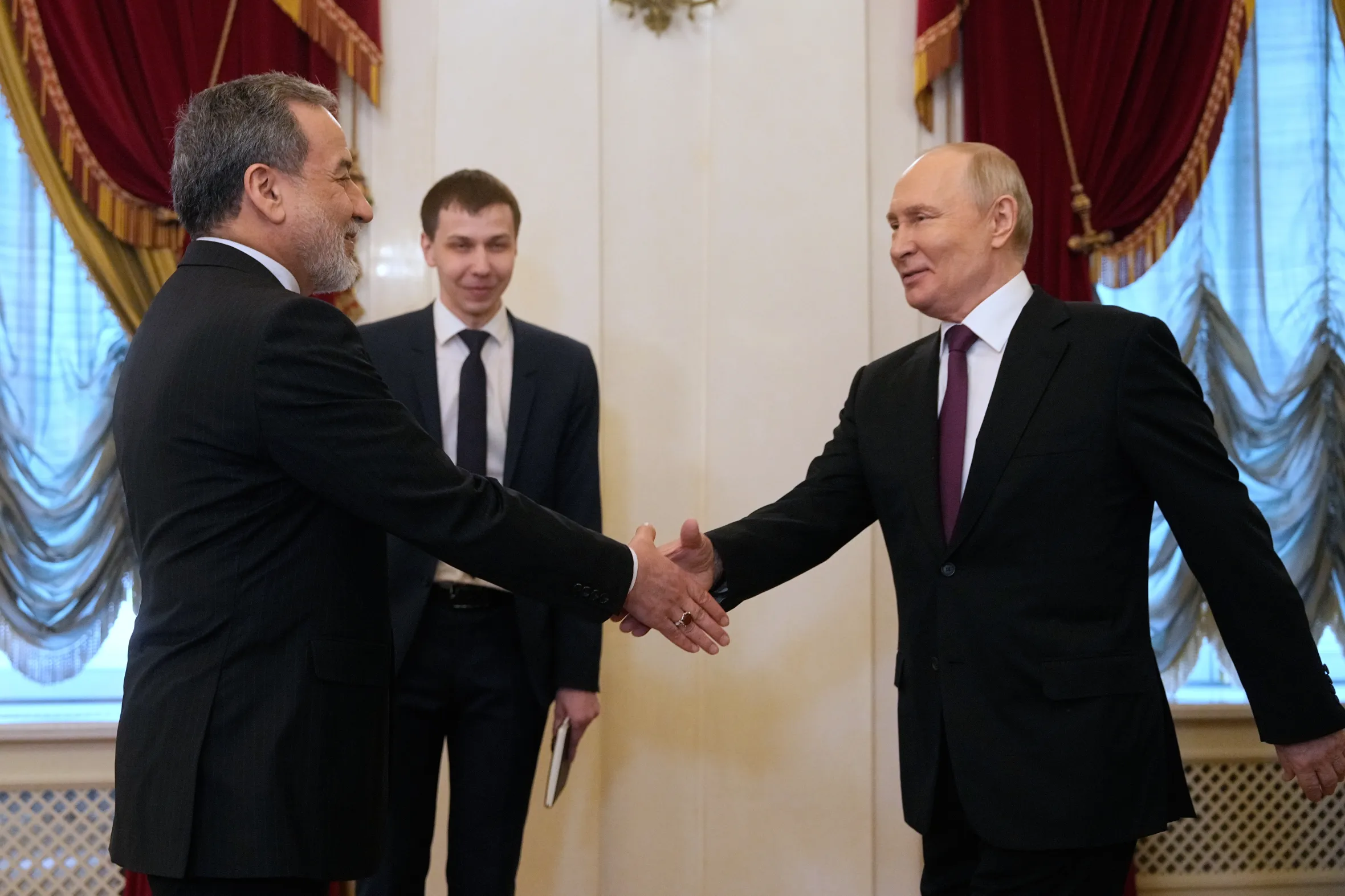 Putin greets Abbas Araghchi in St Petersburg on MondayDmitri Lovetsky/AP
President Putin has met Iran’s foreign minister, Abbas Araghchi.
Putin said Russia hoped the Iranian people will weather what he described as a “difficult period” and that peace will prevail.
He added that Russia would do everything in the interests of Iran and other countries in the region, the state-run RIA news agency reported.
The Russian leader also praised “how courageously and heroically the people of Iran are fighting for their independence and sovereignty”, the Tass news agency reported.
1.50pm
Bahrain revokes citizenship of 69 people for ‘sympathising with Iran’
Bahrain has revoked the citizenship of 69 people for “sympathising with and glorifying Iran’s criminal acts of aggression”, the country’s interior ministry has announced.
Iran has carried out several attacks on Bahrain, hitting the capital Manama, and the areas surrounding the US Navy’s 5th Fleet headquarters in the country. At least two people have been killed in the Iranian attacks.
“In accordance with the royal directives, Bahraini citizenship has been revoked from 69 individuals for sympathising with and glorifying Iran’s criminal acts of aggression,” it said.
1.50pm
Iran ‘to remain in charge of Strait under Tehran plan’
Iran’s armed forces would be the authority responsible for the Strait of Hormuz under the country’s proposed law for managing the waterway, a senior Tehran official has said.
Ebrahim Azizi, head of the national security commission in Iran’s parliament, told state television that the armed forces were already in control of the Strait and were seeking to prohibit the passage of “hostile vessels”.
Azizi also said the proposed law states that financial gains from the Strait should be paid in the local rial currency.
1.15pm
4m barrels of Iranian oil evades tankers
Some four million barrels of Iranian oil passed through the US blockade on Friday onboard tankers, according to analysis from Tankertrackers.com, an independent service that tracks and reports shipments and storage of crude oil across the globe.
How ghost ships in the Strait are slipping through America’s blockade
12.55pm
Israel hits Hezbollah in eastern Lebanon
The Israeli military has said it has begun hitting Hezbollah positions in Lebanon’s eastern Bekaa region, despite a ceasefire that began earlier this month.
“The IDF has begun to strike Hezbollah infrastructure sites in the Bekaa valley and in additional areas across southern Lebanon,” it said in a brief statement on social media.
An initial ten-day ceasefire was extended by three weeks, according to reports last week. Earlier this month, President Trump said Israel was “prohibited” from further bombing of Lebanon. “Enough is enough!!!” he said on April 17.
12.45pm
Lebanese president hints at Hezbollah ‘treason’
President Aoun of Lebanon said that direct negotiations with Israel were aimed at ending the conflict with Hezbollah, while accusing those who drew Lebanon into war of “treason” in an implicit rebuke to the Iran-backed armed group.
“My goal is to reach an end to the state of war with Israel, similar to the armistice agreement” of 1949, Aoun said in a statement, adding: “I assure you that I will not accept reaching a humiliating agreement.
“Those who dragged us into war in Lebanon are now holding us accountable because we made the decision to go to negotiations … What we are doing is not treason. Rather, treason is committed by those who take their country to war to achieve foreign interests,” he said.
Aoun was speaking after a statement earlier from the Hezbollah leader, which criticised the Lebanese leadership for talking to the Israelis.
12.15pm
US ‘humiliated’ by Iran, says Merz
Friedrich Merz, the German chancellor, has said he does not see what exit strategy the United States has for the war, adding that “an entire nation is being humiliated by the Iranian leadership, especially by these so-called Revolutionary Guards”.
Merz told students in Marsberg, in North Rhine-Westphalia, that the Iranians were “obviously negotiating very skilfully” and “clearly stronger than thought”. He called for the conflict, which was having a direct impact on Germany’s economy, to be ended as quickly as possible.
11.50am
Starmer: We will stand by working people in this crisis
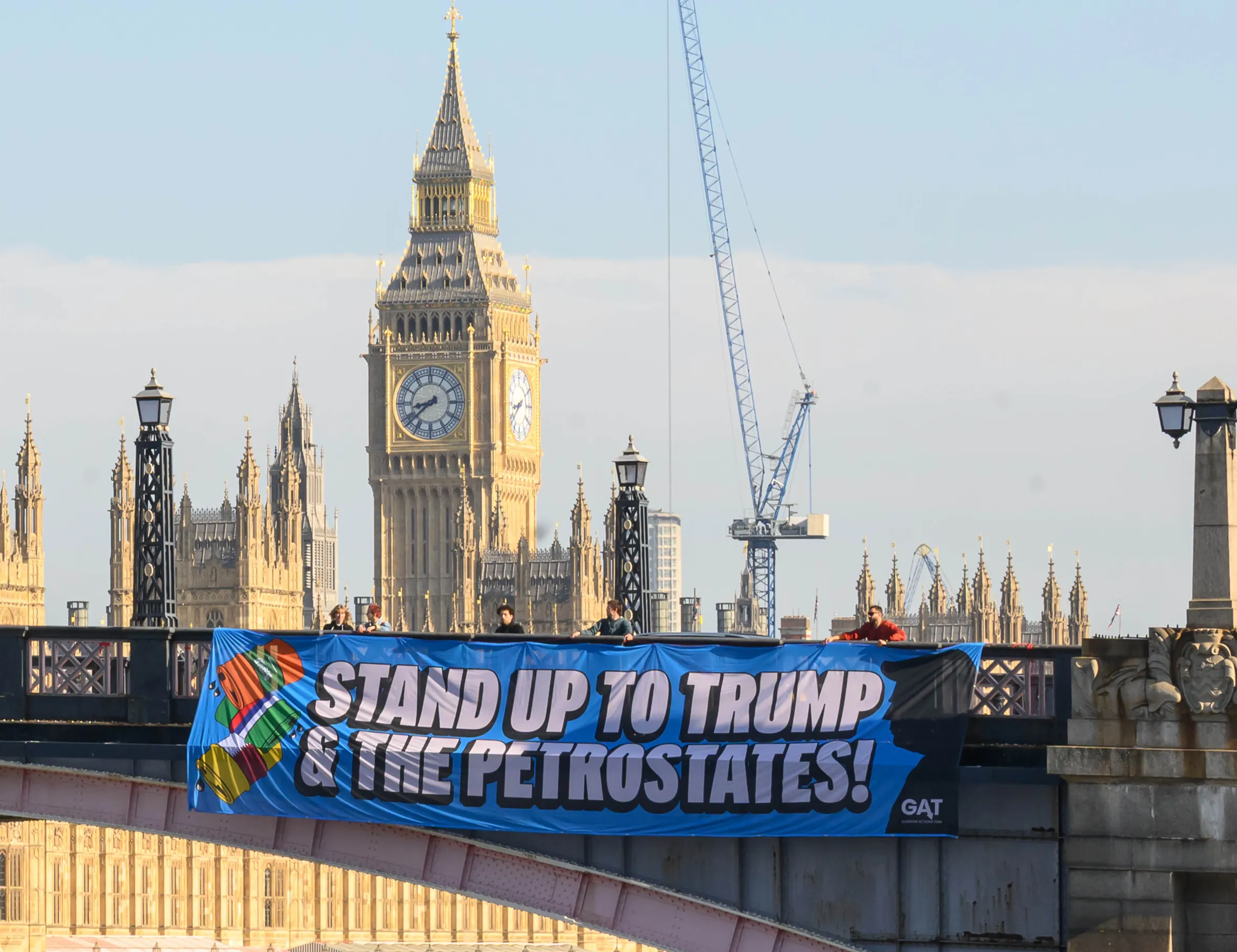 Activists unveil banners near the International Maritime Organization headquarters in London as delegates arrive for a meetingJack Hall/PA
Sir Keir Starmer has warned that the impact of the Iran war could continue “for some time”.
The prime minister will convene an emergency Cobra committee with representatives from the Bank of England on Tuesday to discuss the war’s economic impact.
He told the Usdaw union’s conference in Lancashire on Monday that he had called the meeting “so you can be sure we will stand by working people in this crisis”.
Starmer said: “I have to level with you about Iran. The truth is the economic consequences could still be with us for some time.
“You don’t need to be a politician to know that, you can see it on every petrol forecourt across the country.”
11.50am
Trump to consult advisers on Iran
President Trump will hold talks on the Iran war on Monday with his top security advisers, US media reported, as negotiations between the rival parties seemed to reach an impasse.
Tehran’s top diplomat blamed Washington on Monday for the failure of talks in Pakistan this month, the first and only round of negotiations in a bid to strike a deal to end the conflict that has engulfed the Middle East.
Barak Ravid, global affairs correspondent for the US media outlet Axios, reported that Trump was expected to hold a meeting with his top national security and foreign policy team on Monday to discuss the next steps.
ABC News quoted two unidentified US officials as saying that a new deal proposed by Tehran to resolve the conflict fell short of Washington’s red lines.
That deal centred on reopening the Strait of Hormuz and ending a US naval blockade of the vital waterway, with nuclear negotiations postponed for a later stage, Axios reported.
11.20am
Iran ‘submits new peace plan to the US’
Iran has submitted a peace proposal to the US which focuses on a new legal framework for the Strait of Hormuz and lifting of the maritime blockade, officials in Washington have claimed.
Tehran also wants compensation for attacks already carried out, plus guarantees against any further military action. The latest proposal does not include potential discussions on Iran’s nuclear ambitions, according to the news website Axios.
The offer has been conveyed via Pakistani mediators, said the report. Two US officials confirmed to Axios that the Trump administration had received the proposal but Washington had made no decision on it.
The White House said: “These are sensitive diplomatic discussions and the US will not negotiate through the press.”
11.00am
Reform launches protest over price of fuel
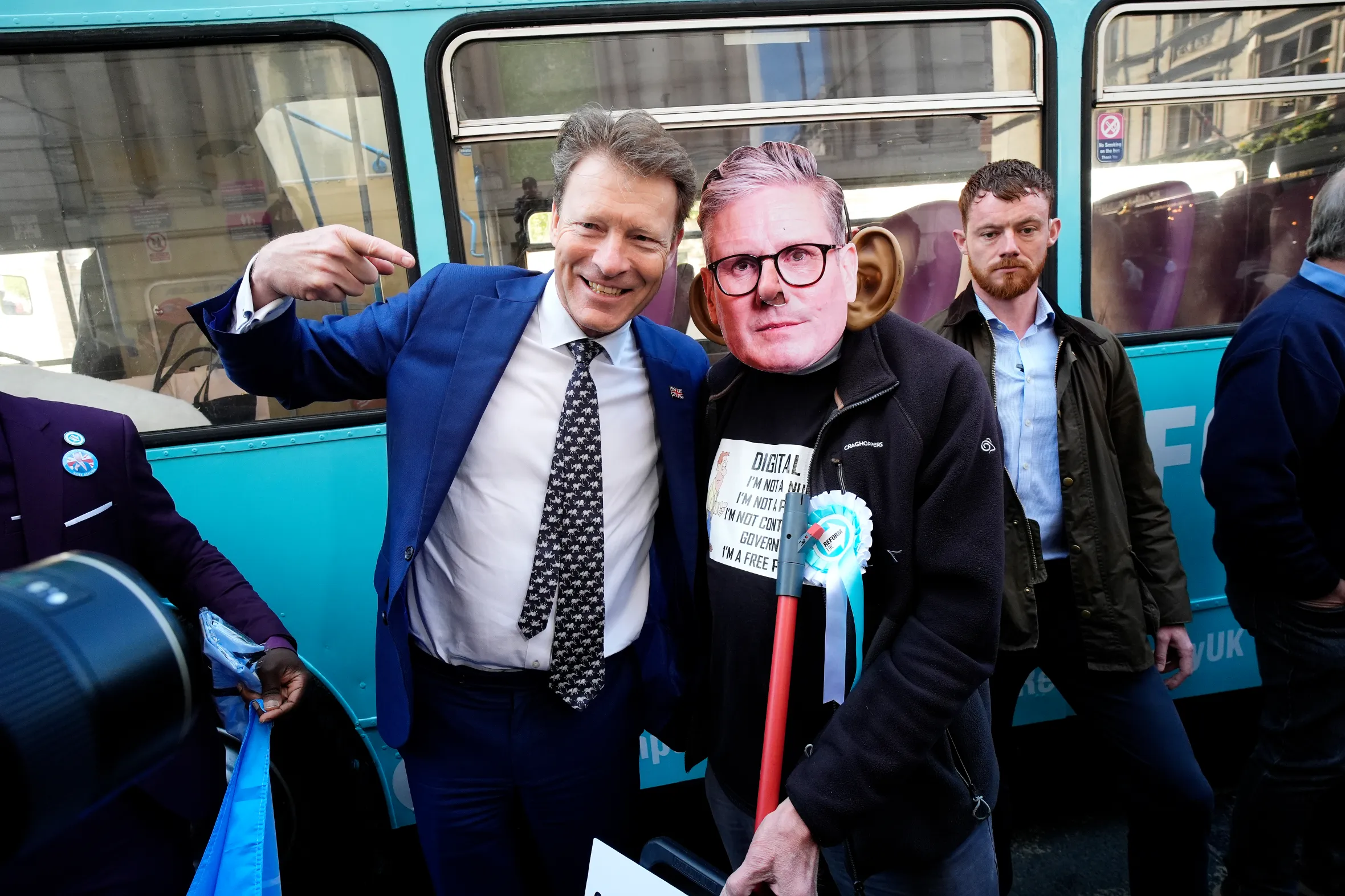 Jordan Pettitt/PA
The UK’s first major national fuel protest in more than two decades has begun. Campaigners said sustained high prices were “crippling” businesses.
Organised by Reform UK, the “national fuel tax protest” calls on Rachel Reeves, the chancellor, to take action to address “out of control” fuel prices.
Reform UK protest against fuel prices
10.50am
German price controls ‘driving up fuel costs’
Price controls introduced at German petrol stations to shield motorists from the effects of the war have backfired by driving up the average cost of fuel, economists have said.
After Iran effectively cut off about a fifth of the world’s oil and gas supplies in response to US-Israeli attacks, Katherina Reiche, Berlin’s minister for economic affairs and energy, said in March that petrol stations would have to limit price rises to once per day at noon to limit the effect of soaring energy prices.
The law has boosted retailers’ margins by five to six cents a litre, according to economists at the ZEW institute and the Duesseldorf Institute for Competition Economics, who compared wholesale prices to those at 15,000 petrol stations.
Looking at price data before and after the measure’s introduction, the economists found that prices now spiked at noon before falling gradually over the course of the day and bottoming out the next morning.
“The reform was successful in increasing price transparency but failed to reduce price levels,” the economists said. “If anything, it had the opposite effect.”
10.45am
Too early to drop Iran sanctions, EU chief warns
It is “too early” to drop sanctions imposed on Iran according to Ursula von der Leyen, the European Commission president.
At a meeting of Germany’s conservative CDU and its Bavarian sister party CSU in Berlin, she said the sanctions were in place because of Iran’s suppression of its own population.
“We first have to see a change, a fundamental change, in Iran for the dropping of sanctions,” von der Leyen added.
10.35am
Starmer to chair Cobra meeting on Iran
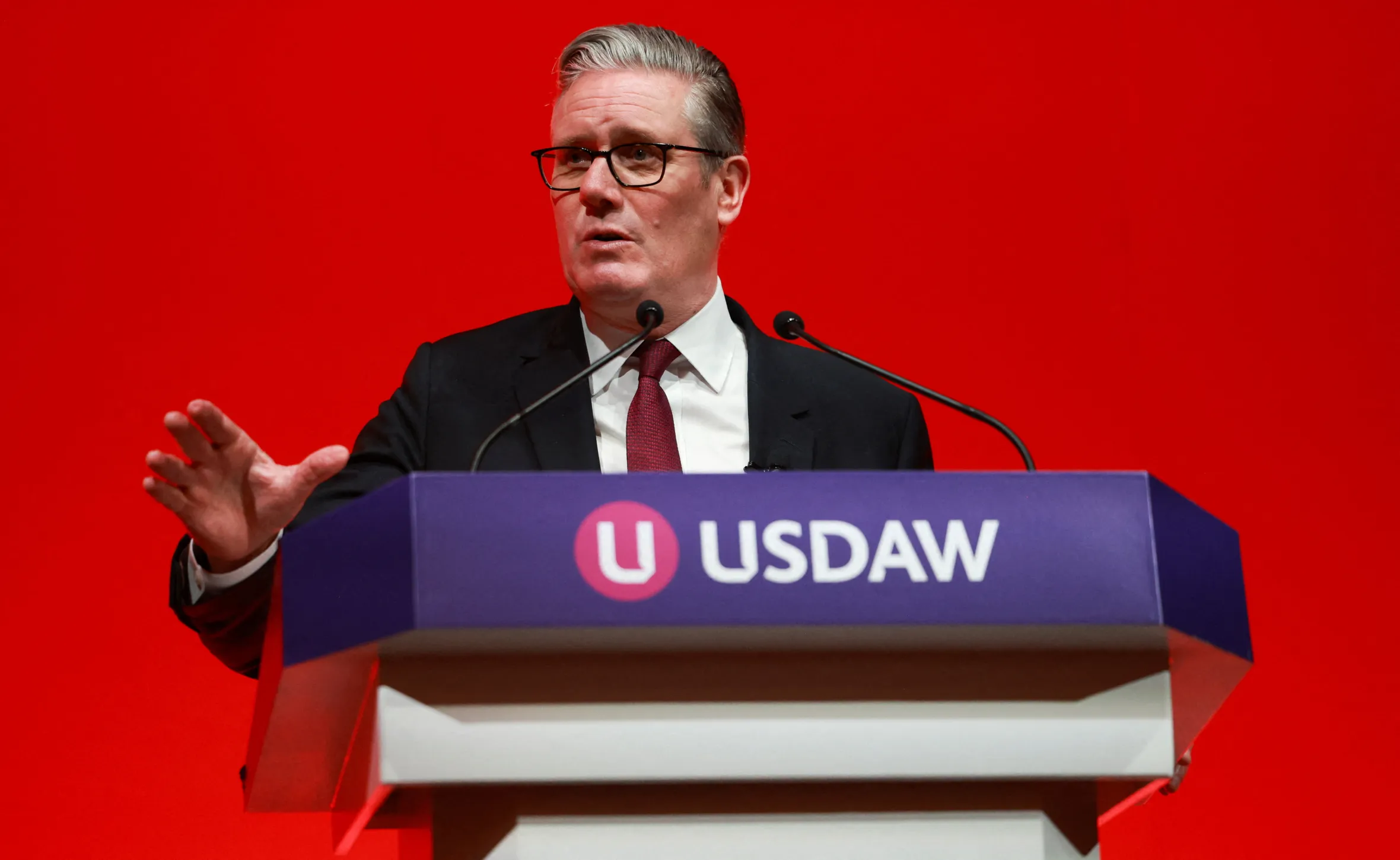 The prime minister speaking to the Usdaw union on MondayTemilade Adelaja/Reuters
Sir Keir Starmer will chair a meeting of the government’s Cobra emergency committee on Tuesday to discuss the impact of the Iran war.
Oil prices have hit a near three-week high and hopes of progress on peace talks between the US and Iran were dashed once again after President Trump cancelled plans to send a negotiating team to Pakistan.
10.20am
Hezbollah leader thanks Iran for Lebanon ceasefire
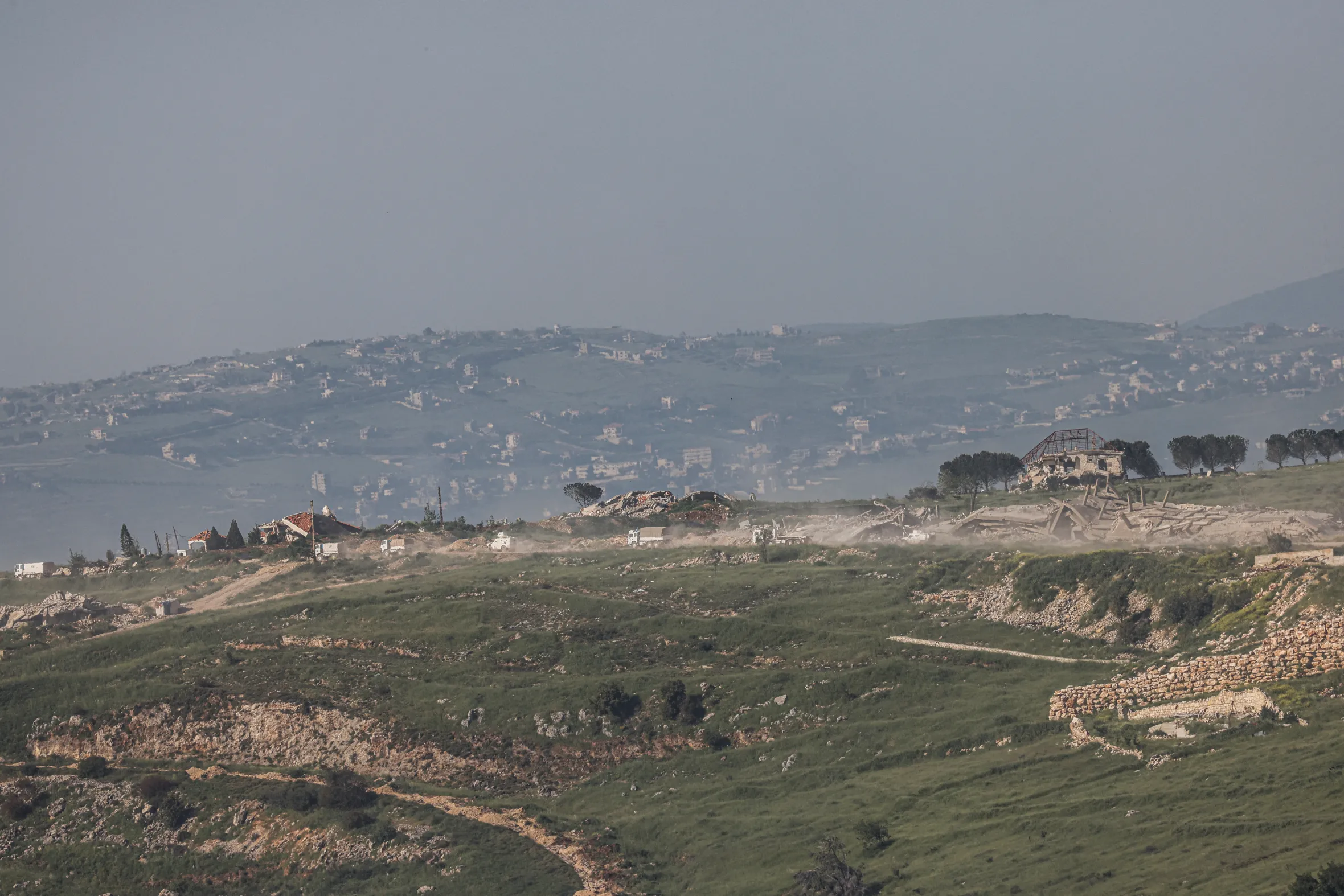 A UN convoy driving past destroyed houses in southern Lebanon on April MondayJalaa MAREY/AFP/Getty Images
The Hezbollah leader also thanked Tehran for its involvement in securing the fragile ten-day ceasefire in Lebanon.
“The ceasefire would not have been possible without the Islamic Republic of Iran’s involvement in the Pakistan talks, following the legendary resilience of the resistance and the Lebanese people. Thank you, Iran,” Naim Qassem said.
He added: “We will respond to Israeli aggression and stand up to it.”
10.10am
Lebanon-Israel talks ‘will destabilise region’
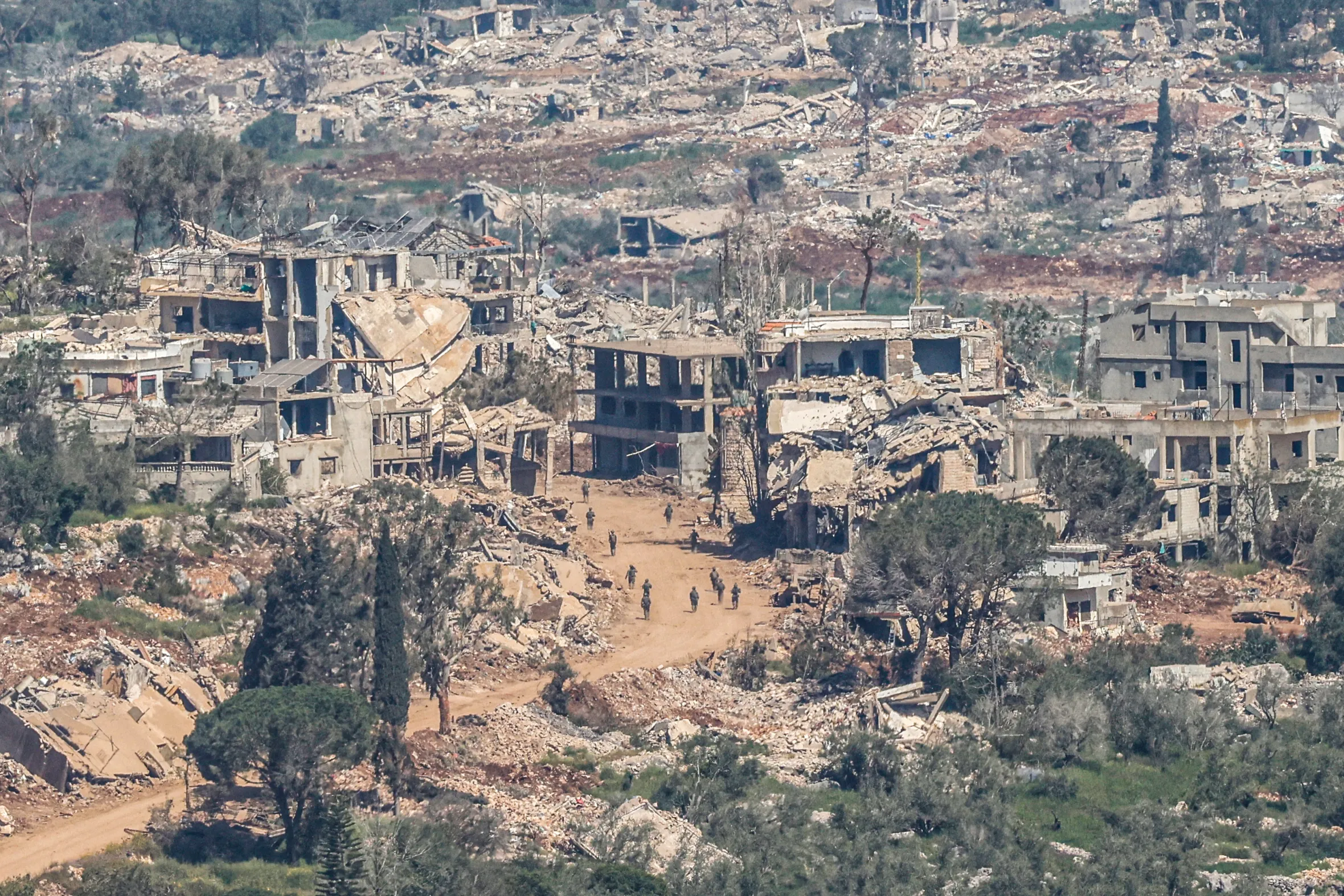 Israeli soldiers and armour in southern Lebanon on MondayJalaa MAREY/AFP/Getty Images
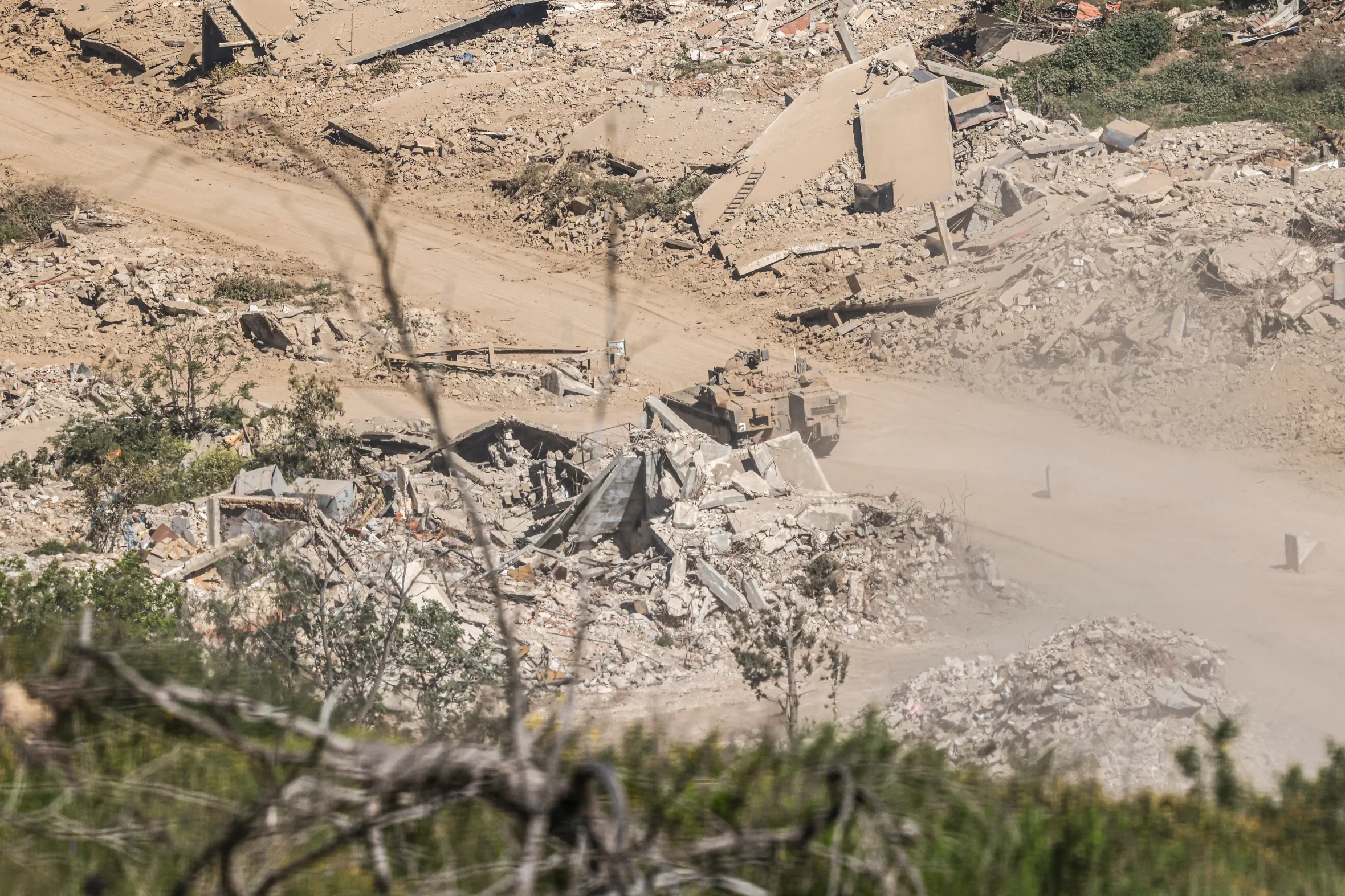 Jalaa MAREY/AFP/Getty Images
The Hezbollah leader, Naim Qassem, has rejected Lebanon’s planned talks with Israel, calling them a “grave sin” that will destabilise Lebanon.
“We categorically reject direct negotiations with Israel, and those in power should know that their actions will not benefit Lebanon or themselves,” Qassem said, calling on authorities to “back down from their grave sin that is putting Lebanon in a spiral of instability”.
“These direct negotiations and their outcomes are as if they do not exist for us, and they do not concern us in the slightest,” he added, saying “we will continue our defensive resistance for Lebanon and its people”.
“No matter how much the enemy threatens, we will not back down, we will not bow down, and we will not be defeated.”
10.05am
Iran cuts steels exports
Iran has banned the export of steel slabs and sheets until May 30, state media reported. The country’s industry has been targeted in strikes during the conflict between Iran and Israel and the United States.
9.55am
Iran war leads to halving of predicted UK house price growth
Economic shocks caused by the Iran conflict, and the possibility that Sir Keir Starmer will be ejected from office by the summer, have led an estate agency to halve its house price growth predictions for this year (David Byers writes).
Knight Frank says more buyers will stay away in 2026 due to the rising cost of mortgages and cost-of-living increases caused by the conflict, including an increase in energy prices — while the possibility that the government may fall could slow the market further.
As a result, it has reduced its predictions for UK price growth in 2026 from a rise of 3 per cent, which it made in September last year, down to 1.5 per cent.
9.35am
Oil edges closer to $110 with talks in limbo
Oil has risen above $108 a barrel in London trading as stalled peace talks and the continued dual blockade of the Strait of Hormuz increased concerns of prolonged disruption to oil and gas exports.
Brent crude is trading up 2.9 per cent at $108.37 a barrel, having closed at $105 a barrel on Friday.
The FTSE 100 is flat at 10,369.33, as are markets in Germany and France. Earlier, stock markets in Asia shrugged off the tensions to focus on artificial intelligence-related shares, which lifted the Nikkei 225 is up 1.4 per cent to close above 60,000 for the first time. South Korea’s Kospi gained 2 per cent and Taiwan’s Taiex rose 1.76 per cent.
9.35am
Hezbollah drone targets Israeli troops
Hezbollah has targeted evacuating Israeli troops in Taybeh, southern Lebanon, narrowly missing an army helicopter with a drone strike.
Footage posted online shows the Hezbollah drone exploding metres from an Israeli medical evacuation helicopter.
Israel has issued new orders in southern Lebanon for residents to leave their homes in seven towns outside the Israeli so-called “buffer zone”.
Earlier, Hezbollah claimed a “direct hit” on a group of Israeli army vehicles and soldiers at Tel al-Nahas on the outskirts of Kfarkela in southern Lebanon, the state-run news agency reported.
9.30am
I’m not a rapist, Trump tells CBS
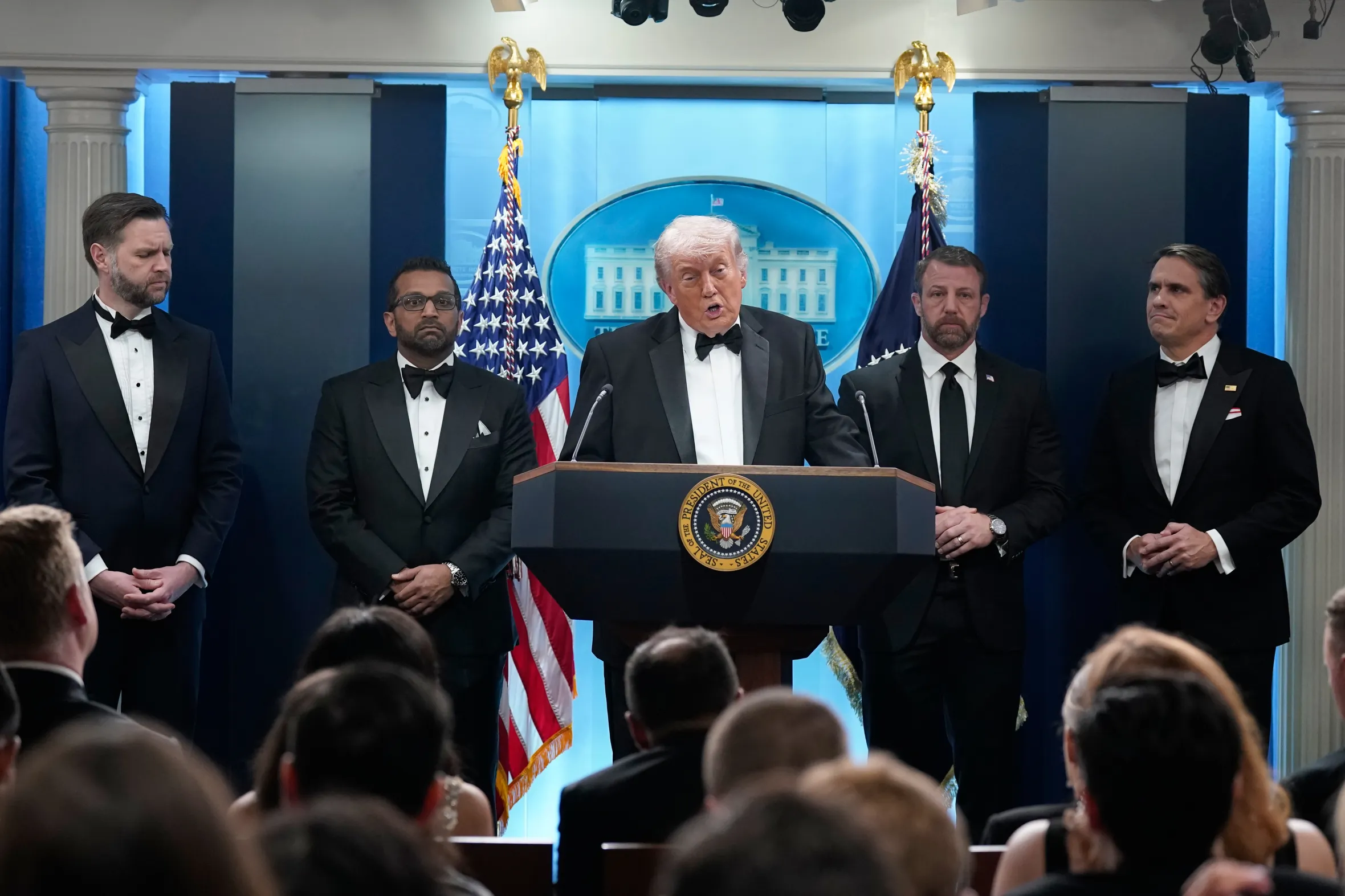 President Trump speaking at the White House after the shootingJose Luis Magana/AP
President Trump has said “I’m not a paedophile”, addressing the message allegedly sent by the suspected White House correspondents’ dinner gunman to his family minutes before the attack.
The US president made his comments in an interview with CBS, calling host Norah O’Donnell a “disgrace” for reading out lines from what has been described as a manifesto from the suspect.
Cole Tomas Allen is alleged to have written: “I am no longer willing to permit a paedophile, rapist, and traitor to coat my hands with his crimes.”
Trump told CBS: “I’m not a rapist. I didn’t rape anybody. I’m not a paedophile. Excuse me. Excuse me. I’m not a paedophile. You read that crap from some sick person?”
He said he had been “totally exonerated”, adding: “I said to myself, ‘You know, I’ll do this interview and they’ll probably… read the manifesto’. But you should be ashamed of yourself reading that because I’m not any of those things.”
9.10am
Former Israeli premiers join forces to oust Netanyahu
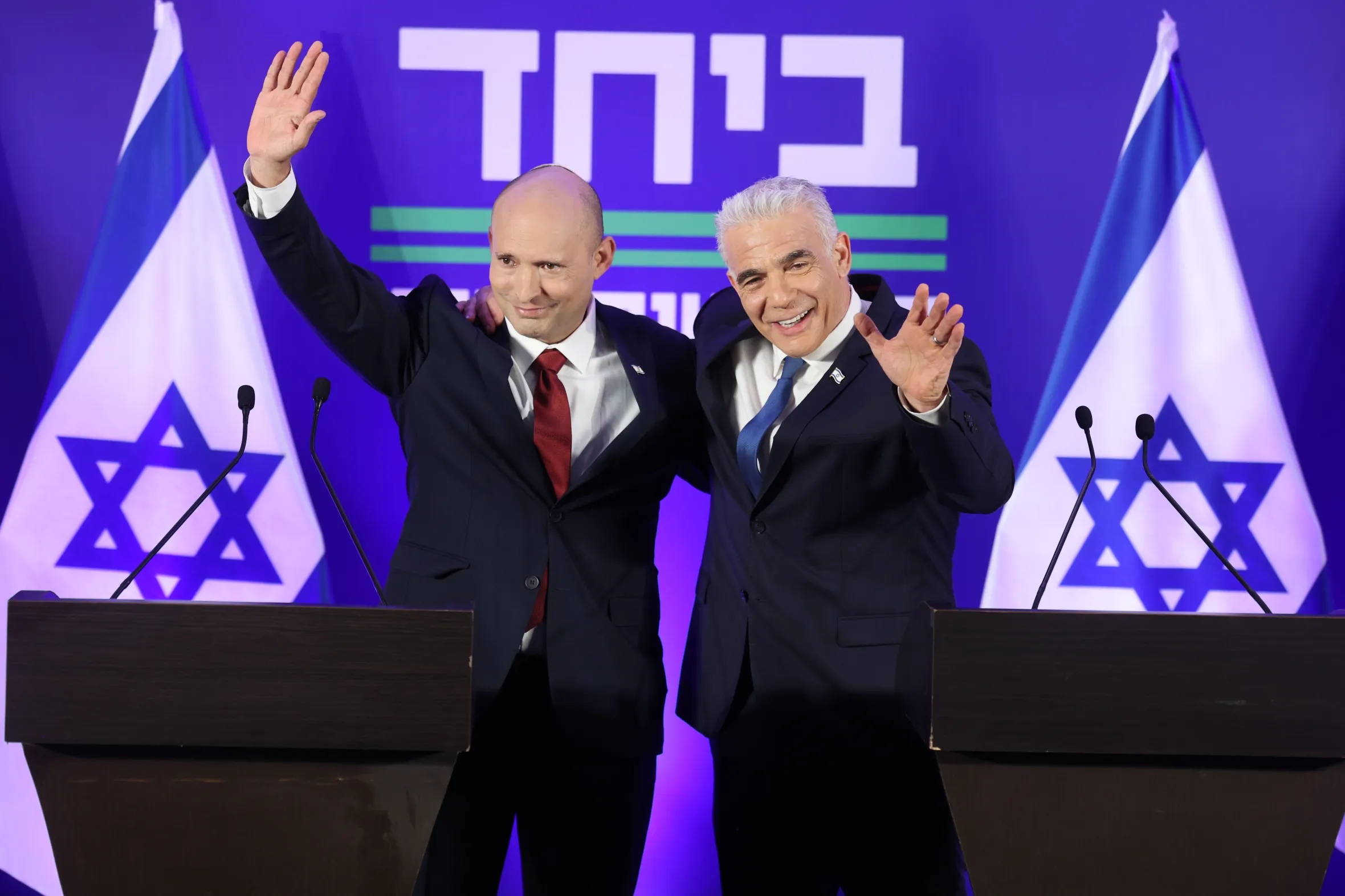 Naftali Bennett and Yair Lapid hold a joint press conference in Herzliya, Israel, on SundayABIR SULTAN/EPA
Two former Israeli prime ministers have announced that they will join forces at elections later this year in a pact that increases the likelihood that Binyamin Netanyahu could be ousted.
Naftali Bennett and Yair Lapid said their two parties, Bennett 2026 and Yesh Atid, would formally merge into a party called Yachad — Hebrew for “Together” — under Bennett’s leadership.
At a joint press conference, the pair described the agreement as “the first step in the process of uniting and repairing the state of Israel”.
A recent poll showed Bennett’s party tied with Netanyahu’s Likud, while Yesh Atid trailed. Were that to play out in an election, the Bennett-Lapid ticket would still need to form a coalition with several other parties in order to form a majority in parliament of more than 60 seats.
The pair previously ousted Netanyahu in 2021-22 when they led a short-lived and diverse coalition made up of right-wing, centrist and left-wing parties, as well as the Arab party Ra’am.
9.05am
Trump: We live in a crazy world
In overnight remarks, President Trump has said he “wasn’t worried” by the latest shooting incident, which happened at the White House correspondents’ dinner in Washington on Saturday.
“I understand life. We live in a crazy world,” he said in an interview with CBS.
The president was asked about apparently falling as he was led from the room by security agents, but said he was told to get on the floor.
“I started walking with them [agents]; I turned, I started walking, and they said, ‘Please go down. Please go down on the floor’. So I went down and the first lady went down also.”
8.55am
Smuggled video reveals defiant song of hanged Iran protesters
Pouya Ghobadi was seated alone in a prison yard. A single leafless sapling threw a thin shadow against a wall topped with coils of barbed wire. In one corner, someone had scrawled in Persian: “Death to the dictator.”
Ghobadi, 33, an electrical engineer from the western city of Sonqor, then began to sing. “I clench the weapon’s grip, with iron in my hand,” he chanted, his voice steady. “For fire is the only answer to this land.” The camera filming the young man tilted towards the sky.
Five weeks after this video was taken, Ghobadi was dead. According to Amnesty International, he was allegedly tortured before the Iranian regime hanged him on March 31, accusing him of armed rebellion against the state and membership of an outlawed organisation.
8.35am
Iran blames US for talks failure ahead of Putin meeting
Iran’s foreign minister, Abbas Araghchi, has blamed the United States for the failure of peace talks in Pakistan, after he touched down in Russia for a meeting with President Putin.
“The US approaches caused the previous round of negotiations, despite progress, to fail to reach its goals because of the excessive demands,” Araghchi was quoted as saying by Iranian state media.
He also said that “safe passage through the Strait of Hormuz is an important global issue”, as the US and Iran continue their rival blockades in the waterway.
Negotiations were pencilled in for the weekend but never went ahead.
8.10am
Hezbollah claims missile strike on Israel forces
Hezbollah says a guided missile targeting an Israeli convoy was a “direct hit”.
The group of Israeli army vehicles and soldiers was at Tel al-Nahas on the outskirts of Kfarkela in southern Lebanon, the Lebanese state news agency reported.
Kfarkela is located directly on the border with Israel in southern Lebanon, with parts of the town situated within 500 metres of the frontier.
Both Israel and Hezbollah have accused each other of violating the ceasefire, despite the militant group not being a party to the truce agreed between Israel and Lebanon. The Lebanese government is not a party to this conflict.
Hezbollah has said it will not allow Israel to occupy Lebanese land, and Israel claims it reserves the right to preempt any threat or any perceived security threat.
8.05am
Stranded in the Strait: ‘We just want to go home’
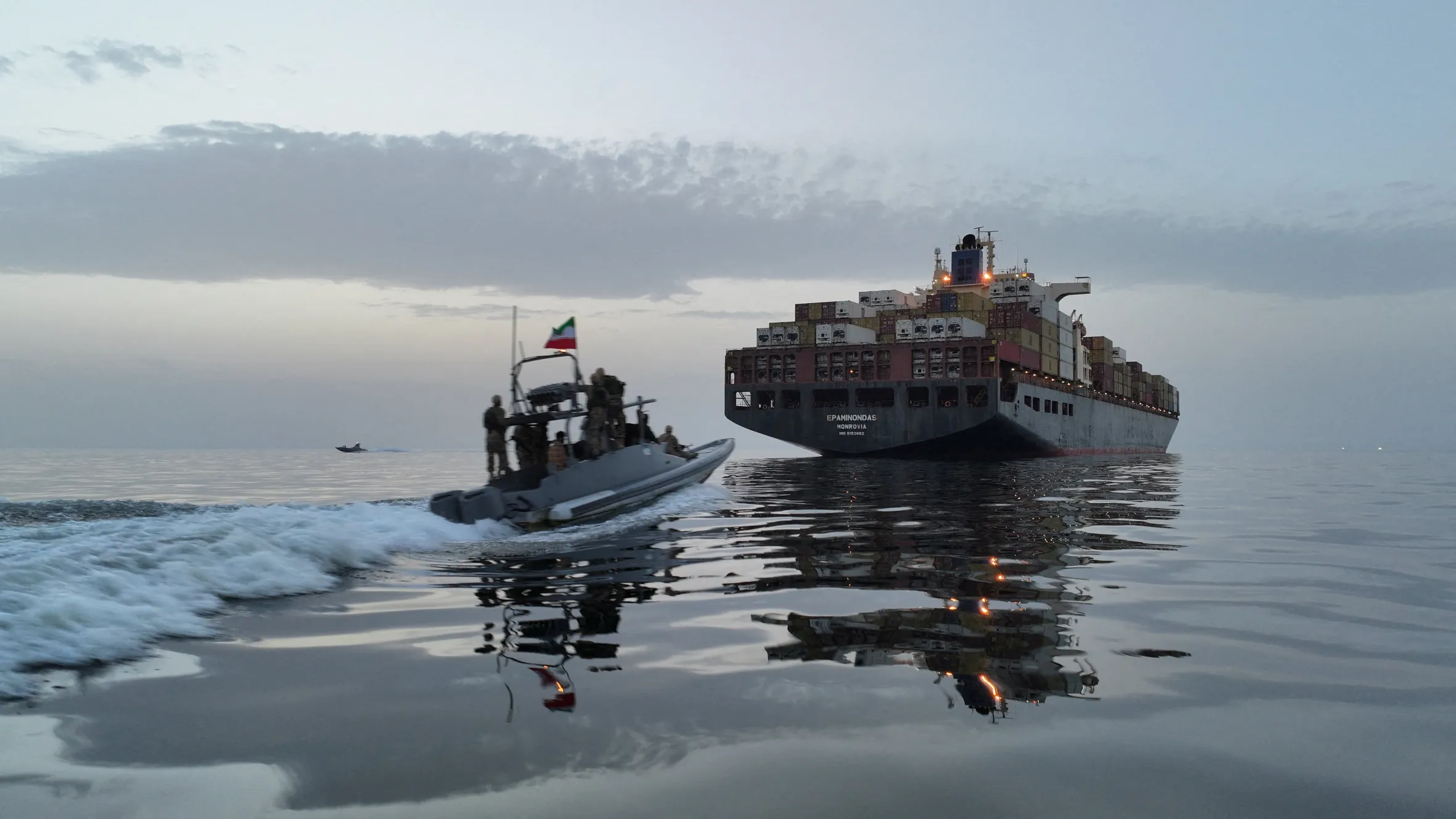 The ship Epaminondas was seized by the Islamic Revolutionary Guard Corps in the strait on Friday Meysam Mirzadeh/Tasnim/WANA/REUTERS
By day they watch the skies and the vast Gulf of Oman, frightened that one of the small fishing vessels paddling by might plant a bomb against their ship (Anna Dowell writes).
By night they rewatch Spider-Man and the other superhero DVDs they have onboard, most of which they have seen more than 20 times, to distract themselves from the rockets flying overhead.
The 11-man crew from India, Pakistan, and Bangladesh are among the thousands of seafarers stranded on ships anchored around the Strait of Hormuz since the start of the war in Iran and the double blockade of the vital waterway.
7.55am
Israel ‘sent Iron Dome system to UAE’
Israel sent an Iron Dome air defence system — the kind it uses for its own security — to the United Arab Emirates with troops to operate it early on in the war with Tehran, according to Axios, which cited two Israeli officials and one US official.
It is the first time the unprecedented deployment has been reported.
The UAE has been targeted by Iran more than any other Gulf nation during the conflict. The Emirati defence ministry said Tehran has fired more than 500 ballistic and cruise missiles and 2,000 drones since Israel and the US began striking Iran in late February.
7.50am
Collapse of talks in Pakistan
On Saturday, President Trump scrapped a planned trip to Islamabad by his envoys, Steve Witkoff and Jared Kushner.
In a sign that efforts were ongoing, the Fars news agency said Iran had sent “written messages” to the Americans via mediator Pakistan outlining red lines, including nuclear issues and the Strait of Hormuz.
However, Fars said the messages were not part of formal negotiations.
A fragile ceasefire between the US and Iran has so far held, but its economic shockwaves continued to reverberate globally.
On Sunday, Trump told Fox News that if Iran wanted the talks, “they can come to us, or they can call us”.
7.50am
Oil rises on peace talk impasse
Oil has ticked higher overnight, topping $107 a barrel in early trading, as stalled United States-Iran peace talks raise fears of prolonged disruption of Middle East oil and gas exports.
Brent crude is currently trading up 2 per cent over the session at $107.52 a barrel, having closed at $105 a barrel on Friday.
Equity markets in Asia shrugged off the growing tensions, with sentiment driven by artificial intelligence and semiconductor-related shares after Intel’s forecast for second-quarter revenue beat Wall Street expectations last week. The Nikkei 225 is up 1.4 per cent, on track to close above 60,000 for the first time, while South Korea’s Kospi gained 2 per cent and Taiwan’s Taiex rpse 1.76 per cent. The FTSE 100 is forecast to open flat.
7.40am
Analysis: Are Iran peace talks dead?
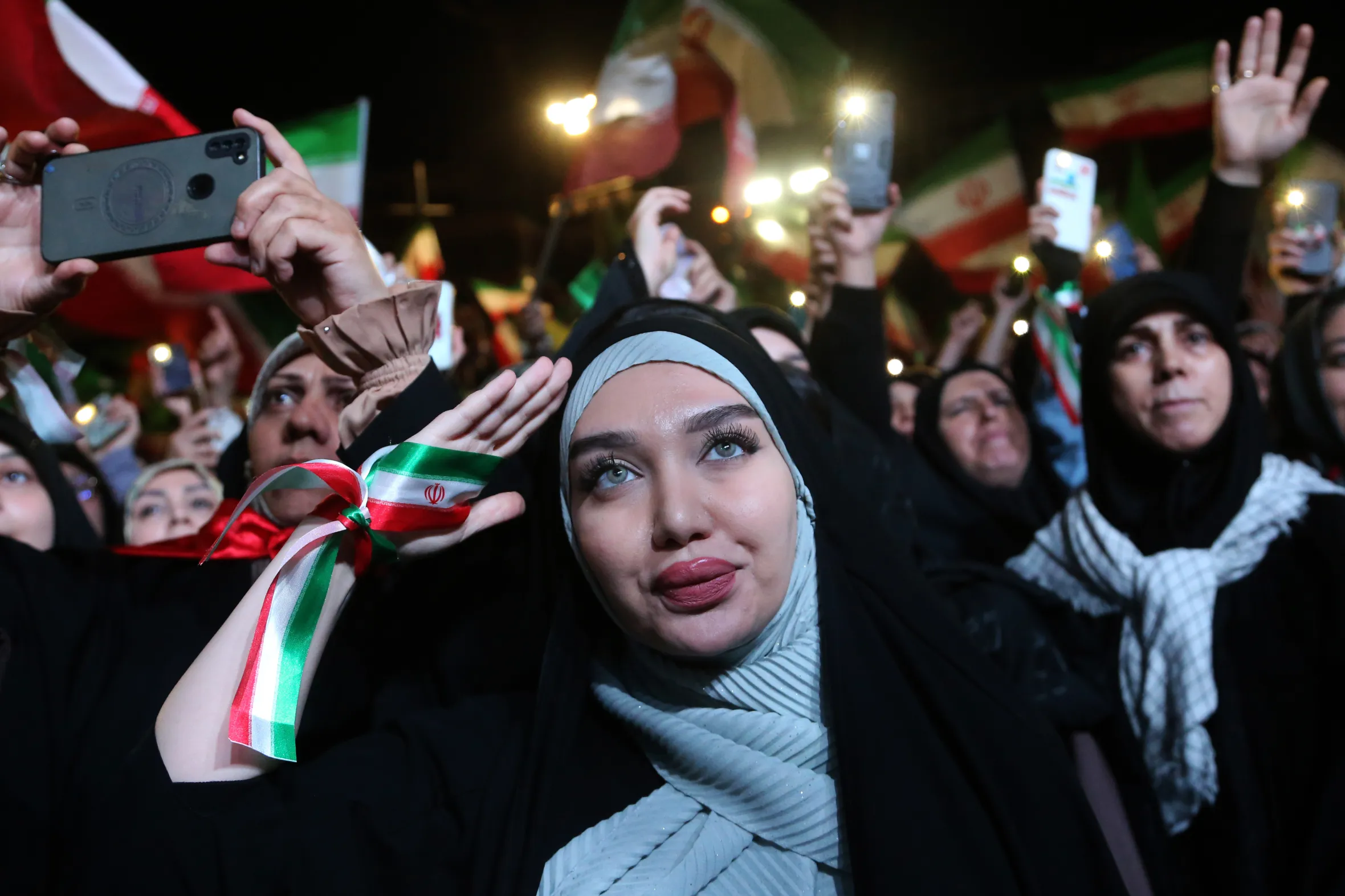 A protest against the United States and Israel in Tehran on SaturdayFatemeh Bahrami/Anadolu/Getty Images
Iranian officials continued peace discussions with Pakistani mediators on Sunday despite President Trump pulling out of talks, an indication that both sides may be determined to refrain from returning to war (Richard Spencer writes).
Abbas Araghchi, the Iranian foreign minister, left Pakistan on Saturday before the arrival of Steve Witkoff and Jared Kushner, Trump’s envoys, but returned a day later.
Araghchi said there were no plans for face-to-face talks yet, after Witkoff and Kushner’s trip was cancelled, and Pakistan indicated that it was still willing to be a mediator.
7.35am
Israeli strikes kill 14 in Lebanon
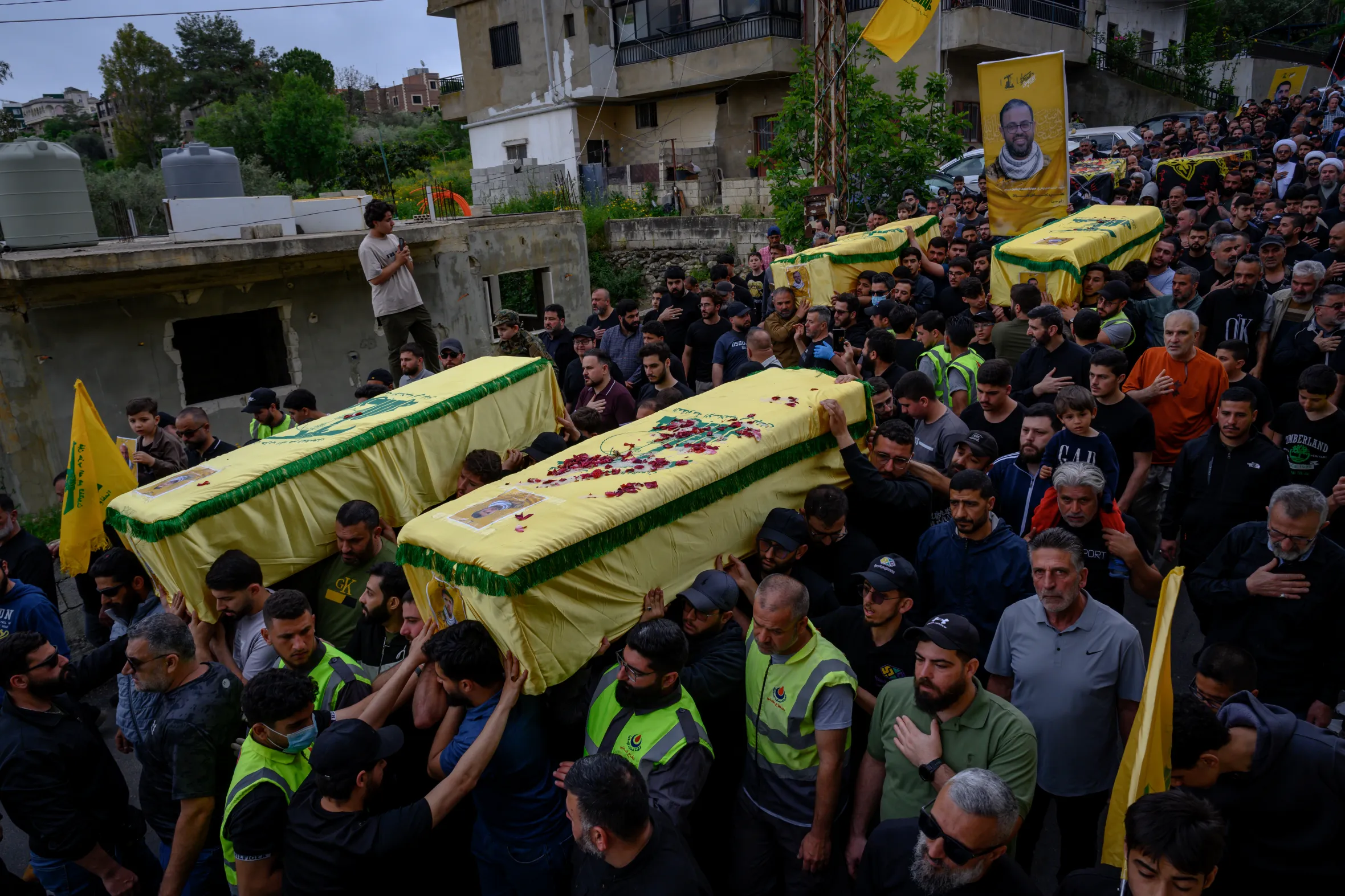 The coffins of four fighters and two civilians killed by Israel during recent clashes are carried in Maaroub, Lebanon, on Sunday. Fighting has resumed despite the ceasefire Scott Peterson/Getty Images
Lebanon’s health ministry said Israeli strikes on the country’s south on Sunday killed 14 people, the deadliest day since a ceasefire in the Israel-Hezbollah war came into force more than a week ago.
It came as Israel and the Iran-backed group traded fresh accusations of breaching the fragile truce. The Israeli prime minister, Binyamin Netanyahu, said the military was “vigorously” targeting Hezbollah and the group vowing to keep responding to “violations”.
Israel’s military has carried out repeated strikes in Lebanon since Trump announced the April 17 ceasefire, which on Thursday was extended for three weeks, after six weeks of war in which Israel also invaded the country’s south.
Israeli troops are operating inside an Israeli-announced “yellow line”, which demarcates a ribbon of Lebanese territory about 10 kilometres (six miles) deep along the length of the border, where residents have been warned not to return.
Lebanon said the dead on Sunday included two women and two children, and that 37 other people were wounded.
7.35am
Stalled talks doesn’t mean further strikes, says Trump
Asked whether the cancelling of a meeting in Pakistan signalled renewed fighting, President Trump said last week: “No, it doesn’t mean that.”
He extended a two-week ceasefire with Tehran, after they failed to come to a deal before his deadline last Tuesday.
On Saturday, Araghchi met Pakistan’s military chief Asim Munir, the prime minister Shehbaz Sharif and the foreign minister Ishaq Dar, before travelling to Oman and returning to Islamabad.
He later left for Russia for talks with senior officials, his ministry said.
7.30am
Putin to host Iranian foreign minister
The Russian president Vladimir Putin plans to meet the Iranian foreign minister, Abbas Araghchi, on Monday, Russian state media reported.
Russia and Tehran, who are both subject to fierce Western sanctions, have developed an increasingly close relationship in recent years.
Moscow’s Tass news agency confirmed the Russian leader’s plans, citing the Kremlin spokesman Dmitry Peskov.
Russia’s foreign ministry had said earlier that Araghchi would travel to Moscow for talks.
“We confirm a visit by Araghchi to Russia with the aim of holding talks,” the ministry told RIA Novosti news agency, without providing more details.
5.00pm
US to blame for failure of talks, Iranian minister says
Iran’s foreign minister, Abbas Araghchi, told President Putin that Washington was to blame for the failure of Middle East peace talks during their meeting in Moscow earlier today.
According to comments on Telegram by the Iranian foreign ministry, Araghchi told the Russian leader that America’s “destructive habits” and “unreasonable demands” were slowing diplomatic progress over the war.
Tehran’s foreign ministry also said that Washington frequently changed its position.