
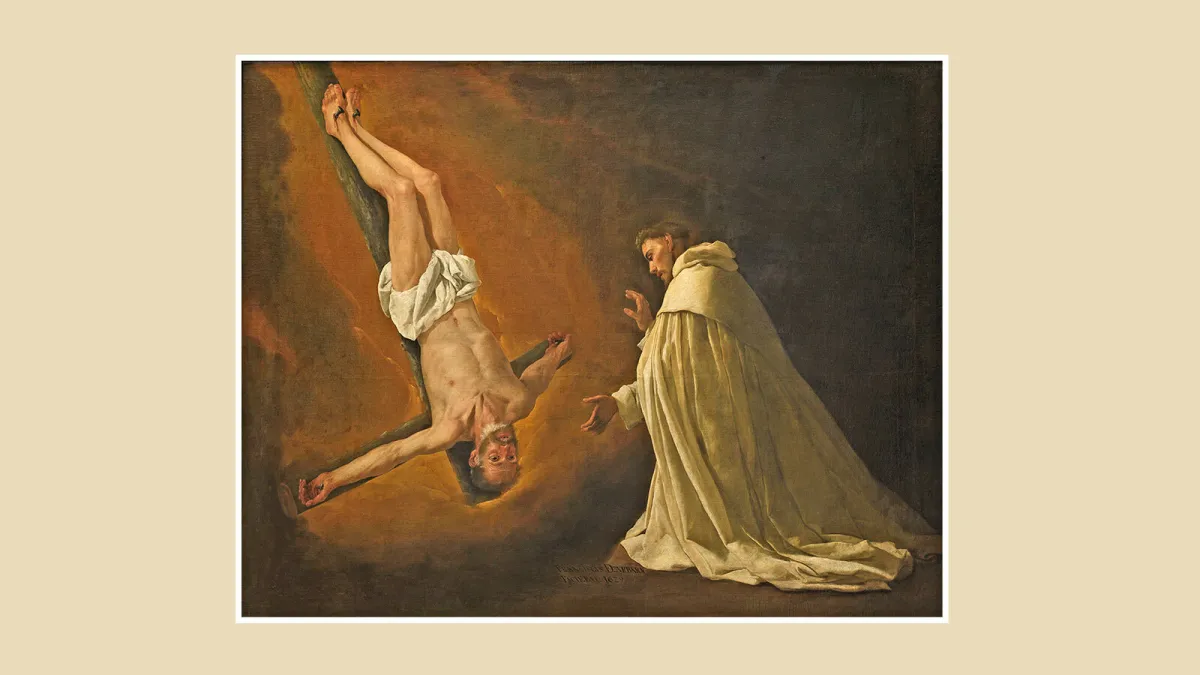
The National Gallery’s Zurbarán exhibition opens with a spectacular piece of stagecraft. The first room is dark as a sepulchre. Directly ahead of you is the crucified Christ. No mourners gather, no friends or followers loosen his ropes or rush to lower him. Night has fallen on Golgotha. To your right, St Serapion slumps unconscious, arms pulled back by his bonds. To your left is St Peter, pained, emaciated, crucified upside down, the blood rushing to his head. You are no longer a tourist or a ticket-holder but a witness. If you can, book a 10am slot and be first through the doors. The effect of these three painted apparitions together is enough to convert a heathen on the spot.
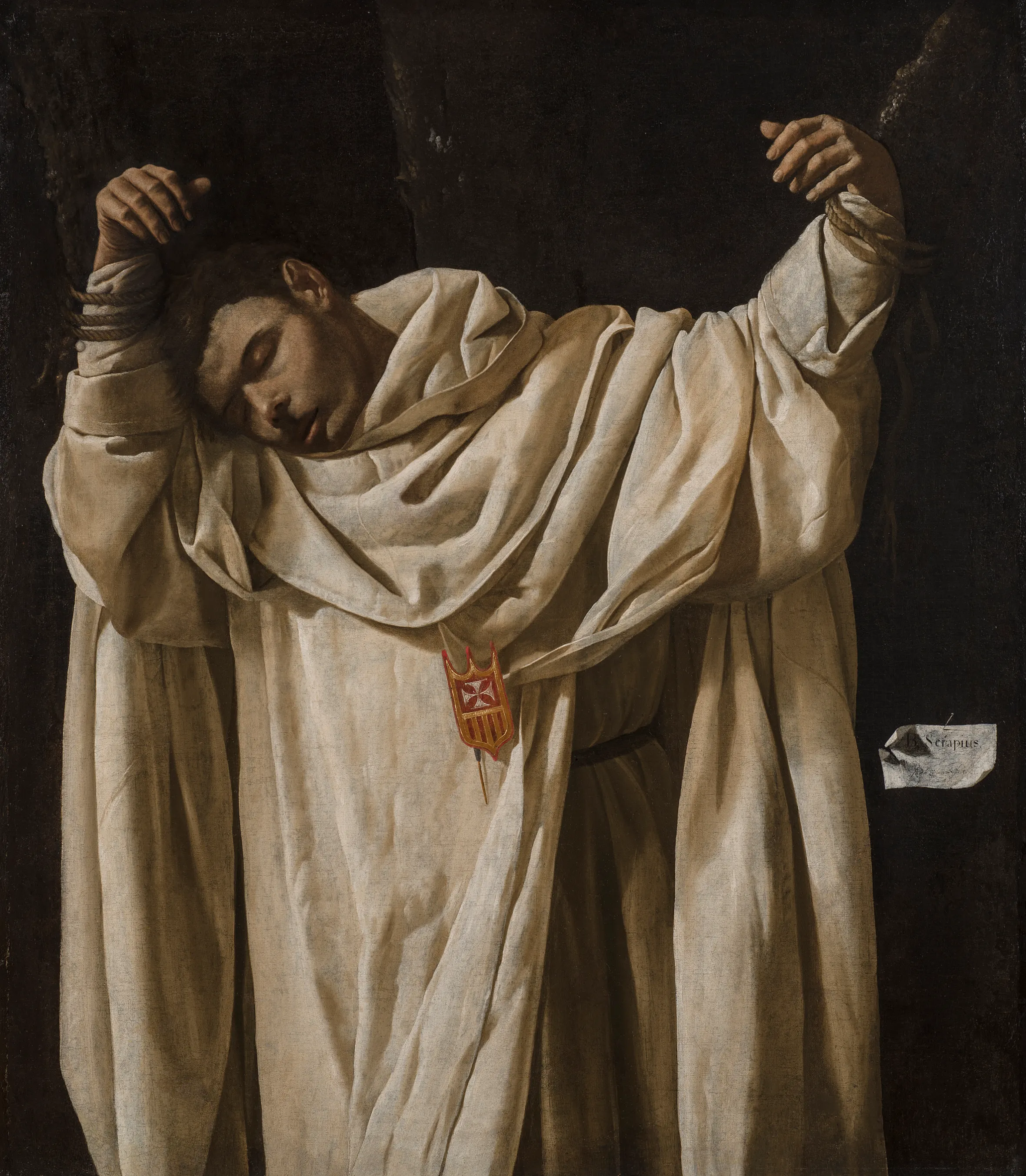 Saint Serapion, 1628 Photo: The National Gallery, London/Wadsworth Atheneum Museum of Art, Hartford, Connecticut
I confess I had Zurbarán all wrong. The Zurbarán I knew was the Zurbarán of the National Gallery’s out-at-the-elbows Saint Francis in Meditation, all shadows and fustian, sackcloth and patches. I had not expected how sumptuous this exhibition would be, or how strange.
Zurbarán was born in 1598 in Fuente de Cantos but spent most of his life in Seville. He was a friend and contemporary of Velázquez, while Murillo was 20 years younger. Together they are considered the three greats of 17th-century Spanish painting. Zurbarán painted principally for Seville’s religious orders but also for private patrons and the King of Spain. His father traded in textiles, and the young Zurbarán was apprenticed to a “pintor de imaginería” (a painter of sculpted images). He would dazzle with his depiction of fabrics and amaze with his treatment of volume. When you look at his crucifixions you don’t just confront them, you feel sure you could walk round the back of them.
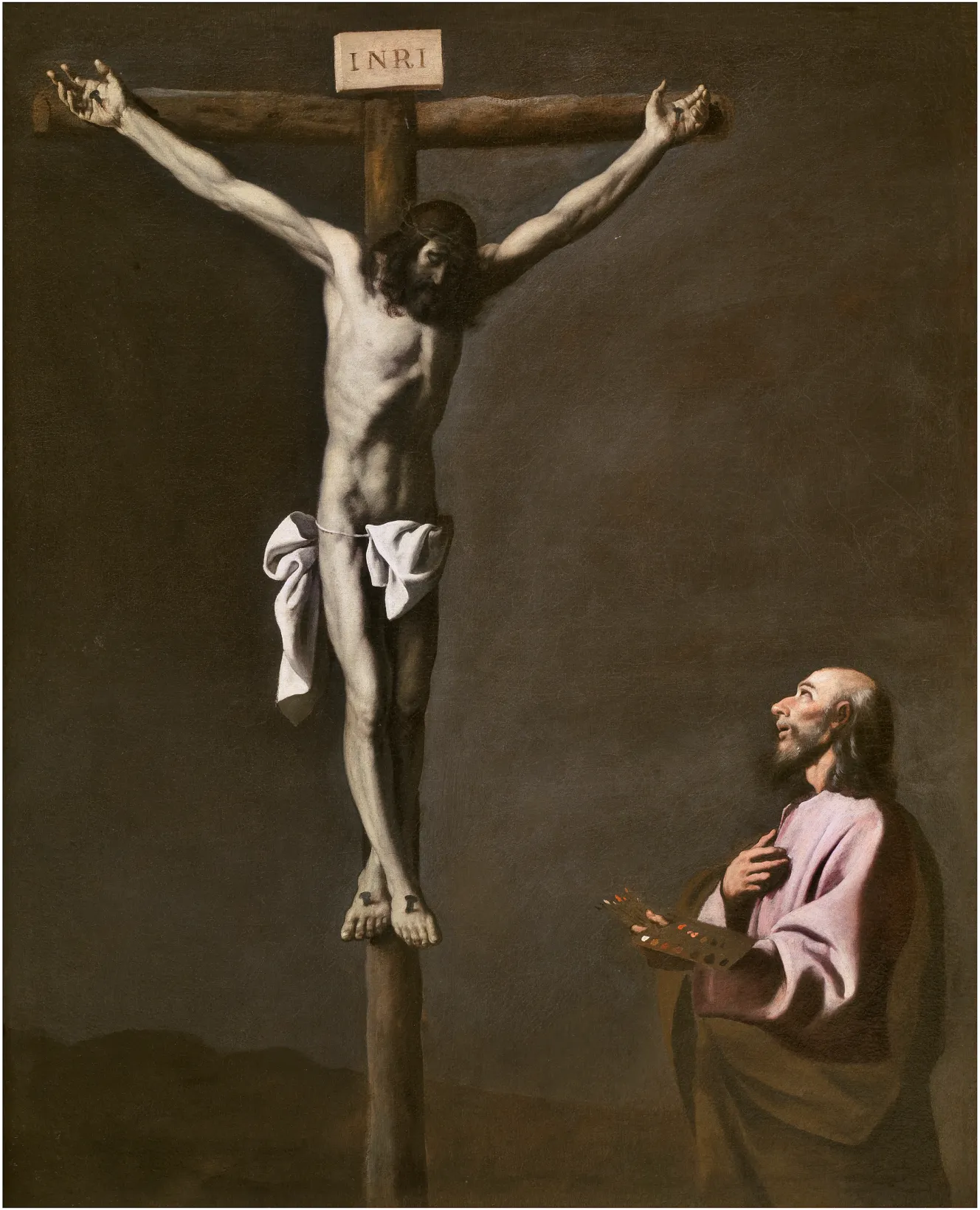 The Crucified Christ with a Painter, c 1650Museo Nacional Del Prado
Come for the cowls but stay for the tassels, the trimmings, the fringes and ties. The infant Christ ought to be the focus of Zurbarán’s Circumcision, on loan from the Musée de Grenoble, but all I could look at were the bells sewn into the rabbi’s hem and the twisted ribbon threaded through his robe. You will notice the same trick — it might even be the same tassel — in the Joseph on loan from Auckland Palace. It is hard to warm to Zurbarán’s female saints, with their pinched and sulky faces, but there is no doubt they know how to dress. Zurbarán’s conjuring of brocade and sheepskin, linen and plaited straw is ravishing. When it came to his still-life paintings, I wanted to stroke the glazes and test the weight of the water jugs.
As for the strangeness, whoa. His paintings are weird. In the Vision of Blessed Alonso Rodriguez, Zurbarán has Christ and the Virgin holding their own hearts — they look like holy whoopee cushions — and squeezing rays of light from them. Other artists do rings of cherubs. Only Zurbarán would have Christ rest his foot on the forehead of one of these floating baby heads.
As an exhibition it is not an easy win — you wouldn’t want a postcard of those grisly visions in the first room — but it is masterfully put together, and with more than enough beauty, embroidery and lustrous colour to balance the visions of anguish.
★★★★★
National Gallery, London, May 2 to Aug 23 (nationalgallery.org.uk)