

Listen to this article
Estimated 4 minutes
The audio version of this article is generated by AI-based technology. Mispronunciations can occur. We are working with our partners to continually review and improve the results.
Morale is low among Quebec paramedics in the Laurentians and Lanaudière region as a contract dispute over compensation and staff work overload, continues into its third year.
Danny Leggo-Beaudoin, head of the regional union for paramedics, Syndicat des Paramédics des Laurentides-Lanaudières (SPLL-CSN), says employees feel the government does not respect or value their profession.
Its union is one of 18 within the pre-hospital sector across the province that have been without a contract since April 2023.
The union’s collective agreement expired three years ago and it’s been two years of negotiations, says Leggo-Beaudoin.
“And we still are not close to an agreement,” he said.
The 3,300 unionized paramedics in Quebec would like their jobs re-evaluated. They say the last time their jobs were evaluated was 10 years ago and the workload has changed.
Leggo-Beaudoin says paramedics would like their salaries to be more in line with what nurses with a college degree make in Quebec. They would also like the new collective agreement address work overload and show improvements to the pension plan.
He pointed to an internal poll by the SPLL-CSN, showing 87 per cent of paramedics in Laurentians and Lanaudière are considering leaving within five years.
‘Disruptive’ for paramedic trainees, says academic director
As an essential service, paramedics don’t wield much power when it comes to pressure tactics in a contract dispute.
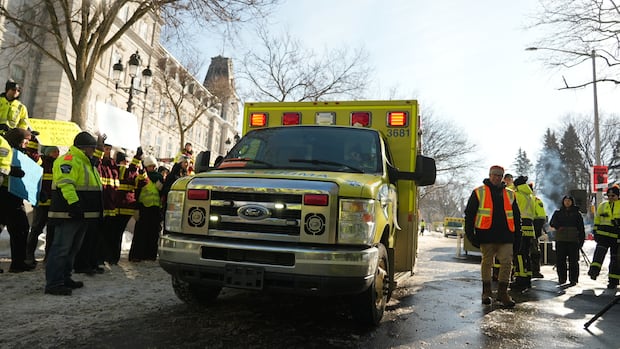
In February, unions affiliated with the federation of health-care and social service workers (FSSS–CSN) asked the government to improve the salaries of its members. In a demonstration outside the National Assembly, people were reported to have overturned an ambulance.
The camouflage pants and sticker-covered ambulances have done nothing to resolve this contract dispute that has now stretched on for three years.
But one tactic is the refusal to supervise trainees — which has been in effect since July 2025.
This year’s graduating class is having a hard time finding places to complete their 180 to 300 hours of training in an ambulance, according to Geneviève Ducharme, the academic director at Cégep Shawinigan.
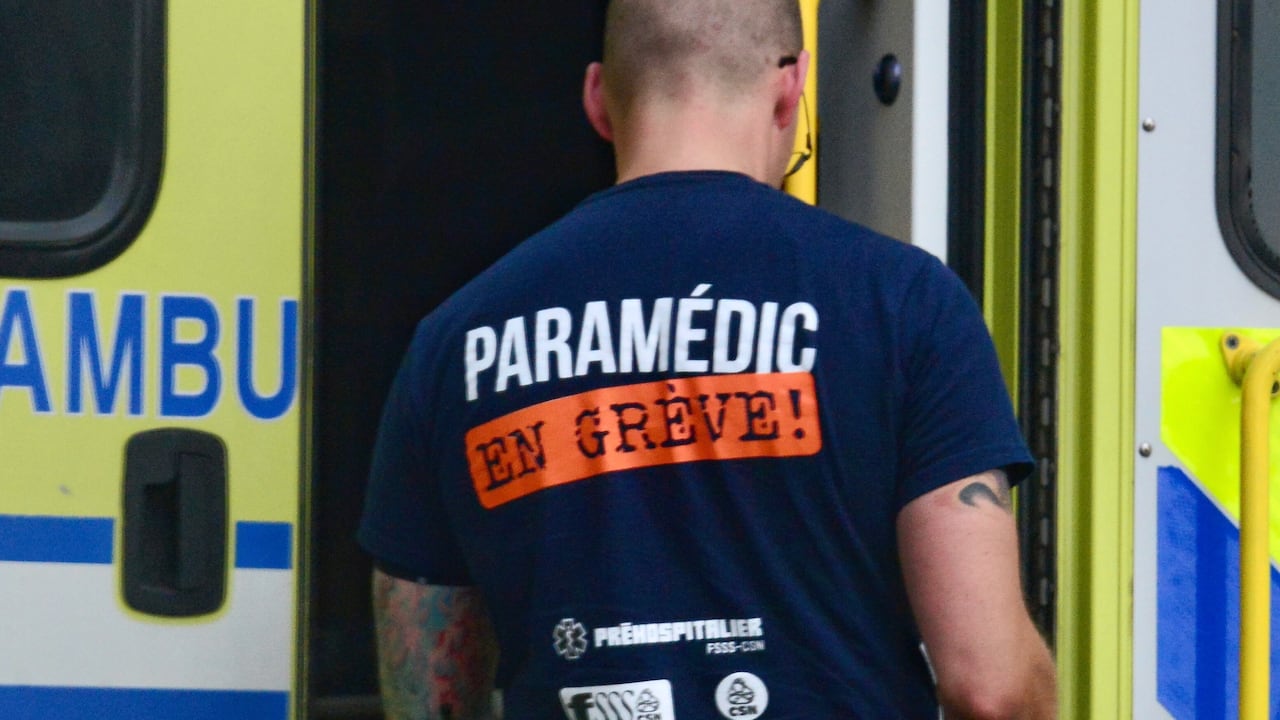 A paramedic pictured in Montreal in 2021 wearing a strike T-shirt. Danny Leggo-Beaudoin, head of the Syndicat des Paramédics des Laurentides-Lanaudières (SPLL-CSN), says employees feel the government does not respect or value their profession. (Jean-Claude Taliana/CBC)
She says across the province, 28 per cent of pre-hospital students completed their stage hours and will graduate on time in May. The remaining 72 per cent are in a holding pattern until an agreement is signed.
Ducharme says it is extremely stressful for students who were expecting to start work this summer.
“It causes them a lot of anxiety and stress. They put in so much effort to get there, and then to end up like that is really disruptive and disappointing for them,” she said.
With no new paramedics coming in, the impact on unionized workers is already being felt. Leggo-Beaudoin says the absence of trainees means added workload and less time off.
Union’s billboards highlight 3 years with no contract
In an effort to remind the public of the ongoing labour negotiations, the SPLL-CSN recently put up billboards along highways to mark its three-year anniversary without a contract.
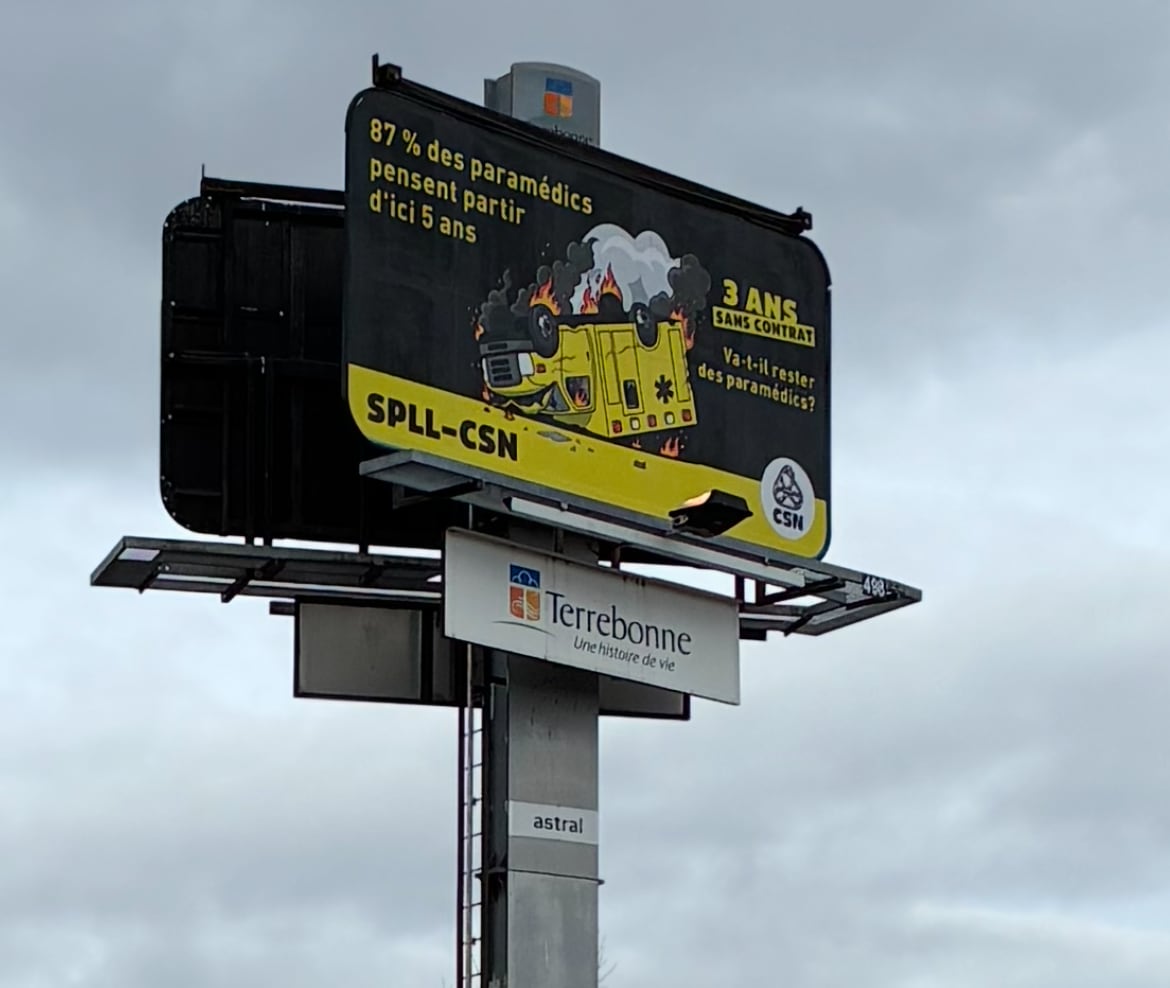 The union of paramedics covering the Laurentians and Lanaudières want to remind people they have been without a collective agreement since April 2023. For a few weeks in April these signs were erected along highways in their territory. (Submitted by Danny Leggo-Beaudoin)
Leggo-Beaudoin says the first offer from the government included a reduction in salary, and only recently has that been taken off the table. He says this contributed to the feeling that their work is not respected.
He says he doesn’t want to begin to describe some of the calls parademics take on daily in the field. The absence of government support makes him feel they don’t care about the toll it takes, he adds.
The government said in an emailed response that out of respect for the ongoing negotiation process, they will not comment on the discussions or the proposals exchanged at the negotiating table.
Regarding students’ required training hours, the government said they are working on solutions to lessen the impact on future graduates.