

 ALENA DZIHILEVICH/Getty Images
Midi Health claims to want to help you with the toll that chronic stress is having on your body. What is their answer? A “Daily Cortisol Support” supplement. (Of course it’s a supplement, nothing like offering a simple solution for a complex problem). I’ve been meaning to review it for a while, and so today is your lucky day! Not Midi’s though!
According to Midi Health, their Daily Cortisol Support, has “a combination of clinically studied adaptogens, amino acids, and botanicals to help manage cortisol for better focus, mood, sleep, and stress resilience.”
In reality, the ingredients are grossly understudied and this is the kind of product that preys on the gaps in our health care system, and diverts women from what could actually help them. Just what you want from a company that claims it can help you manage menopause!
The last time I wrote about Midi, the Chief Medical Officer contacted me on LinkedIn to say. “Our goals are the same – even if we differ on some of the approaches.” Our goals are the same? Seriously? I am not sure how anyone could have read what I wrote about Midi last time and think we could be aligned in any way. Hope this new post clears up any confusion!
Before we get to the supplement, let’s get up to speed on the background. This product is supposed to “help modulate cortisol levels and support the body’s resilience under stress.” Cortisol dysregulation due to chronic stress is a real thing. But what does that actually mean?
The Hypothalamic Pituitary Adrenal Axis and the Chronic Stress Response
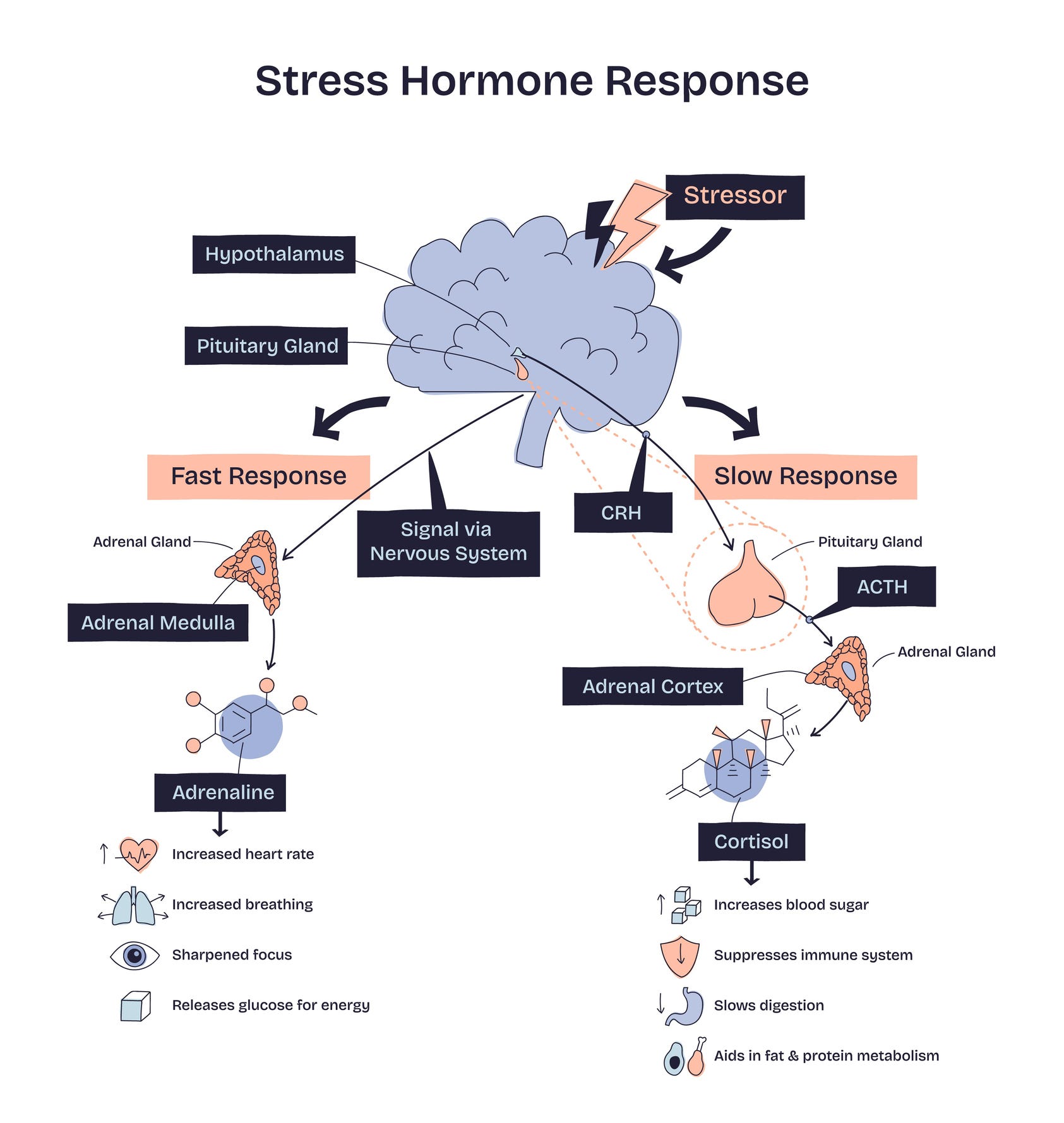
Cortisol is an essential hormone. It performs many functions, including helping regulate the body’s stress response. When we are stressed, the brain sends a signal from the hypothalamus to the pituitary gland and then to the adrenal glands, which release cortisol. Cortisol helps mobilize energy, raise blood sugar, sharpen focus, and temporarily dial down functions that are not immediately needed, like digestion and reproduction. In a healthy system, once the threat passes, cortisol drops back to baseline.
 VectorMine/Getty Images
What happens when the threats are ongoing?
When stress is chronic, from poverty, caregiving, an abusive relationship, or an awful workplace (and often there is more than one), signaling from the brain to the adrenal glands can become dysregulated.(1,2) Cortisol initially stays elevated, but over time, cortisol rhythms may flatten, cortisol spikes may occur at the wrong times, or stress responses may become blunted. Think of the signaling from the brain like a thermostat and the adrenal glands as the furnace. HPA dysfunction is the equivalent of a thermostat malfunctioning: you get heat when it’s 90 degrees and the AC when it’s cold, or sometimes the furnace doesn’t respond at all.
Over the years, this results in cumulative biological wear and tear affecting the cardiovascular system, immune system, metabolism, and brain, a process collectively called allostatic load.(1–3) This is why chronic stress does not just feel bad; it contributes to disease and may even accelerate biological aging. Women disproportionately carry this kind of stress from caregiving, intimate partner violence, economic stress, and societal and workplace discrimination.(4,5) Chronic stress, HPA-axis dysregulation, and allostatic load are associated with increased risks of cardiovascular disease, type 2 diabetes, dementia, autoimmune disease flares, depression, and all-cause mortality.(6) Essentially, it contributes to accelerated physiologic aging across multiple organ systems.(7)
Wait, isn’t this adrenal fatigue?
The confusion is understandable, but adrenal fatigue is not a diagnosis. The concept of “adrenal fatigue” takes a real medical phenomenon, HPA axis dysregulation from chronic stress, and mislocates the problem to the adrenal glands, as if they are tired, worn out, or incapable of producing sufficient cortisol. It is easy to see how this is an appealing narrative: the stress was too much and the adrenal glands packed it in. But that is not what is happening.
In HPA axis dysregulation, the adrenal glands are fine. They are capable of producing cortisol. The problem is upstream in brain signaling. In our analogy, the adrenal glands are the furnace and the furnace works just fine; the problem lies with the thermostat.
What is the Actual Data Behind the MIDI Supplement?
I’m not going to bury the lede. A recent review of a variety of phytonutrients and the HPA axis concluded that “for most phytonutrients, the effects of supplementation on HPA-axis activity in humans is unclear,” and the “most consistent finding” was that ashwagandha lowered morning cortisol.(8)
Meaning there is no solid science here. Also, lowering morning cortisol may not be a good thing.
Here are the ingredients in the product, and their “purpose.”
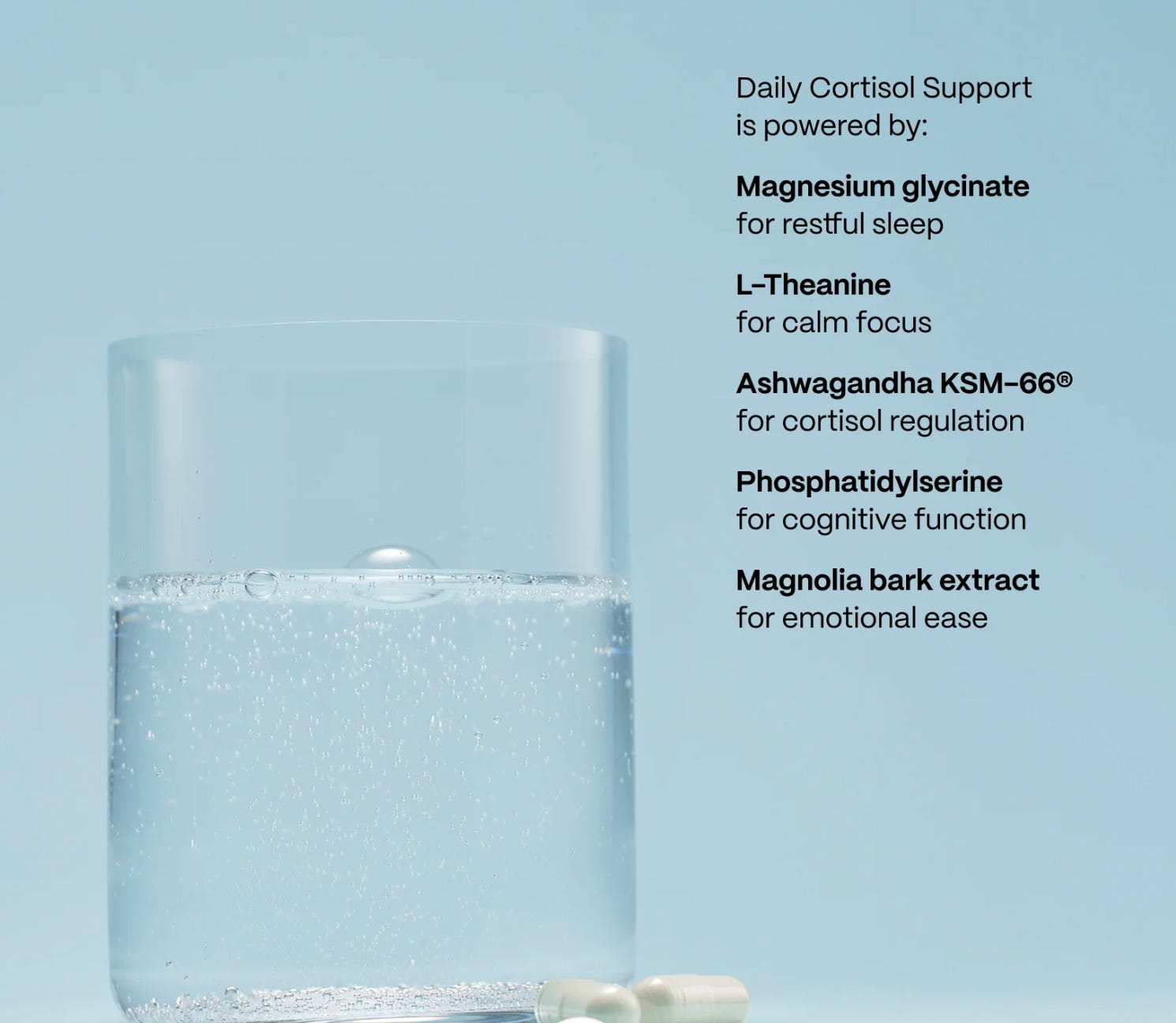
Magnesium is for sleep, but the evidence is remarkably thin, low quality, and does not support the confident recommendations seen in popular media.(9,10) There are a few small clinical trials, and I believe the studies enrolled mostly elderly nursing home residents, these studies have significant design flaws. Enough said. If you want to take a magnesium supplement, buy one with a third party label on the bottle and don’t waste your money on something with all these other ingredients.
Ashwagandha for “cortisol regulation.” Look, I know a lot of people like to hype this, but the data is weak. A 2026 meta-analysis of 23 clinical trials found that while there was benefit for anxiety, stress and depression, the quality of evidence was very low (11). A 2022 meta-analysis and systematic review of 12 eligible papers found that while ashwagandha supplementation reduced anxiety stress levels, “the certainty of the evidence was low.” (12)
Much of the positive data for ashwagandha comes from small trials with significant methodological limitations and frequent industry involvement. Some studies enrolled only about 30 participants per group, making them dramatically underpowered, meaning that even one outlier could substantially influence the results. Many trials also evaluate proprietary branded extracts manufactured by companies connected to the study authors or funders, creating an obvious risk of bias. This does not automatically invalidate the findings, but it does mean the evidence deserves far more skepticism than the confident wellness marketing surrounding these products would suggest. Pooling multiple small, low-quality, industry-linked studies into a meta-analysis does not magically create high-quality evidence; it simply produces a larger pool of low-quality studies.
Le sigh.
L-theanine is supposedly for “calm focus”, which I suppose is their way of using language that gets around the FDA regulations to make a claim that it can reduce anxiety. It apparently reduces stress for rats, so there’s that. A 2025 review concluded bluntly “In the absence of well-designed and carefully controlled human clinical trials, we would urge caution in the use of l-theanine supplements at pharmacologic doses by the wider population, and believe that the science does not yet match the hype behind this trending supplement for brain health and relaxation.”(13)
Phosphatidylserine for cognitive function follows the same pattern as the other ingredients; maybe biologically plausible, in the sense that our brains need it but that does not mean taking more of it as a pill helps anything (this is a common theme in supplements). The clinical trial evidence is small and low quality (another theme with supplements). (14) The trial with the best outcome used a product that was made from cow brains, but it is not available anymore because of prions (completely understandable!). Modern supplements use soy-derived or sunflower-derived products, which have a different fatty acid profile, and so we can’t use this older data to support these newer products.
Magnolia bark extract is for “emotional ease,” which it sounds like something a creepy dude would slip in a drink to make you choose him over the bear. I can find only two clinical trials, but they are of a product that also has another ingredient, so it’s impossible to apply that data here and they are small phase 2 studies. (15) At this point I feel that I have put far more effort into understanding this product than anyone at Midi Health, so I am not reading them. I’ve exceeded my weekly quota for reading low quality studies.
Basically, the data is of absurdly low quality for all the ingredients.
I Would Personally Never Take Ashwagandha
But isn’t it an adaptogen?
This “adaptogen” claim does not match the pharmacology and it is deceptive. It implies the substance intelligently knows whether to raise or lower cortisol depending on what the body needs. There is no evidence ashwagandha does this: every trial shows it lowers cortisol, not “adapt” to individual needs (although recognizing the quality of the data is poor). This is not an “adaptogenic” bidirectional effect, if the data is correct (again, a big if) this is a unidirectional cortisol suppressant.(8,16-18)
The problem is that chronic stress does not produce a single cortisol pattern. The trajectory is cortisol rises with early/acute stress and cortisol spikes are blunted with chronic/prolonged stress.(1-3)
If someone is in the early phase of their stress response (high cortisol), might suppressing cortisol with ashwagandha help? It’s a hypothesis, but no trial has shown this translates to meaningful clinical outcomes. However, if someone is in the late phase (flattened cortisol), further suppressing cortisol is biologically counterproductive. Adding a cortisol suppressant to an already suppressed system could worsen the very fatigue, brain fog, and immune dysregulation that the person is trying to treat. In this situation, for someone who is chronically stressed, this Midi supplement is the equivalent of giving a diuretic to someone who is already dehydrated. It is important to mention that ashwagandha is implicated in adrenal suppression, exactly what one would expect if a medication that suppresses cortisol, especially to someone with chronic HPA suppression! (17,18)
The Midi product also has a proprietary blend, which experts recommend against as it means the actual amount of each ingredient is unknown and products with proprietary blends are associated with a higher risk of liver injury. (19) This is on my “no fly” for any supplement.
Ashwagandha has also been cherry picked from traditional Ayurvedic practice. The marketing of this product leverages the appeal from other cultures while simultaneously ignoring how those cultures actually used the herb and repackaging it as consumer products that are “better” because they are “natural.” This practice has been called neo-Western herbalism.(20)
And then there is the liver toxicity.
Ashwagandha can cause cholestatic hepatitis. This is inherent to the herb, not due to contamination. It can be fatal in patients with pre-existing liver disease and has led to liver transplantation. The mechanism involves oxidative stress in the liver (somewhat iron for an herb that supposedly reduces stress).(21).
Ashwagandha appears to increase thyroid hormone (T4) in some trials, but the evidence is low quality and inconsistent. There could be a risk for thyrotoxicosis in susceptible individuals (1,16-18).
All of this raises reasonable concerns about endocrine effects and safety, and the true clinical impact is uncertain given the small, heterogeneous, and often industry-linked studies.
A Masterclass in Predatory Marketing
Here something from he Midi Health website:
“Chronic stress can disrupt the hypothalamic-pituitary-adrenal axis (your body’s central stress response system), often leading to cortisol dysregulation. Research suggests that adaptogens and nutrients used in Midi’s Daily Cortisol Support may help modulate cortisol levels and support the body’s resilience under stress.”
Every sentence is technically legally defensible, yet together they are misleading.
The first sentence is accurate: chronic stress can dysregulate the HPA axis, as we’ve just discussed. Classic marketing 101: Start with something real, because then people are primed to believe that everything else that follows will also be truthful.
The second sentence exploits the trust built by the first. The phrase “research suggests” is doing a Herculean amount of heavy lifting. But what quality of research? Is it my basement experiment that my mom liked? Twelve rats? A 16 week study on the effect of one of the ingredients on cortisol levels done by the company that makes the product? Or actual quality clinical trials on humans that show not just changes in cortisol, but meaningful improvement in health outcomes? Most people will assume it’s the latter, but the research here is generally low quality and short term and Midi does not provide links to any research they are referring to, so who knows what data they are using.
The words “may help” are a structure-function claim that supplement manufacturers can make without FDA approval. This is a way to get around terms that the FDA prohibits while still misleading consumers into believing therapeutic efficacy has been demonstrated.
And then we get a couple of terms that are scienceish, but medical gibberish: “modulate” and “support the body’s resilience and stress” These are classic snake-oil. Legally, MIDI can’t say they “treat” or “fix,” but they can say “modulate” and “support.”
The phrase “support the body’s resilience under stress” is also unfalsifiable wellness language. It’s a claim that cannot be meaningfully challenged because it is worded in such a way that any outcome can be interpreted as evidence that the claim was true. I mean, which is the body’s resilience and how does Midi measure it?
Are You Feeling Lucky?
In one study of 12 over-the-counter “adrenal support” supplements, 100% had thyroid hormone, 42% contained pregnenolone, and 25% contained the synthetic steroid budesonide, despite being marketed as hormone-free. So third-party testing is non-negotiable here.(22)
Midi claims their supplement is third-party tested, but I could not verify which lab performs the testing or whether it has independent certification from a major outside organization like NSF or USP. Usually companies brag about this, so for me it is a MAJOR concern not to see the name of any of the companies in their testing section. I would NEVER EVER take a supplement without the label stating the name of the company that did the testing. USP verified and NSF are two to look for.
It seems that Midi wants us to trust their supply chain instead of 3rd party testing.

Midi is Monetizing Your Stress
This is predatory. I am not sure there is another word for a company that is now valued at $1 billion and part of that valuation is based on taking a structural problem, a society that disproportionately burdens women with chronic stress, and repackages it as a personal biochemistry problem with a $40-a-month consumer solution. They are monetizing allostatic load and it’s gross.
There is good data here about what to do, and it doesn’t come in a bottle. The solution is retraining the stress response system and reducing the chronic psychosocial stressors driving the HPA dysregulation. I hate the term root cause, but I admit it is applicable here as chronic stress is the root cause. A 2024 meta-analysis of 58 randomized clinical trials found that mindfulness and relaxation interventions meaningfully altered cortisol measures, with stronger evidence than exists for most “cortisol support” supplements. Unlike “cortisol support” supplements built on small, low-quality studies, mindfulness, relaxation training, CBT, and exercise target the stress-response system itself rather than simply trying to suppress one hormone output; even a 6-week cognitive behavioral therapy (CBT) program has been shown to improve cortisol habituation to repeated stress exposure. (23,24). Admittedly, this approach is less lucrative for the C-suite at Midi Health.
Here is what I have to say to Midi: Be brave kids, show your work. Tell us which clinical trials informed this product. The women you claim to be helping deserve the evidence.
To the best of my knowledge, is this content accurate enough to share?
An Integrative Approach to HPA Axis Dysfunction: From Recognition to Recovery.The American Journal of Medicine. 2025.
Rozanski A, Blumenthal JA, Davidson KW, Saab PG, Kubzansky L. The epidemiology, pathophysiology, and management of psychosocial risk factors in cardiac practice: the emerging field of behavioral cardiology. J Am Coll Cardiol. 2005
Ebong IA, Quesada O, Fonkoue IT, Mattina D, Sullivan S, Oliveira GMM, Spikes T, Sharma J, Commodore Y, Ogunniyi MO, Aggarwal NR, Vaccarino V; American College of Cardiology Cardiovascular Disease in Women Committee. The Role of Psychosocial Stress on Cardiovascular Disease in Women: JACC State-of-the-Art Review. J Am Coll Cardiol. 2024
Longpré-Poirier C, Dougoud J, Jacmin-Park S, Moussaoui F, Vilme J, Desjardins G, Cartier L, Cipriani E, Kerr P, Le Page C, Juster RP. Sex and Gender and Allostatic Mechanisms of Cardiovascular Risk and Disease. Can J Cardiol. 2022
Stewart AL, Kathawalla UK, Wolfe AG, Everson-Rose SA. Women’s heart health at mid-life: what is the role of psychosocial stress? Womens Midlife Health. 2018
Gresham B, Morency MM, Corcoran F, Kunkel JJ, Riegelman A. Exposure to community violence and biomarkers of allostatic load: A systematic review and meta-analysis. Psychol Bull. 2025
Lyons CE, Razzoli M, Bartolomucci A. The impact of life stress on hallmarks of aging and accelerated senescence: Connections in sickness and in health. Neurosci Biobehav Rev. 2023
Lopresti AL, Smith SJ, Drummond PD. Modulation of the hypothalamic-pituitary-adrenal (HPA) axis by plants and phytonutrients: a systematic review of human trials. Nutr Neurosci. 2022
Arab A, Rafie N, Amani R, Shirani F.S. The Role of Magnesium in Sleep Health: A Systematic Review of Available Literature. Biological Trace Element Research. 2023.
Mah J, Pitre T.S. Oral Magnesium Supplementation for Insomnia in Older Adults: A Systematic Review & Meta-Analysis. BMC Complementary Medicine and Therapies. 2021.
Akhgarjand C, Asoudeh F, Bagheri A, Kalantar Z, Vahabi Z, Shab-Bidar S, Rezvani H, Djafarian K. Does Ashwagandha supplementation have a beneficial effect on the management of anxiety and stress? A systematic review and meta-analysis of randomized controlled trials. Phytother Res. 2022
Alsanie SA, Alhodieb FS, Askarpour M. Effects of ashwagandha (Withania somnifera) on mental health in adults: A systematic review and dose-response meta-analysis of randomized controlled trials. Complement Ther Med. 2026
Dashwood R, Visioli F. l-theanine: From tea leaf to trending supplement – does the science match the hype for brain health and relaxation? Nutr Res. 2025
Hellhammer J, Fries E, Buss C, Engert V, Tuch A, Rutenberg D, Hellhammer D. Effects of soy lecithin phosphatidic acid and phosphatidylserine complex (PAS) on the endocrine and psychological responses to mental stress. Stress. 2004
Kalman DS, Feldman S, Feldman R, Schwartz HI, Krieger DR, Garrison R. Effect of a proprietary Magnolia and Phellodendron extract on stress levels in healthy women: a pilot, double-blind, placebo-controlled clinical trial. Nutr J. 2008 Apr 21;7:11. doi: 10.1186/1475-2891-7-11.
Lopresti AL, Smith SJ, Malvi H, Kodgule R. An investigation into the stress-relieving and pharmacological actions of an ashwagandha (Withania somnifera) extract: A randomized, double-blind, placebo-controlled study. Medicine (Baltimore). 2019
Kumar A, Sah BK, Ahmad F, Jamwal V, Sahu SK. Potential Adverse Effects of Ashwagandha: A Critical Review of Preclinical and Clinical Evidence. Phytother Res. 2026
Fornalik M, Malkiewicz A, Adamczak D, Nawrocki F, Zielinska A, Mondal SA. Hormonal Modulation with Withania somnifera: Systematic Review and Meta-Analysis of Randomized-controlled Trials. Planta Med. 2026
Saldanha LG, Dwyer JT, Hardy CJ, MacKay DJ. Perspectives on the Use of Proprietary Blends in Dietary Supplements. J Nutr. 2023
Elvin-Lewis M. Should we be concerned about herbal remedies. J Ethnopharmacol. 2001 May;75(2-3):141-64. doi: 10.1016/s0378-8741(00)00394-9. PMID: 11297844.
Philips CA, Valsan A, Theruvath AH, Ravindran R, Oommen TT, Rajesh S, Bishnu S, Augustine P; Liver Research Club India. Ashwagandha-induced liver injury-A case series from India and literature review. Hepatol Commun. 2023
Akturk HK, Chindris AM, Hines JM, Singh RJ, Bernet VJ. Over-the-Counter “Adrenal Support” Supplements Contain Thyroid and Steroid-Based Adrenal Hormones. Mayo Clin Proc. 2018
Rogerson O, Wilding S, Prudenzi A, O’Connor DB. Effectiveness of stress management interventions to change cortisol levels: a systematic review and meta-analysis. Psychoneuroendocrinology. 2024
Andrew W. Manigault, Ryan C. Shorey, Katrina Hamilton, Matt C. Scanlin, Alex Woody, Wilson S. Figueroa, Christopher R. France, Peggy M. Zoccola. Cognitive behavioral therapy, mindfulness, and cortisol habituation: A randomized controlled trial. Psychoneuroendocrinology. 2019