
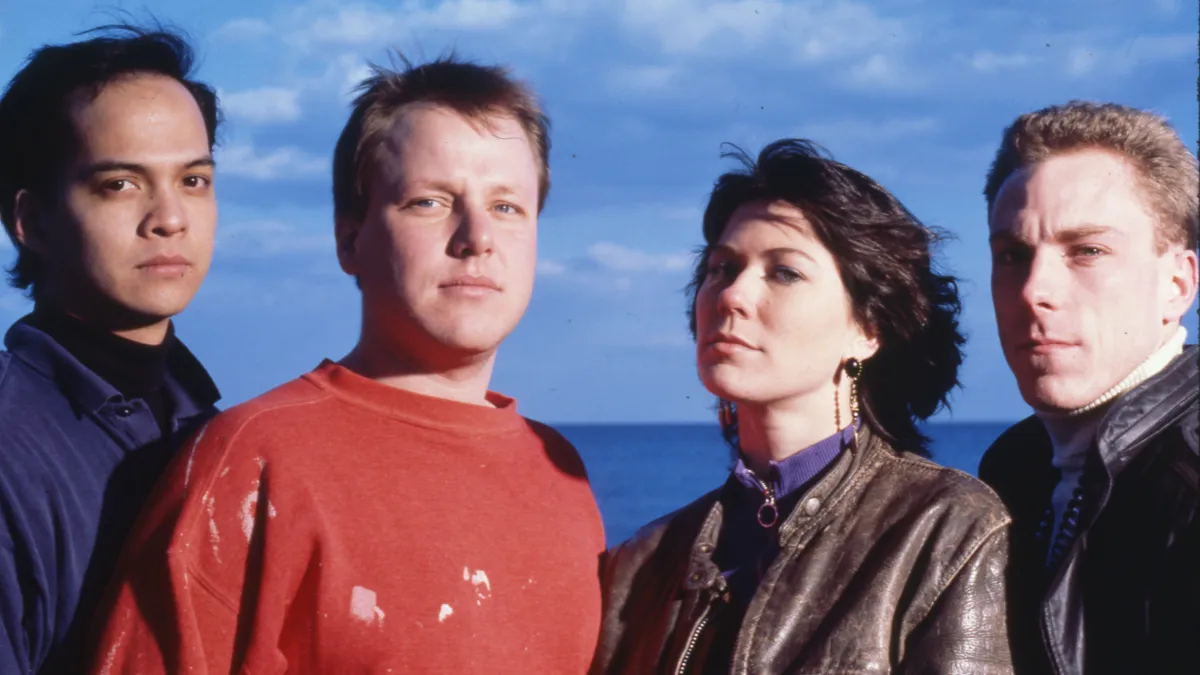
In keeping with the random nature of popularity in the 21st century, a late-1980s alternative rock band once beloved of floppy-fringed students have become a Gen Z sensation. A video of three teenagers performing an a cappella rendition of Pixies’ Where Is My Mind? in an underground car park has had almost 12 million views on TikTok. The band’s 1989 surf rock classic Here Comes Your Man was used on the 2025-26 New Year’s Eve finale of Stranger Things, and they have more than ten million monthly listeners on Spotify. Pixies have thrived against the odds to make it to their 40th birthday; not bad for mostly sixty-something misfits with a catalogue of songs about torture, mutilation and death.
The American band are celebrating with a victory lap of Britain. “It would be a little too heavy to call the UK our spiritual home,” says their lead vocalist Frank Black, real name Charles Thompson, an avuncular 61-year-old son of a bar owner from Boston, Massachusetts. “But even in the lowest points of my solo career, when I was touring in a van and getting trashed by the music press, the UK and some parts of Europe let me stay in the game, which is good for the ego. I would go home and say, ‘Hey, I’m big in Rotterdam!’”
The Pixies’ strange, enduring appeal lies in the fact that they have never fitted in, right down to looking more like diligent college students than alternative rockers. “I wake up, put something on, and that’s what I wear on stage,” says the guitarist Joey Santiago of his clothing policy. “It turned out a lot of people could relate because they would go: ‘Oh yeah, I’ve got that velour sweater my father made me wear too.”
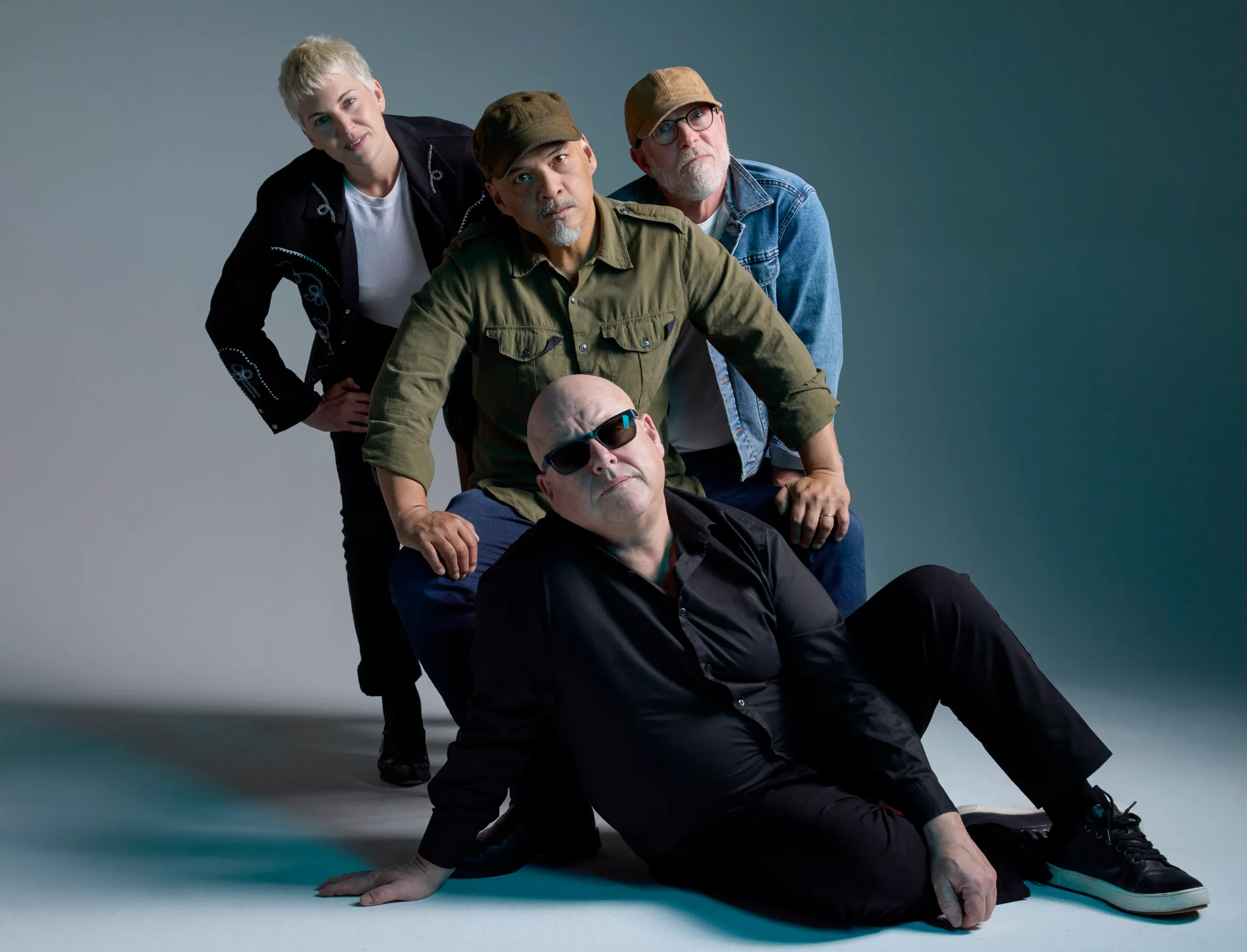 Pixies now, with the bassist and backing singer Emma RichardsonTravis Shinn
However, appearances can be deceptive. Santiago, who was born in the Philippines, met Thompson at the University of Massachusetts in 1984 and formed the band two years later, giving up university in the process. “I was on academic probation straight away,” he says. “I have five brothers and the plan was for all of us to get a college degree, so my parents, even my brothers, were disapproving of my own plans to be in a band. But I knew we were doing something special, something different, from the very start.”
Then there is the bassist and backing singer Kim Deal, who dressed like she had come straight from the office to make it to the gig. That’s because, in the early days, she had. Deal juggled life in Pixies with a job as a medical secretary.
“People thought it was a get-up,” Thompson says of Deal’s stage wear. “At the same time we knew we didn’t have any fancy dance moves, we didn’t like the big hair and posturing that was on MTV at the time, and it was a case of keeping our heads down and getting on with it. All we did was rehearse in a garage, beg to get on the bill of the local club and plug in our amplifiers, because that’s what you were meant to do. Just like the Beatles.”
With an intense sound that switched between sweet melody and lacerating noise, at once menacing, reassuring and childlike, the band were — and remain — unlike anything else out there. You wonder about Thompson and Santiago’s original vision, not least because they got going after placing a classified advert for a bassist who liked the winsome folkies Peter, Paul and Mary and the hardcore punks Hüsker Dü. Deal got the job, but then she was the only person who answered the advert. Deal brought in the drummer David Lovering, who was working with her husband at a Boston branch of Radio Shack, and Pixies were born.
“It came from being ignorant of things,” Thompson says. “We didn’t know how everything connects, we weren’t part of a scene, and although we liked different genres of music, we weren’t very good at any of them. I don’t have the Chuck Berry licks and I don’t know how to play Beatles songs, but it turned out to be a good parameter because then I could pick up a guitar, put in my own thoughts, and go: Hey, I’ve written a song. You try and convince the other people in your band about it, you play to a few people in a bar on a Tuesday night, you move to the Friday, and so on. That’s all it comes down to, really.”
Santiago’s twangy, melody-rich guitar style belongs more to the soundtrack of a surf movie than the mosh pit. “That’s just the way I played naturally,” he says. “Very quickly we got noticed and I realised I wouldn’t have to go back to college, so we went with it.”
By 1988, when they released the album Surfer Rosa, Pixies were a big deal, celebrated for the quiet-loud dynamics of the music and the grisly originality of the lyrics: Cactus comes from the perspective of a prison inmate who wants his girlfriend to smear her dress in blood and send it to him. Kurt Cobain said the album served as an inspiration for Nirvana’s Nevermind, and it did seem like Pixies were screaming their way through deep inner torment, although Thompson comes across as a down-to-earth figure who simply liked the idea of being in a band, not the twisted genius of legend.
“A certain image is chosen and before you know it, people are asking about your childhood,” he says of a time when visceral classics such as Debaser (about Luis Buñuel’s surrealist film Un Chien Andalou) and Monkey Gone to Heaven (an environmental protest at “the ocean being used as one big organic toilet”) were being studied for evidence of psychological turmoil. “Suddenly everyone is talking about murder, incest and a whole scary universe when actually most of it was just word association. You try to combine your personality with mumbo jumbo and word choice, and then you have a better chance of making authentic art that is not BS.”
All of this made for a surprisingly successful commercial formula. “It’s not like we were being served sushi on a private jet,” Thompson says of Pixies in their prime. “It was still a grungy, messy lifestyle, but it felt good to have some adoration and make a bit of money, and from the very first gig we did get a clear message from the crowd: ‘There’s something odd about you guys, please play again.’ That supplied me with a certain cockiness. I’d be going around thinking, ‘Well … you know … I must be pretty good … Then you realise you can’t be everyone’s golden boy for ever.”
If you wait long enough, though, you might just be everyone’s golden middle-aged rock band. Thompson split Pixies in 1993, feeling that they had reached the end of the road as inter-band tensions rose and exhaustion set in. The reunion a decade later came about by accident. During an interview on XFM Thompson made a joke about the band all jamming together, implying that by then they were no longer talking to each other.
“Somehow it made it on to the 24-hour news ticker on CNN: the Pixies reunion!” he remembers. “My phone was ringing, the band members got back to me, and eventually we asked, ‘Well, should we? Just for the hell of it?’ We thought it would be for a year. All of a sudden the money was so much easier than it had been before, with these offers coming in from around the world, so it was really fun to whore around on our repertoire and not worry about anything else.”
“I thought it was never going to happen,” Santiago says of the reunion. “When we first got back together to practise, we told ourselves that if it was bad we would shake hands and not even go out there, but it sounded good right from the get-go.”
A decade into the reunion, Deal bowed out. She and Thompson had never been the best of friends and by then she had stepped towards the centre of the stage with her twin sister, Kelley, in the Breeders, so when the idea of recording a new album came up, she wasn’t interested.
“Once you’ve run your own band, it isn’t as fun to be in someone else’s,” Thompson concedes. “I like to run the band, that’s part of the whole thing for me, and Kim’s got some of that too. Her leaving definitely called into question the integrity of the band, but the new line-up hasn’t been totally outright rejected by everybody.”
After years of diligent touring with the bassist and backing singer Paz Lenchantin, and then with Emma Richardson, Pixies were indeed accepted as an alternative rock institution. Then along came Stranger Things, TikTok mania and a new generation raving about their wild, disturbing universe. It must have come as a surprise.
“Not really, because I see how my kids discover music through streaming,” Thompson says. “One of them will get into, I don’t know, Japanese space jazz from the early Seventies. That’s how I found out about things, by rummaging around record stores, so I’m glad musical discovery is still around in its own form. My kids will now accept Nick Drake or Bert Jansch, whatever I was obsessed with when they were younger, and the same thing is happening with Pixies. People discover high-quality stuff.”
“The Pixies are part of the initiation of teenagers,” Santiago says. “Alongside the Velvet Underground, Sonic Youth and Hüsker Dü, we’re one of those bands: Hey, welcome to college! Open up your mind and discover the world.”
What does Thompson think of all those Pixies classics now? “I like to think they’re achieving a kind of folk art,” he says. “I like to imagine the audience going, ‘Ah, here we go with this one!’ It’s a dance, a theatre, a script you can follow, an ancient form of cause and effect. And then it’s over.”
That’s what Pixies have become, 40 years on from first thrilling and disturbing crowds with surf rock songs about incest, mayhem and murder: a folk phenomenon.
Pixies are at Aviva Studios, Manchester, May 24 & 25; Royal Albert Hall, London, May 28 & 29