
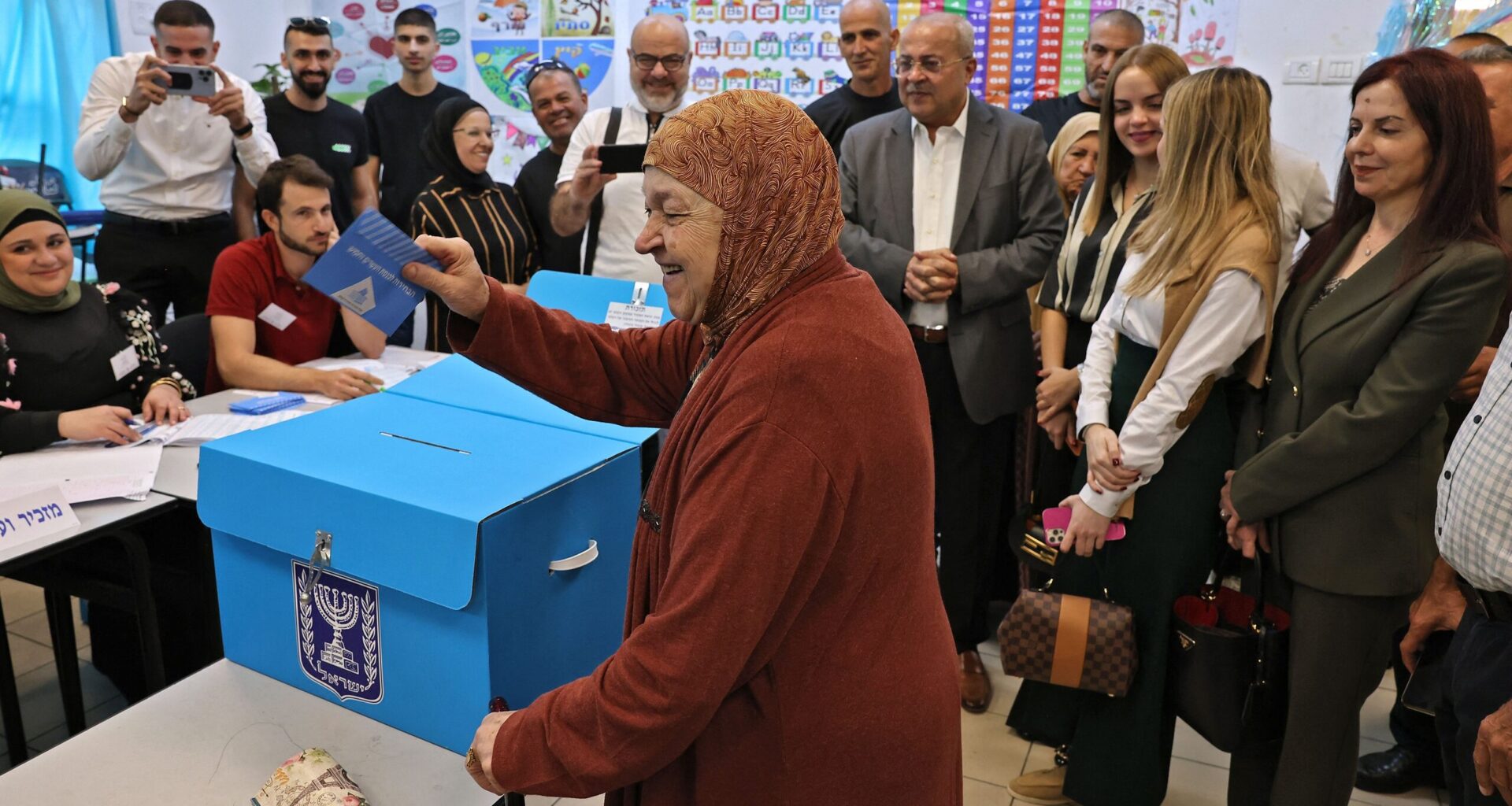
Israeli politics is again staring at a question it likes to avoid: Can Arab citizens vote, send representatives to the Knesset, and still be treated as illegitimate partners when the next government is formed? In Elias Zananiri’s opinion piece for The Media Line, that contradiction sits at the center of Israel’s approaching election campaign, where both coalition and opposition figures are calculating paths to power while tiptoeing around Arab political participation.
Zananiri argues that Palestinian citizens of Israel, who make up more than 20% of the population, are repeatedly asked to prove loyalty to a state whose political system often treats their votes as useful only when they do not determine power. He points to Benjamin Netanyahu’s past outreach to Mansour Abbas of Ra’am before the 2021 election, and to the reluctance of most major opposition parties today to endorse a partnership with Arab voters or their elected representatives openly.
The piece’s historical spine runs through Oslo. In 1993, Rabin’s government survived a no-confidence motion over Oslo I with the help of five MKs from Hadash and the Arab Democratic Party. A similarly narrow vote carried Oslo II in 1995. For Zananiri, those moments proved that Arab and Arab-Jewish parliamentary support could shape Israeli policy at historic turning points. For the Israeli right, he writes, they helped fuel rage against Rabin and the peace process.
The present arithmetic brings the issue back. Recent polls often show Netanyahu’s bloc in the low 50s, the opposition in the mid-to-high 50s, and Arab parties around 10 seats. Haredi parties may also become kingmakers, but Arab MKs could be just as decisive.
Read the full opinion piece because Zananiri’s argument cuts past slogans about democracy and asks the sharper question: If Arab citizens are expected to behave as full citizens, why are their elected representatives so often excluded from full political legitimacy?