
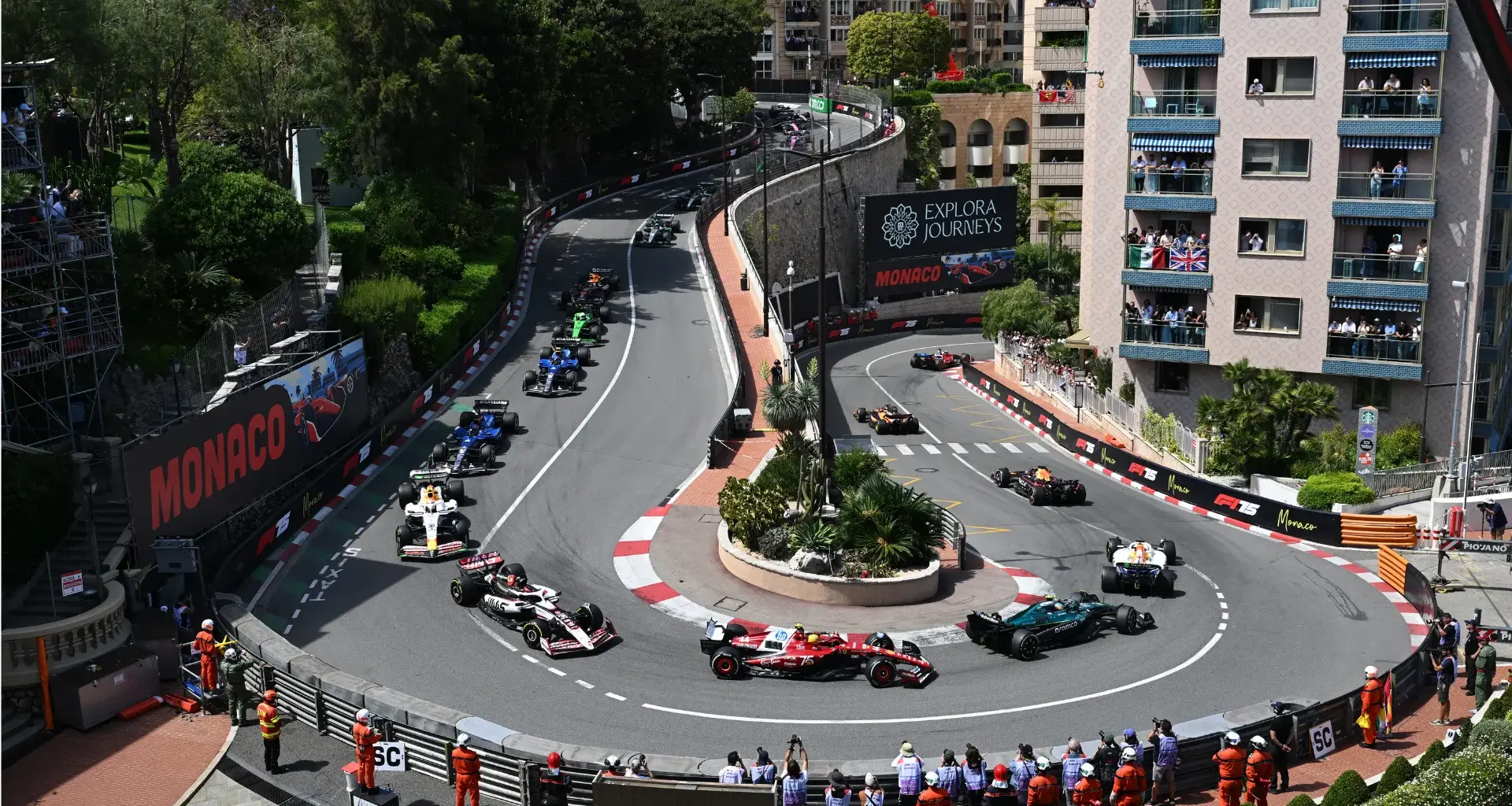
Formula 1 returns to action with the Monaco Grand Prix this weekend. But how much do you know about the historic Circuit de Monaco street track? F1.com has your all-in-one guide…
When was Monaco’s first Grand Prix?
While Monaco is the second smallest sovereign state after the Vatican City, its tight and twisty streets combine to make up one of the most famous circuits in the world.
Racing cars first appeared in Monte Carlo back in 1929, after cigarette manufacturer Antony Noghes organised a gathering with his friends from the Automobile Club de Monaco.
In terms of the F1 World Championship, founded in 1950, the Principality was given a spot on the very first edition of the calendar, and has kept its place across almost every year since.
Known for an opulent setting and significant on-track challenge, Monaco forms part of motorsport’s so-called ‘Triple Crown’ alongside IndyCar’s Indianapolis 500 and the 24 Hours of Le Mans endurance event.
What’s the circuit like to drive?
Triple F1 World Champion Nelson Piquet memorably described the challenge of racing in Monaco as “like riding a bicycle around your living room”, with drivers having to thread the needle on a narrow strip of tarmac between imposing, punishing barriers.
There is barely a moment to relax, with the corners coming thick and fast, and the ‘straights’ going by in a flash, meaning it is as much a mental test as it is a physical one.
“Monaco is a beautiful circuit and a true driver’s track. It feels like madness in an F1 car; even in comparison to other street circuits it’s so narrow, the roads are cambered, it’s tight and twisty and there are challenges everywhere,” explains former Renault F1 driver Jolyon Palmer.
“I love coming out of Sainte Devote, Turn 1, which is a challenge in its own right. It’s so steep at the exit, you’re looking at the sky going to Massenet and Casino. You’ve got to hug the inside line at Massenet, otherwise you skittle into the barriers on the outside.
“The hairpin is a little bit more straightforward, but you feel like you’re in there for an eternity, bouncing your way through as it’s all really bumpy.
“You flash out of the tunnel and pick a braking point for the chicane, where you’ve got to get as close as you can to the armco on the left-hand side. Occasionally, you see people getting too greedy and just nibbling it, causing a puncture and a bit of damage.
“You also see so many people going straight through the chicane, especially early on in practice, just trying to find the right braking point. It’s one of the few places where you have a little bit of room for error, so people will take it the fastest.”