

Listen to this article
Estimated 4 minutes
The audio version of this article is generated by AI-based technology. Mispronunciations can occur. We are working with our partners to continually review and improve the results.
While recycling services in New Brunswick have expanded in recent years, a new plant in Miramichi would fill the gap in recycling dry waste items that don’t currently have local processing solutions.
Sébastien Tinor-Roy founded Atlantic Circular Recycling & Environmental Solutions Inc. when he noticed certain items, such as mattresses, were still being landfilled or shipped out of province.
“Mattresses get transported out of province … large farming tires are actually just stockpiling …there’s a number of materials that actually don’t have solutions or are very costly solutions,” Tinor-Roy said.
“It was kind of this realization that, why are we sending waste outside of the province, or even still burying it, when we can produce opportunities and economic value here in the province?”
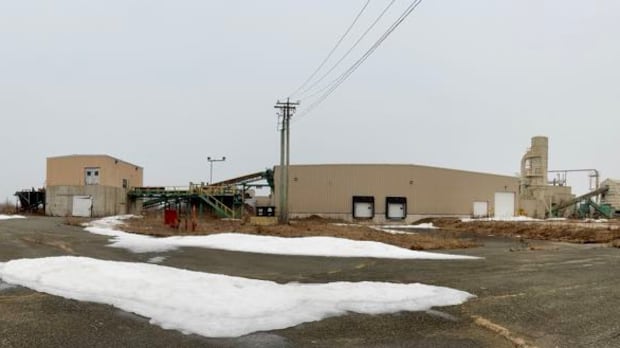
The project involves turning a former plywood manufacturing plant into an 80,000-square-foot multi-stream dry waste plant that would exclusively recycle large items, including furniture, mattresses, insulation and packaging, biomass, tires and electronics.
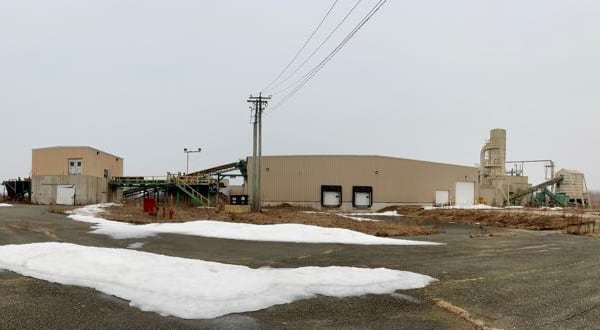 If approved, a former plywood manufacturing facility would be converted into an 80,000-square-foot multi-stream dry waste recycling plant. (Submitted by Sebastien Tinor-Roy)
Tinor-Roy said the plant would provide more than 30 jobs and would be able to process a minimum of 30,000 tonnes of waste annually.
That would account for nearly six per cent of the province’s total waste collection, which is 504,000 tonnes a year, according to Statistics Canada.
New Brunswick’s Strategic Action Plan for Solid Waste Management aims to reduce landfill waste by 40,000 tonnes each year, and Tinor-Roy said he hopes his operation will contribute significantly to that goal.
The project is waiting for provincial approval of its environmental impact assessment.
Sebastian Hultberg, director of solid waste services for the Southeast Regional Service Commission and Eco360, welcomed the project. He said it aligns with work his operation started, when his team noticed a gap for recycling mattresses.
Hultberg said Eco360 started a mattress recycling program and collected 7,000 mattresses just last year that were all shipped to Montreal for processing.
“I think it’s a win-win,” Hultberg said of having local recycling solutions.
“Just by recycling mattresses we reduce the carbon footprint and the environmental impact, but if we do it nearby rather than having to ship them all the way to Montreal, we would further reduce that environmental footprint and it would also provide some jobs.”
 Sebastian Hultberg, director of solid waste services for the Southeast Regional Service Commission and Eco360, said it collected 7,000 mattresses last year that were all shipped to Montreal for processing. (Submitted by the Southeast Regional Service Commission)
Tinor-Roy said about 95 per cent of a mattress can be recycled and reused. His equipment will shred them down to their components — including foam, textiles and springs — which will later be sold individually.
Hultberg said some appliances can be recycled locally and turned into scrap metal, but most electronics are recycled through the Electronic Products Recycling Association. The association has drop-off sites around the province, but the closest processing plant is in Quebec.
“A lot of these facilities require significant volumes in order to process the materials economically, that’s why we don’t have that many local opportunities,” Hultberg said.
Circular Materials now manages most recycling across the province and relieved regional commissions of that duty starting in 2023.
That not-for-profit confirmed in an email to CBC News that its services do not include collection and recycling of mattresses, large furniture items, insulation or electronics.
After discussions with regional waste commissions across the province, Tinor-Roy also learned there’s a need for a more centralized drop-off location for individuals and haulers transporting waste.
He said Miramichi was selected as the project’s site location, with that need in mind.
Tinor-Roy said there will be a cost associated with dropping waste off at the location.
He said he cannot disclose the estimated total cost of the project because certain elements are still being finalized, but he estimated the initial phase would require an investment between $6 million and $10 million.
No government funding has been committed to the project, but Tinor-Roy said his team is exploring funding possibilities.