
By Sarah Burkhard, Jocelyn Bridges,[1] Victoria Cheng, and Spencer Faragasso
June 11, 2026
Introduction
The Peddling Peril Index for 2025/2026 is the forthcoming, fifth edition in a biennial series collecting qualitative and quantitative data in five areas of strategic trade controls: International Commitment, which measures countries’ memberships and adherence to international nonproliferation treaties and conventions; Legislation, which examines laws and regulations related to strategic trade controls; Ability to Monitor and Detect Strategic Trade, which assesses the state’s trade and customs environment; Ability to Prevent Proliferation Financing, which assesses financial controls and transparency; and Adequacy of Enforcement, which evaluates a state’s level of corruption, ability to enforce international sanctions, and the like.[2] The underlying data contain information on 200 countries across 106 indicators, and different methods of presenting and analyzing the data are discussed, including statistical analysis and case studies. In addition to a final ranking of the 200 countries, territories and entities evaluated in the PPI, examples of evaluating the countries in groups are included, such as grouping countries by supply potential of WMD-related items and technology, to acknowledge and draw out different needs for—and challenges posed to—strategic trade control systems across countries. A subset of evaluated countries is presented here, namely those that have rare earth element deposits or reserves.
Defining the Group of Countries
The PPI team evaluated 16 countries that have the largest rare earth elements (REEs or rare earths) deposits. Rare earth elements are a group of 17 metallic elements recognized for their importance in the modern production of advanced technologies, military weapon systems, and industrial goods; they are therefore dual-use goods. The 16 countries are (listed alphabetically): Australia, Brazil, Canada, China, Greenland*, India, Madagascar, Malaysia, Myanmar, Nigeria, Russia, South Africa, Tanzania, Thailand, United States, and Vietnam.[3] These countries should prioritize their ability to control the entire REE process, from separation, refining, to alloying and end-product manufacturing. The PPI can shed light on the status of these countries’ current strategic trade controls as a group but also individually.
Today, China maintains a near monopoly in the sourcing, refining, and supply of REEs. This has created serious concerns regarding the ability of countries to procure these important materials for domestic security and economic purposes. China is actively taking advantage of countries with weak export controls and trade and investment practices to purchase REE companies and acquire controlling stakes in deposits and active mines. These efforts will enable China to further expand its control over the REE market, begging the need for countries to adapt and protect their natural resources and markets.
Applying the findings of the PPI to the case of rare earth elements can help states and policymakers better understand how to enhance the control of their trade, combat predatory trade practices, protect and foster domestic REE industry development, and develop greater cooperation between allies and partners.
Background on REE and their National Security Relevance
Rare earth elements are a group of 17 metallic elements that range from atomic number 57 through 71, including the lanthanides plus scandium (atomic number 21) and yttrium (atomic number 39). Although not generally rare in the conventional sense, they can be difficult to process into usable forms. Scandium and yttrium are grouped with the rare earths due to their chemical and physical affinities with the lanthanides. Yttrium commonly occurs in REE deposits, but scandium naturally occurs in a separate geological environment. REEs are typically divided into two groups: light rare earth elements (LREE), which are more abundant and have lower atomic numbers; and heavy rare earth elements (HREE), which are rarer and have higher atomic numbers. Light rare earth elements include Lanthanum (La), Cerium (Ce), Praseodymium (Pr), Neodymium (Nd), Promethium (Pm), Samarium (Sm), and Europium (Er). Heavy rare earth elements include Gadolinium (Gd), Terbium (Tb), Dysprosium (Dy), Holmium (Ho), Erbium (Er), Thulium (Tm), Ytterbium (Yb), and Lutetium (Lu).
Rare earth elements should not be confused with critical minerals, which include a broad range of minerals characterized by their strategic economic importance and supply chain risks. In essence, not all critical minerals are rare earths, but all rare earths are included in conversations about critical minerals.
Rare earth elements have a variety of uses due to their magnetic, luminescence, thermal, catalytic, optical and laser, and electrochemical properties. Rare earth elements are used in everyday consumer technologies such as phones, computer monitors, and flat screen televisions. They are also used for a variety of medical applications, automotive vehicles, and clean energy technologies. Importantly, rare earth elements are considered dual-use materials. In defense, REEs are used in guidance and control systems, defense electronic warfare, targeting and weapon systems, electric motors, and communication. The biggest national security concerns lie in the use of REE’s in the specific defense subcomponents that enable precision, autonomy, or strategic military advantages. For example, the strong magnetic properties of REEs allow them to be used in powerful and permanent magnets. Specifically, REEs are found in two powerful permanent magnetic materials: samarium cobalt (SmCo) and neodymium iron boron (NdFeB). NdFeB magnets are considered the world’s strongest permanent magnets which makes them essential to military weapons systems. SmCo magnets’ ability to retain strength at extreme temperatures makes them ideal for defense technologies that use guidance and control electric motors and actuators such as precision-guided missiles, smart bombs, and aircraft.
The biggest national security concerns are not the rare earth elements themselves, which are extremely difficult to differentiate between civilian and military uses in the alloy state, but rather the specific defense subcomponents that use REEs to enable precision, autonomy, or strategic military advantages. For example, most defense-manufacturing countries procure neodymium magnets to then develop the finished products domestically. Table 1 below outlines a variety of defense applications rare earth elements have. This group of minerals play a critical role in national security considerations and are a key part of the supply chain used to produce some of the most vital defense products.
Rare Earth Elements in Defense Applications
Rare Earth Element UseRare Earth ElementsRare Earth TechnologyFunction / ApplicationSelected ExamplesGuidance and control systemsNeodymium, Praseodymium, Samarium, Dysprosium, TerbiumCompact / powerful permanent magnetsGuidance & control electric motors and actuatorsTomahawk cruise missile, Smart bombs, JDAM, Joint Air-to-Ground Fin Actuator, Predator UAVDefense electronic warfareNot specifiedEnergy storage / density amplification, capacitanceElectronic warfare, directed energy weaponsJamming devices, Electromagnetic Railgun, Ni-Metal Hydride Battery, Area Denial System, LRAD, Area Denial Systems on Stryker vehicleTargeting and weapons systemsYttrium, Europium, TerbiumEnergy amplification & resolutionTargeting and weapons systemsLaser targeting, Air-Based Lasers, Laser Avenger, SaberShot Photonic Disrupter, FCS Vehicle with Laser WeaponElectric motorsNeodymium, Praseodymium, Samarium, Dysprosium, TerbiumCompact / powerful permanent magnetsElectric drive motorsCHPS Future Combat, Integrated Starter Generator, Hub-Mounted Electric Traction Drive, Zumwalt DDG-1000, Joint Strike Fighter, More Electric AircraftCommunicationNeodymium, Yttrium, Lanthanum, Lutetium, EuropiumSignal amplification & enhanced resolutionRadar, sonar, radiation, and chemical detectionSonar transducers, Radar systems, Enhanced X-Ray, MICAD
Table 1. Source: Compiled from presentations by the Rare Earth Industry and Technology Association, the United States Magnet Manufacturing Association, and David Pineault, “Global Rare Earth Element Review,” Defense National Stockpile Center, Spring 2010.
China’s Dominance and Recent Developments
For decades, China remained responsible for 95 percent of the supply for REEs with total market control from 1990-2012.[4] More recently, China maintained control over on average 60 percent of the mining of REE’s, but an even greater dominance in 91 percent of every other stage of the supply chain, including separation, refining, alloying, and end-product manufacturing.[5] This position has given China significant economic and strategic leverage over countries that rely on Chinese REE exports. The effects of this dominance have already been put on display during the trade war between China and the United States during the second Trump Administration. China used its dominant position in the REE market to counteract the Trump Administration’s tariffs by restricting their export. While this was used as a negotiation tactic, more dramatic concerns can be imagined, such as how the supply chain can be controlled and compromised in a conflict with China.
The trend in market dominance does not seem to be slowing down, rather, China is looking to expand. China is actively seeking out opportunities to invest in or purchase REE mining operations that would give China ownership or a majority stake. This is part of a strategy to control the supply chain even beyond its borders. For example, a Chinese rare earth’s company, Shenghe Resources, through its subsidiary, Ganzhou Chenguang Rare Earths New Material, recently gained control over a key REE deposit in Tanzania.[6]
Though China holds the majority of the world’s REE reserves and mines, there are sizable reserves in 16 countries, according to a Mineral Commodities Survey produced by the U.S. Geological Survey in 2025.[7] These reserves are in the following countries, listed in descending order in metric tons: China, Brazil, India, Australia, Russia, Vietnam, United States, Greenland (see sidebar: a note on Greenland), Tanzania, South Africa, Canada, Thailand, Madagascar*, Malaysia*, Myanmar*, and Nigeria*.[8] Despite known sizable reserves in 16 countries, only 12 of these countries have rare earth mines as of 2024. These countries are as listed, in descending order: China, United States, Myanmar, Australia, Nigeria, Thailand, India, Russia, Madagascar, Viet Nam, Malaysia, and Brazil.
SIDEBAR: A NOTE ON GREENLAND
Although Greenland is included in the grouping of countries discussed in this chapter, the PPI team decided to exclude it from data analysis. As an autonomous territory of Denmark, Greenland’s foreign, defense, security and monetary affairs remain under Denmark’s constitutional authority.[9] At the same time, Greenland has gained increasing control over its internal governance. The adoption of the 2009 Self Governance Act significantly expanded Greenland’s autonomy, granting its government the authority to create legislation in a number of policy areas, including the regulation and management of mineral resources. Article 7 of the Self Governance Act outlines Greenland’s authority relating to mineral resource activities.[10] Since the PPI only assigns points to Denmark, and not its autonomous territories, Greenland was not included in the data analysis.
Efforts are being made to counteract and reduce China’s control over REE’s. The United States government has issued massive contracts and funding opportunities for American rare earth elements companies involved in all stages of rare earth element supply. These investments will enable companies to develop mines and build production facilities that will enable a domestic supply of materials. However, it may take years for these projects to reach fruition and economic viability to compete in a market saturated with Chinese products.
In February 2026, the United States hosted the Critical Minerals Ministerial, a gathering of 54 countries and the European Commission intended to sign memorandums of understanding (MOUs) and bilateral frameworks that would ultimately seek to create “secure, diversified, and resilient, end-to-end” supply chains of critical minerals, including REE’s.[11] The U.S. committed to leverage the Export-Import Bank of the United States (EXIM), Department of War, Department of Energy, and the U.S. International Development Finance Corporation, to issue billions of dollars in loans to develop a U.S. domestic strategic reserve of critical minerals and to U.S. companies to build out every part of the supply chain. Nonetheless, establishing new supply chains is a lengthy and expensive, but necessary process.
The supply chain risk created by China’s willingness to use its industry dominance coercively has spurred advances in engineering and material science over the last 15 years, leading to the further development of iron-nitride magnets, and re-designing of products without the need for rare earth magnets.[12] Taking advantage of these alternative developments can help create new market opportunities that will reduce the overall dependence on rare earth elements and lower the intense pressure developing rare earth element supply chains are facing.
REE Countries vs PPI
Applying the results of the PPI to the group of 15 countries (no PPI results are available for Greenland, see footnote 1) with the largest deposits of REE’s can reveal some interesting insights into the strengths and vulnerabilities facing these countries as they develop their domestic resources. The countries can be viewed through many lenses, such as in terms of their PPI Tier of supply potential, their overall performance in the PPI and the respective super criteria, and by looking at specific sub-criteria. This analysis will provide a perspective that can reveal how strong each country’s strategic trade control system is and how vulnerable a country is to exploitation.
As a group, the countries on average scored 735 points, or 56 percent of the total 1,300 points available in the PPI. The points varied widely from some of the best scoring countries, including the United States, to some of the worst scoring countries, including Myanmar (see Figure 1). In terms of super criteria, the group achieved more than 50 percent in three of the five super criteria, including International Commitment, Legislation, and Ability to Monitor and Detect Strategic Trade (see Figure 2). For the Super Criteria Ability to Prevent Proliferation Financing and Adequacy of Enforcement, the group achieved just shy of 50 percent. The group scored the best in Legislation, achieving on average 82 percent of available points. The average score in Proliferation Finance was dragged down by the seven countries that achieved less than 50 percent, including South Africa, China, Nigeria, Madagascar, Tanzania, Myanmar, and Viet Nam. Myanmar and Viet Nam, in fact, received negative scores. For Adequacy of Enforcement, eight countries, namely, India, Tanzania, Viet Nam, Nigeria, Myanmar, Madagascar, China, and Russia, all received less than 50 percent of possible points. Myanmar, Madagascar, China, and Russia all received less than a quarter of the points.
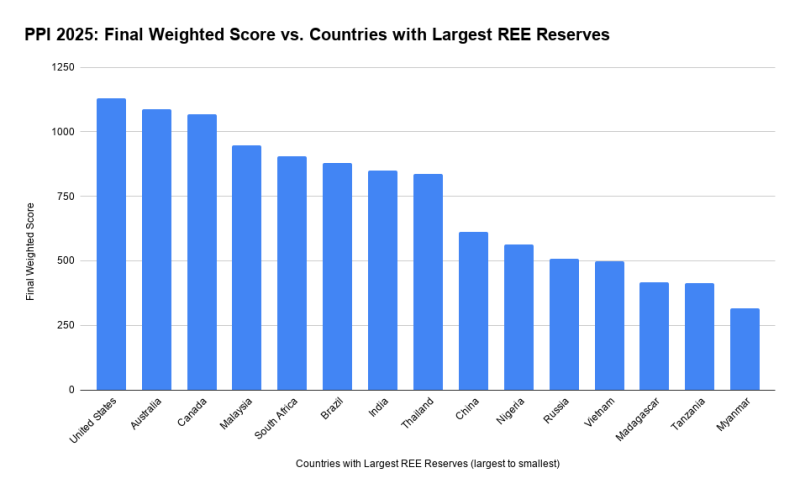
Figure 1. The final, weighted PPI scores achieved by the 15 countries in this group, from highest to lowest., out of 1,300 possible points.
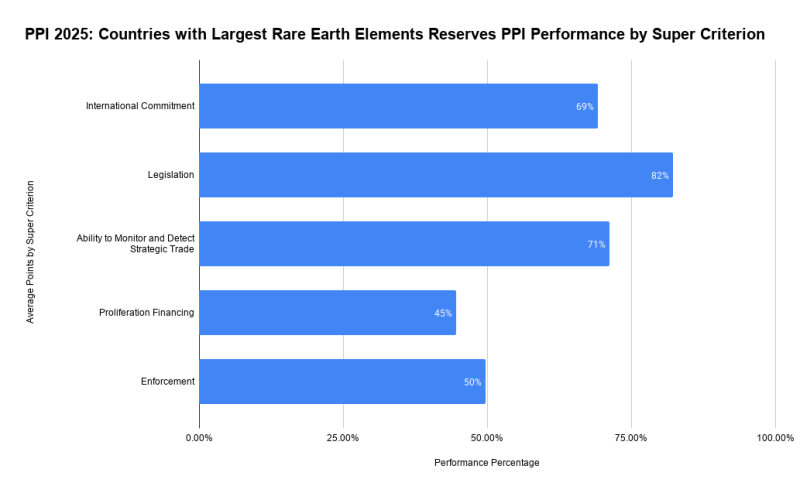
Figure 2. The group of 15 countries collective average scores in each Super Criterion.
Tiers of countries
The PPI presents its findings in terms of tiers of similar countries with respect to the supply potential of strategic goods. This manner of evaluating countries acknowledges that smaller countries, and countries that trade less and have fewer resources to devote to trade controls, cannot realistically be expected to match the performance of major world economies. The tiering system allows for a more relevant comparison of countries’ ranks among peers in their potential to prevent strategic commodity trafficking. It also serves to create a more transparent method to improve trade controls among peer countries.
The three tiers are defined in broad terms as:
Tier One: Major suppliers of, or capability to supply, nuclear facilities and components, and nuclear-related commodities and ballistic missile programs, other WMD programs, and related strategic commodities.
Tier Two: Potential nuclear, ballistic missile, WMD, and related strategic commodity transshipment countries with limited supply potential. These countries may have limited capabilities to manufacture dual-use items, or they may have limited nuclear infrastructure in place, such as nuclear research or power reactors or uranium mines.
Tier Three: All other countries.
Table 2 contains a breakdown of the 15 countries by their PPI Tier of supply potential. It shows that many countries are in Tier One and Tier Two and as such not newcomers to strategic trade. Three countries, however, are Tier Three countries, meaning they are not regularly exposed to strategic trade outside of the REE supply chain.
TierCountries1Australia, Brazil, Canada, China, India, Russia, South Africa, and the United States2Malaysia, Nigeria, Thailand, and Viet Nam3Madagascar, Myanmar, and Tanzania
Table 2. An overview of the 15 countries organized by PPI Tier.
Tier 1 Countries Eight of 15 countries are considered Tier 1 countries. These countries include some of the best performing countries in the PPI, including the United States, Australia, and Canada, all of which are in the top ten. As a group, the Tier 1 countries score well in the PPI, achieving more than 67 percent of total points on average, however, the average score is dragged down by the mediocre performance of China and Russia, which are some of the largest violators of export controls in the world. The Tier 1 group received more than 50 percent in all super criteria, and performed the best in Super Criterion Legislation, scoring close to 97 percent fulfillment (see Figure 3). The high score in Legislation provides a strong legal basis for this group of countries to control their resources. This group performs the worst in Enforcement, where the average score is again lowered due to the low scores for China and Russia.
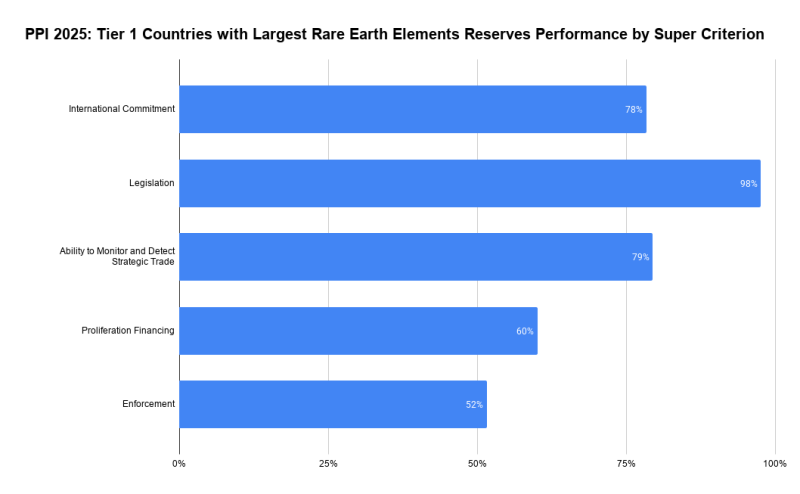
Figure 3. The average score in each super criteria area for the Tier 1 countries in this group.
Tier 2 Countries Four of the 15 countries are Tier 2 countries, which includes Malaysia, Thailand, Nigeria, and Viet Nam (in order of highest to lowest scoring). Viet Nam is ranked sixth in the group in terms of the size of its rare earth deposits. Overall, this group of countries performs modestly in the PPI, receiving 711 points, or 54 percent of the total PPI points on average. As with Tier 1, this group performs quite well in Legislation, receiving on average about 80 percent of possible points. The group performs abysmally in Proliferation Financing (see Figure 4). Proliferation Financing is extremely important, as a low score signifies that these countries are vulnerable to exploitation and risky business practices that can enable countries like China or illicit actors to operate within their borders.
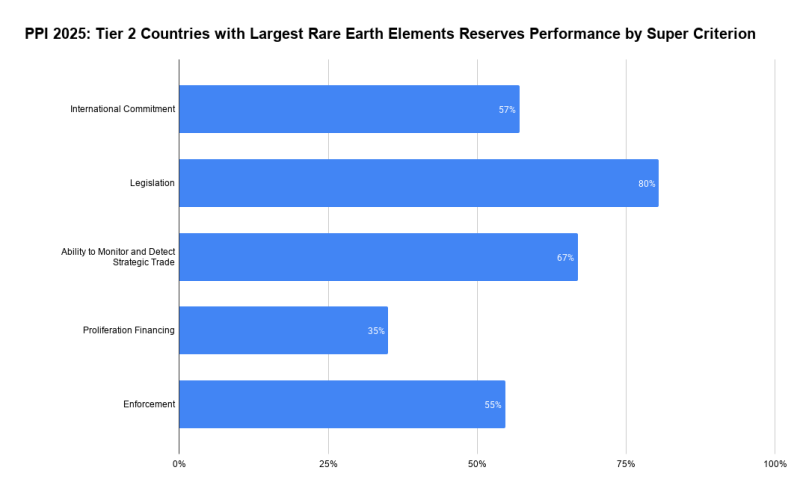
Figure 4. The average score in each super criteria area for the Tier 2 countries in this group.
Tier 3 Countries
Three of the 15 countries are considered Tier 3, including Madagascar, Tanzania, and Myanmar. This group of countries performed poorly in the PPI, earning on average 382 points, or only 29 percent of total possible PPI points. Only two Super Criteria averaged over 50 percent, International Commitment and Ability to Monitor and Detect Strategic Trade, while all other Super Criteria achieved less than 50 percent (see Figure 5). The scores for Proliferation Financing were particularly low, with the group achieving less than 10 percent on average. The scores were dragged down by Tanzania and Myanmar, which, respectively, received only 12 and 5 total points. Madagascar performed the best in Proliferation Financing and received just over 25 percent of possible points. The generally deficient performance is concerning given that Tanzania has the ninth largest deposits of REE’s in the world, making it extremely vulnerable to exploitation. These countries pose a significant exploitation concern and should be prioritized when developing outreach and assistance providing plans to ensure they have adequate control systems.
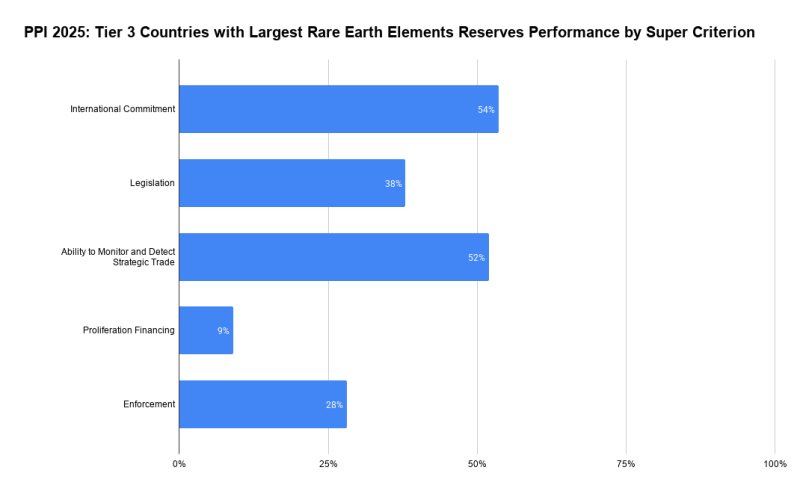
Figure 5. The average score in each super criteria area for the Tier 3 countries in this group.
Export control Legislation
As part of the Legislation super criterion, the Institute analyzed export control legislation of 200 countries and placed them into five categories regarding their quality and extensiveness relating to nuclear and nuclear-related dual use goods.
. Red: Export controls may include small arms and light weapons or radioactive materials.
. Orange: Export control legislation or agreements include only conventional weapons as laid out under the Arms Trade Treaty.
. Yellow: These countries have comprehensive, overarching nuclear safety and security laws that place transfer controls on nuclear material and equipment. These are not viewed as effective export control laws governing nuclear and nuclear-related commodities but are viewed as better in a relevant export control sense than the legislation in the red and orange categories.
. Light Green: Export control legislation or agreements includes controls or clauses relating to nuclear direct-use goods (i.e., nuclear commodity controls such as implementation of Nuclear Suppliers Group Part I list or an equivalent), and conventional weapons.
. Dark Green: Export control legislation or agreements includes controls or clauses relating to nuclear direct-use and nuclear dual-use goods, (i.e., nuclear, and nuclear dual-use commodity controls such as implementation of NSG Parts I & II or their equivalent).
When looking at export control legislation, overall, the group performs very well. Twelve of the 15 countries have at least Green category legislation, where ten of those are considered in the Dark Green category (see Table 3). Only three countries have deficient export control legislation. Nigeria and Tanzania have Yellow category legislation, meaning that while they have some transfer controls regarding nuclear materials and equipment, they lack comprehensive dual-use export control lists and laws. Only Madagascar is categorized as Red, meaning its export control laws only apply to small arms and light weapons and lack virtually any legal basis to control dual-use materials or nuclear related goods. Comprehensive dual-use lists will be necessary to control the transport and transfer of REE’s due to their dual-use nature.
PPI Export Control Legislation Color CategoryCountriesDark GreenAustralia, Brazil, Canada, China, India, Malaysia, Russia, South Africa, Thailand, and the United StatesLight GreenMyanmar and Viet NamYellowNigeria and TanzaniaRedMadagascar
Table 3. The group of 15 countries is categorized by export control legislation color.
PPI Gaps to Fill
Foreign Direct Investment Screening Gaps
Inbound Foreign direct investment (FDI) controls play a vital role in how countries can protect investments in their domestic REE resources. Countries with poor inbound FDI controls are less able to assess and vet the risks posed by foreign companies or governments making investments into domestic REE operations, increasing the possibility that domestic resources can be fully purchased and owned by a foreign entity. Nine of the 15 countries received full points in the FDI sub-criterion, meaning these countries have a dedicated mechanism to screen inbound investments which allows screening for national security purposes (see Figure 6). Six of the countries have neither dedicated FDI screening mechanisms nor screen FDI in sectors relevant to national security and did not earn any points. These six countries are highly vulnerable to foreign exploitation. It is particularly concerning that no relevant FDI controls were found for Brazil and Tanzania, ranked second and ninth in terms of REE deposit size, respectively. As stated earlier, Tanzania has already proven vulnerable to Chinese investments into its REE deposits. These gaps should be filled by policymakers to ensure that countries have adequate capabilities to monitor who is investing in their country.
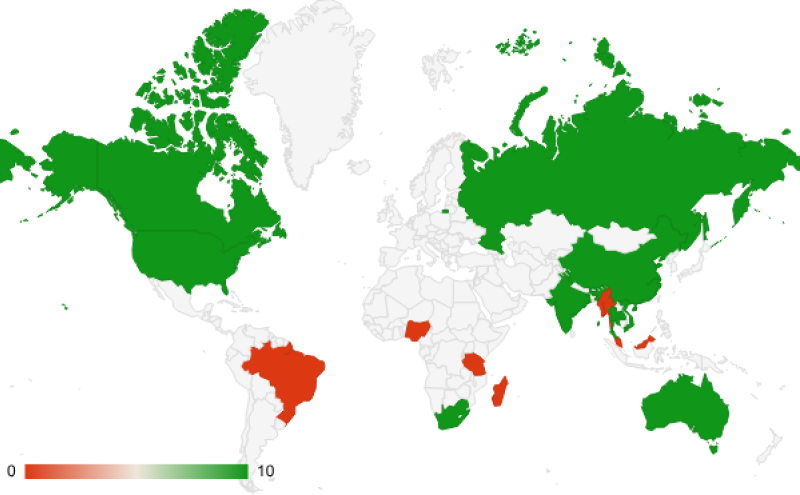
Figure 6. The scores received by each country for the FDI sub-criterion. A full score of 10 points (Green) indicates that the country has a dedicated mechanism to screen inbound investments that allows screening for national security purposes.
Impact of Internal Stability and Corruption
Internal stability and corruption are major considerations in how well a country can manage and protect its REE resources. Poor internal stability limits the ability of the government to effectively govern its territory and maintain stable long-term policies that enable businesses to form long-term plans and investments. Corruption can prove to be similarly compromising. Corruption limits the governments’ ability to enforce laws fairly and equitably, abide by regulations, and build norms in business. Corruption can allow government officials or businesses to unfairly profit from the sale or exploitation of domestic resources.
Of the 15 countries assessed here, eight of them are listed in the bottom half of the Global Corruption Index (GCI) for 2023, ranking them amongst some of the most corrupt countries in the world. This includes Myanmar, Madagascar, Nigeria, Viet Nam, Tanzania, Russia, China, and Thailand. As seen above, four of those countries, Myanmar, Madagascar Tanzania, and Nigeria, lack any FDI controls, meaning they are especially vulnerable to exploitation.
CorruptionGCI Rank (Worst to Best)Myanmar181Madagascar156Nigeria146Viet Nam131Tanzania129Russia127China113Thailand99India90Brazil85South Africa59Malaysia50United States24Canada16Australia11
Table 4. The group of 15 countries and how they rank in the 2023 Global Corruption Index, from worst to best.
Overall Recommendations
China’s control of the REE supply chain poses unique challenges. Countries effectively need to build their own domestic industries to insulate themselves from coercive trade practices, but this is difficult in a market dominated by price pressures and dictated by supply and demand. For new supply chains to be profitable and sustainable, governments can help by providing financing to alleviate concerns and provide incentives to develop the projects in the first place. But as the PPI demonstrates, simply funding new supply chain elements alone is not enough to prevent China’s aggressive expansion. Countries will need to leverage export controls and inbound foreign direct investment controls to prevent the exploitation of their domestic resources. This can be done by strictly monitoring and evaluating the companies seeking access to domestic natural resources, and determining the level of ownership these companies would have, and who are the true beneficial owners of the companies themselves.
For the countries who are not categorized as having Dark Green legislation, it will be necessary for governments to adopt comprehensive dual-use export control lists, licensing processes, and end-use and end-user controls. The U.S. and its partner countries should prioritize outreach to Viet Nam on adopting its new control list and making additional improvements to its recent STC Decree. It should also prioritize outreach to Madagascar, Nigeria, and Tanzania to create new legislation. Further, the eight countries with no FDI control mechanisms should swiftly implement those controls. It is important for the United States and its partners to assist in these efforts as it will help form strategic alliances.
Another strategy for reducing dependence on China’s dominance in the global rare earth market and strengthening U.S. critical mineral supply chains is expanding rare earth recycling. As discussed in the background section, rare earth elements are used across a wide range of sectors, including defense, healthcare, and automotive manufacturing. Many products in these sectors, such as magnets and batteries, contain rare earth elements that could be recovered once the products reach the end of their lifecycle. However, currently less than one percent of rare earth elements are recycled.[13] Increasing recycling rates would allow the United States and its partner countries to develop a secondary supply source, supplementing traditional mining and processing activities, providing another alternative to relying on China’s supply chains. A 2014 industrial base assessment conducted by the Department of Defense’s Defense Logistics Agency and the Department of Commerce’s Bureau of Industry and Security evaluated the “health and competitiveness of the domestic REE supply chain network”, concluding that organizations that recycled REEs were primarily commercial entities, with only three U.S. government organizations reporting recycling activities.[14] The assessment also found that cost and expertise served as the two biggest constraints to expanding rare earth recycling activities. The United States and its partner countries can help to accelerate the development of rare earth recycling by supporting research and development and creating incentives for companies to recover rare earth materials from end-of-life products, no matter the sector. Investments into recycling technologies and infrastructure would help diversify supply sources and reduce dependence on China’s rare earth supply chain.
States should also work to form an international organization of countries that either produce rare earth elements or hold significant rare earth reserves. This group would provide a formal forum for coordination and cooperation among participating countries, with the goal of establishing shared standards and expectations for the production, trade, and distribution of rare earth materials. In particular, the organization could develop ground rules to help ensure that rare earth elements, intermediate materials, and finished products are not diverted to sanctioned entities. The Minerals Security Partnership (MSP) came close to fulfilling this proposal, as it was designed to facilitate meetings with other key mineral rich countries to “discuss priorities, challenges, and opportunities in responsible mining, processing, and recycling of critical minerals.” MSP has since been succeeded by the Forum on Resource Geostrategic Engagement (FORGE). FORGE will enable partners to “collaborate at the policy and project levels to advance initiatives that strengthen diversified, resilient, and secure critical minerals supply chains.”[15] This will effectively enable members to coordinate capital investments in critical mineral developments and facilitate creating supply chains outside of China. While these are necessary and important functions, it should be done in parallel with efforts to establish shared standards. Protecting new and emerging markets from exploitation and predatory/illicit activities is essential to ensuring that new markets flourish and remain competitive while also thwarting proliferation-related activities.
[1] Jocelyn Bridges wrote sections of this report during her time as a Research Associate Intern at the Institute.
[3] *Greenland has domestic control over its natural resources. The PPI only assigns points to Denmark; therefore, Greenland is not included in any data analysis. Thus, the data analysis will only consider 15 countries.
[4] Haque, Nawshad, Anthony Hughes, Seng Lim, and Chris Vernon, “Rare Earth Elements: Overview of Mining, Mineralogy, Uses, Sustainability and Environmental Impact,” Resources3, no. 4 (2014): 614-635, https://doi.org/10.3390/resources3040614.
[8] The exact reserve amounts in Madagascar, Malaysia, Myanmar, and Nigeria are unknown, though it is apparent that there are reserves in these countries.