
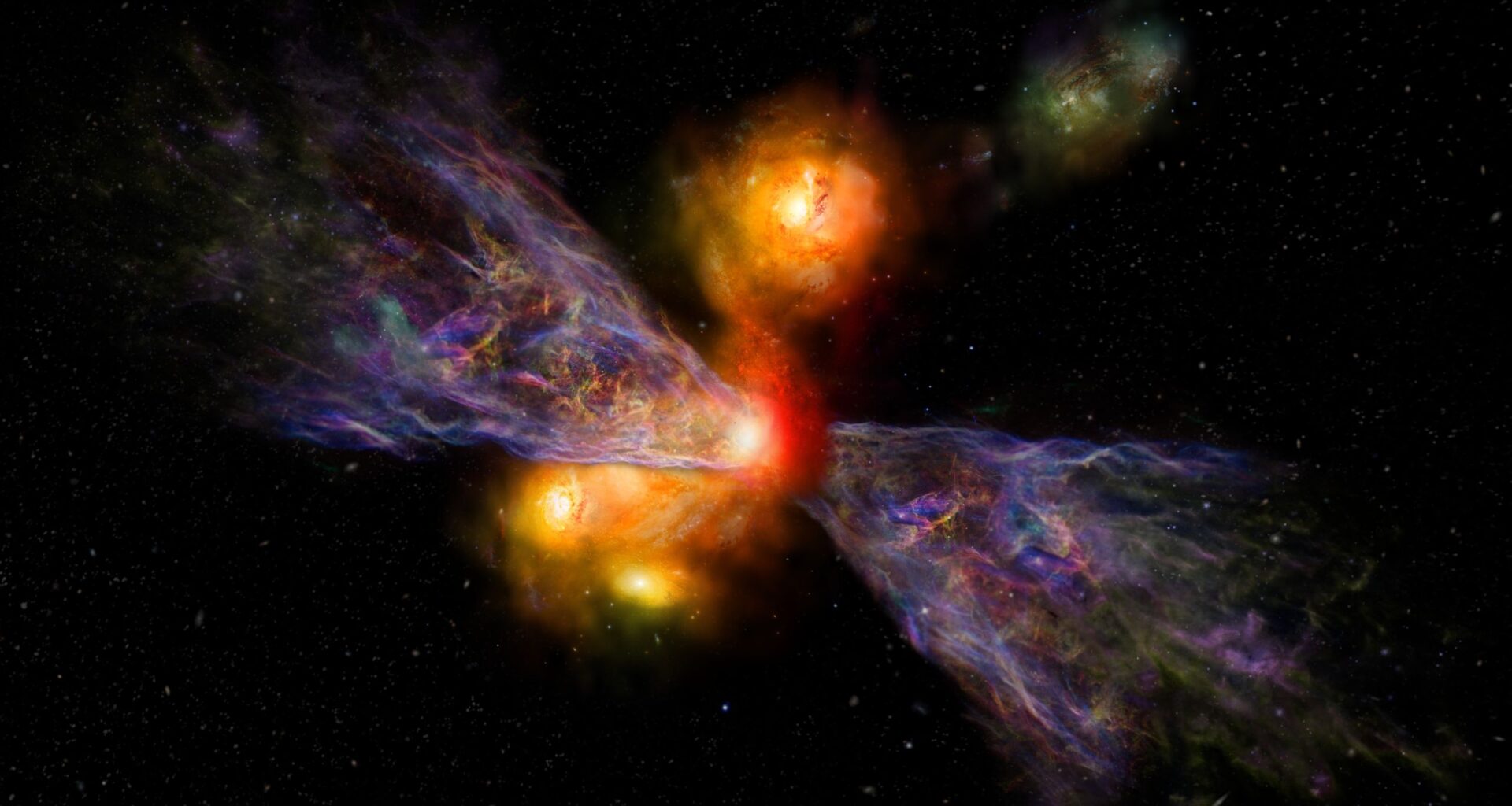
When galaxies collide, it’s less like a train wreck and more like a marriage: Two separate entities merge into a single massive celestial structure. But relationships are hard, whether you’re a human or a galaxy — and ,this process may also “kill” the merging galaxies by unleashing star-quenching winds.
This mechanism may help to explain an enigma in the early universe. A glut of James Webb Space Telescope (JWST) observations have shown that galaxies grew surprisingly massive within 1 billion years of the Big Bang. Just as unexpectedly, many of these galaxies appear to have already stopped producing stars and grown quiescent (or dead) only about a billion years later.
Gas leak near the dawn of time
You may like
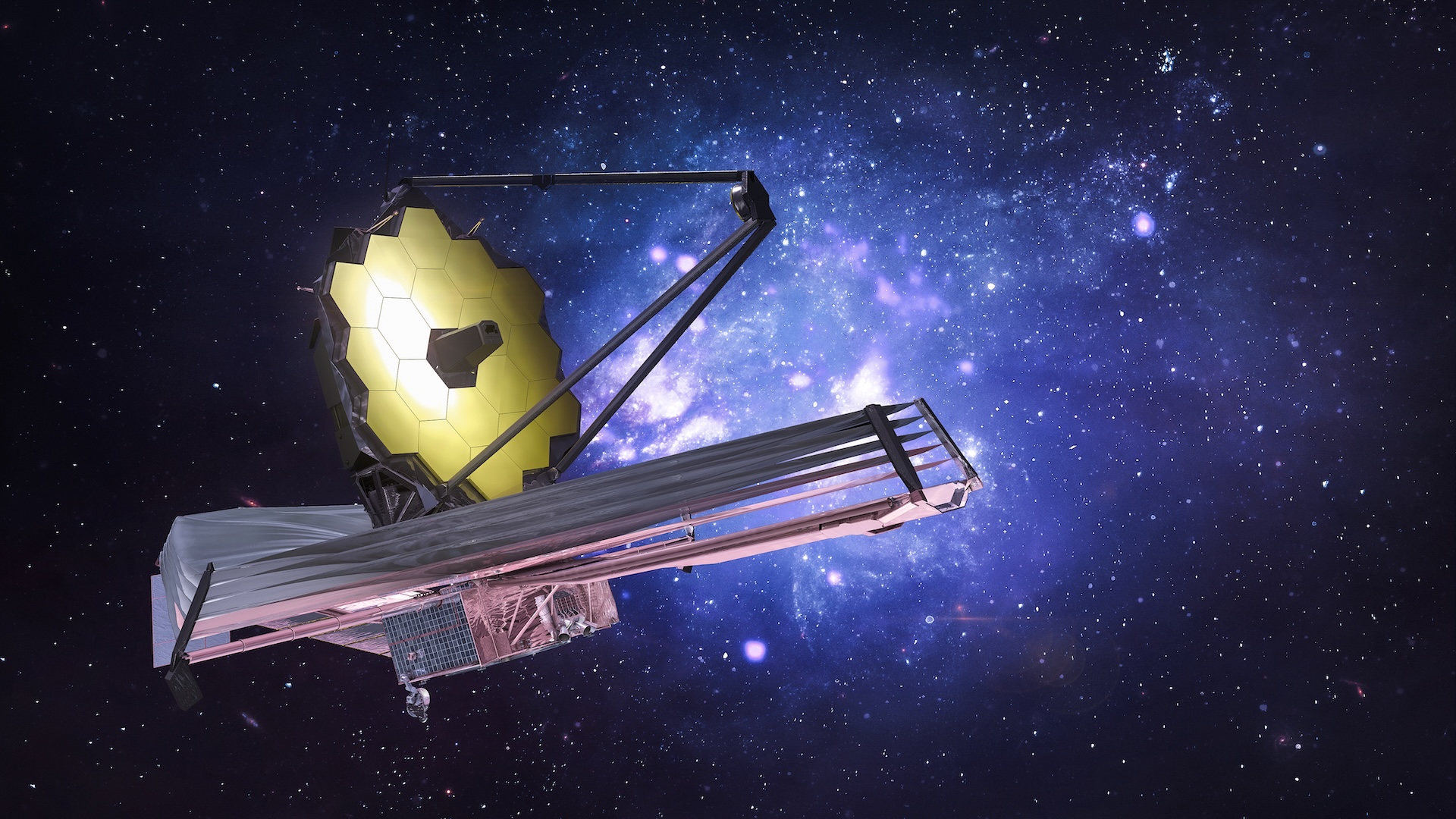
An illustration of the James Webb Space Telescope observing a distant galaxy
(Image credit: Getty Images)
What to read next
A widespread cosmic phenomenon
Davies, R. L., Fisher, D. B., Herrera-Camus, R., Faisst, A., Spilker, J., González-López, J., Fujimoto, S., Amorín, R., Aravena, M., Assef, R. J., Barcos-Muñoz, L., Boquien, M., Dessauges-Zavadsky, M., Ferrara, A., Schreiber, N. M. F., Ginolfi, M., Gómez-Espinoza, D., Ibar, E., Ikeda, R., . . . Zamorani, G. (2026). Multiphase images of a powerful supernova-driven wind in the early Universe. Monthly Notices of the Royal Astronomical Society, 549(3). https://doi.org/10.1093/mnras/stag874
TOPICS