
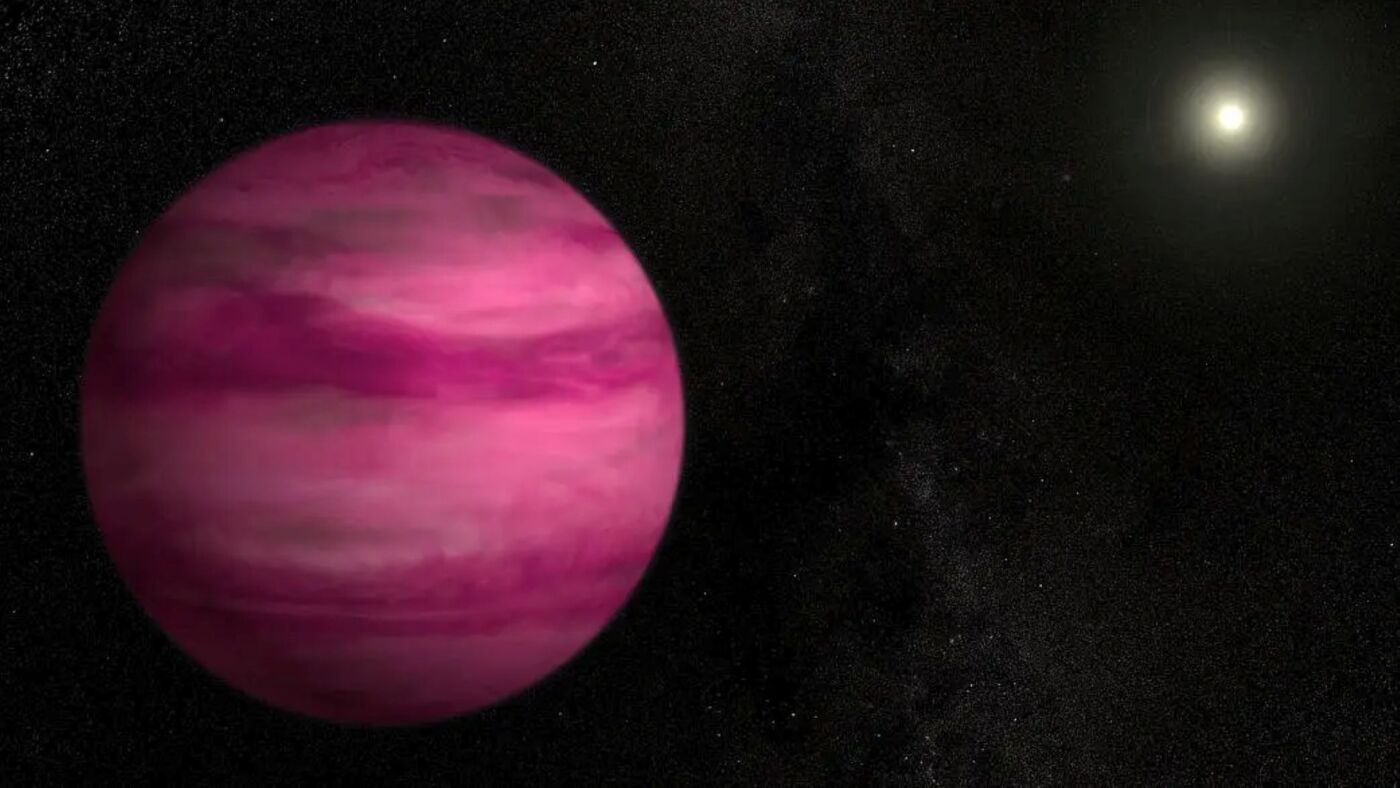
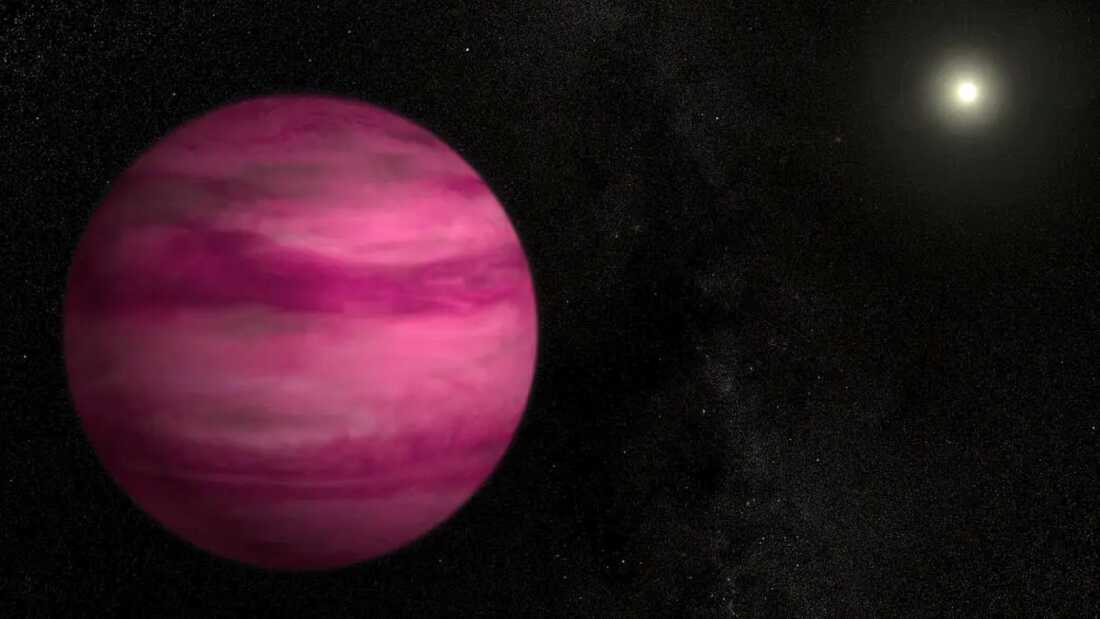
If humans could travel to this giant planet, we would see a world still glowing from the heat of its formation with a color reminiscent of a dark cherry blossom, a dull magenta.
NASA/Goddard Space Flight Center/S. Wiessinger
hide caption
toggle caption
NASA/Goddard Space Flight Center/S. Wiessinger
There’s an object in space 25 times the size of Jupiter that’s stumped scientists for years. They haven’t been able to figure out if it’s a planet or a failed star. But scientists are one step closer to an answer thanks to the powerful James Webb Space Telescope.
After analyzing data collected by the telescope, astronomers have uncovered unexpected new clues floating light years away from us: salty clouds sitting in space as hot as some home ovens. And if this mystery isn’t enough, we have more to look forward to in this episode, including insights into the evolution of laughter and the burials of ancient human relatives.
Interested in more science in the news? Email us your question at shortwave@npr.org.
Support public media with NPR+ and enjoy perks for over 25 podcasts like this one. It includes perks like bonus episodes, early access, archive access, curated playlists and sponsor-free listening. Learn more at plus.npr.org.
Listen to Short Wave on Spotify and Apple Podcasts.
This episode was produced by Berly McCoy and Jordan-Marie Smith. It was edited by Rebecca Ramirez and Mallory Yu. Tyler Jones checked the facts. The audio engineers were Josephine Nyounai and Jimmy Keeley.