
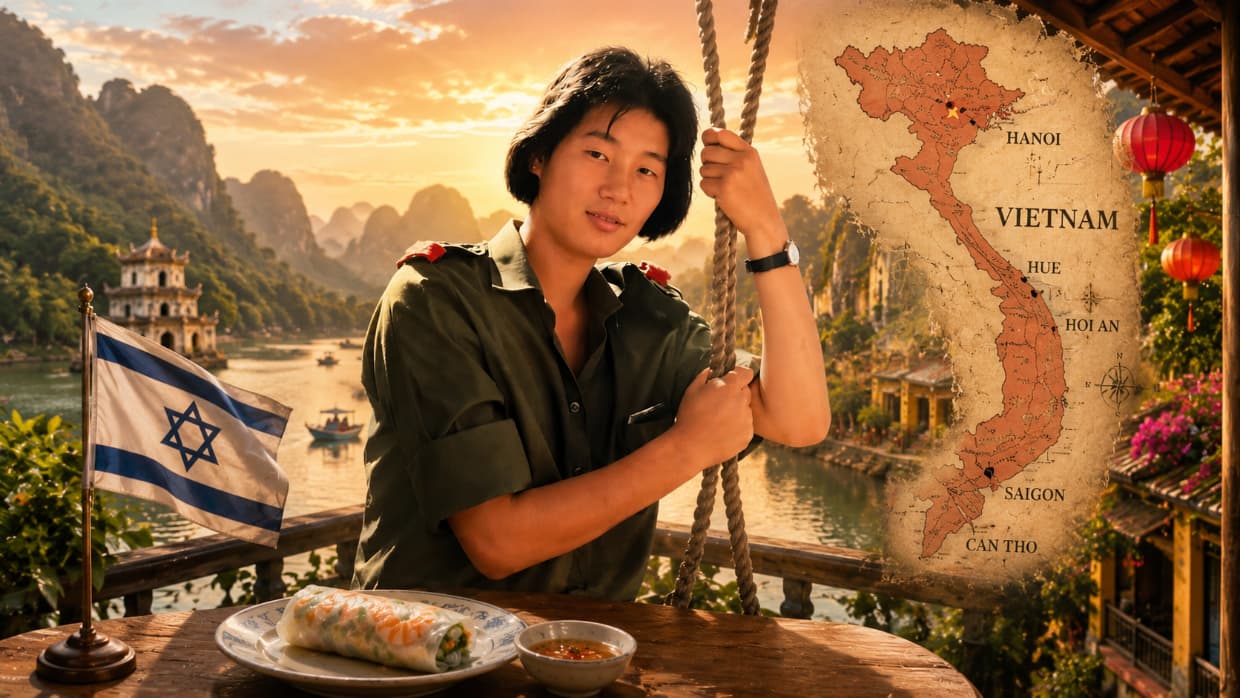
She was five weeks old when her parents fled their bombed-out village in North Vietnam. By six, she was on a plane to Israel. By twenty, she was a radar spotter on the Lebanese border, watching for Hezbollah. Today, Ai Lien Luong Phung owns four kosher restaurants in South Florida. This is her unusual story.
Ai Lien was the youngest of four children and the only girl, born in Hai Phong, a coastal city in northeastern Vietnam near the Gulf of Tonkin. Her mother was Vietnamese; her father was ethnic Chinese, raised in Vietnam since age eight. She was born in the middle of the war between communist North Vietnam and South Vietnam, and at five weeks old, bombings forced her family to flee to her maternal grandfather’s home. That area was bombed too. She learned early to keep moving.
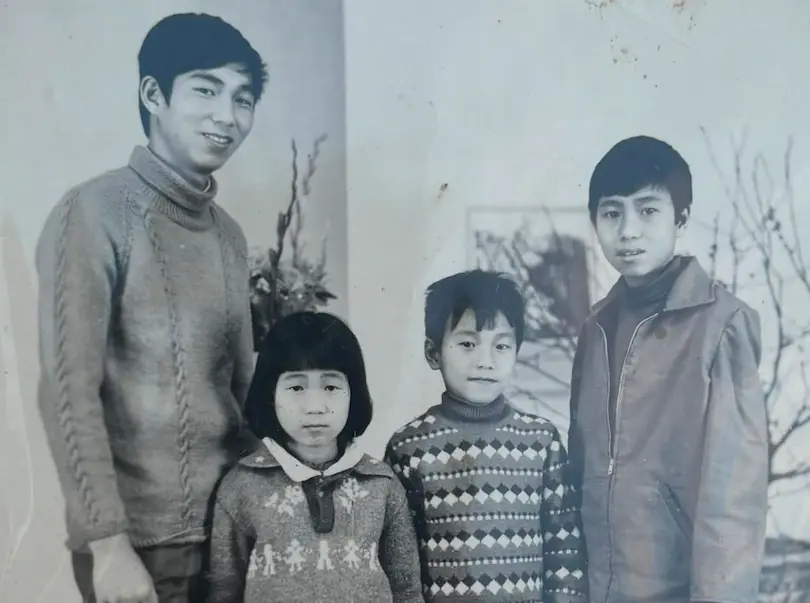 Ai Lien with her brothers
After the fall of Saigon in April 1975, hundreds of thousands of Vietnamese fled communist persecution. Many left by boat. The UN High Commission for Refugees estimated that between 200,000 and 250,000 of those “boat people” died at sea from piracy, storms, and overcrowded vessels. The new communist government was especially brutal toward ethnic Chinese, whom it viewed as a security threat amid rising tensions with China. Ai Lien’s father, who had practiced acupuncture and herbal medicine, was no longer welcome. Her parents sold everything they could and moved the family to China.
After a year, they decided to escape that regime too. Her parents fled with Ai Lien and their two younger sons to Hong Kong, where they lived in a refugee camp, a family of five sharing a single bunk bed. Their eldest son, 12 years older than Ai Lien, had to stay behind to serve in the Chinese army. He couldn’t rejoin the family for ten years.
What happened next was the result of one man’s decision. Israeli Prime Minister Menachem Begin, haunted by the memory of Jewish refugees turned away by every country during the Holocaust, ordered Israeli diplomats to visit refugee camps and offer asylum. Approximately 366 Vietnamese refugees were admitted to Israel. In 1978, when Ai Lien was six, her father announced they were moving to Israel. Her family was part of the third and final group Israel accepted, and according to family lore, was the very last family let in.
Starting Over in Sderot
The Israeli government settled Ai Lien’s family, along with other Vietnamese refugees, in a new apartment building in Sderot. Prime Minister Begin came to visit. Donations of clothing arrived. And the family tried to figure out a country that was utterly foreign to them.
They had no experience with modern indoor plumbing. They assumed the toilets were for washing. The yellow bar of soap on the kitchen counter looked like butter. On Ai Lien’s first day of school, her mother dressed her in a beautiful blue flowered outfit she had received as a donation. The teacher sent Ai Lien home without explanation. Later she learned her mother had dressed her in pajamas.
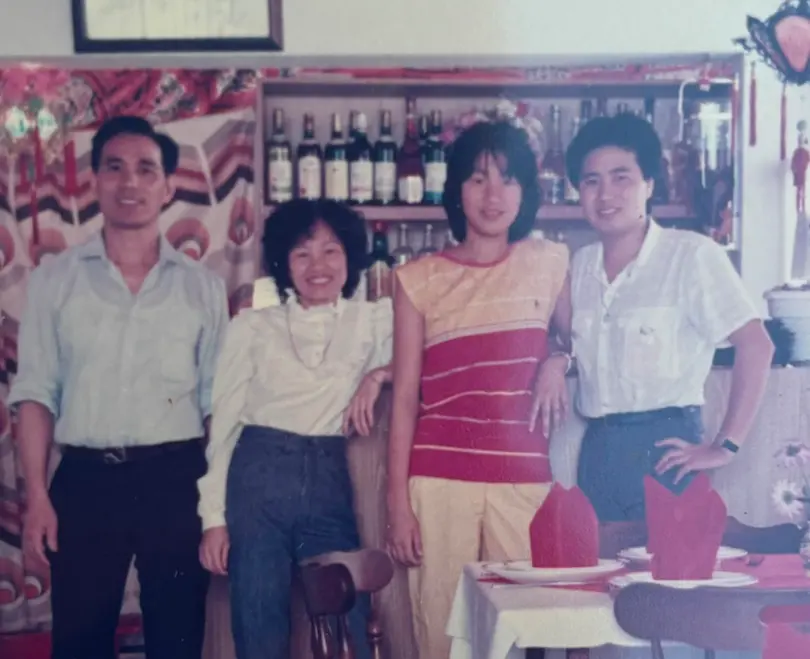 Ai Lien with her family in their restaurant in Tiberias
Ai Lien’s mother attended ulpan to learn Hebrew while the children went to school. Because Israel didn’t recognize acupuncture and herbal medicine as official professions, her father found work in Chinese restaurants. After ten months, the family moved to Beersheba. Her father and one brother went to Tel Aviv to work at a Chinese restaurant that was opening, meaning her brother, then about 17, had to quit school to help support the family. For roughly a year, Ai Lien, her mother, and her 12-year-old brother lived in Beersheba while her father and older brother stayed in Tel Aviv, coming home sometimes only once a month. Her mother worked two jobs, including housekeeping at Soroka Medical Center. Ai Lien was nine years old.
After that year, her father and brother opened their own Chinese restaurant in Haifa, and the family moved again. By 1982, after a few years in business, the Lebanon war had slowed things down, and her father took a chance on an equal partnership in a new Chinese restaurant in Tiberias. In 1983, the family moved again.
Israeli Soldier on the Lebanese Border
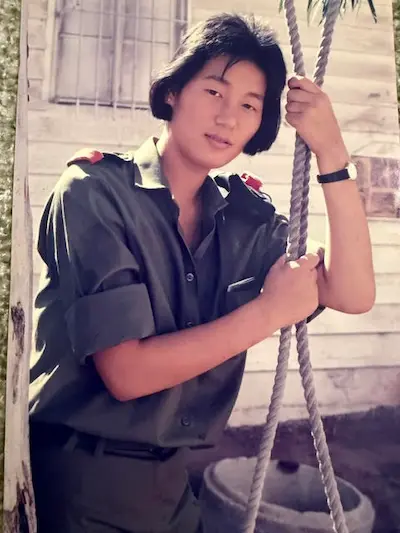 Ai Lien in the Israeli army
In 1990, the year Ai Lien entered the Israeli army, her father handed his share of the restaurant to his second son and returned to Vietnam with her mother for six months to complete his training and earn a degree in acupuncture. When they came back to Israel, he finally practiced the medicine he had always loved, until his death in 1993.
When Ai Lien was inducted into the Israeli army, she asked to serve at the most dangerous border. She was assigned as a radar spotter, first on the Lebanese border watching for Hezbollah threats, then transferred south to the Kerem Shalom crossing in the south, searching for illegal border crossings. After her service, she went to work as a server at a Chinese restaurant in Herzliya, where she met her future husband, Trieu Luong Phung, who has a similar ethnic background. She trained as a travel agent, but after a year a better offer came: triple her salary to manage the same restaurant where she’d been a server. She went back.
Five years after they met, Ai Lien and Trieu married. They moved to Tel Aviv and began talking about children. Then a public bus near their home was bombed, and Trieu said they had to leave. Ai Lien wanted to stay. She lost that argument. In 1998 they moved to the United States. She left behind her mother, now 85, and her three brothers, who were living in the Haifa area. Her brothers are intensely connected to Israel and tell her regularly she should come home.
Building Something New in Florida
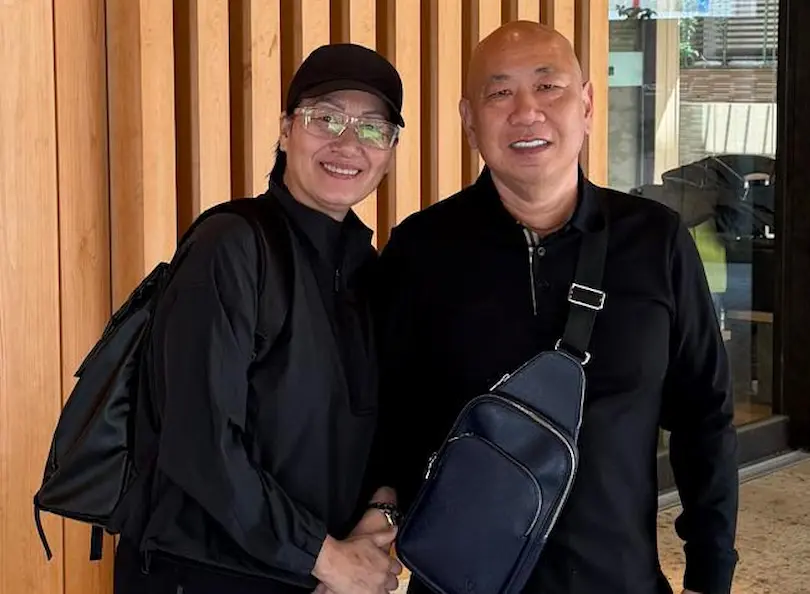 Ai Lien and Trieu
Her mother’s adjustment to Israel had never been easy; it didn’t help that so many foods she knew from Vietnam, including tofu, bean sprouts, bok choy, and good rice, were simply unavailable back then. She never complained. Today Ai Lien’s mother speaks Hebrew and has kept up friendships with other refugee families from those early years, even those who eventually left Israel. Ai Lien visits her mother as often as she can, most recently with her sons during Passover.
Ai Lien says she never experienced racism or discrimination in Israel and always felt accepted. She speaks Hebrew and English fluently and has learned Chinese. She and Trieu live in an Orthodox neighborhood in Miami, where they feel comfortable, even though they are not Jewish. Although she doesn’t keep kosher herself, they chose to keep their restaurants kosher because, as she puts it, they connect better with that customer.
Trieu was previously the chef at Soho Grill and Bar, a kosher restaurant in Aventura. Together, with Jewish partners, they own and operate Bambu, a kosher Chinese restaurant in North Miami Beach, and Shanghai, a kosher Chinese restaurant in Hollywood. They have since added two more: another Bambu in East Boca Raton, and Sunflower, a Vietnamese-Pan Asian restaurant in West Boca Raton.
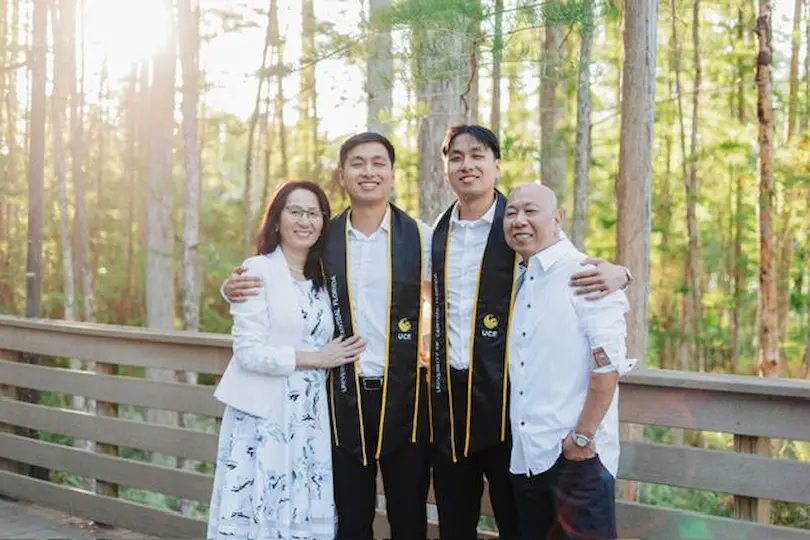 Ai Lien with her husband and sons
Sunflower is Ai Lien’s personal dream realized, a chance to introduce people to the food of her country. When she talks about the cuisine, her eyes light up describing the smells from her childhood, such as the broth of the pho (Vietnamese noodle soup) simmering on the stove. She and Trieu constantly try new Asian dishes and work to recreate them with kosher ingredients, but only put something on the menu when it tastes completely authentic.
On the day of Sunflower’s soft opening, she walked out of the kitchen singing “Am Yisrael Chai.”
Her most memorable army experience, she says, was the day Saddam Hussein’s chemical weapons threat led the army to issue gas masks. When a warning alarm sounded, the soldier next to her had a panic attack, even though it turned out to be a false alarm. Ai Lien says that experience made her stronger. She learned the power of the mind and the need to verify things for herself.
She loves that Israel, despite being a small country, has everything: mountains, rivers, desert, and the Dead Sea. Her favorite place to camp is by the shores of the Kinneret.
Once true and lasting peace comes to Israel, Ai Lien would consider returning with her family and opening a kosher restaurant there. Until then, the people of southern Florida are benefitting from her and her husband’s culinary expertise.